
‘Azzun, Deir Sharaf, Eliyahu Crossing, Falamiya, Habla, Jit Junction , Kufr Jammal, Mon 19.8.13, Morning
'Azzun
See all reports for this place-
Azoun (updated February 2019)
A Palestinian town situated in Area B (under civil Palestinian control and Israeli security control),
on road 5 between Nablus and Qalqiliya, east of Nabi Elias village. The inhabitants are allowed to construct and improve infrastructures. The Separation Fence has confiscated lands belonging to the town's people. In 2018 olive tree groves owned by one of its inhabitants were confiscated for the sake of paving a road to bypass Nabi Elias. Azoun population numbers 13,000, its economic state dire. Its infrastructures are poor, neglect and poverty rampant. In the meantime, the town council has completed paving an internal road for the inhabitants' welfare.
Because of its proximity to the Jewish settler-colony of Karnei Shomron and its outposts, the town suffers the intense presence of the Israeli army, especially at nighttime: soldiers enter homes, arrest suspects, trash the house and sometimes ruin it, as they do in numerous places in the West Bank. At times a checkpoint closes the entrance to the town, so no one can come in or get out.
-
Deir Sharaf checkpoint
See all reports for this place-
Deir Sharaf checkpoint is located west of Nablus and south of the settlement of Shavei Shomron, at the entrance to the village of Deir Sharaf on the road leading to Nablus. The checkpoint was activated in early March 2009 after the Beit Iba checkpoint was closed. Palestinians are allowed through the checkpoint , but not for Israelis. Unlike the checkpoints leading to Qalqilya and Tulkarm, crossing of Israeli Palestinians is only allowed on Saturdays.
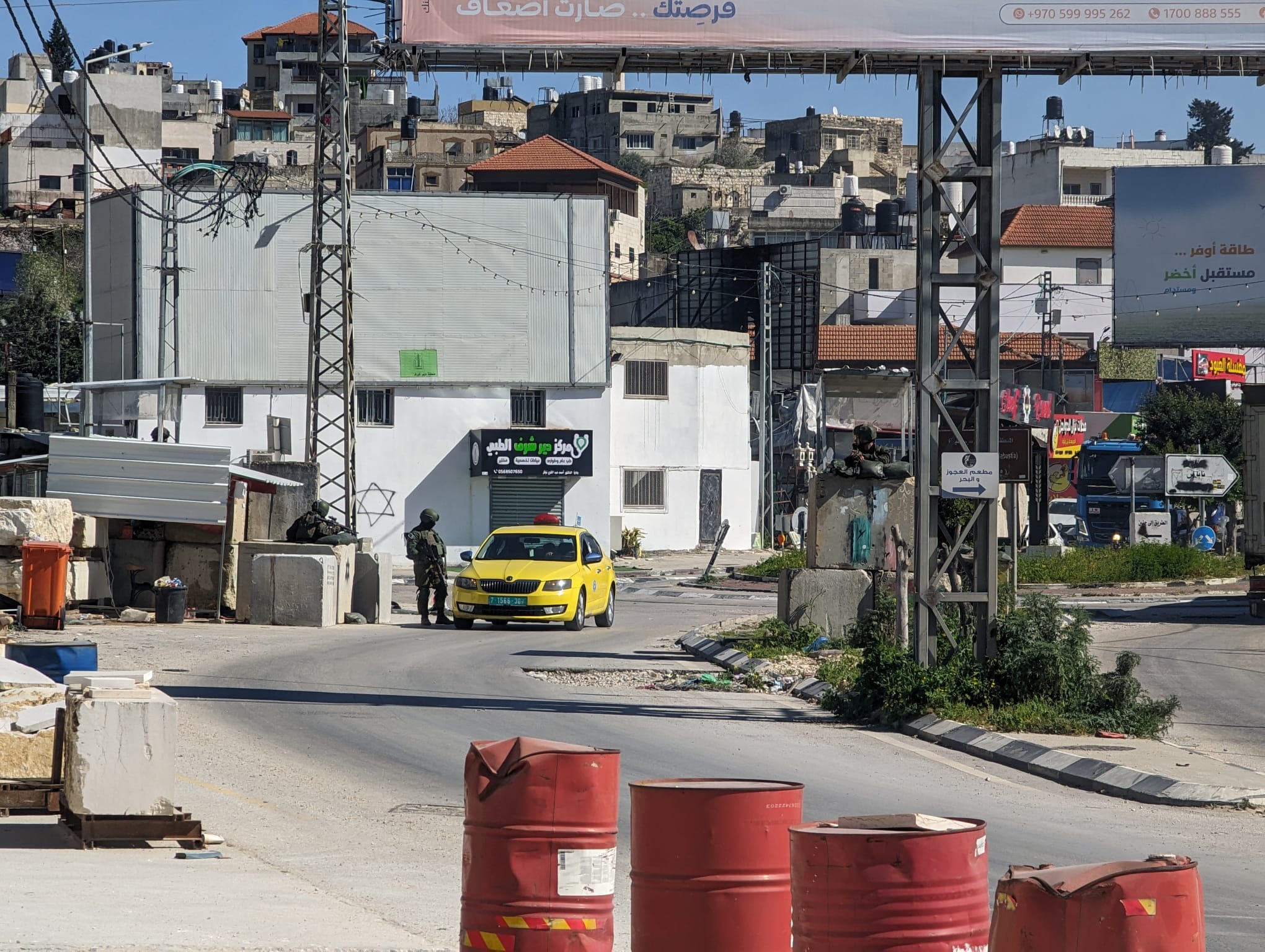 Nina SebaFeb-28-2024Deir Sharaf - the entrance to the village
-
Eliyahu CP (109) / Crossing
See all reports for this place-
Eliyahu CP (109) / Crossing This checkpoint, also known as the Fruit Crossing, is one of the main checkpoints between Israel and the West Bank. It is located on Route 55 between Alfei Menashe and the turn to Qalqilya and Zufin, more than 4 km east of the Green Line, in the separation fence, which separates Qalqilya from its lands to the south, thus leaving Alfei Menashe West of the fence - the Seam Zone. This checkpoint, a few kilometers across the Green Line, is intended for "Israeli settlement in the West Bank and the population of the Seam Zone." It is managed by a civil company. Palestinians with a special permit for their lands in the seam area are also allowed to pass through it, on foot, and sometimes by car.
-
Falamiya
See all reports for this placeHabla
See all reports for this place-
Habla CP (1393)
The Habla checkpoint (1393) was established on the lands of the residents of Qalqilya, on the short road that
connected it for centuries to the nearby town of Habla. The separation barrier intersects this road twice and cut off the residents of Qalqilya from their lands in the seam zone.(between the fence and the green line).
There is a passage under Road 55 that connects Qalqilya to the sabotage This agricultural barrier is used by the farmers and nursery owners established along Road 55 from the Green Line and on both sides of the kurkar road leading to the checkpoint.
This agricultural checkpoint serves the residents of Arab a-Ramadin al-Janoubi (detached from the West Bank), who pass through it to the West Bank and back to their homes. The opening hours (3 times a day) of this agricultural checkpoint are longer than usual, about an hour (recently shortened to 45 minutes), and are coordinated with the transportation hours of a-Ramadin children studying in the occupied in the West Bank.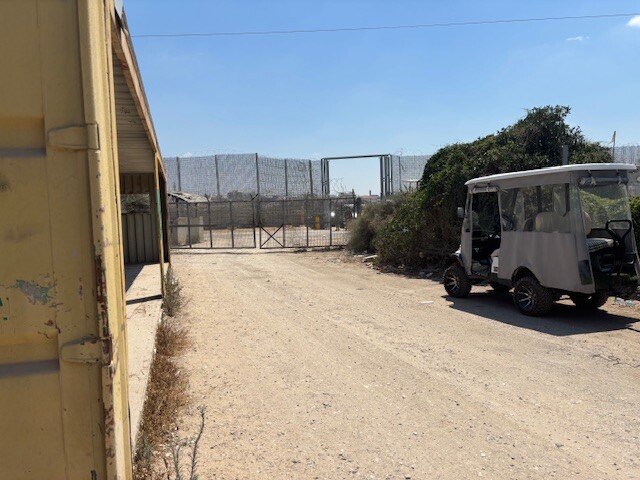 Nina SebaAug-18-2025Habla: The gate is in the process of closing
-
Jit Junction
See all reports for this place-
The checkpoint is located on Route 60 near at the junction with Route 55, near the village of Jit. There was a checkpoint for vehicles passing between the north and south of the West Bank, which was abolished towards 2010. Since then, surprise checkpoints have been set up there from time to time with a police or Border Police vehicle, and vehicles and their passengers are inspected.
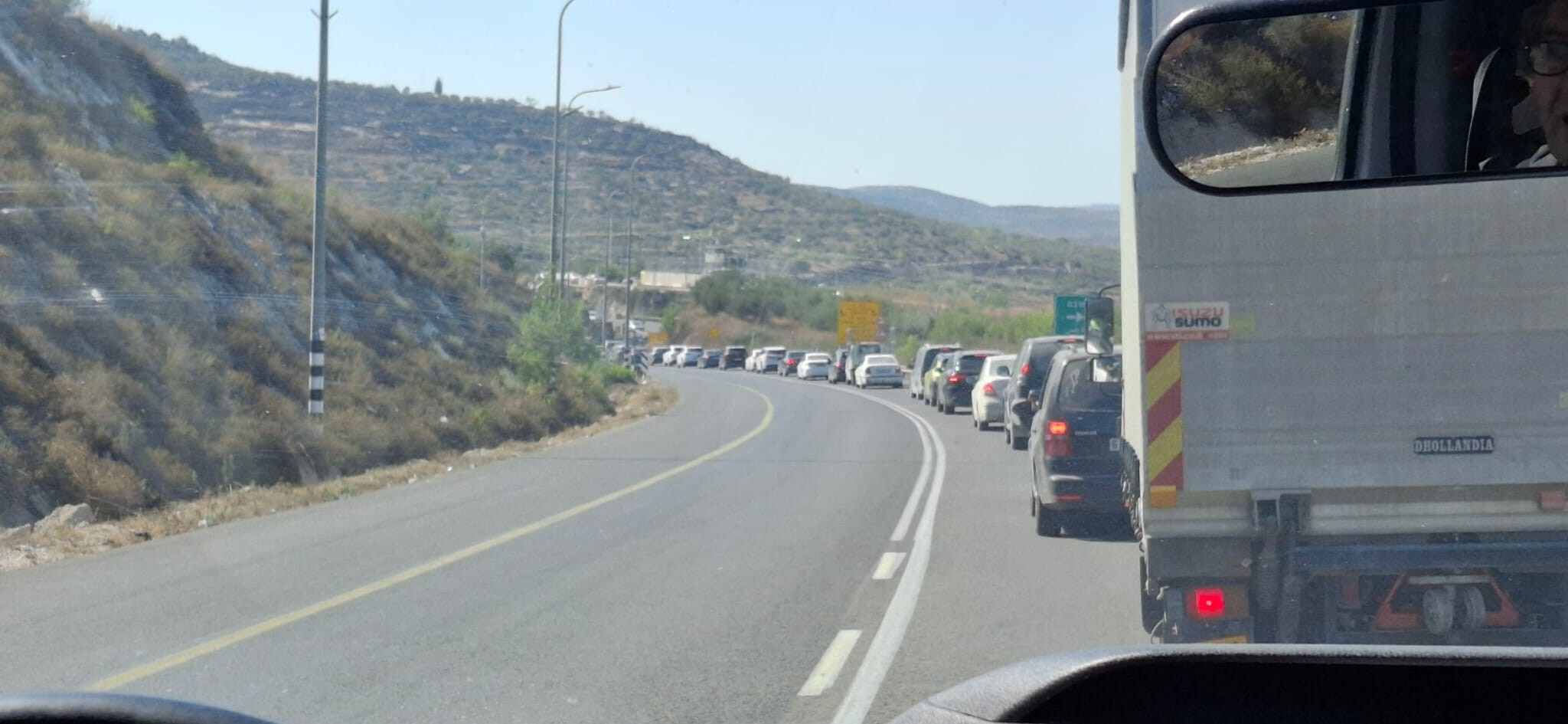 Anat PolakJul-17-2025Yitzhar Road, Jit Junction: traffic jam
-
Kufr Jammal
See all reports for this place-
Kufr Jammal This village, rising about 200 meters over sea level, is located about 14 kilometers south of Tul Karm town and about 17 kilometers from the Mediterranean Sea. The families living there since the mid-18th century number about 3,000 persons at present. The village has lost thousands of dunams of its northern and western lands due to the construction of the Separation Barrier, leaving the lands themselves behind the barrier. After the Israeli Supreme Court ruling in 2011, the barrier was moved to the west and many farmlands were returned to their owners. It is a quiet village, its relations with the nearby settler-colony of Sal’it are favorable, and many of the villagers work in the colony’s industrial plants. Farmers cross the agricultural checkpoint close to this settler-colony in order to tend their fields unhampered. However, there are numerous acts of harassment and disorder taking place when the village farmers cross the other agricultural checkpoints: gates do not open at hours suitable to the farmers’ needs, and for a short period of time only; the Civil Administration usually prevents all kinds of crops except olives; tractors and other farm equipment are forbidden entry; only a single permit is issued per family, and occasionally such permits are confiscated and their re-issue is delayed – the common excuse is usually “security reasons”. How do the villagers make their living? Holders of work permits inside Israel travel at 3 a.m. to Eyal Checkpoint near Qalqiliya town in order to make it on time to their workplace at Sal’it (close to their village) and elsewhere. Owners of vegetable patches who hold permits are allowed to reach their fields beyond the Separation Barrier through the distant Falamiya Checkpoint. Importantly, fields returned to the village show amazing improvement intending, irrigation and farming variety – and instead of the neglected olive tree groves that were accessible only to holders of transit permits through agricultural checkpoints usually closed, farming has now flourished. (updated Jan 2021)
-