
Beta: both entrances to the village are closed
Habla – gate opened on time.
Beta – both entrances closed – the gate on the Huwara side and the gate on the Awarta side closed with dirt dykes.
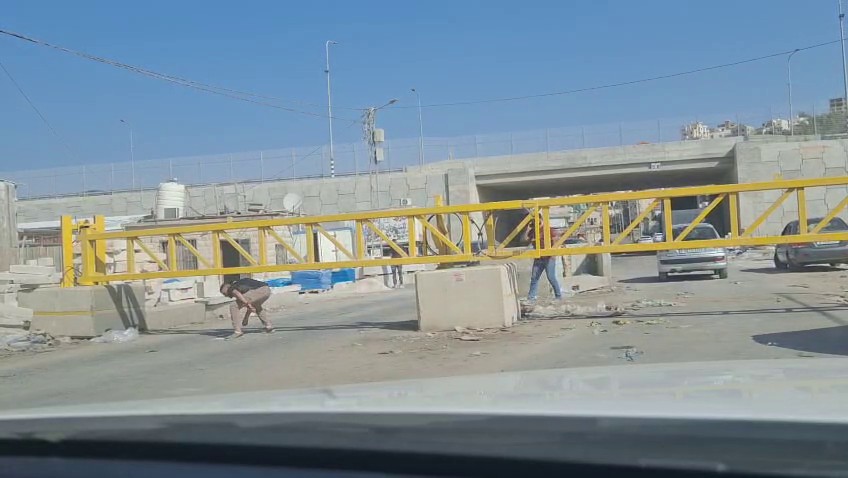
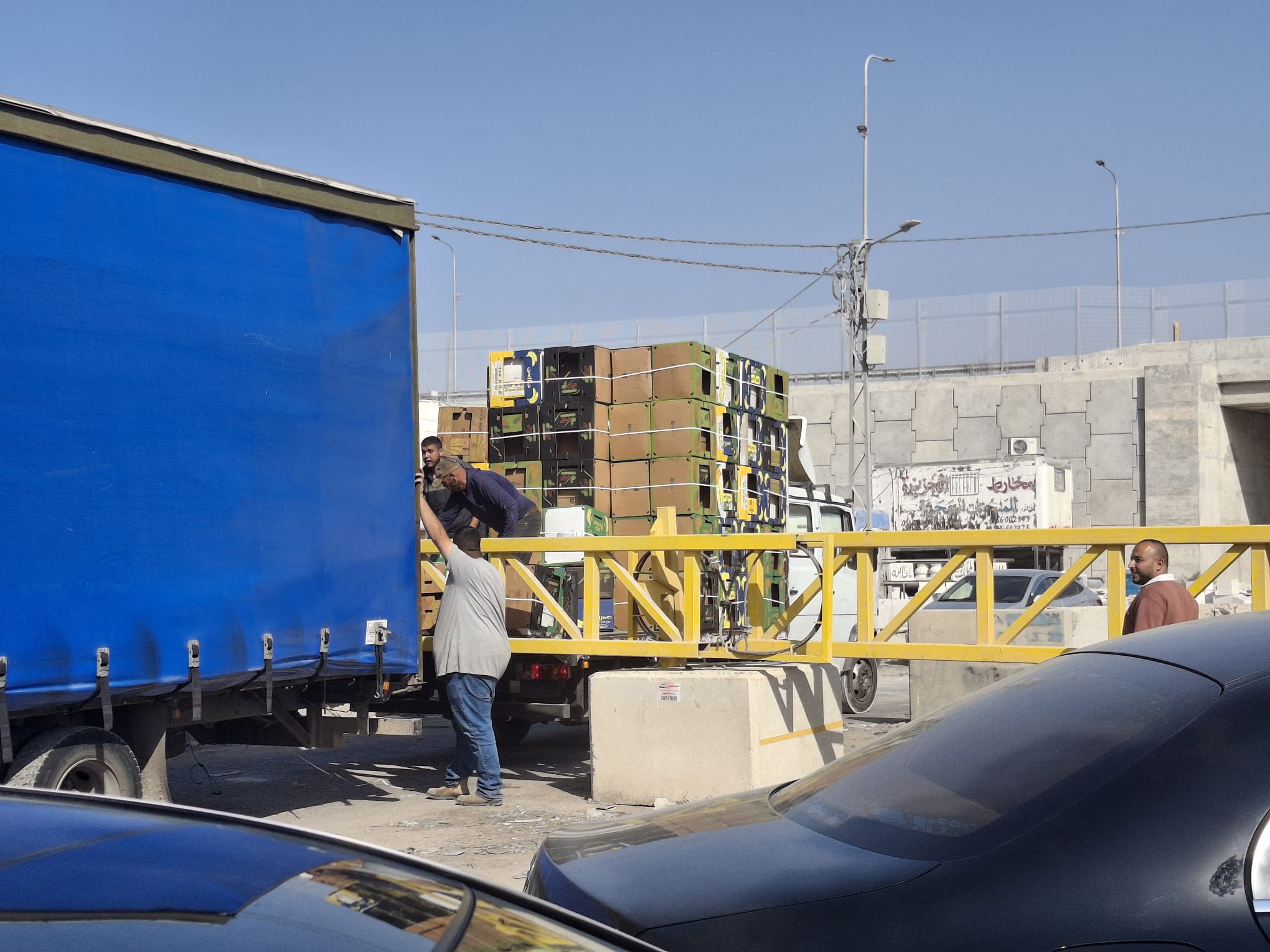
For the past 4 days including today, people are forced to leave their cars and crawl under the gate while carrying bags.
Business owners are forced to transfer goods back-to-back. A lot of work in searing heat… simple harassment.
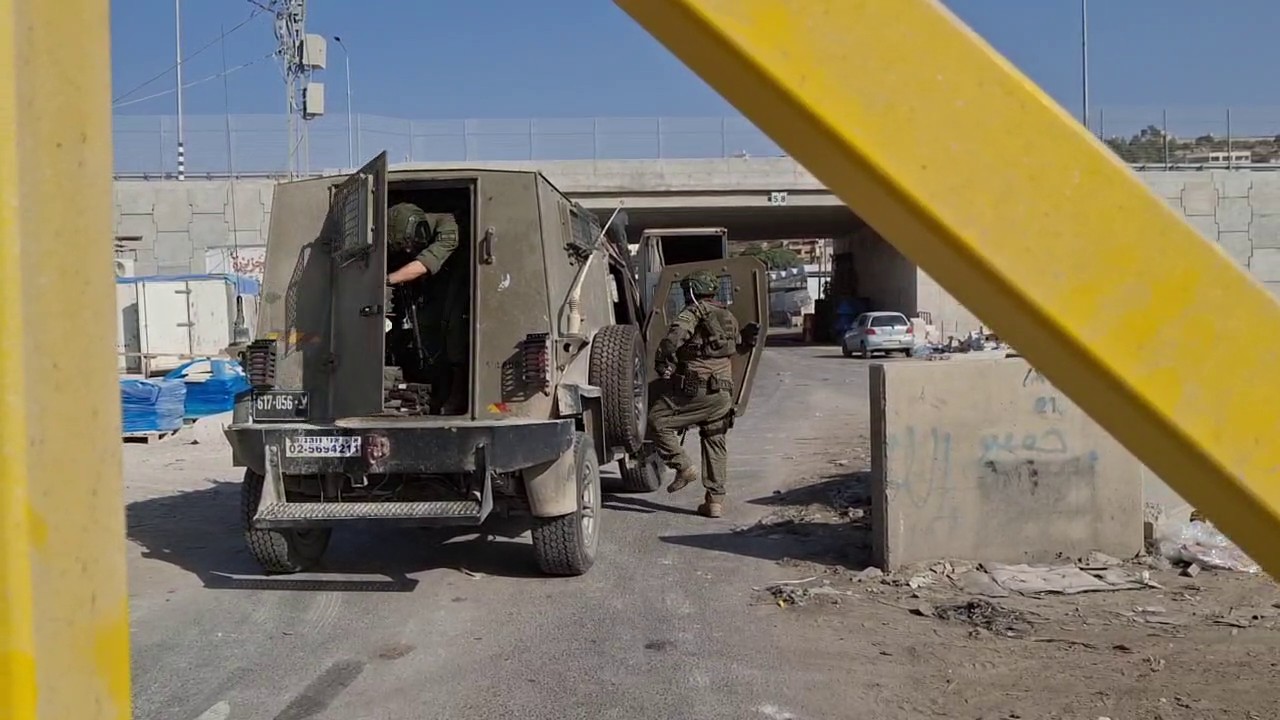
Soldiers arrived in two jeeps, came out the vehicle, opened the gate, entered and closed it. We called the Israeli DCO. Told to call the Palestinian DCO. We did. They didn’t know about this and thanked us, promised to look into it. Until now the gate remains closed.
The soldiers spent three hours in Beta, arrested a child and confronting the villagers.
We continued to Awarta.
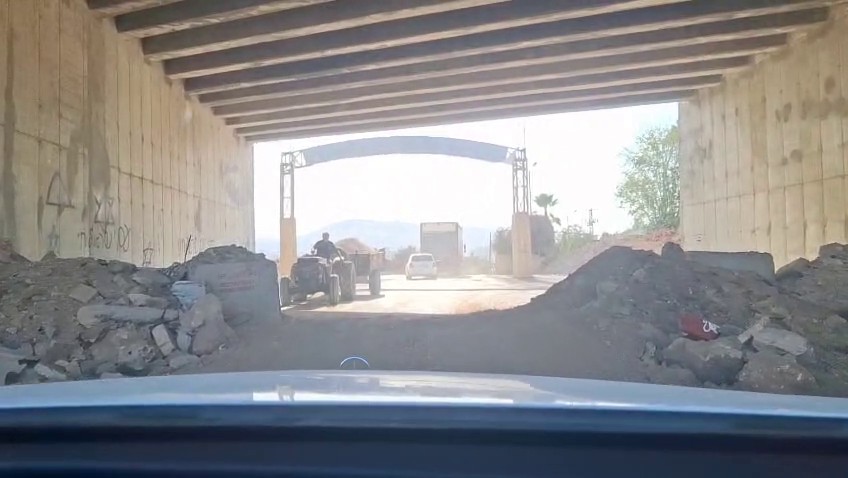
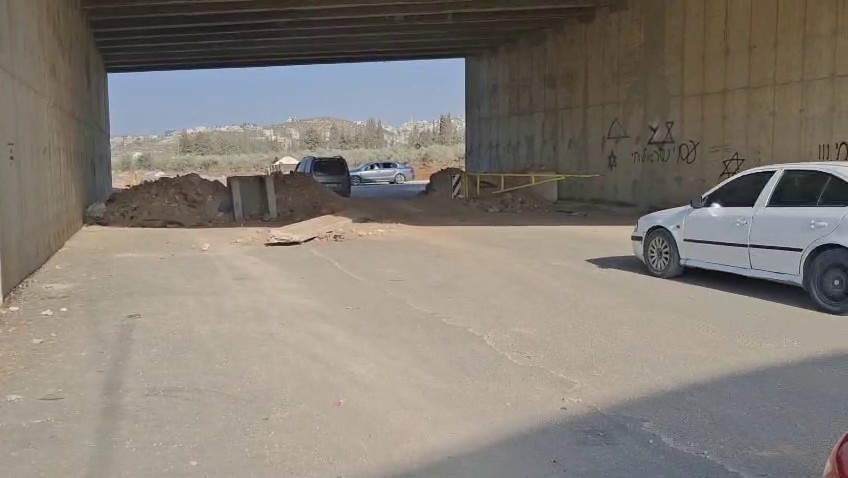
Truck drivers managed to break into the entrance to Beta under the bridge between Awarta and Beta and make way so that other vehicles could pass too.
Awarta – a huge traffic jam in both directions.
Beit Furik Checkpoint crowded as well. People said the gate to Beit Furik was closed and opened only 24 hours later by soldiers.
Burin – villagers confronted settlers who harassed them today during the olive harvest, helped by soldiers.
Huwara – shops and businesses closed except for a few garages.
Location Description
'Awarta
See all reports for this place-
Awarta, an internal checkpoint in the heart of the West Bank, is located east of the Hawara checkpoint, at the junction of Roads 555 (which was forbidden for Palestinian traffic in this area) and the entrance road to Nablus. It was one of the four checkpoints that surrounded Nablus until 2009. We used to watch it at Huwwara shifts because it was the only one where goods could be transferred to and from Nablus, using the back-to-back method. It was operated by the army, from 06:00 to 20:00. Until 2009.
 Ronit Dahan-RamatiJan-6-2026Awarta: Traffic jam on the way to Nablus
-
Beta
See all reports for this place-
Beta is a town of 12,000 people, high unemployment rate. Many work in Israel, others in agriculture. Neat ornamental system. Unemployment is high. Young people, even the educated, are forced to look for work in Israel. Medical services are available once a week.
Settlers from Yitzhar and Itamar harass residents frequently and prevent them from cultivating their fields: Permits are required from the DCO / DCL / DCL / DCL to go to work.
-
Burin (Yitzhar)
See all reports for this place-
Burin (Yitzhar)
This is a Palestinian village in the Nablus governorate, a little south of Nablus, on the main road passing through the West Bank. The settlements: Yitzhar and Har Bracha, settled in locations that surrounded the village, placed fences so it is cut off the main road.
There are around 4000 inhabitants. Most of them are engaged in agriculture and pasture, although many graduates of the two secondary schools continue to study at the university. Academic positions are hardly available, they find work as builderd, or leave for the Gulf countries.
The village lands were appropriated several times for the establishment of Israeli settlements and military bases, and as a result, Burin's land and water resources dwindled. lSince 1982, more than 2,000 dunams of village land have been declared "state land" and then transferred to Har Bracha settlement.
Over the past few years and more so since 2017, the villagers have been terrorized by the residents of Yitzhar and Har Bracha, the Givat Ronen outpost and others. Despite the close proximity of soldiers to an IDF base close to one of the village's schools, residents are suffering from numerous stone-throwing events, vehicle and fire arson, also reported in the press.
In 2023, the prevention of the olive harvest in the village plot was more violent than ever. Soldiers and settlers walked with drawn weapons between the houses of the village and demanded that people stop harvesting in the village itself and in the private plots outside the village. The settlers from Yitzhar and Giv'at Roned raided the olive groves and stole crops. 300 olive trees belonging to the residents of Burin, near Yitzhar, were uprooted. The loss of livelihood from the olives causes long-term economic damage to the farmers' families, bringing them to the point of starvation.
(updated for November 2023)
-
Habla CP (1393)
See all reports for this place-
Habla CP (1393)
The Habla checkpoint (1393) was established on the lands of the residents of Qalqilya, on the short road that
connected it for centuries to the nearby town of Habla. The separation barrier intersects this road twice and cut off the residents of Qalqilya from their lands in the seam zone.(between the fence and the green line).
There is a passage under Road 55 that connects Qalqilya to the sabotage This agricultural barrier is used by the farmers and nursery owners established along Road 55 from the Green Line and on both sides of the kurkar road leading to the checkpoint.
This agricultural checkpoint serves the residents of Arab a-Ramadin al-Janoubi (detached from the West Bank), who pass through it to the West Bank and back to their homes. The opening hours (3 times a day) of this agricultural checkpoint are longer than usual, about an hour (recently shortened to 45 minutes), and are coordinated with the transportation hours of a-Ramadin children studying in the occupied in the West Bank.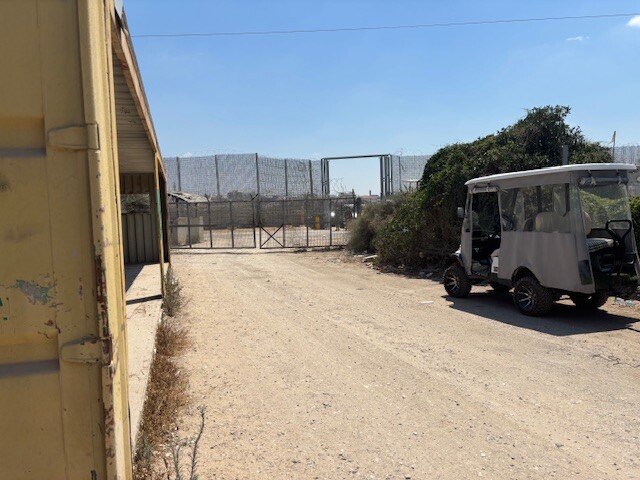 Nina SebaAug-18-2025Habla: The gate is in the process of closing
-