
Bethlehem (300) - Palestinians do not believe anyone


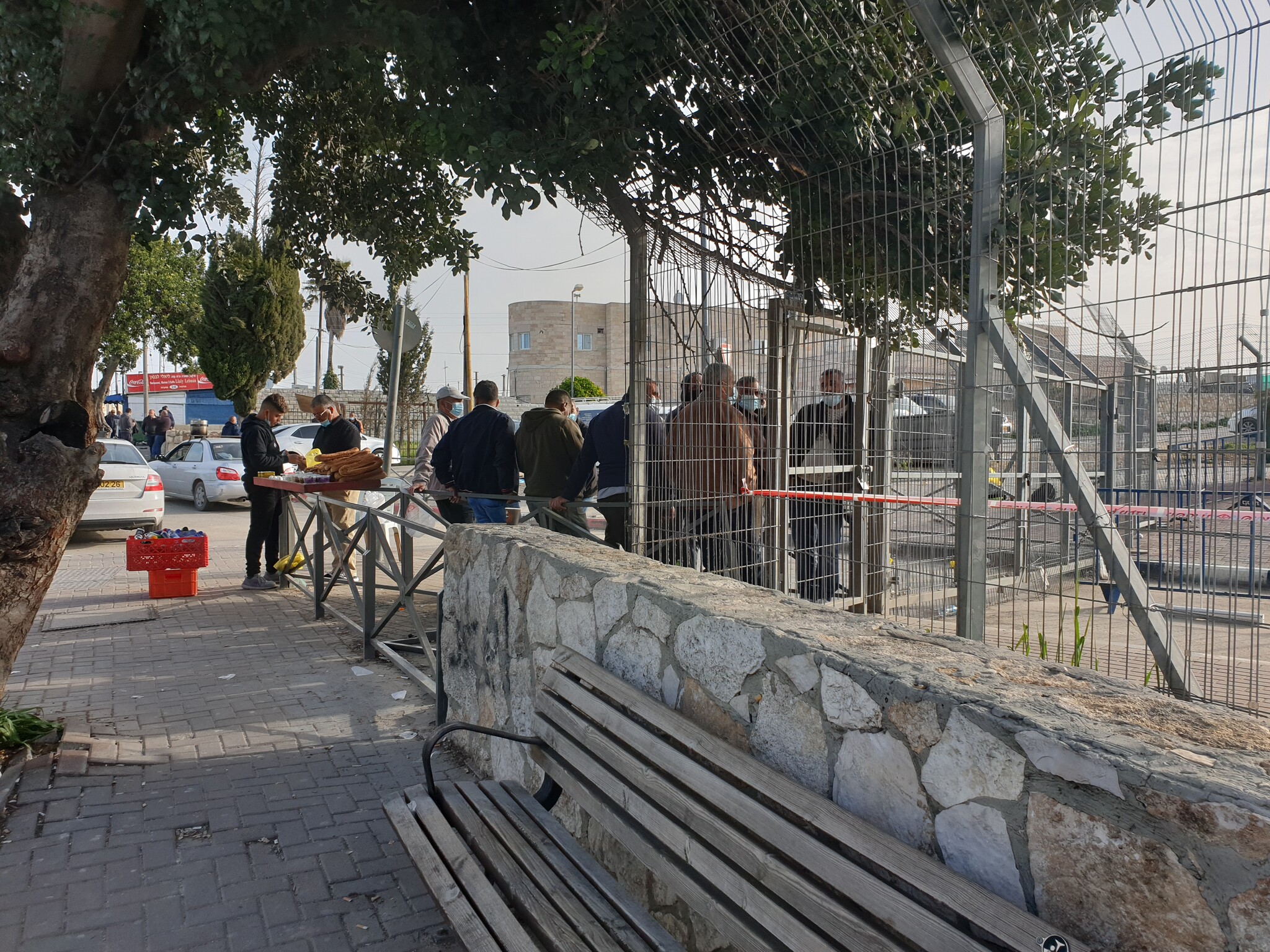
07:15 Bethlehem checkpoint.
After many weeks during which the access road from Jerusalem to Checkpoint 300 was partially blocked, there’s again much traffic. The vehicle checkpoint to and from Bethlehem is still closed. Tents have been erected in the large parking lot beside the checkpoint to vaccinate workers with permits, and people already are waiting in line for it to open at 09:30. The rumor is that in the future unvaccinated workers won’t be allowed to cross.
Only two inspection stations are open but the surprisingly friendly security person (who’s also familiar with our website) says that at dawn all the inspection stations were open for the many workers to go through. Merchants haven’t been allowed to cross for four months!
We spoke to Palestinians waiting for rides and contractors. One tells us about a generous Israeli, Moshe Abergil, a contractor from Rishon LeZion, who from time to time gives him thousands of shekels to buy food and distribute it to Bethlehem’s needy. We wonder what opinions are about the upcoming Palestinian Authority elections, and receive the same response from everyone: they don’t believe anyone, not Hamas, not Abu Mazen, not Jibril Rajoub – they’re all thieves, stealing both money and vaccinations.
08:00 We try to reach Sheikh Sa’ed. The road via the schools is blocked by construction. The workers tell us they’re making the schools road – Shara’ al-Madars, which runs down to the American road – less steep. Access is only on foot for now. A traffic circle has already been built which will also give access to the road being paved that will connect to Highway 398 (to Har Homa and Teqoa).
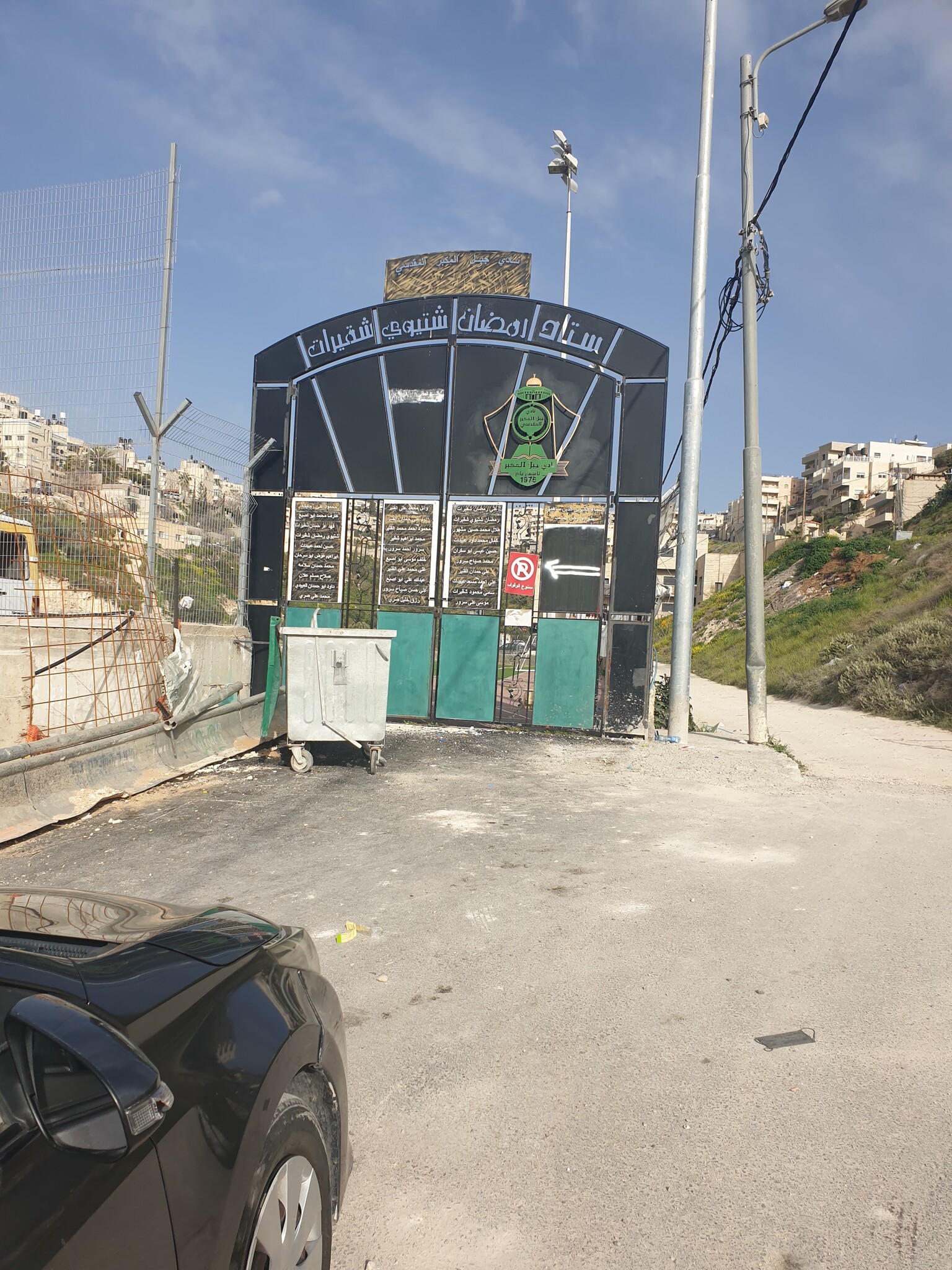
We returned to the entry to the main village, Jabal Mukaber, and down to the American road and the Sheikh Sa’ed checkpoint via a more northerly internal road. It’s also very steep and narrow. We were happy to see a large, new green soccer field had been built. We’d hoped the Jerusalem municipality had been involved but the sign indicated that the funds came from private donations and a grant from the waqf.
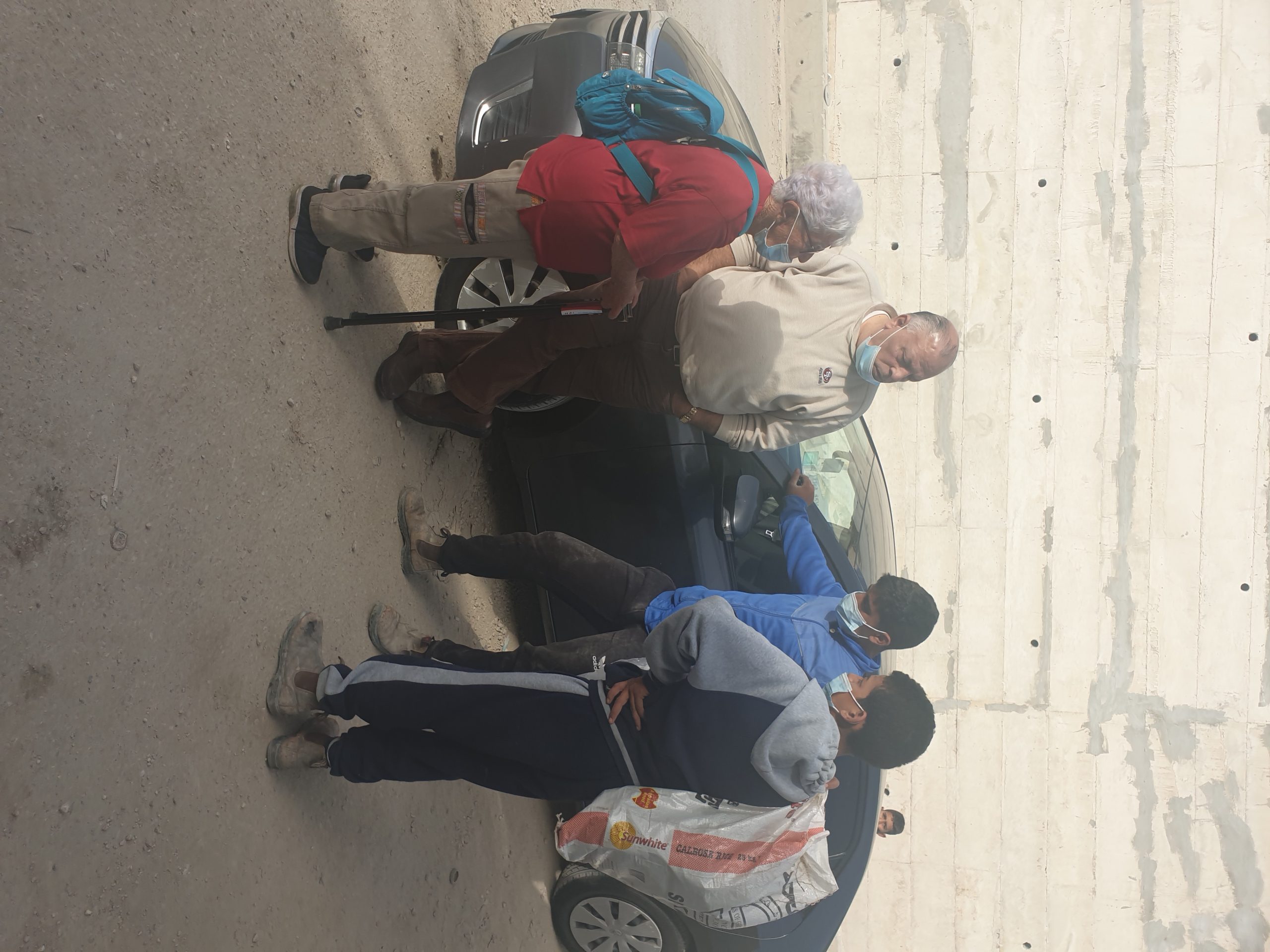
We met four children at the Sheikh Sa’ed checkpoint – brothers from Azzariyya (on the other side of the separation wall from Abu Dis). A. the oldest, is 14. They said they came to collect plastic bottles, turn them in for the deposit and bring the money home. Their father’s leg is injured; he hasn’t worked for a number of years. Maybe they’re hoping to pick up odd jobs? They don’t attend school. It isn’t clear how they arrived here from Anata (a long, poorly-maintained road) and how they got through this checkpoint. We didn’t know what we could do besides talk to them and offer them the Jerusalem beigeleh we had bought; we knew we couldn’t contact the Palestinian welfare authorities. It wouldn’t have been appropriate. We also recalled children selling chewing gum at traffic lights in northern Jerusalem whose parents kept sending them despite being pressured to stop. We took A’s cellphone number; we’ll try to contact UNRWA or OCHA and ask them to determine whether the family is receiving assistance. If someone has additional ideas, we’re happy to hear them.
I go through the checkpoint to see what’s going on in Sheikh Sa’ed. The number of drivers waiting for passengers traveling into and out of the isolated neighborhood has diminished – there are now only people leaving. Unlike in the past, however, they’re not willing to speak with me. They feel despair, alienated, and demonstrate to me that our interest in their situation doesn’t help them, only annoys them. There’s no work, no permits – not for young people either. Our repeated suggestion to contact Sylvia is greeted with indifference. I give up. I try to go through the checkpoint back to Jabal Mukaber. Three Border Police soldiers and a security guard come to life, request documents, contact their commander and declare I can’t cross. Only residents of Jabal Mukaber and Sheikh Sa’ed with blue ID cards – no one else.
I argue, it’s Area B under Israeli security control and members of human rights organizations are permitted to be here. But it’s no use. A wearying half-hour of telephone calls to the northern Jerusalem DCL passes until I’m released. The alternative was to give work to the desperate drivers and ride at least half an hour to the Olives checkpoint, where N. and K., the driver, would await me. I’m somewhat embarrassed at my privileged status. A Palestinian resident of Jerusalem wouldn’t have succeeded in crossing under any circumstance.
Bethlehem (300)
See all reports for this place-
Located adjacent to the Separation Wall ("Jerusalem Wrap") at the north entrance to Bethlehem, this checkpoint cuts off Bethlehem and the entire West Bank from East Jerusalem, with all the serious implications for health services, trade, education, work and the fabric of life. The checkpoint is manned by the Border police and private security companies. It is an extensive infrastructure barrier and is designated as a border terminal, open 24 hours a day for foreign tourists. Israeli passport holders are not allowed to pass to Bethlehem, and Palestinian residents are not allowed to enter Jerusalem, except those with entry permits to Israel and East Jerusalem residents. Israeli buses are allowed to travel to Bethlehem only through this checkpoint.The checkpoint, which demonstrated harsh conditions of crowding and extreme passage delays for years, started employing advanced electronic identification posts and has upgraded its gates' system as of the middle of 2019 - and conditions improved.Adjacent to the checkpoint, in an enclosure between high walls and another passage, is the historic Rachel's Tomb, which is now embedded within a concrete fortified building. It contains prayer and study complexes for Jews only, as well as a residential complex. updated November 2019 .
-
Sheikh Sa'ed
See all reports for this place-
A checkpoint limited to pedestrians, located on Jerusalem’s municipal boundary.
The checkpoint sits on the separation fence at the entrance to Sheikh Sa’ad, dividing it from its neighbourhood of Jabel Mukkabar. It’s manned by Border Police soldiers and private security companies and operates 24 hours a day. Palestinians are forbidden to go through, other than residents of Jabel Mukkabar or Sheikh Sa'ad who have permits. Both groups are permitted through only on foot. Residents of East Jerusalem who don’t live in Jabel Mukkabar are also allowed to cross to Sheikh Sa’ad, but not in the opposite direction; they must return through the Sawahira ash Sharqiya checkpoint.
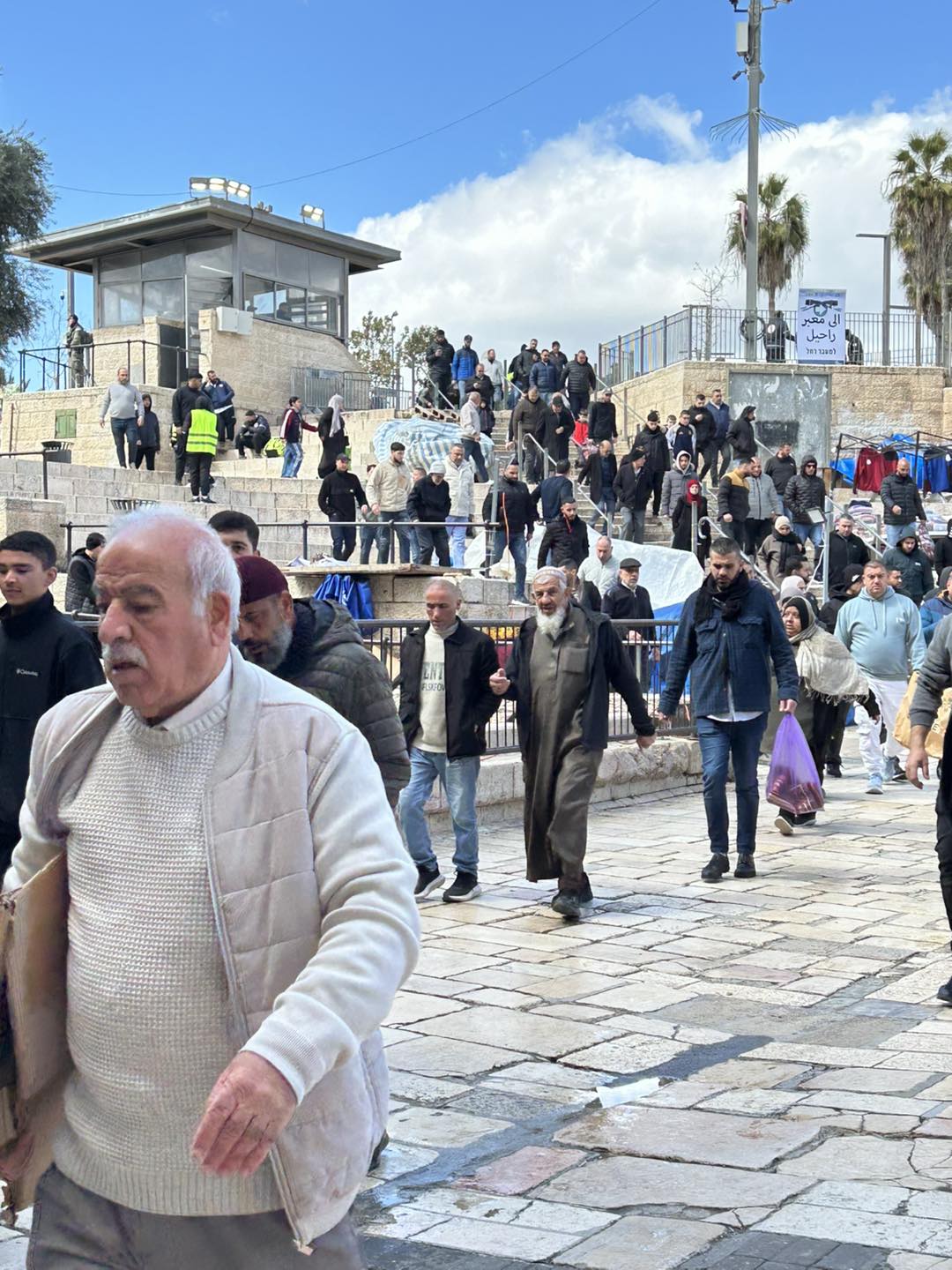 Avital CFeb-27-2026Jerusalem, Damascus Gate: Crowd rushing to prayer
-