
Bethlehem: Rachel’s Tomb is bustling.
Rachel’s Tomb is bustling. A large area is being expanded into another parking lot, right below the Bethlehem houses rising above the separation wall. It’s a week before the celebration of Rachel the Matriarch’s birthday. Groups of girls from the settlement of Efrat arrive with their teachers at the tomb, which is completely encased in an ugly concrete frame. They receive instructions: “Pray for many and successful births.”
I receive a prayer booklet on my way to check the nearby settlement next to the “Bnei Rachel” yeshiva. The collection includes prayers for marriage, domestic harmony, livelihood, and health, for success in Torah study, and even a special prayer to be saved from technological harms. Amen.
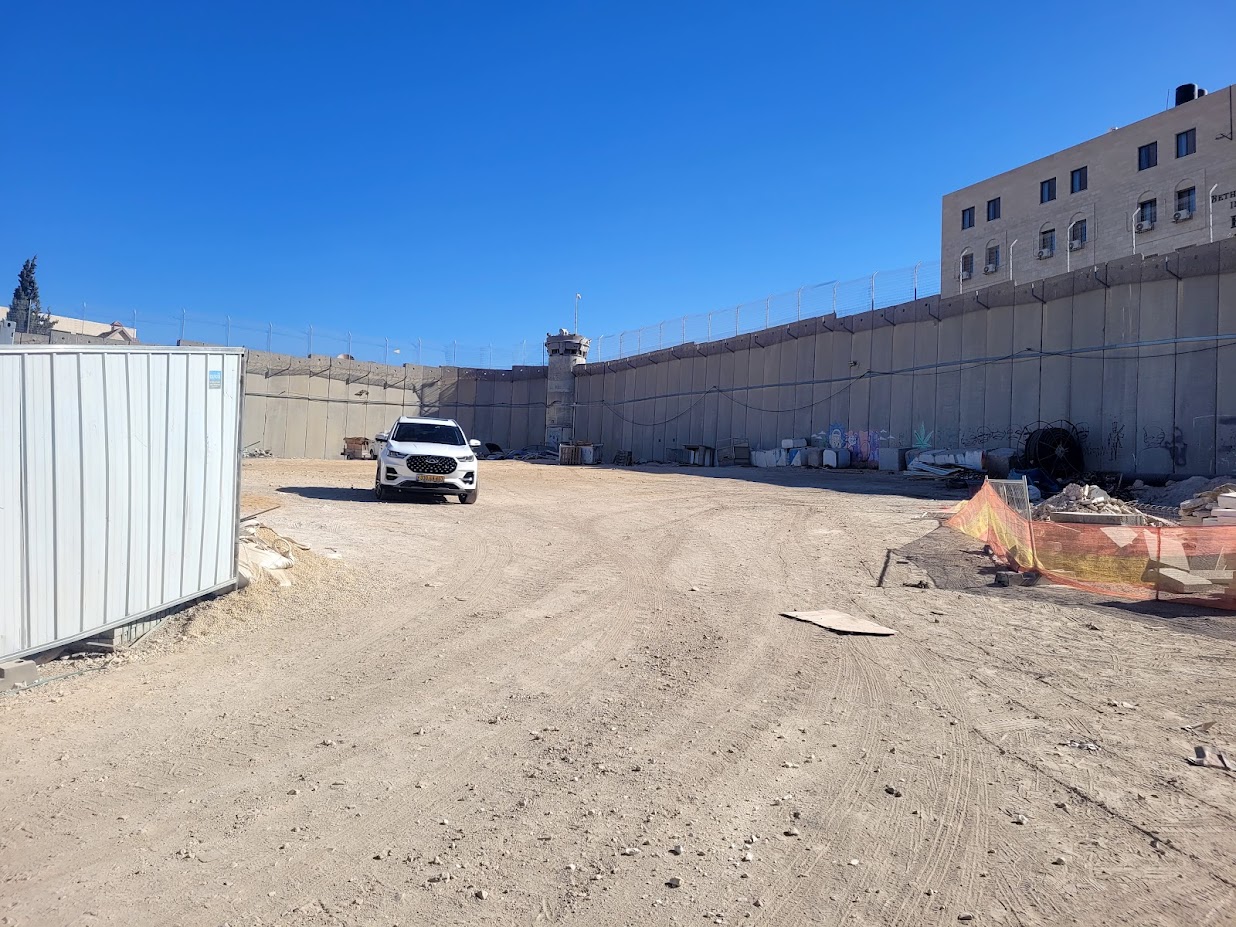
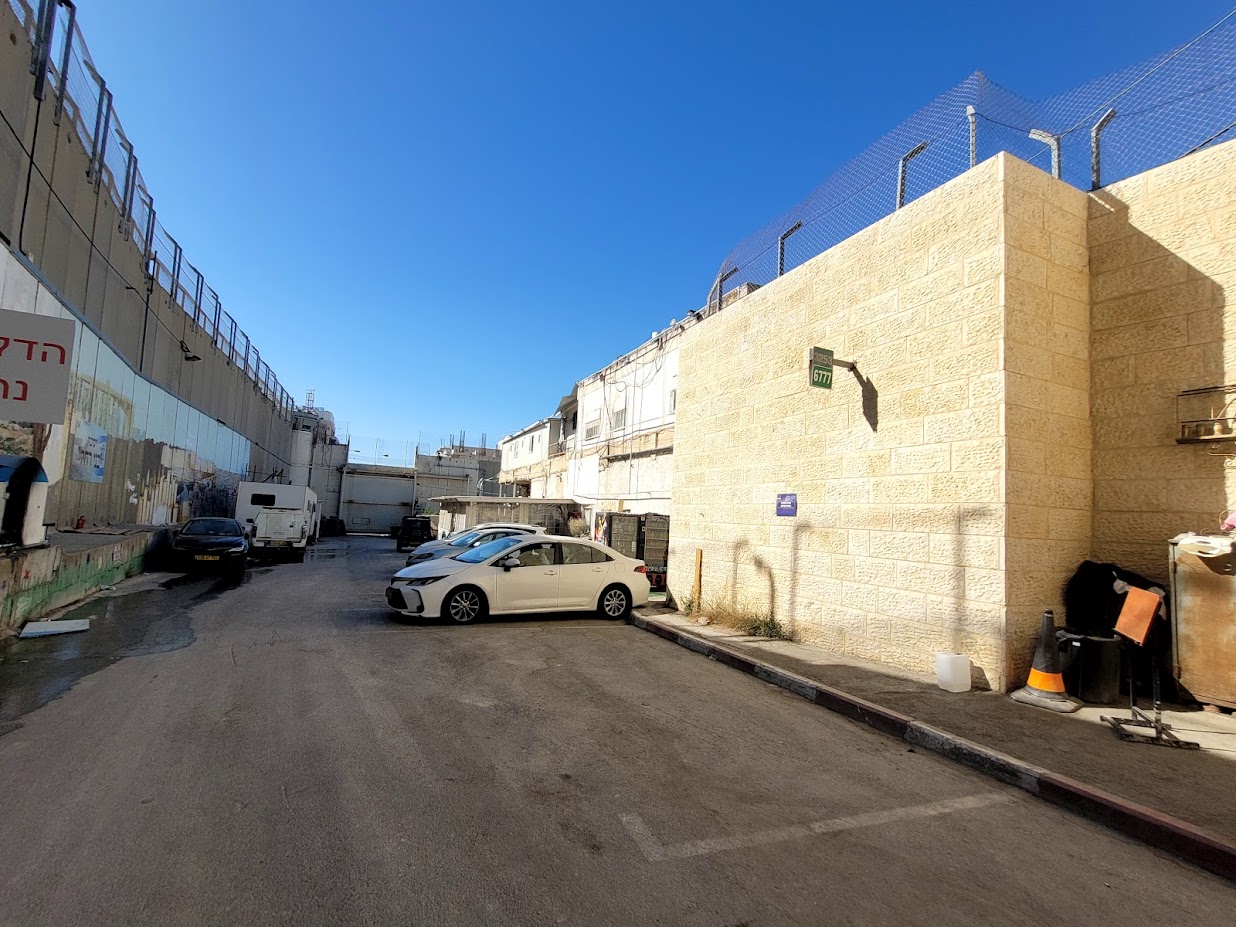
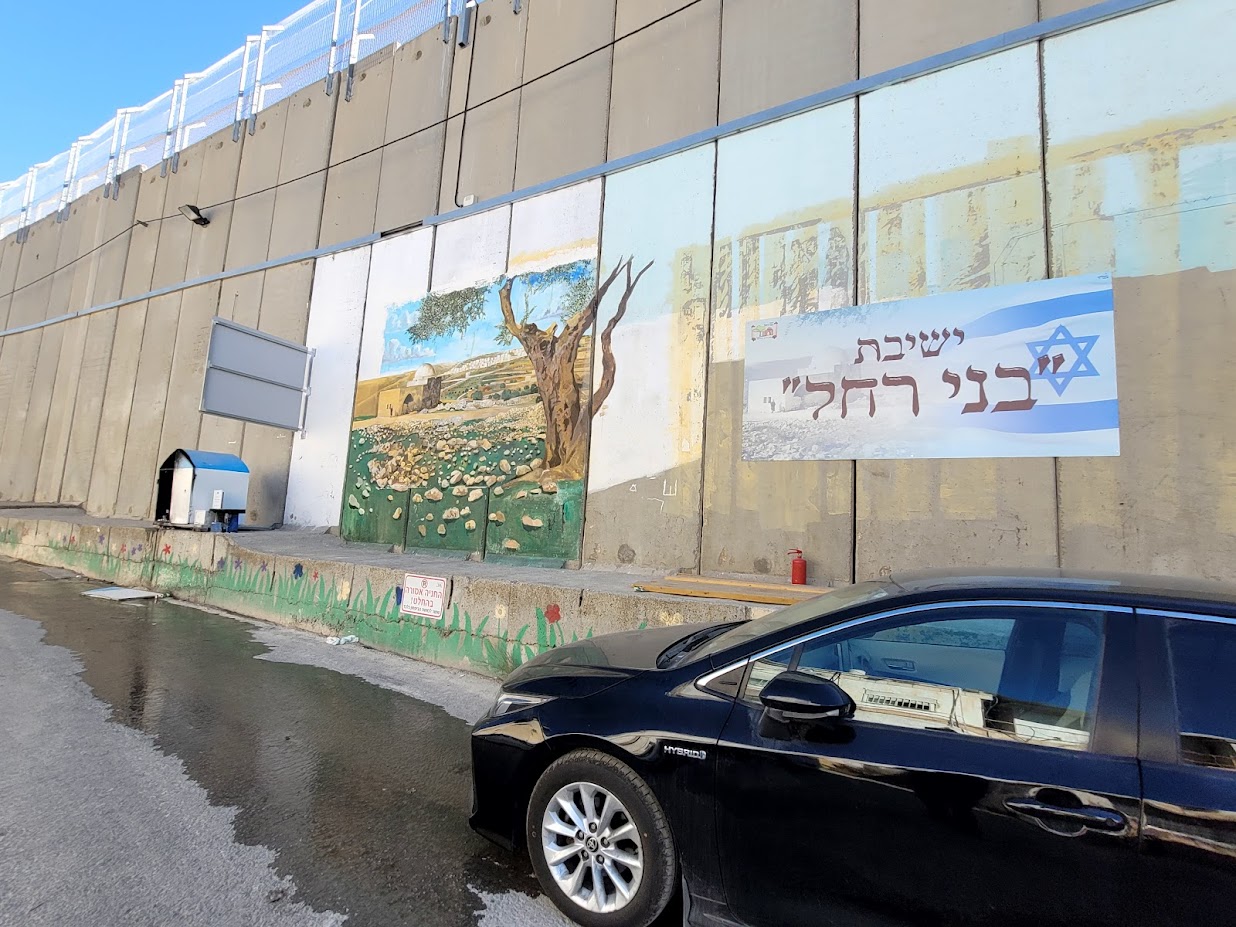
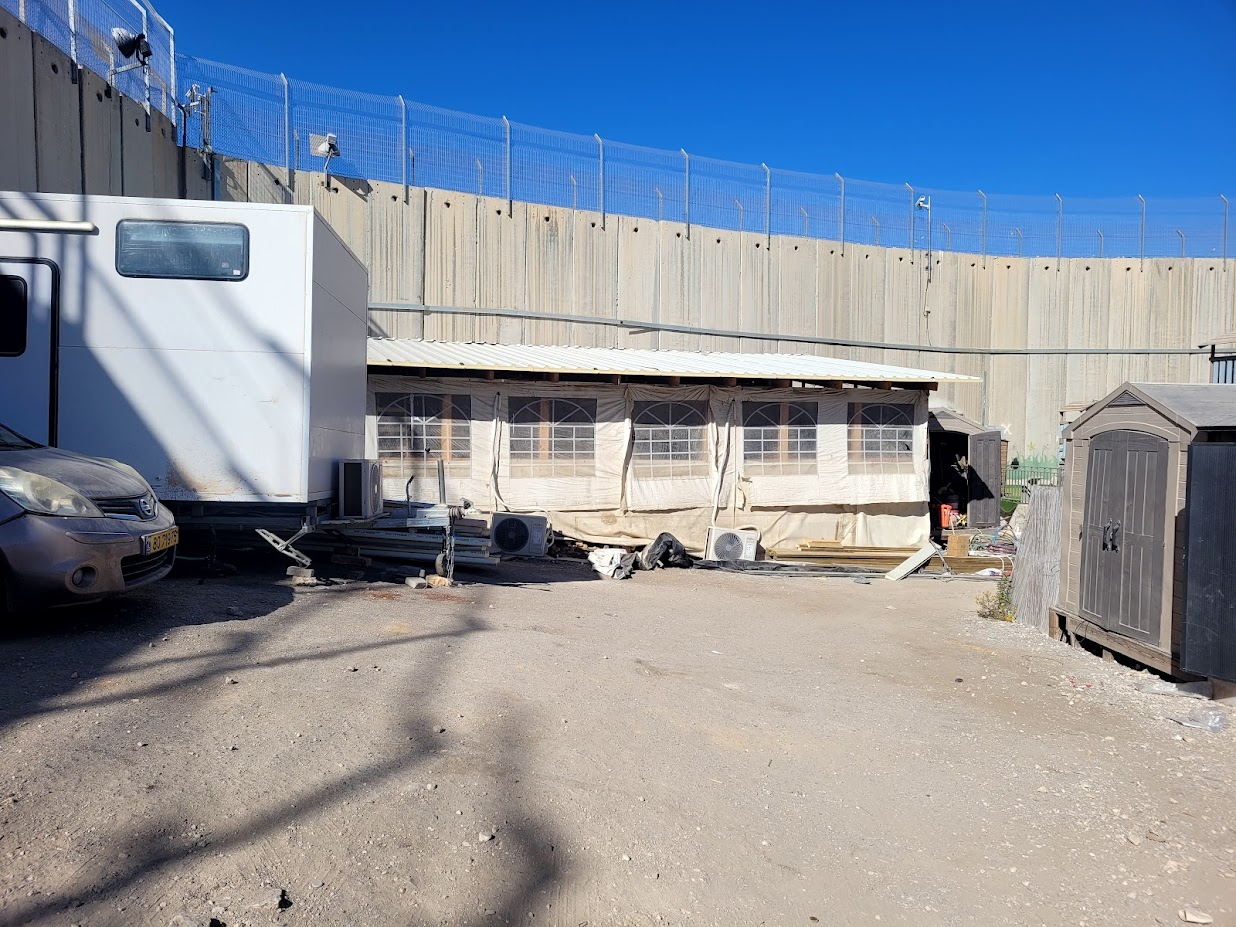
The settlement is expanding with a new outer study hall, also adjacent to the wall. Additional housing units for families have been added, attached to existing structures. There’s a facility for electric bicycles. Everything looks rather neglected.
Bethlehem Checkpoint 300.
A small trickle of people leaving. They warn us not to enter. Most inspection booths are inactive — only one seems to be operating now. The vehicle crossing is open, but sometimes closes — it’s unclear when.
The police officer in charge of the checkpoint explains that only 1,500 people pass through now. It’s open from 6:00 a.m. to 1:00 p.m. The quotas for workers haven’t been increased since the ceasefire and the “end” of the war. Once, 22,000 people used to pass here daily. He offers an explanation: “Contractors don’t want Palestinian workers anymore. They take food breaks and finish by five or six in the evening. The Chinese and Indians took their place. They work from dawn till night, no complaints or problems.”
We said we hadn’t seen many Chinese or Indian workers in Jerusalem, and asked if they were even skilled in construction around here. The Palestinians built Israel for us and continue building the settlements, while the West Bank is starving.
We continue south on the Tunnel Road (Route 60), which is being widened. At the Al Khader junction there’s an improvement: the turn from Route 375 westward (toward Beitar Illit), which had been blocked to Al Khader and the Beitir enclave since the war began, has reopened, now with yellow barrier arms and two inspection stations. The checkpoint is currently open. You can drive into Al Khader on the lower road or continue toward Husan and the Beitir enclave. Soldiers are present — some sitting in a jeep parked a bit away. In short: they monitor, open, and close whenever they wish.

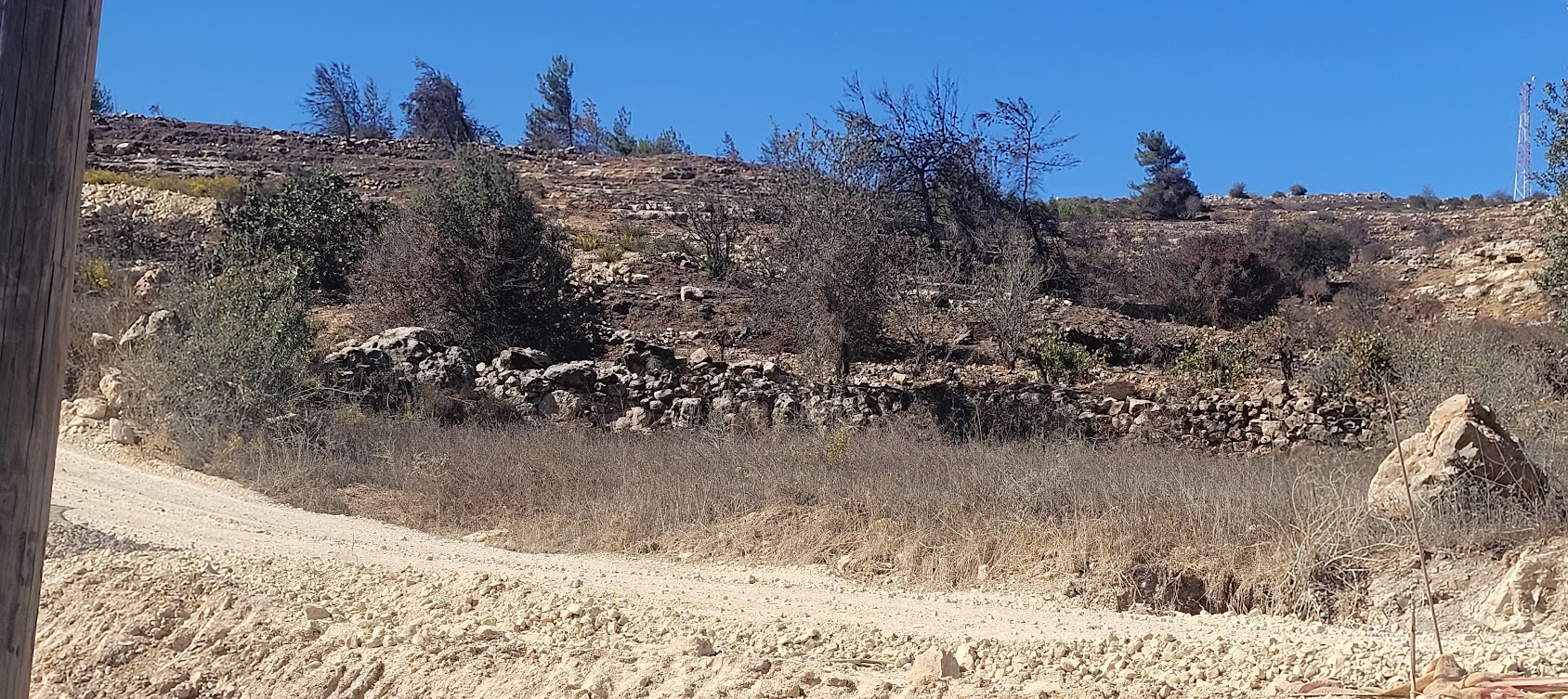
At Nashash Junction, the southern entrance to Bethlehem, roadworks are underway to dig a new underpass — a “fabric-of-life” road. It’s unclear whether it will ease congestion at the Nashash checkpoint from Route 60 southbound, allowing Palestinians to enter Bethlehem without passing the junction that also leads to Efrat. We couldn’t get close enough to ask.
We arrive at the home of Nafouz Dadoua, our friend whose house sits on the northern access road to Efrat and is under demolition threat, approved by the High Court of Justice (Judge Elron, a conservative). Her 17-year-old daughter married two months ago, and the 18-year-old studies at Bethlehem University. The two boys and three younger girls study in Al Khader — but in the Palestinian Authority schools, classes are held only two days a week, since the teachers haven’t been paid salaries ever since Smotrich froze all tax transfers belonging to the PA.
Today, tourists are visiting her with a Palestinian guide — good people wishing to help during their visit by assisting in the olive harvest. Nafouz was widowed a year ago and now has to provide for everything on an allowance of 1,500 shekels a month. She doesn’t receive permits to leave her area freely, nor ones that would allow her to work in Efrat. We help her from time to time, as perhaps does the organization that renovated her house.
She is proud of her olive yield, which she managed to harvest; the olives await pressing into oil on her lushly planted veranda. Nafouz prepared pastries with za’atar, tea, and coffee. We sit on the veranda and talk about life alone with grown daughters and two small boys, requiring a male relative to stay with them to protect their reputation. She’s lost weight, isn’t healthy, and is worried. We don’t speak of the demolition — no one knows when it will happen. Nafouz lives day by day, navigating an uncertain future.
And we, too, are worried that all the machinery of destruction from Gaza — including the settler-contracted workers who demolished entire neighborhoods there — will soon be redirected to carry out even larger demolitions throughout the West Bank. We know that the massive settlement project at Givat Eitam (east of Efrat) is advancing rapidly. The goal: to create a strip of settlements linking “Western Gush Etzion” to what they call “Eastern Gush Etzion.” That strip will sever the Bethlehem area from the Hebron and South Hebron regions.
Location Description
A-Nashshash
See all reports for this place-
A-Nashshash
Junction on Road 60 from leading to the southern outskirts of al-Khader, to Salomon pools and to Bethlehem. Until 2015, a blockade at the junction prevented the passage of vehicles from the south (from Hebron) to Bethlehem and from there to the north of the West Bank and vice versa, and a small market developed at the junction, with taxis serving both directions on two sides of the blockage. Until 2015, Members of MachsomWatch police reports team would come to the scene to receive and return traffic violations reports for payment (possible only in Israel).- from Palestinians without a entrance permit to Israel. There is usually no military or police supervision i n place.
-
Bethlehem (300)
See all reports for this place-
Located adjacent to the Separation Wall ("Jerusalem Wrap") at the north entrance to Bethlehem, this checkpoint cuts off Bethlehem and the entire West Bank from East Jerusalem, with all the serious implications for health services, trade, education, work and the fabric of life. The checkpoint is manned by the Border police and private security companies. It is an extensive infrastructure barrier and is designated as a border terminal, open 24 hours a day for foreign tourists. Israeli passport holders are not allowed to pass to Bethlehem, and Palestinian residents are not allowed to enter Jerusalem, except those with entry permits to Israel and East Jerusalem residents. Israeli buses are allowed to travel to Bethlehem only through this checkpoint.The checkpoint, which demonstrated harsh conditions of crowding and extreme passage delays for years, started employing advanced electronic identification posts and has upgraded its gates' system as of the middle of 2019 - and conditions improved.Adjacent to the checkpoint, in an enclosure between high walls and another passage, is the historic Rachel's Tomb, which is now embedded within a concrete fortified building. It contains prayer and study complexes for Jews only, as well as a residential complex. updated November 2019 .
-
Tunnels CP
See all reports for this place-
Tunnels CP
A checkpoint on Road 60, west of the entrance to Beit Jala. The checkpoint is manned by the army, Border Police and private security companies. Palestinian crossing is prohibited, except for residents of East Jerusalem.
-