
Corona Report, Araca: I was glad if they were my neighbors

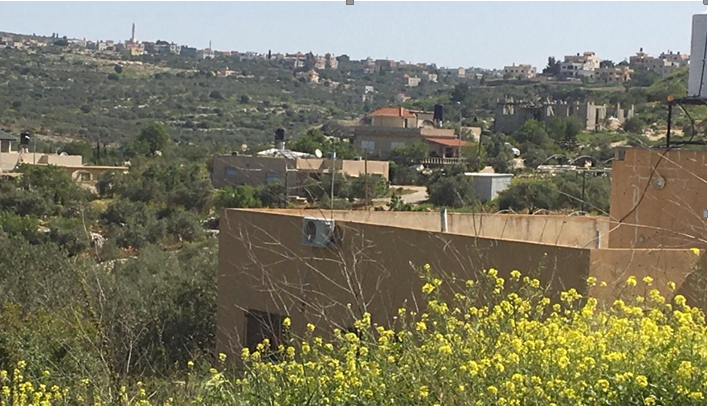
(1) On a whatapp-video talk with W. of Zabda village, on April 4, 2020, I see him with his wife and their two little sons, and it’s a joy. As a boy he used to sell coffee in a thermos bottle at the Barta’a checkpoint car-park along with his brother S., and both became favorites with the northern MW members who had just begun coming to that checkpoint regularly in its new location (about 18 years ago)… W. tells me that traffic at the checkpoint is slow, that hardly anyone is seen on the village streets, and that the numerous checkpoints put up by the Palestinian Authority inspect anyone about, and whoever is found running a fever or back from work inside Israel is sent to quarantine. He lives in a multi-apartment building, and each of the flats is inhabited by a family of his clan. They meet and socialize and one can hardly think of quarantine. “We have no Corona virus here, it’s only over there, in your parts” he says, confidently. Food is sufficient and there are no special problems, but when, when will this be over?
(2) On April 5, 2020, I called A. of Araka village, east of the settler-colony Shaked. We have not met nor spoken for a long time now. At the time A. surprised us by volunteering to make order in the waiting lines at the entrance to the terminal in Barta’a checkpoint, when riots used to break out there every morning because of the slow procedures of the crossing. He is a nice and educated man, speaks, reads and writes Hebrew and is outspokenly idealistic, about 60-years old. A contractor. Very up-to-date in the goings-on inside Israel.
He told me that in the coming days the PA will begin to visit every home and test everyone for the virus. Whoever needs medical attention will be housed in buildings that have been sequestered in the cities and turned into temporary hospitals. Corona-virus patients are not hospitalized in a normal hospital. Quarantine will now be extended to 28 days. It all sounds much more careful than the Israeli procedures. In his village people are hardly seen in the streets, almost never leave their homes, but do mix with their family and clan members. He works in his olive grove two hours in the morning, and two hours in the afternoon, along with his sons who are not studying at the moment (high school and university). That’s how their days are spent.
We exchanged good wishes for the present and the future, for him and his family. I wish we were next-door neighbors…
Barta’a-Reihan Checkpoint
See all reports for this place-
This checkpoint is located on the Separation Fence route, east of the Palestinian town of East Barta’a. The latter is the largest Palestinian community inside the seam-line zone (Barta’a Enclave) in the northern West Bank. Western Barta’a, inside Israel, is adjacent to it. The Checkpoint is open all week from 5 a.m. to 9 p.m. Since mid-May 2007, the checkpoint has been managed by a civilian security company subordinate to the Ministry of Defense. People permitted to cross through this checkpoint into and from the West Bank are residents of Palestinian communities inside the Barta’a Enclave as well as West Bank Palestinian residents holding transit permit. Jewish settlers from Hermesh and Mevo Dotan cross here without inspection. A large, modern terminal is active here with 8 windows for document inspection and biometric tests (eyes and fingerprints). Usually only one or two of the 8 windows are in operation. Goods, up to medium commercial size, may pass here from the West Bank into the Barta’a Enclave. A permanent registered group of drives who have been approved by the may pass with farm produce. When the administration of the checkpoint was turned over to a civilian security firm, the Ya’abad-Mevo Dotan Junction became a permanent checkpoint. . It is manned by soldiers who sit in the watchtower and come down at random to inspect vehicles and passengers (February 2020).
-