
Deir al-Ghusun, Olive CP (623)
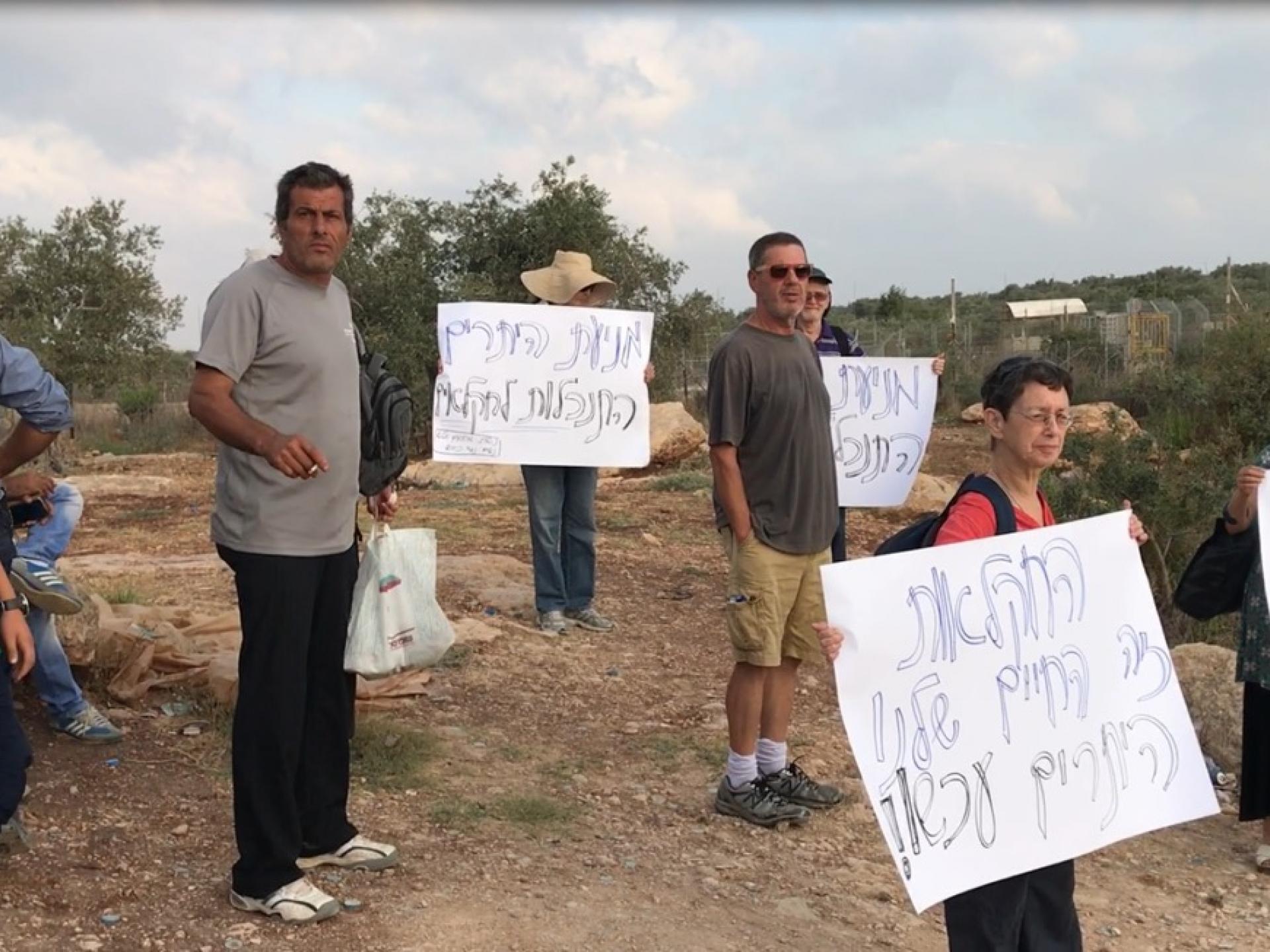
A solidarity vigil with the protest demonstration of Deir Al Ghusun farmers
6:50 – We arrived at Checkpint 623
An impressive presence of over 150 Palestinian farmers of all ages, half of them holding valid permits to cross Atil agricultural checkpoint (609) and Deir Al Ghusun agricultural checkpoint (623), the other half hold permits that are no longer valid. They have now been waiting between two and four months for an answer to their renewal application.
Present are the heads of the local councils of Deir Al Ghusun and Jarushiya and other council officials.
The farmers invited us to take part in their strike protesting the fact that their applications have not been answered.
While we were there the landowners told us again about the state of their fruit tree groves, the tomato and cucumber greenhouses all drying out, and their thyme beds that cannot be irrigated. The agricultural workers employed by the landowners told us of their livelihood that is now lost because of the denial of permits.
The councils heads told us again that a few days prior to the holiday (end of Ramadan) all their applications that had already been turned in were returned and they were required to fill new applications because the form itself had been changed. In the new form, in addition to the 14 criteria which if answered, the farmers may apply for a permit to enter the seamline zone, a 15th criterion has been added – grazing in the seamline zone. It is likely that only 5 farmers at the most would need this addition.
7:00 – Military Policemen arrive and open the checkpoint gates.
Representatives of the farmers approach the gate and inform the soldiers that they are striking in protest, and demand to see the DCO representatives. The policemen call the DCO and announce that the representatives will arrive at 8 a.m.
7:30 The Military Policemen lock the gates and proceed to another agricultural checkpoint. The Palestinian farmers remain around the gate – site of their demonstration – to wait for the DCO officers.
8:00 No DCO officer in sight. Raya calls the DCO operations to find out what happened to their promise. They reluctantly answer that they’ll look into it.
8:15 Another phone call, to Walid, the officer in charge of crossings at Efrayim DCO. He answers that he received the information about the farmers’ strike at Deir Al Ghusun checkpoint only a few minutes earlier, and is on his way there.
Who did not tell the truth about passing on this information on time – the Military Police people or the DCO? Anyone’s guess…
He added authoritatively that they will not speak with the farmers if cameras are present. We clarified that he would have to settle this with the Palestinians themselves.
8:50 A vehicle arrives with the DCO people, but they cannot open the gates without military personnel who are busy opening other gates at the moment (apparently no one gave this a thought).
9:15 Soldiers arrive and open the checkpoint gate. Two DCO officers, Major Naef , responsible for all the checkpoints in this area and Lieutenant Walid – the crossings officer, approach the inner gate. The Palestinians crowd around the gate after having decided that the council heads would represent them. The DCO officers announce that they will speak with the council heads, and with a very old farmer on the other side of the gate. The officers do not allow representatives of human rights organizations to join them.
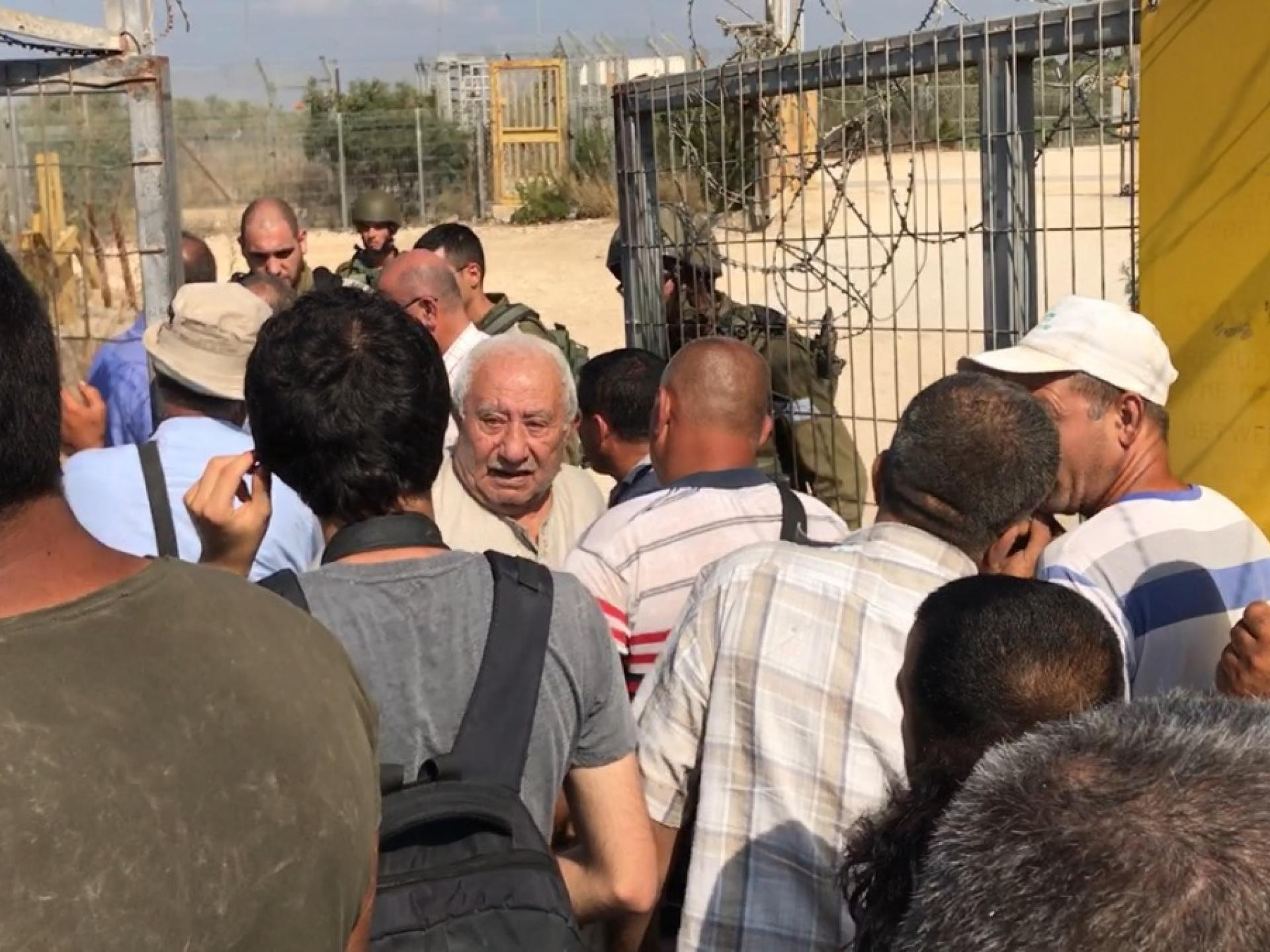
9:35 The heads of councils return with the officers. Several farmers, among them our acquaintance R., who owns 18 dunams of greenhouses, beg to speak with them, officers refuse, leaving clarifications to the heads of councils, and leave.
The heads of councils explain to the waiting farmers what “agreements” were made.
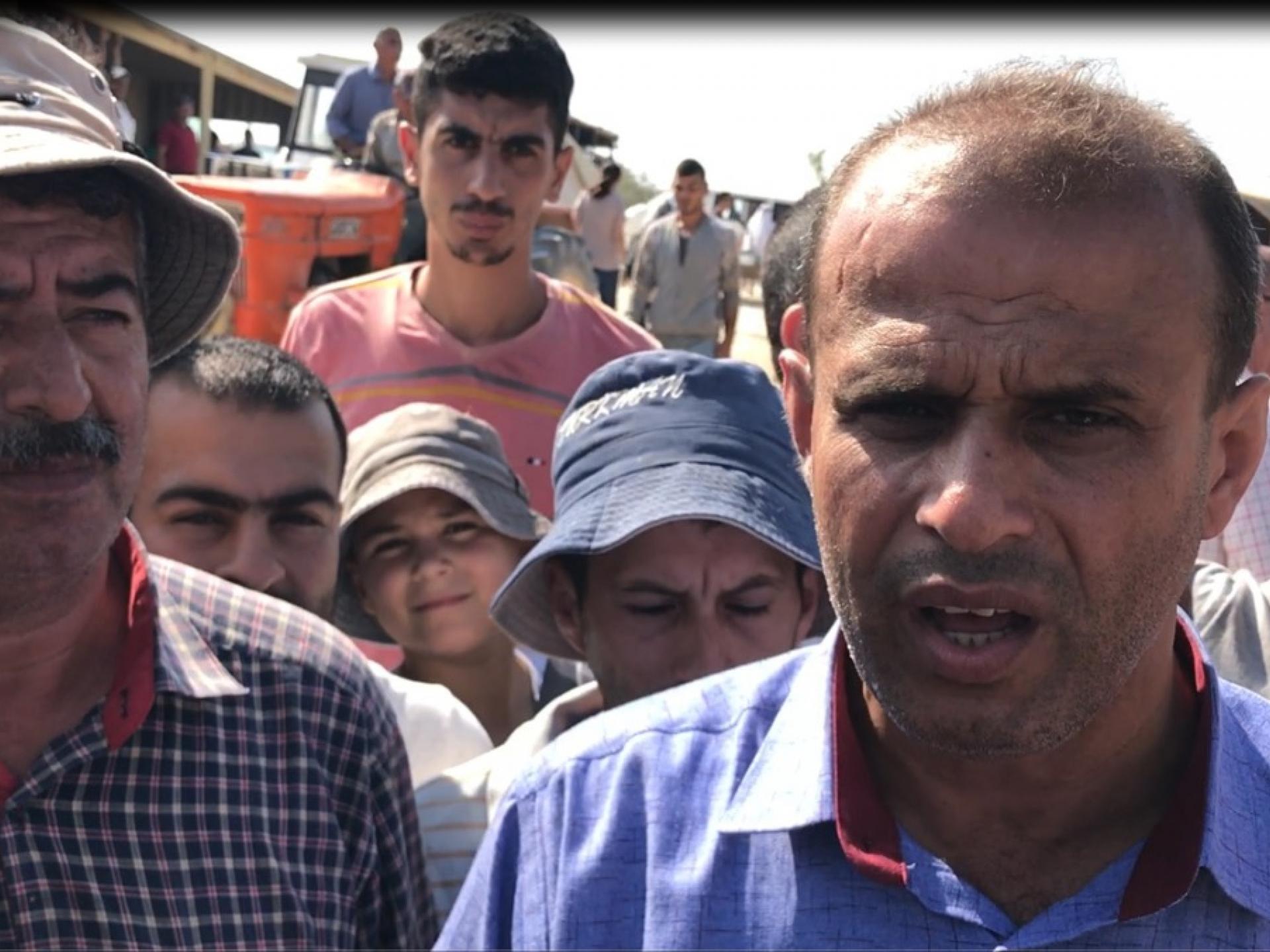
Later, the B’Tselem representative in the area explains to the human rights organizations members what those agreements entail:
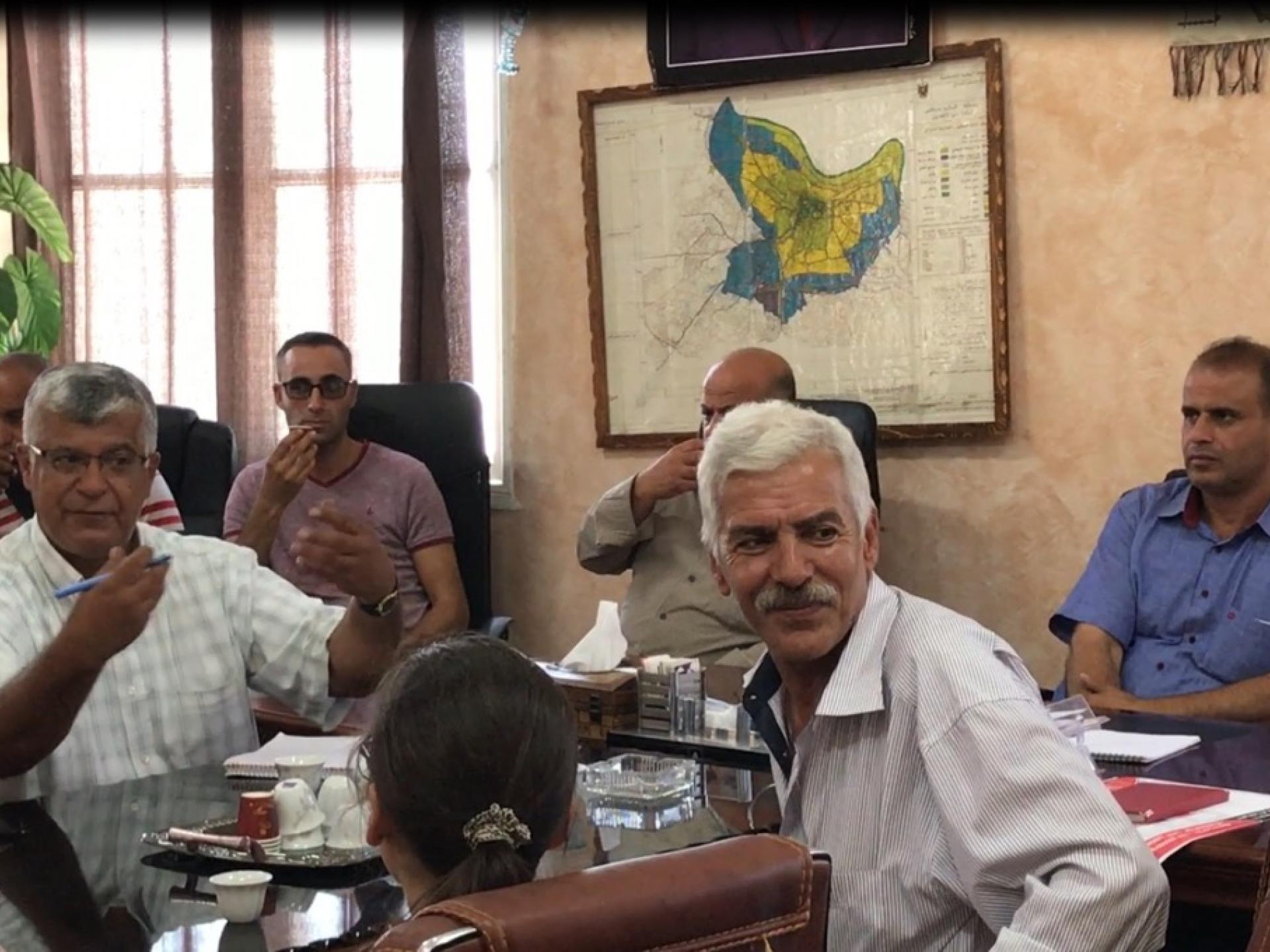
- Applications for permits will be handed to the Palestinian DCO and it will pass them on to the Israeli DCO.
- All applications turned in so far are no longer valid, they must be handed in once again with the new form according to the new criteria (reminder: only one single criterion has been added, of grazing!!!) The DCO declared his commitment to process these new applications as soon as they are handed in. He did not specify how long “as soon as” really meant.
- Landowners of at least one-third dunam (333 sq.m.) may request permits for themselves and their family members.
- Landowners of more than 5.5 dunams who are too old to cultivate their fields or landowners whose family members cannot do so because of other work or various limitations may request permits for relatives and workers.
All those present, farmers and council members, expressed their mistrust of the officers’ promises about availability of permits and their immediate processing. They have heard enough false promises by the various Israeli authorities.
The B’Tselem representative added that in the Tul Karm area, so far 1000 applications to renew permits have been turned in, and only two have been approved so far.
Appreciation of our presence in solidarity was definitely shown.
Deir al-Ghusun CP (623)
See all reports for this place-
Deir al-Ghusun CP (623) and 'Atil (609) Here these ‘gates’ agricultural checkpoints - are open all year round, 3 times a day, so the village farmers cross them to reach their 2,200 dunams that were separated by the Separation Fence and left in the seam-zone. the Fence itself grabbed 300 more dunams of their land. Depending on opening times, the area’s farmers use these checkpoints alternately. The Israeli army has threatened with the closure of these checkpoints as collective punishment if any breaks of the fence or climbing over it were detected. The main complaints of the Palestinians here are about not being issued sufficient permits for farmworkers in spite of the large farmlands behind the fence. We have documented several cases of miserable conduct: a fire broke out in one of the storage areas, but firefighters were not allowed to reach it in time. another example: During olive harvest for a few days it is open for all day, but at the same time, they placed concrete blocks against vehicles, prevent basic agricultural work.
-
Ras Abu Sbitan (Olive Terminal)
See all reports for this place-
A large checkpoint/crossing to the area of a-Tur, Abu Dis and the Old City; only for pedestrians. Located on Jerusalem’s municipal boundary.
One of the major crossings in Jerusalem’s central sector. It is located on the separation fence between the northern portion of the al-Ezariya neighborhood and the neighborhood of a-Tur and the rest of East Jerusalem. It is manned by Border Police soldiers and private security companies and operates 24 hours a day. Palestinians are forbidden to go through, other than permanent residents of East Jerusalem (holders of blue ID cards) and holders of work and commercial permits who are allowed through only on foot.
-