
Deir Sharaf, Eliyahu Crossing, Habla, Jubara (Kafriat), Sun 16.10.11, Afternoon
Summary
For those of us who travel to the OPT, week in, week out, it’s tiring to know that the Israeli authorities demolished about a dozen Palestinian-owned structures in Area C, and that demolition orders continue to be meted out; that Israeli forces injured nearly two dozen Palestinians in the past week, and how many more in the coming week? How much more will settler violence against Palestinians and plundering of their property increase during this year’s olive harvest? How much more theft of olive crops and damage to trees? And what about the ever increasing “blacklisted,” who find, from one day to the next, that their permits have been nullified by the ever insidious arm of the Civil Administration which does its dirty work behind the scenes, hoping to remain out of sight. Knowing about the non-stop violence, greed, abuse, humiliation and bureaucracy of occupation is wearing, yet we know only too well that this unbridled lawlessness is not the Wild West but a reality in which we have no choice other than to continue monitoring in an attempt to have our voices heard above the effective din of the Israeli authorities’ public relations campaigns.
13:00 Habla
As we arrive a soldier is helping a Military Policewoman deal with her gun. That, of course, takes precedence over opening all the many gates at this agricultural checkpoint where already the school bus is waiting together with at least 15 people on either side of the Separation barrier, plus the usual assortment of donkey and pony carts, pick ups, tractors, bicycles, young men as well as old plus a handful of women.
13:05 – a Hummer speeds by on the Barrier road, never to return. Most of the gates remain locked. The soldiers are in no hurry today, although the summer heat has turned to pleasant autumn warmness.
13:10 – a jeep arrives and the two soldiers are joined by others. Soldier number one, who refuses to acknowledge our greetings, now beckons for five Palestinians at a time to come to be checked in the concrete house. That being the case, no one from the Habla side, wishing to cross, is allowed through, and the furthest gate remains locked.
We see the small kids getting out of the school bus. Just how long have they already waited? In this part of the world, children do not come first for the conqueror.
13:20 – finally, ten minutes later, the bus gets to the center of the Separation barrier, soldier number one goes inside, to check, and the Military Policewoman circles around it.
One of the waiting Palestinians expounds in a usual way for many of his ilk: “You can’t say soldiers are all good or all bad, some are like this, some are like that.”
13:25 – a pickup truck, whose driver comes from the Bedouin enclave near Alfei Menashe settlement, proudly points out his tiny toddler daughter, wandering around on her own, unafraid and full of spunk. But what hope is there for her? No water, no electricity: “What can I tell you?” says her father as he waits and waits some more. Ten minutes later, the pickup truck, filled with other kids and a couple of adults, reaches the Separation Barrier, and every bit of it is checked; even the tightly tied tarpaulin at the back has to be undone, for there too checking needs to be carried out.
13:40 – soldier number one, no rank badges, comes up to us, asking us to move. As we begin to ask why, another soldier beckons to him, clearly asking him to cease and desist.
14:00 – a large, green Egged-type bus bears the older kids on their way home from school.
Eliahu Crossing, Gate 109
Several blue police, as well as Border Police and security staffers, hang around, clearly ready to pounce on any non-Israeli licensed vehicle, or perhaps one bearing non-Jewish Israelis. Indeed, we hear today of the unbridled racism of the security company in charge of “security” here, a term implying the punishing of everyone with an Arab name or born in Palestine, plus a new demand, requirement or “law”: that a magnetic card be produced together with a permit.
Route 55
Lots of military jeeps, blue police and other military materiel on the roads today.
Deir Sharaf
The olive harvest appears to be similar to last year’s – not good. Along our route, olives are being picked, but not avidly, a lot of women at work.
15:00 Jubara
The usual Military Police women ask for IDs, and, as usual, are non committal, showing a definite “attitude.” We park the car, telling a soldier we are to meet somebody at the gate through which Palestinian Israelis return, in vehicles only, from visiting friends or family in Tulkarm. We soon realize that the person we are to meet cannot be here. While we wait, two soldiers come up and, with genuine curiosity, ask about MachsomWatch. They have heard about the women who “hate the army,” have never met any before today, and can’t believe that it’s us! We tell them, instead, what we do and why, and are struck by their genuine interest in our activities.
We make our way to the path taken by pedestrians needing to cross into Tulkarm. A steep, dusty stony path, down from the highway, the apartheid road, into an olive grove where a number of Palestinians await the return of a prisoner friend. From here, we get a very different view of the gateway we know as Jubara: here, the main, well paved highway with its speeding vehicles seems to be light years away, yet it’s only a couple of meters between us and them…. The expected, newly released prisoner doesn’t arrive, the Palestinians wait some more, as is their wont, but one of the men helps locate the person we are to meet today regarding his blacklisted status. But we also hear other stories of permits withdrawn for no reason, and once again are glad of the work of MachsomWatch women who work on behalf of those blacklisted by the Israeli authorities. The stories are heartbreaking and shocking. But that’s the occupation, just one other aspect that many, including us, tend not to see on our weekly forays into the OPT.
Deir Sharaf checkpoint
See all reports for this place-
Deir Sharaf checkpoint is located west of Nablus and south of the settlement of Shavei Shomron, at the entrance to the village of Deir Sharaf on the road leading to Nablus. The checkpoint was activated in early March 2009 after the Beit Iba checkpoint was closed. Palestinians are allowed through the checkpoint , but not for Israelis. Unlike the checkpoints leading to Qalqilya and Tulkarm, crossing of Israeli Palestinians is only allowed on Saturdays.
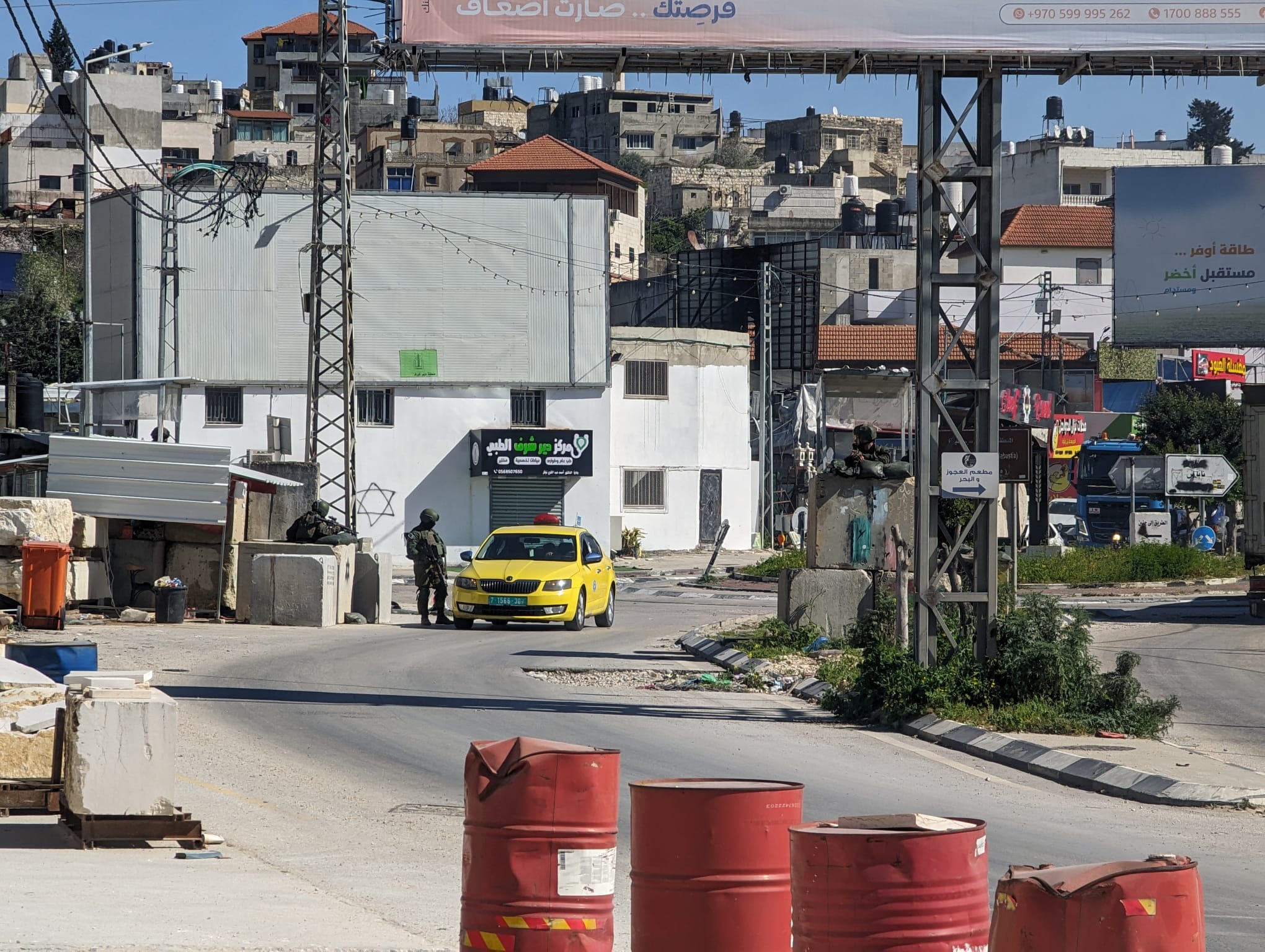 Nina SebaFeb-28-2024Deir Sharaf - the entrance to the village
-
Eliyahu CP (109) / Crossing
See all reports for this place-
Eliyahu CP (109) / Crossing This checkpoint, also known as the Fruit Crossing, is one of the main checkpoints between Israel and the West Bank. It is located on Route 55 between Alfei Menashe and the turn to Qalqilya and Zufin, more than 4 km east of the Green Line, in the separation fence, which separates Qalqilya from its lands to the south, thus leaving Alfei Menashe West of the fence - the Seam Zone. This checkpoint, a few kilometers across the Green Line, is intended for "Israeli settlement in the West Bank and the population of the Seam Zone." It is managed by a civil company. Palestinians with a special permit for their lands in the seam area are also allowed to pass through it, on foot, and sometimes by car.
-
Habla
See all reports for this place-
Habla CP (1393)
The Habla checkpoint (1393) was established on the lands of the residents of Qalqilya, on the short road that
connected it for centuries to the nearby town of Habla. The separation barrier intersects this road twice and cut off the residents of Qalqilya from their lands in the seam zone.(between the fence and the green line).
There is a passage under Road 55 that connects Qalqilya to the sabotage This agricultural barrier is used by the farmers and nursery owners established along Road 55 from the Green Line and on both sides of the kurkar road leading to the checkpoint.
This agricultural checkpoint serves the residents of Arab a-Ramadin al-Janoubi (detached from the West Bank), who pass through it to the West Bank and back to their homes. The opening hours (3 times a day) of this agricultural checkpoint are longer than usual, about an hour (recently shortened to 45 minutes), and are coordinated with the transportation hours of a-Ramadin children studying in the occupied in the West Bank.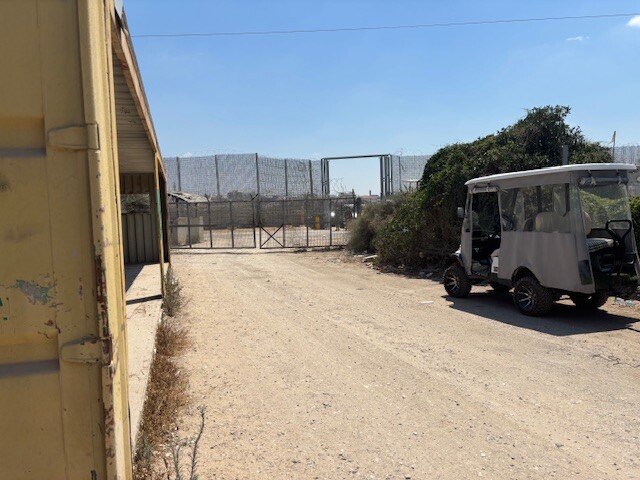 Nina SebaAug-18-2025Habla: The gate is in the process of closing
-
Jubara (Kafriat)
See all reports for this place-
The Jabra checkpoint was on Road 557, south of Tulkarm, on the side of the Figs Pass, which is located within the Palestinian Authority (a few kilometers east of the Green Line), and serves as an entry barrier from the territories to Israel. The checkpoint to the village of Jubara, which until 2013 was in the seam area, blocked and surrounded by a fence, was intended for the passage of the family members of the house next to the checkpoint, and also for the MachsomWatch volunteers (with special permission only), on their way to checkpoint 753. on the other side of the village. The soldiers supervising the "fig crossing" also supervised the crossing at this checkpoint, in our shifts we often waited a long time until the key was found and the gate opened. The checkpoint was abolished and became part of the separation fence that was moved west following the High Court.
-