
Duma: soldiers, police and settlers harass the residents in the Bedouin neighborhood
Duma: We travelled to Duma since the head of the town council of Duma, Suliman Dawbashe, called and asked if we could come.
At 13:30 we arrived at the local town council. The head of the council told us about what happened on Wednesday, 10.9, in the Bedouin neighborhood. We asked him to accompany us and he said that the army had put him on its list of terrorists, so he sent someone else from the council to accompany us.
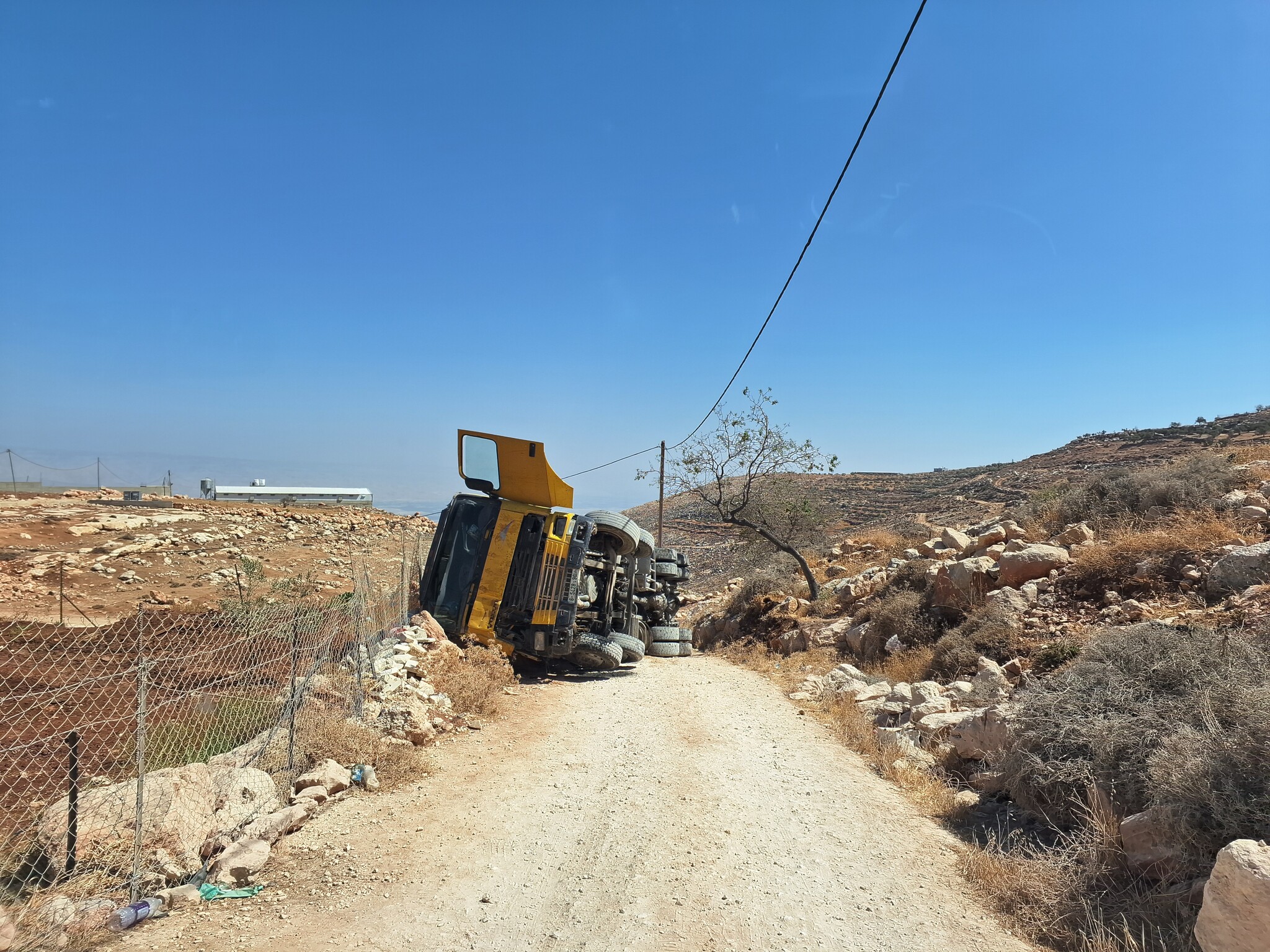
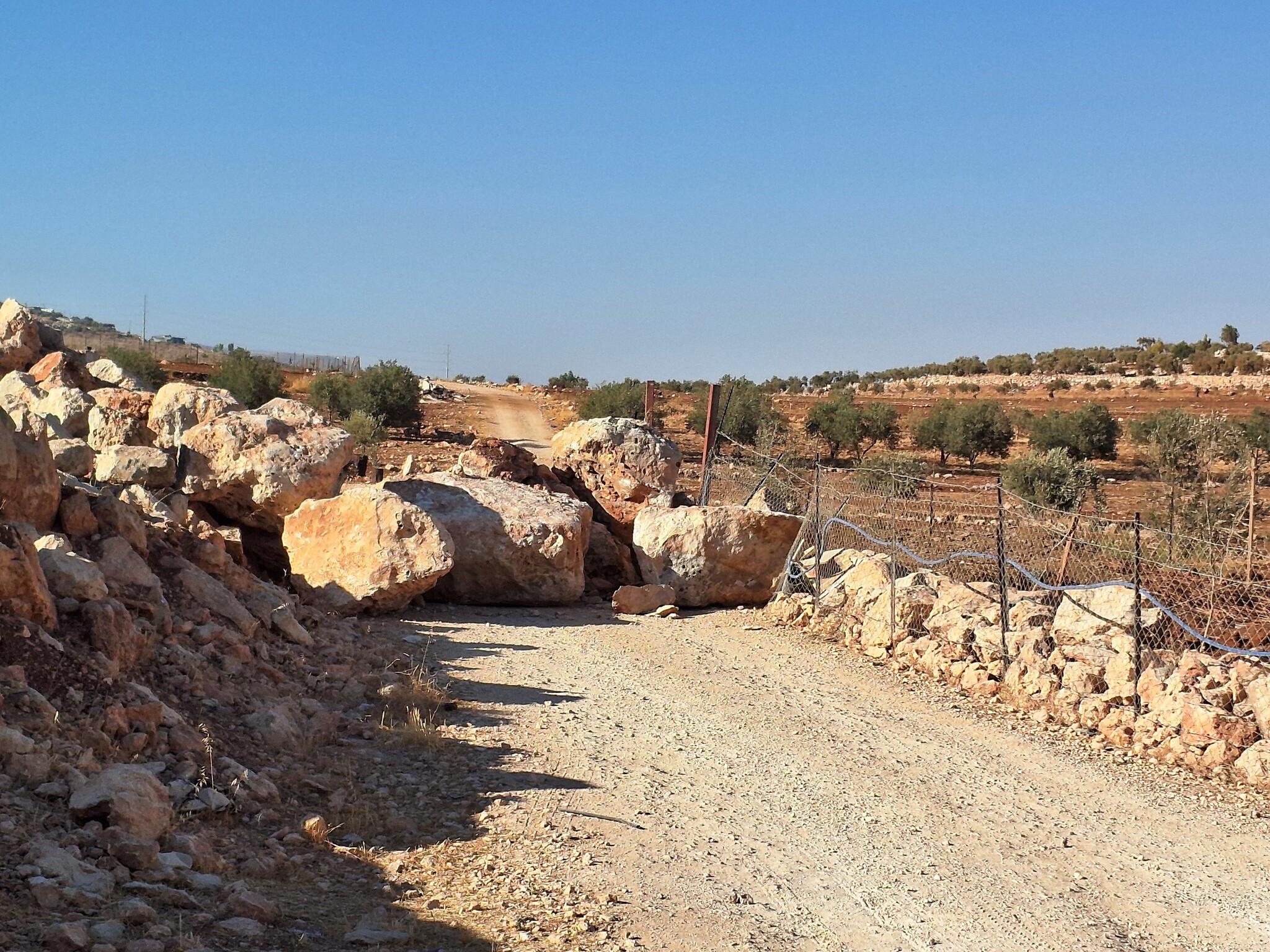
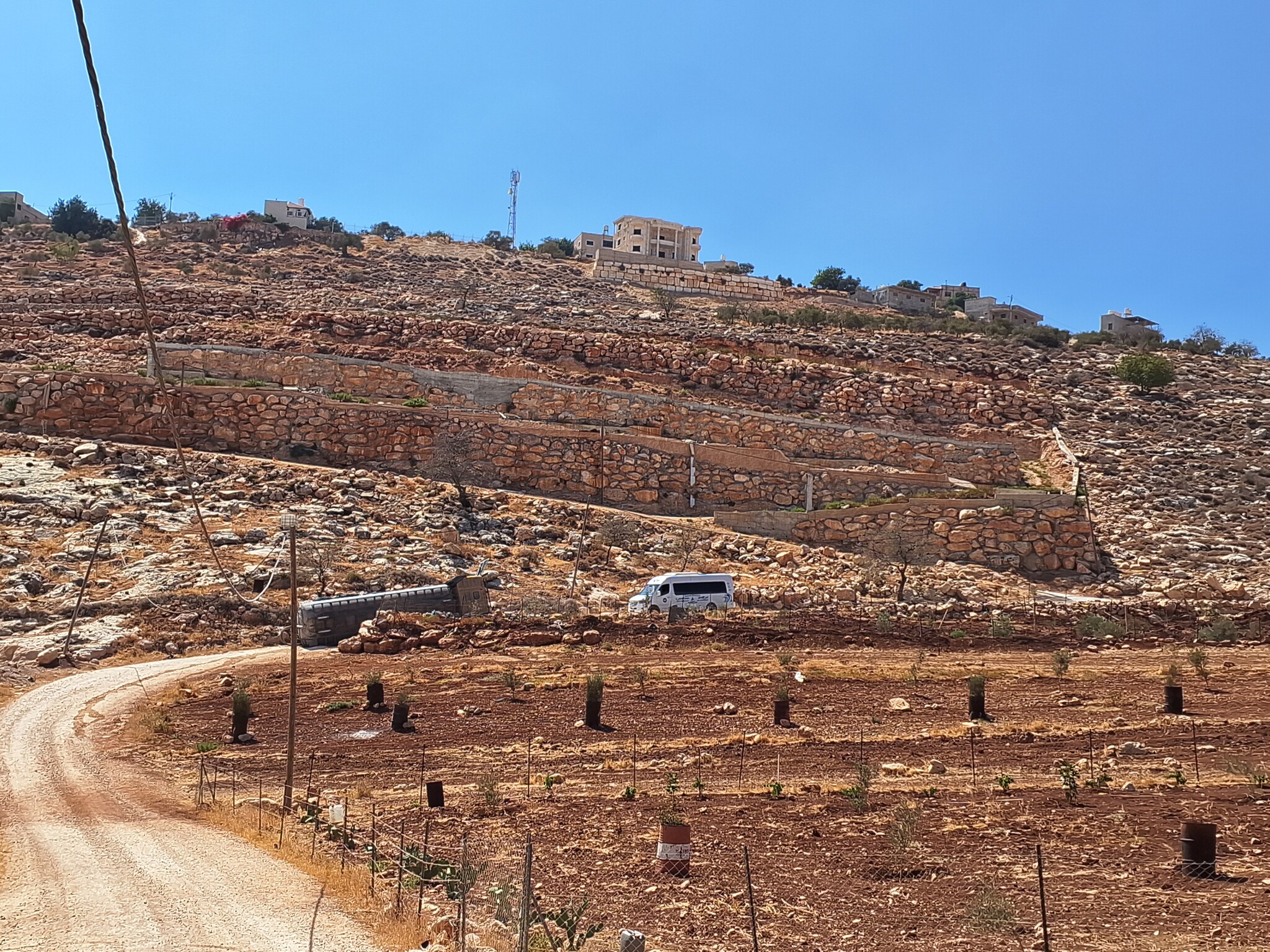
We weren’t able to drive to the place where the Bedouin community from the tribe of Al-Ka’abneh was living on the eastern slopes of Duma: the reason for this was that the road in one direction was blocked with stones by the settlers who had built a new outpost on the top of the nearby hill. The other approach where we wanted to drive was blocked by a truck which had overturned that morning and was not yet removed. The truck blocked the whole artery and prevented cars from approaching. Luckily, the driver was only lightly injured and managed to get out of the cabin without any serious harm. Our driver, an Israeli Palestinian from Kfar Kasem, stopped our car near the truck, let us off, and waited for our return. But then the settlers arrived and expelled him with pointed guns. So he was forced to go back to Duma and wait until we would get back and call him.
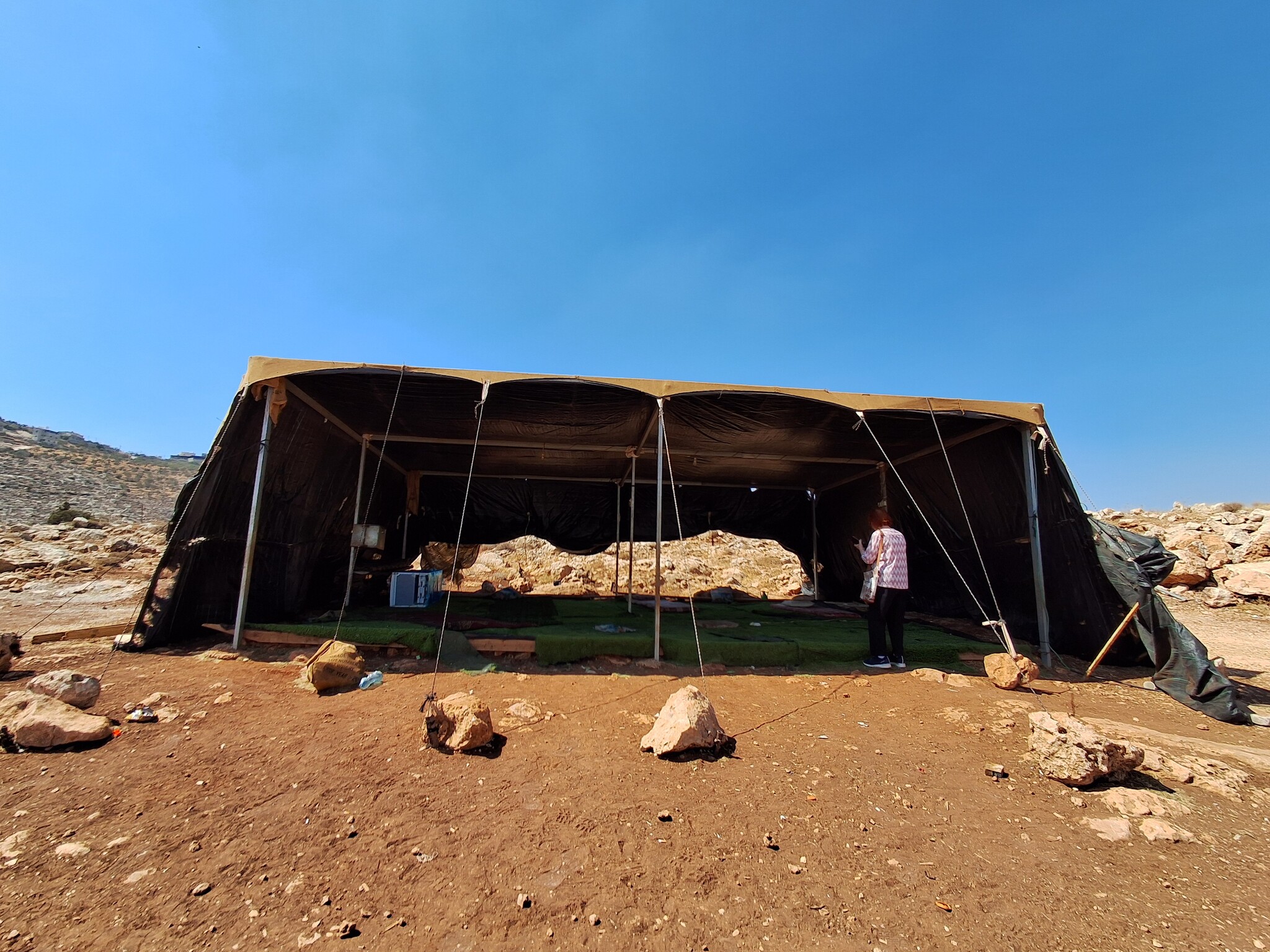
We climbed by foot to the encampment of the Al-Ka’abneh tribe. They have a sort of hospitality tent where we sat and they came out to us and told us what had been happening to them
The settlers from the nearby outpost frequently arrive with their goat flock and harass the residents. On Wednesday, 10.9, at 20:00, a group of soldiers, police and settlers arrived in the Bedouin neighborhood of Duma, Shkara, and ordered them to leave the neighborhood. The soldiers ordered them to clear out and leave the area because they do not own that land; the residents showed them their ownership papers, but that didn’t help. The soldiers asked for the taba but of course they don’t have the taba. The people called Rabbi Arik Asherman from the Torah Tzedek group and he came to the area, argued and spoke to the soldiers. Finally, the soldiers and the police left at 22:00 leaving the settlers behind. The settlers continue to harass the people until 02:00 and, when they left, they managed to rip the electric cords and destroyed the water pipes. Rabbi Arik Asherman stayed the night with our friend Anat Polak who also slept there. Every hours, the settlers came down on tractors toward them and tore up trees and stole sheep. The residents told us that since the beginning of the school year their children have not gone to school. The settlers ambush them on the way and the children are afraid. They need to go by a long indirect way to get to school.
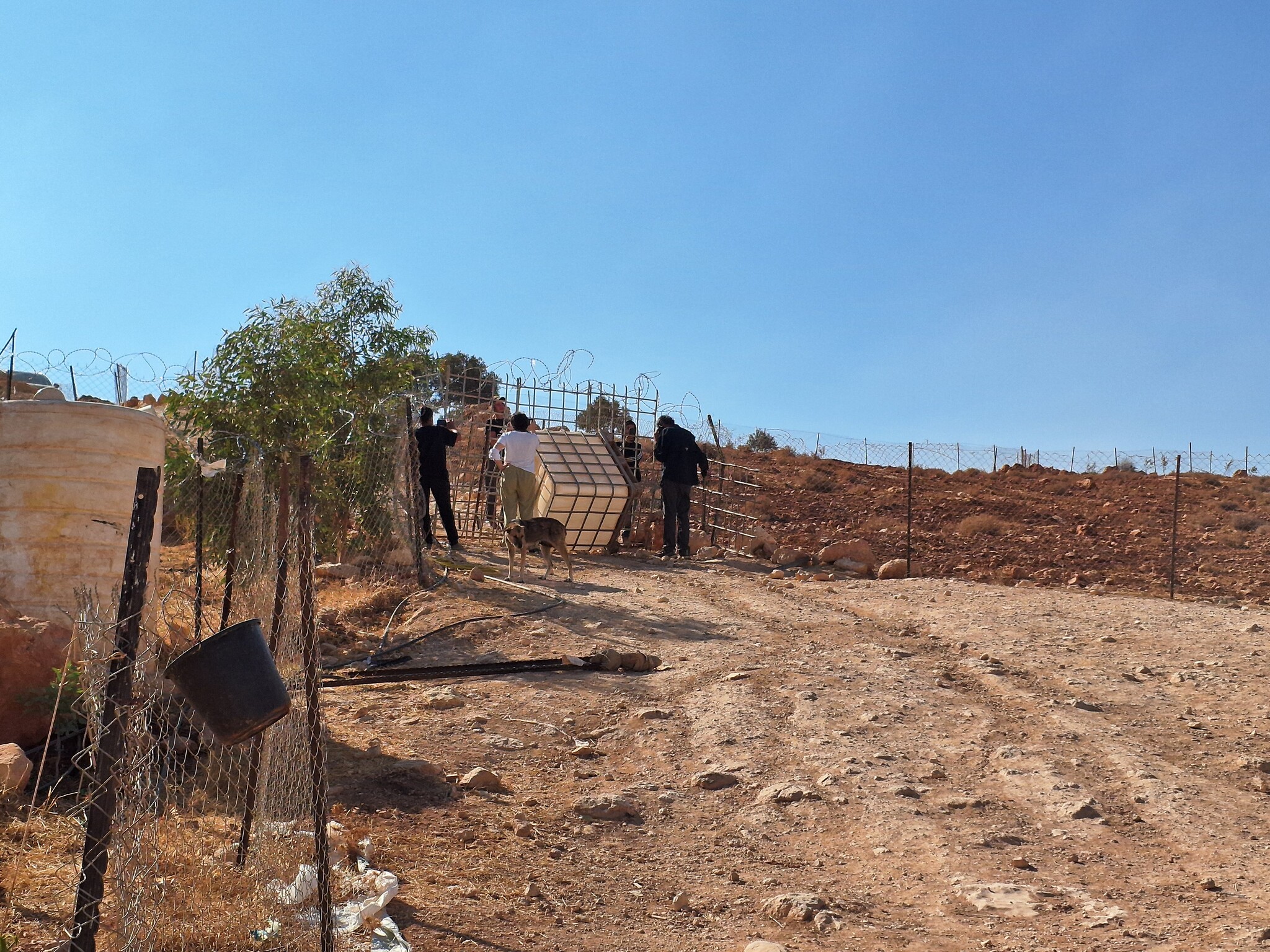
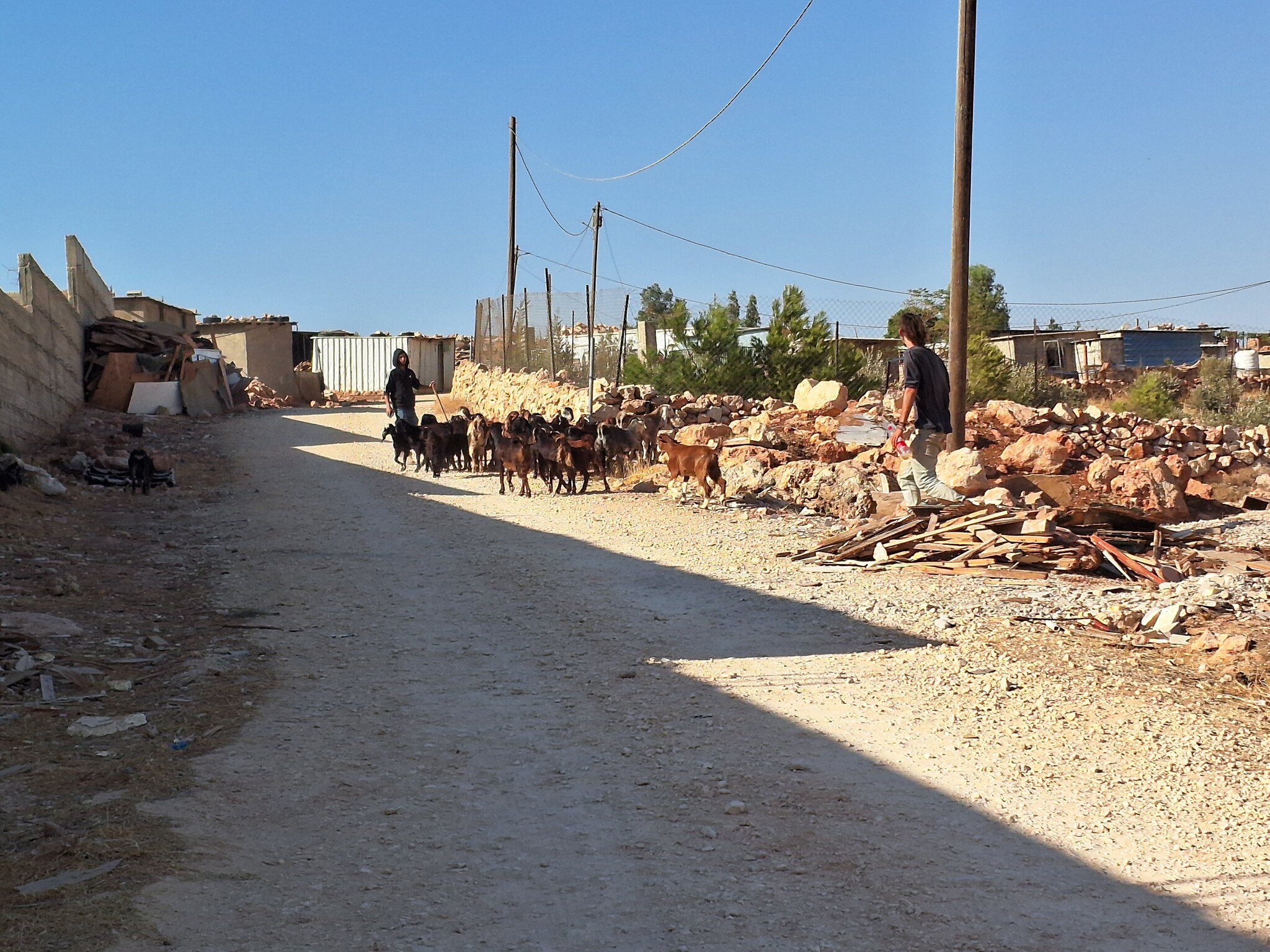
Arik and his group helped them once to fence off the area with a wire fence, but even that didn’t help.
While we were there 2 settlers came down in their car and tried to break through the fence but Arik fought with them and they left. One of the residents, Abu Bassem, told us that he hired a place in the town of ‘Akraba in order to keep his flock here our of anxiety that the settlers would steal his flock.
Also Arik hid his car.
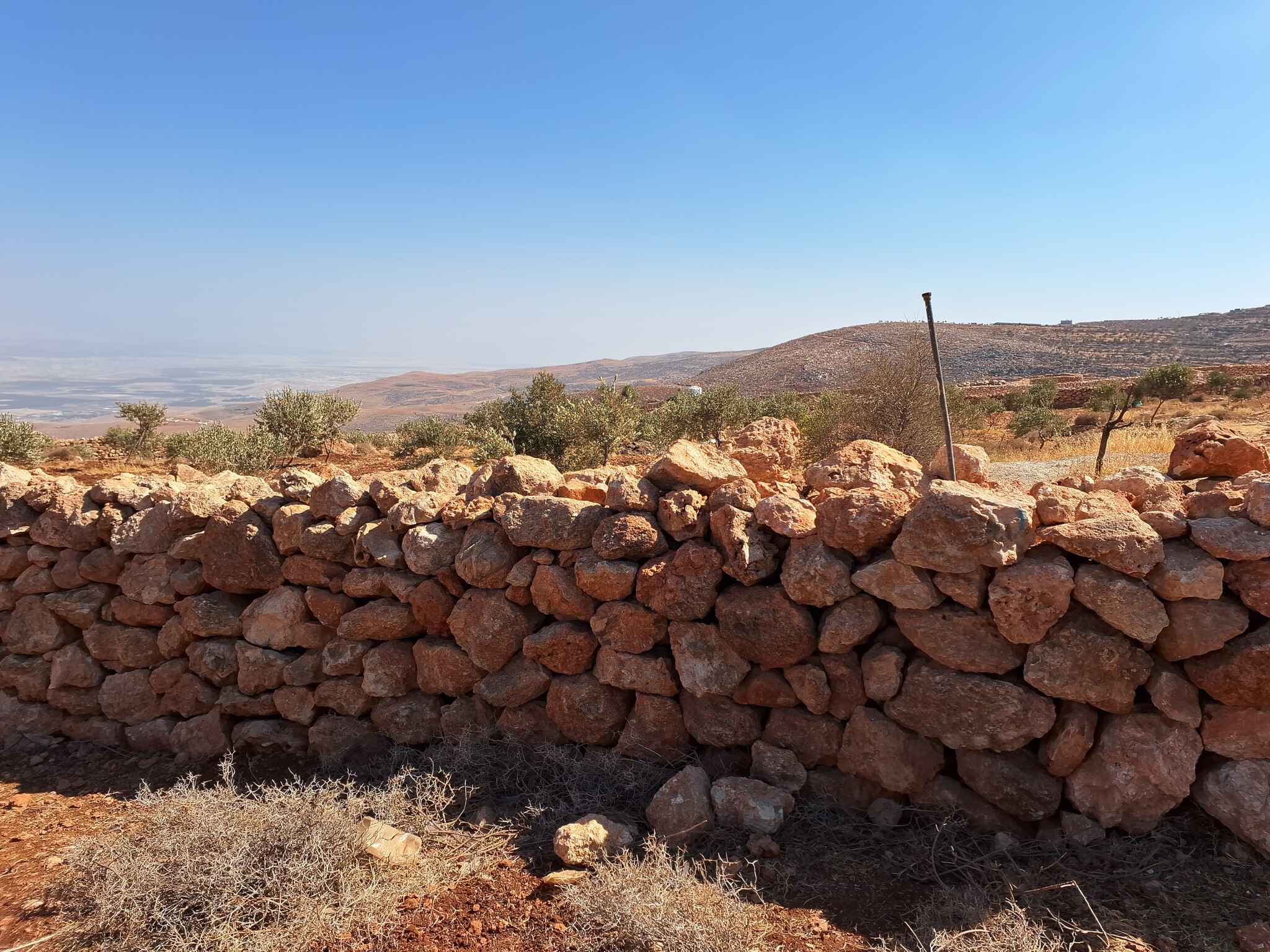
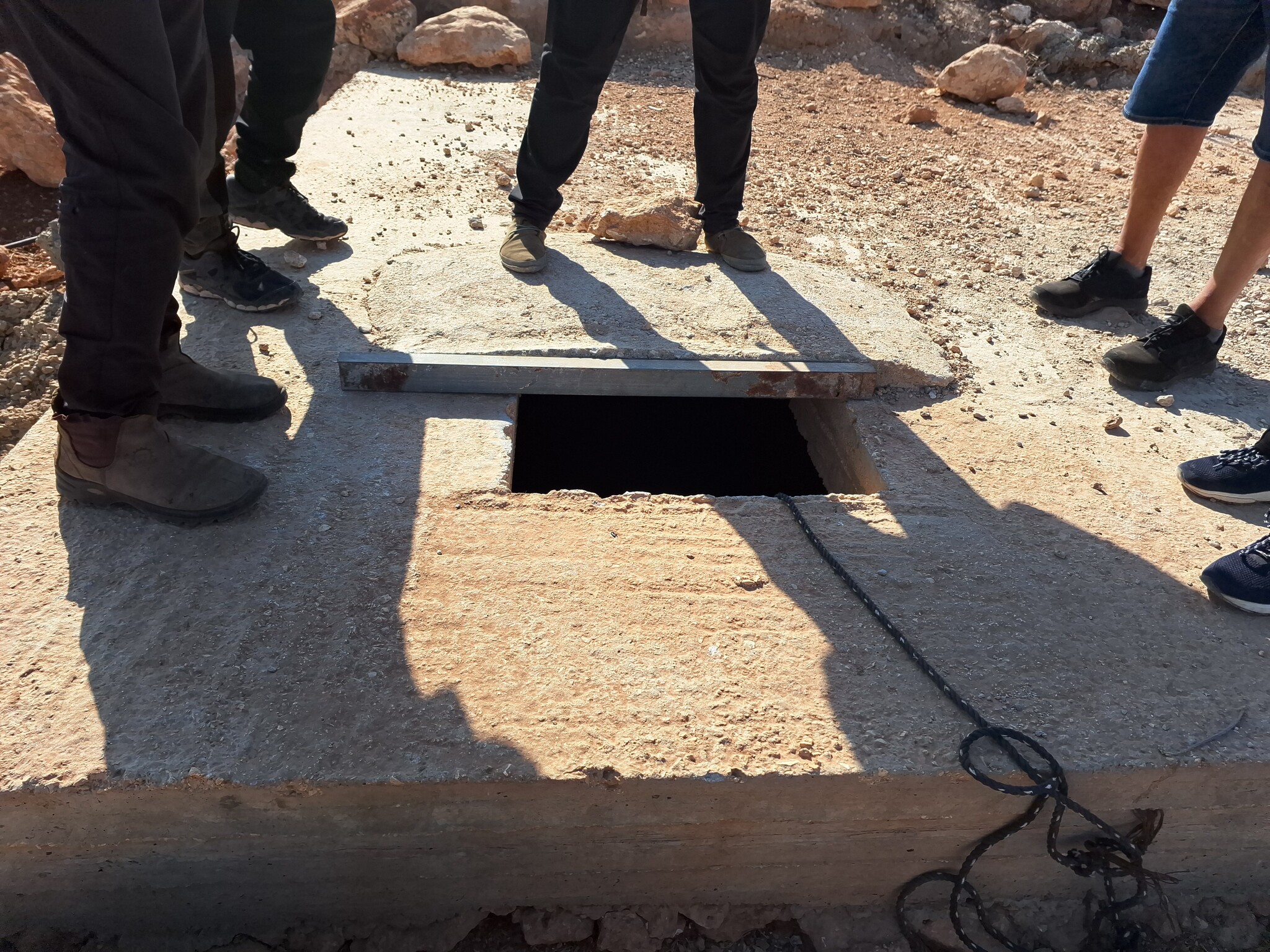
After we sat with them for a little while, a young woman arrived, with a companion, from “Torah Tsedek” – she came to replace Anat who, together with Arik Asherman, had spent the night in the area near the Bedouin from the Jahalin tribe. They had been expelled to that area from ‘Ein a-Rashash by a settler by the name of Elhanan, with the support of the army. They were suffering from a lot of harassment by the settlers. The young man from the local council stayed in the tent camp (he was afraid to wander around, fearing that the settlers would photograph him and afterward recognize him and make trouble for him. So we, with the young woman, Fathiyah and her brother and 2 of them continued to the tent camp near the Jahalin. It turned out that it wasn’t really so near and, on the way, one had to climb onto a stone fence (not really age-appropriate!). They also showed us an opening of a well where the settlers had thrown carcasses and polluted the water. The sun was hot and it was not an easy journey, but we did enjoy the flowering of the squills.
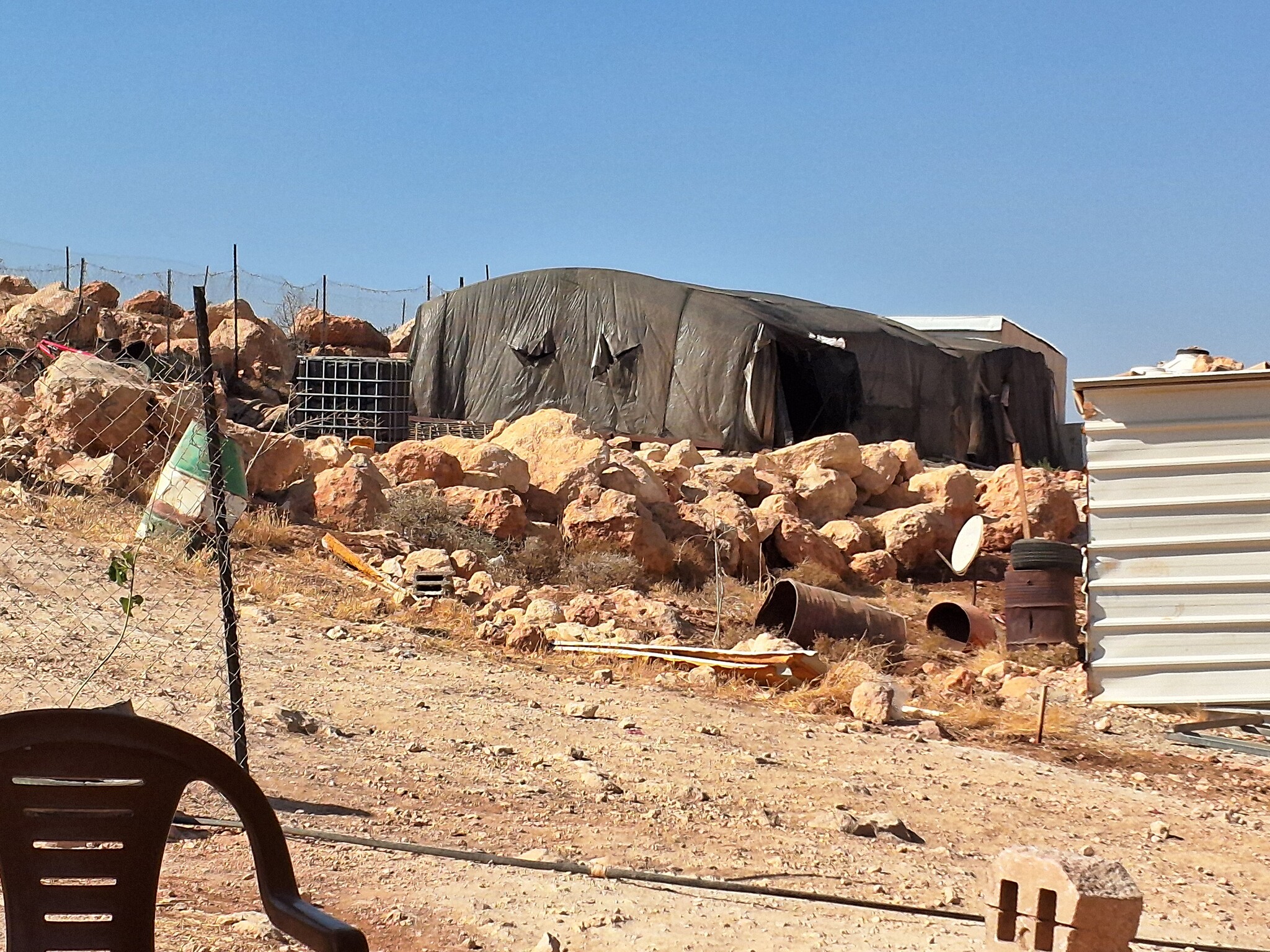
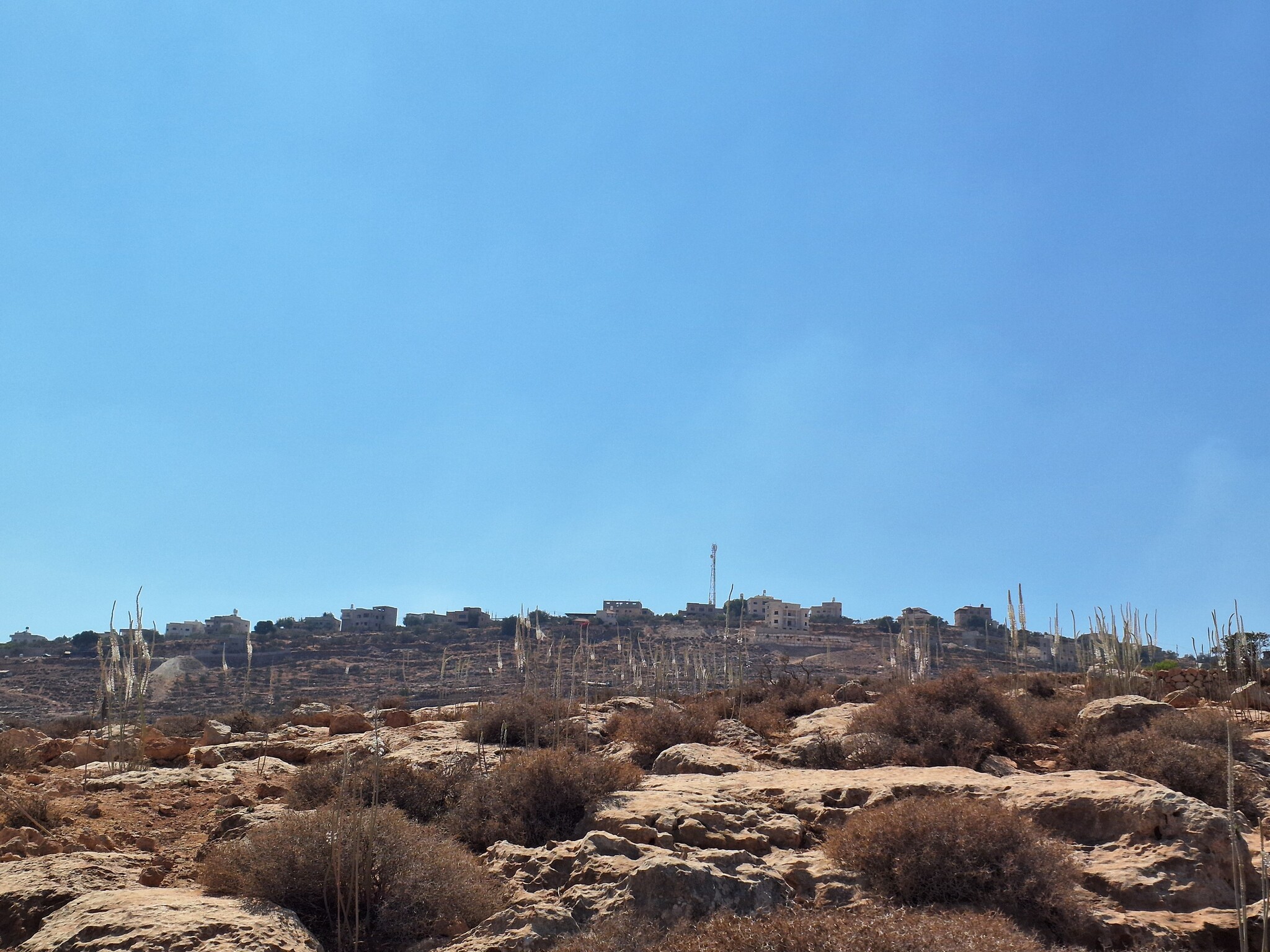
In the encampment of the Jahalin where we arrived we met some people from the tribe, Arik and Anat. Arik told us what happened there the day before yesterday with the settlers and, at the same time, they called him for help in Taybe, near Ramallah, where at that moment they were suffering from bullying of the settlers and he tried to send people to help them. He also showed us that, after the events of Tuesday, settlers also arrived at night from the outpost and ripped up a tent at the edge of the encampment with a knife. While we were there, twice settlers arrived on the hill, in a Ranger vehicle, and afterward 2 other cars; they got out of the car and approached the gate of the encampment. Arik went out toward them, with Anat and an additional volunteer. Everyone photographed everyone and exchanged remarks; Arik also called the police.
After a while, we left with Anat and the volunteers and made our way back to the encampment of Al-Ka’abneh . We sat there a little longer with the people and heard more about the difficult situation. Every time the dogs barked they would go out to see if the settlers from the outpost were entering their area with their goat herd. A little later we left them and, together with the young man from the local council, we started on our way back to where we could meet the driver who would take us home. We walked in the direction of the path near the chicken coop and just then two settlers with the goat herd were on the path separating the chicken coop from the Bedouin encampment. When they saw us, they purposely went in the direction of the encampment, but quickly enough, they went back on the path and went in the other direction. They photographed us and we did the same and tried not to make any contact with them. The man from the council, as soon as he saw them, went in the direction of the chicken coop structure. We went there and waited next to the coop until they disappeared with the goats. The situation was certainly unpleasant. When we moved forward, one of them went after us with a big stick in his hand, but we stayed in eye contact with him so that he wouldn’t try to attack us from behind with the stick. In the end, they left across the path and we went back to the overturned truck and there joined the driver who came to pick us up.
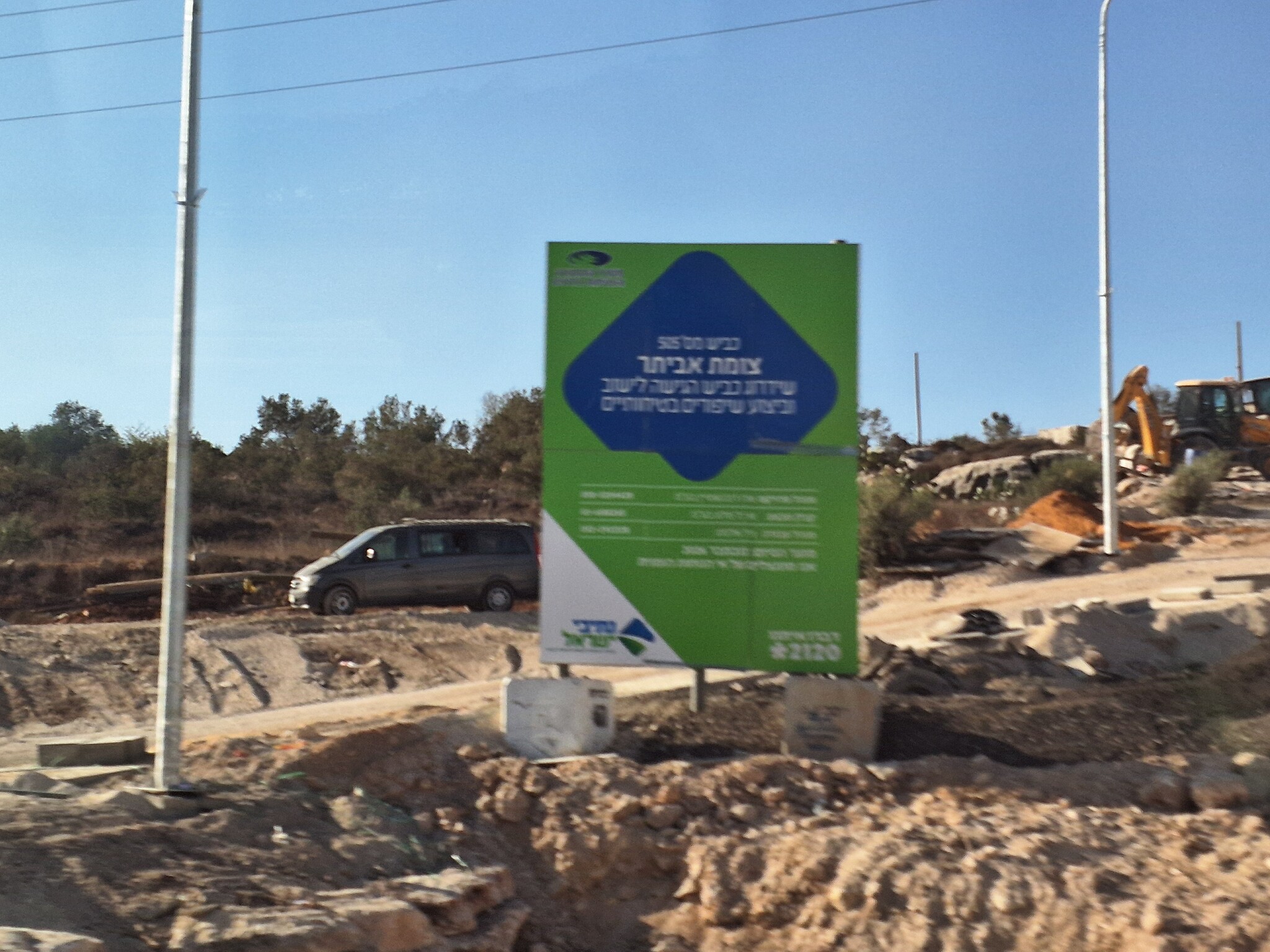
At the exit of Duma the Ranger car awaited us with the settler from the outpost who had apparently been called there by his friends with the herd. He stood and blocked part of the road at the exit and waited for us to get there and then photographed our car. We continued on our way, while we saw, on the way, construction work on the entrance road to the Evitar outpost, which is remembered for evil…
Three weeks ago, the settler named Josef Blumenthal set up a new outpost on the lands of Duma: Arik said that this was at the orders of Netanyahu. There isn’t any outpost there yet.
Because of the late hour, we did not enter Beta. They told us that on Wednesday, 10.9.25, the soldiers destroyed the wholesale market in Beta.
We made a stop to eat in Huwarra (which, in comparison with previous periods, seemed more lively) and another short stop with Doha in Burrin, and then travelled home.
It was a very tiring day. We got home at 18:30. Anat came back with us and Arik waited until someone would come and take his place.
Location Description
Duma
See all reports for this place-
Duma
A village in the Nablus governorate, with 3,000 residents. They owned some 18,000 dunams, 500 dunams of which the village itself was built. However, after the settlement of Migdaleim annexed a large part of their land, their area was reduced to only 2,000 dunams.On July 31, 2015, two houses in the town were torched with petrol bombs. Sa'ad and Riham Dawabsha, and their infant, Ali Sa'ad Dawabsha, were burned to death. Another son was seriously injured. "Revenge" and "King Messiah" were spray painted on the walls of the house. The trial of the arsonist, the settler Amiram Ben Uliel, is still underway (2019), and a plea bargain was signed in May 2018 with the minor who participated in the planning of the arson.
The closure imposed by the army, the poor roads that they are forced use due to the lack of paving permits from the Civil Administration, along with the lack of public transportation, all these difficulties cut off the village from nearby Nablus and Ramallah.
-