
Dura-Al Fawwar Junction, Hebron, South Hebron Hills
On Route 60, many soldiers guard the road and the checkpoint at the entrance to Dahariya
They are in the concrete blocks of Deir Razih near the spring which is at the junction of Dura al-Fawwar where stands a tarpaulin. At the crossroads of Dura–al Fawwar, soldiers are armed with pointed weapons at 4 of the concrete blocks of the roads there
Israeli flags are also attached to them. Apparently the date is causing this preparation.
In Hebron, a student from Scotland who wants to do research on us for her Master’s degree is waiting for us. She is of Dutch origin. This is the third time she has been in Israel and is well versed in the situation, but this time she really wants to hear from all the parties thoroughly. We try to explain to her the complexity of reality in Hebron and refer her to the Bible and to the Oslo and Wye Plantation agreements. We also directed her to the staff of the museum of Beit Hadassah, to also hear their version well and of course talk to the Palestinians later. If need be she will contact us again. She says at the end of the conversation that we are brave women.
Outside there is a large group of tourists with a guide from Breaking the Silence. Ofer Ohana arrives and begins to create a provocation. He says that the house Hagit photographed near the Pharmacy CP had not been bought by Jews and that no Jews live there. “I just wanted to freak you out.”
Today there was no one there to ask and no army so there was no one to ask. We will have to continue to follow this up as Ofer Ohana is not exactly a reliable address for information.
Soldiers at the Tomb of the Patriarchs show signs of concern and come to find out what’s going on. They want to be sure that no conflict should flare up and apparently are not convinced by our attempts to calm them and they call an officer. “Today is beautiful today.” He says. I reply “True and also quiet.” It’s true. “Why shout on such a beautiful day?“ Ask Ofer”, I suggest. A look between the two leaves room for doubt that no one will ask Offer anything or tell him not to shout. We and the Palestinians are the aim.
Ofer, with a smile which does not match his words, boasts that he is the one who put the magazine of Elor Azaria next to the body of the terrorist.
He is in charge of rescue vehicles in Hebron.
Hebron, as Hebron always, is crazy and leaves one feeling desperate.
Dura Al-Fawwar Junction
See all reports for this place-
Junction on Route 60: west - the town of El Dura, east - the Al Fawwar refugee camp. There is a manned pillbox at the junction. From time to time the army sets up flying checkpoints at the entrance to El Fawwar and Al Dura. Al-Fawwar is a large refugee camp (7,000 inhabitants in 2007) established in 1949 to accommodate Palestinian refugees from Be'er Sheva and Beit Jubrin and environs. There are many incidents of stone-throwing. In the vicinity of the pillbox there are excellent agricultural areas, Farmers set up stalls adjacent to the plots close to the road. In recent months the civil administration has set up dirt embankments thereby blocking access to the stalls, and making it impossible for the farmers to sell their vegetables. Updated April 2021, Michal T.
-
Hebron
See all reports for this place-
According to Wye Plantation Accords (1997), Hebron is divided in two: H1 is under Palestinian Authority control, H2 is under Israeli control. In Hebron there are 170,000 Palestinian citizens, 60,000 of them in H2. Between the two areas are permanent checkpoints, manned at all hours, preventing Palestinian movement between them and controlling passage of permit holders such as teachers and schoolchildren. Some 800 Jews live in Avraham Avinu Quarter and Tel Rumeida, on Givat HaAvot and in the wholesale market.
Checkpoints observed in H2:
- Bet Hameriva CP- manned with a pillbox
- Kapisha quarter CP (the northern side of Zion axis) - manned with a pillbox
- The 160 turn CP (the southern side of Zion axis) - manned with a pillbox
- Avraham Avinu quarter - watch station
- The pharmacy CP - checking inside a caravan with a magnometer
- Tarpat (1929) CP - checking inside a caravan with a magnometer
- Tel Rumeida CP - guarding station
- Beit Hadassah CP - guarding station
Three checkpoints around the Tomb of the Patriarchs
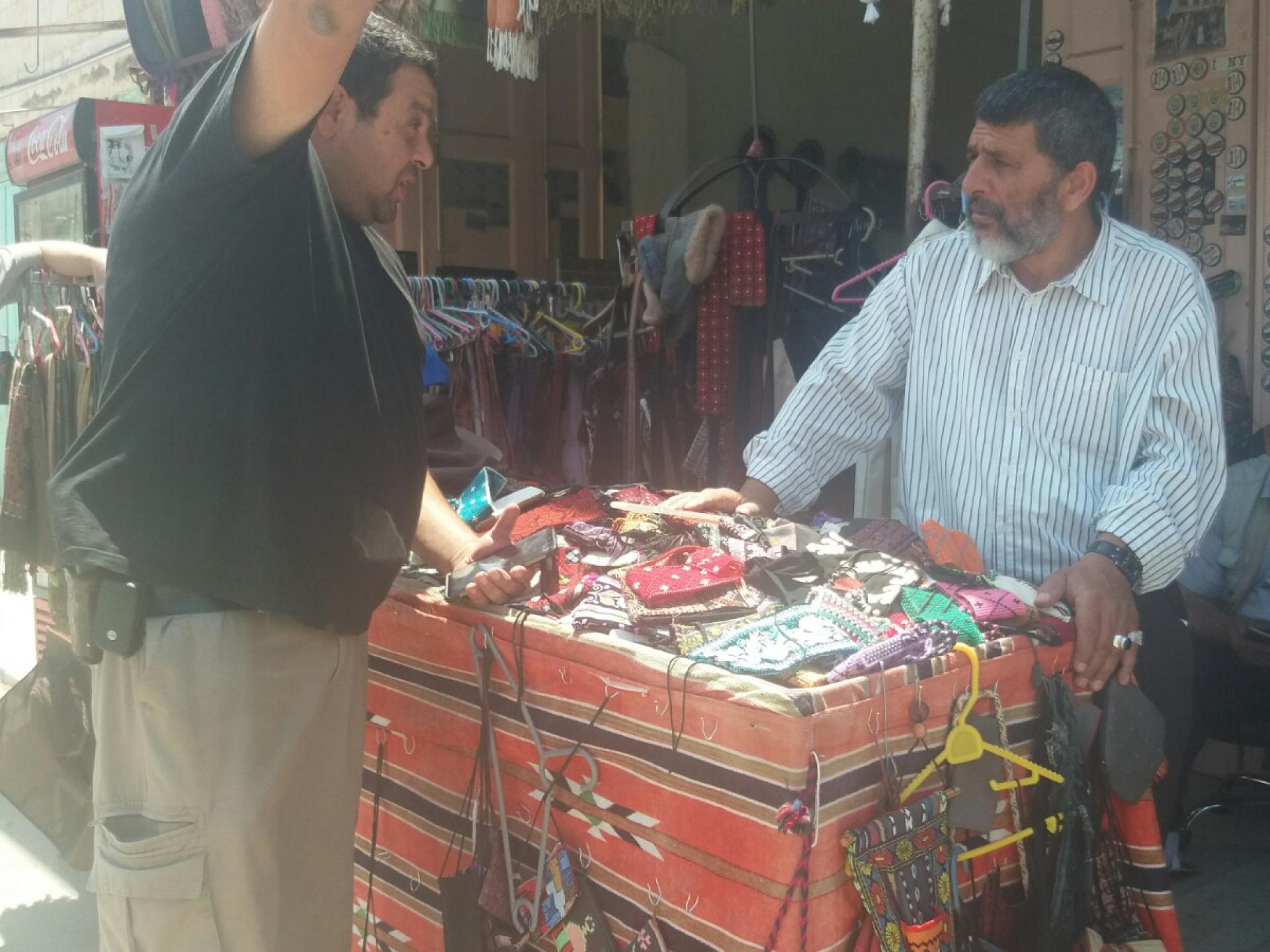
 Raya YeorDec-18-2025Hebron - Yusri Jaber and part of his family
-
South Hebron Hills
See all reports for this place-
South Hebron Hills
South Hebron Hills is a large area in the West Bank's southern part.
Yatta is a major city in this area: right in the border zone between the fertile region of Hebron and its surroundings and the desert of the Hebron Hills. Yatta has about 64,000 inhabitants.
The surrounding villages are called Masafer Yatta (Yatta's daughter villages). Their inhabitants subsist on livestock and agriculture. Agriculture is possible only in small plots, especially near streams. Most of the area consists of rocky terraces.Since the beginning of the 1980s, many settlements have been established on the agricultural land cultivated by the Palestinians in the South Hebron Hills region: Carmel, Maon, Susia, Masadot Yehuda, Othniel, and more. Since the settlements were established and Palestinians cultivation areas have been reduced; the residents of the South Hebron Hills have been suffering from harassment by the settlers. Attempts to evict and demolish houses have continued, along with withholding water and electricity. The military and police usually refrain from intervening in violent incidents between settlers and Palestinians do not enforce the law when it comes to the investigation of extensive violent Jewish settlers. The harassment in the South Hebron Hills includes attacking and attempting to burn residential tents, harassing dogs, harming herds, and preventing access to pastures.
There are several checkpoints in the South Hebron Hills, on Routes 317 and 60. In most of them, no military presence is apparent, but rather an array of pillboxes monitor the villages. Roadblocks are frequently set up according to the settlers and the army's needs. These are located at the Zif Junction, the Dura-al Fawwar crossing, and the Sheep Junction at the southern entrance to Hebron.
Updated April 2022
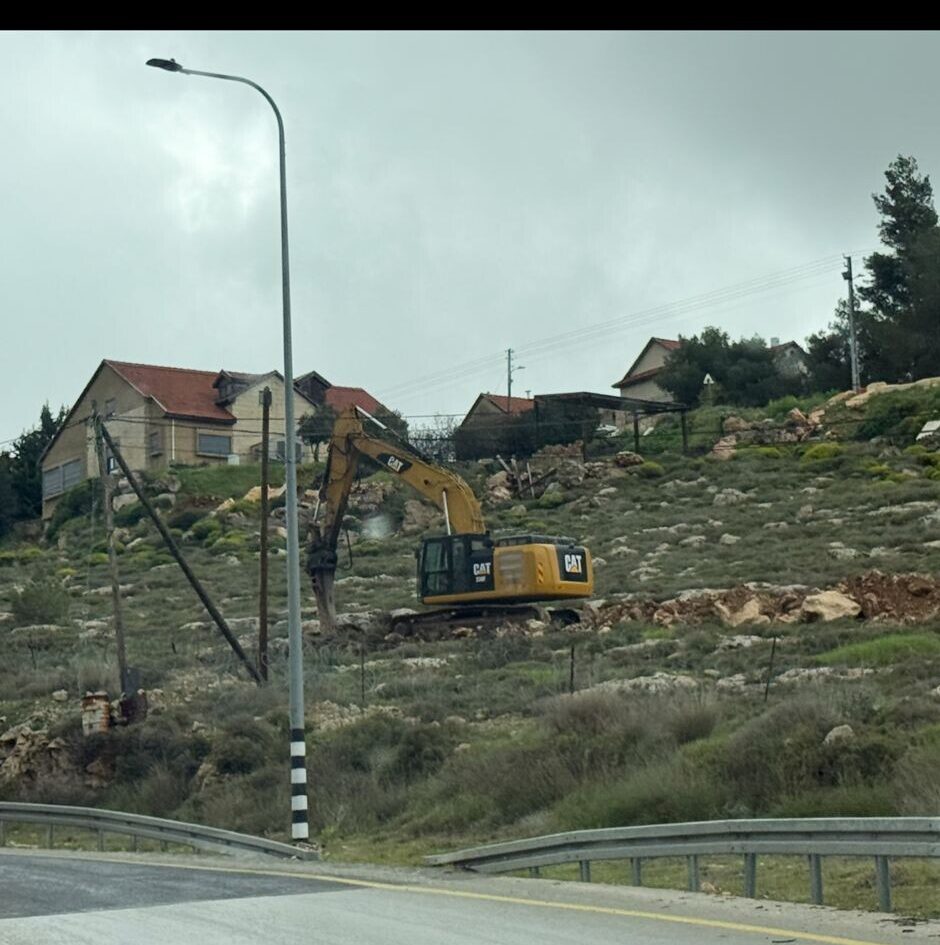 MuhammadFeb-24-2026South Hebron Hill, Beit Hagai: Paving an internal security road
-