
Ein al-Hilweh - Closed to the Palestinian flock

A quiet day, no great excitement, only a little army harassment
It’s a beautiful morning when we drive from the center of the country eastwards and the sun rises in all its glory over the mountains in the Jordan Valley. When we reached Samara our friend F. was eating breakfast and we joined.
We then get going, climbing hills and valleys until we arrived at the area along the entrance road to Umm Zuka that apparently has more pasture. We thought that the reason F. dared walk on the higher hills today was that we were with him. The flock actually grazed along the roadside but did not cross, although F. says the entire area is registered in his name in the Jordanian registry, and he has all necessary documents to prove it. Beyond the road, about 10 meters away, some sort of strings were stretched, seeming to stop passage of larger animals. Whether to prevent passage of the cows belonging to Uri, the illegal settler-colonist (an edict against him has been issued) across the road or to prevent sheep from crossing into ‘his’ are.
At some point, another settler-colonist on the road in his car (Menachem) appeared, and half-an-hour later, the Israeli army. The flock was lower than the road and climbing down. After telling us that this is a firing zone (how can roadsides be firing zones? The most moral army in the world’s God has all the answers…), Oded and Rachel talked to them and argued a bit about the warped logic of this statement, and then Gai H. appeared, continuing the argument and proving on the maps that the firing zone is about 50 meters away from the road, whereas the flock is already further down – then the soldiers relaxed and left.
I still don’t understand how a firing zone can exist next to a road leading to a nature reserve and in civilian use the whole time. But as I wrote, the answers…
We returned to the encampment after more climbing downhill, happy but dusty. The sheep ran to drink water and get their daily barley.
We visited En Al Hilwa which the terrorist-settler-colonists have sanctified for themselves. It is fenced in and off limits to cattle and sheep and goats.
We then headed home to our comfortable and pleasant lives on the coast…
Jordan Valley
See all reports for this place-
Jordan Valley The Jordan Valley is the eastern strip of the West Bank. Its area consists of almost a third of the West Bank area. About 10,000 settlers live there, about 65,000 Palestinian residents in the villages and towns. In addition, about 15,000 are scattered in small shepherd communities. These communities are living in severe distress because of two types of harassment: the military declaring some of their living areas, as fire zones, evicting them for long hours from their residence to the scorching heat of the summer and the bitter cold of the winter. The other type is abuse by rioters who cling to the grazing areas of the shepherd communities, and the declared fire areas (without being deported). The many groundwaters in the Jordan Valley belong to Mekorot and are not available to Palestinians living in the Jordan Valley. The Palestinians bring water to their needs in high-cost followers.
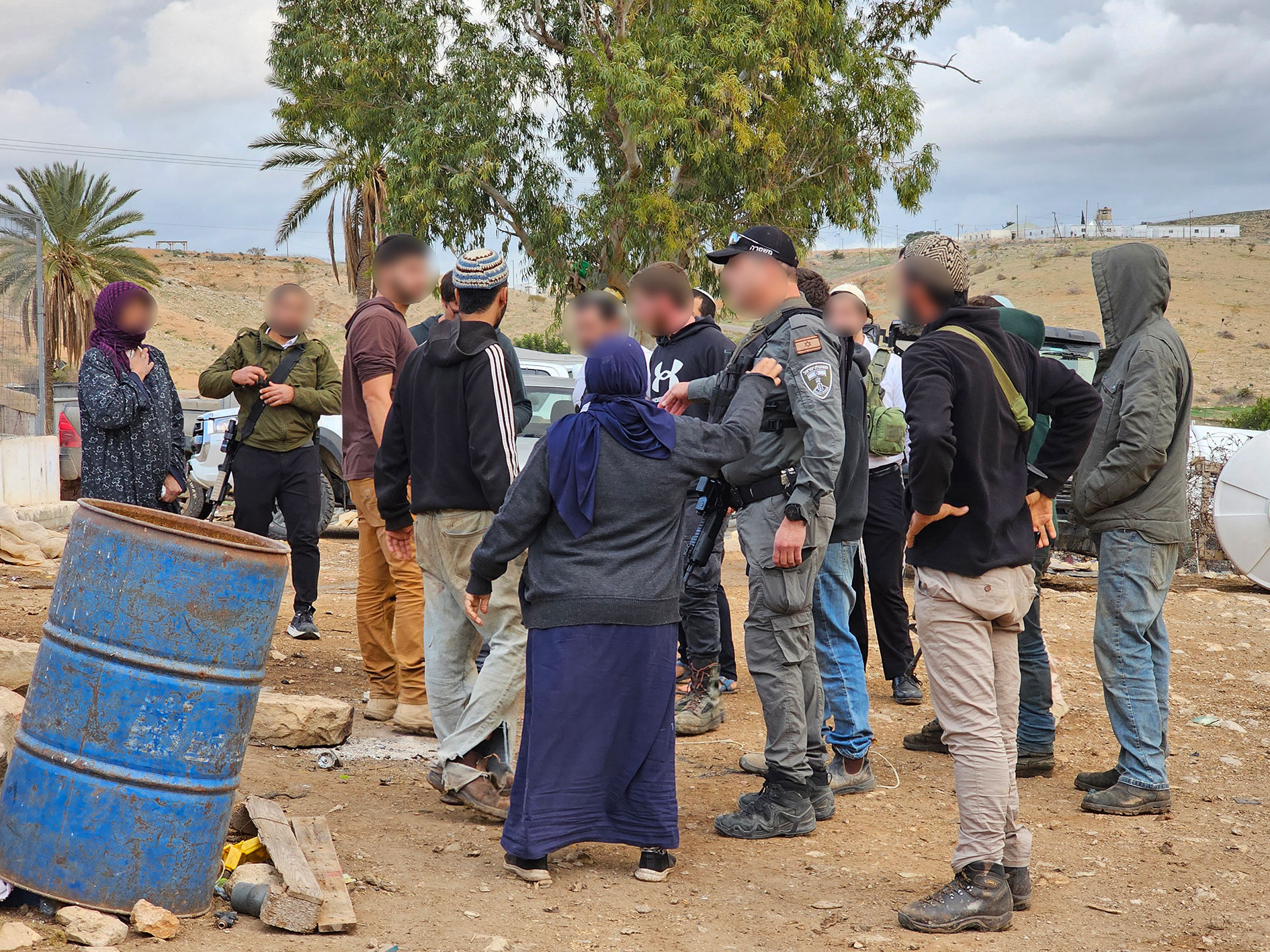 Sarah PostecDec-27-2026Hammam al-Malih: Border Guard and settlers in the compound
-