
Eliyahu Crossing, Falamiya, Habla, Jayyus, Wed 4.4.12, Afternoon
Natanya translating.
Eileen is a student from London (International Relations and Human Relations) who is visiting and asked to join a visit to the checkpoints. I replied to her email and we did a round of the “agricultural” gates.
10.45 Jayyus (the village). We meet with N. and go to offload the large amount of things which has been sent by my daughter. Of course the visit means that we are invited for some refreshments, which turns out to be plentiful and the opportunity to sit on the verandah with the wonderful view and chat with N. who also speaks English I (and I translate a bit).The conversation with N. emphasizes the desire for peace and the despair which is seeping through because of it being getting further and further away. N. explains what the meaning is of being separated from their land which is not only economic but also strikes at the whole human fabric of his family and tradition which is tied up with the cooperation of the activities of the entire family on the land,. It is a completely impossible situation because of the permits which are required today. Eileen starts to get the idea of our enlightened occupation.
Jayyus gate: A cart and horse exit with two old people who are coming home from their lands. The entire time that we parked here no one passed at the checkpoint but it was a good opportunity to speak to the soldiers (especially with a military police. One asked questions and two others listened quietly.
12.55 Falamiya gate: When we arrived a tractor passed with a spraying device. (Eileen saw the procedure which this necessitated. The tractor had to be left…the driver entered the checking post…And then the return to the tractor to continue the journey. Then M. arrived on his bicycles and after he had been checked he stopped by us and sent regards to Yael whom he knows. He talked about the difficulties to get permits so as to get to his land, 90 dunam, which is exactly on the other side of the fence. His old mother of 80 has a permit for two years and so does his wife who looks after the small children. The two of them cannot really go out to work on the lands. He himself on the other hand gets a permit for 6 months and has to renew it each time. We are invited for coffee but have to go on our way to Habla gate.
13.35 The Eliyahu crossing I had forgotten to take down MW flag and this caused suspicion. The fact that I have a visitor from England complicates the matter even more. Her passport which she had to show was passed from hand to hand ( “just a minute”, the guard says to me when I show impatience). She is told to enter the checking area and I have to park at the side while the car including the glove compartment is carefully checked.
13.55 The result of this delay at the Eliyahu crossing causes us to arrive at Habla gate towards to the end of the hours of opening. We see the bus with the school children which has gone through and is already on the way home. The gates are already locked but the soldiers open them and allow three care which are on both sides of the gate to pass. I. the owner of the nursery is one of them and he knows us and invites us for coffee. This is another opportunity to speak with someone who speaks from the heart on people on both sides of the fence who want to live in peace while the behavior which comes from theleaders cannot bring this about.
For Eileen it's quit an interesting experience.
Eliyahu CP (109) / Crossing
See all reports for this place-
Eliyahu CP (109) / Crossing This checkpoint, also known as the Fruit Crossing, is one of the main checkpoints between Israel and the West Bank. It is located on Route 55 between Alfei Menashe and the turn to Qalqilya and Zufin, more than 4 km east of the Green Line, in the separation fence, which separates Qalqilya from its lands to the south, thus leaving Alfei Menashe West of the fence - the Seam Zone. This checkpoint, a few kilometers across the Green Line, is intended for "Israeli settlement in the West Bank and the population of the Seam Zone." It is managed by a civil company. Palestinians with a special permit for their lands in the seam area are also allowed to pass through it, on foot, and sometimes by car.
-
Falamiya
See all reports for this placeHabla
See all reports for this place-
Habla CP (1393)
The Habla checkpoint (1393) was established on the lands of the residents of Qalqilya, on the short road that
connected it for centuries to the nearby town of Habla. The separation barrier intersects this road twice and cut off the residents of Qalqilya from their lands in the seam zone.(between the fence and the green line).
There is a passage under Road 55 that connects Qalqilya to the sabotage This agricultural barrier is used by the farmers and nursery owners established along Road 55 from the Green Line and on both sides of the kurkar road leading to the checkpoint.
This agricultural checkpoint serves the residents of Arab a-Ramadin al-Janoubi (detached from the West Bank), who pass through it to the West Bank and back to their homes. The opening hours (3 times a day) of this agricultural checkpoint are longer than usual, about an hour (recently shortened to 45 minutes), and are coordinated with the transportation hours of a-Ramadin children studying in the occupied in the West Bank.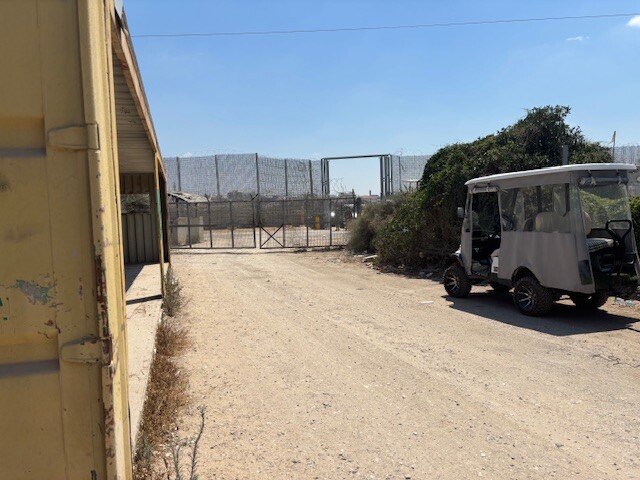 Nina SebaAug-18-2025Habla: The gate is in the process of closing
-
Jayyus North (935)
See all reports for this place