
Escalation of abuse in shepherd communities in the Jordan Valley


A new edict issued by the Civil Administration forbids land owners in the entire northern Palestinian Jordan Valley situated inside ‘fire zones’ to tend their lands.
This edict means that nearly all tended areas by Palestinians outside the villages in the northern area (from the Jiftlik to the Beit Shean Valley inside Israel) are in actually taken over and become useless for their owners
Firstly, all of the Palestinian areas in the northern West Bank (except for 4 villages) are firing zones. This also applies to the residential areas of communities living outside the 4 villages in the area, and naturally to the farm lands whether owned by the villagers, shepherds or Palestinians living in Area A.
This edict was issued them a few days ago by the Palestinian DCO which received it from the Israeli DCO. It has not been stated what sanction would be exerted against those who violate this edict. A land owner with whom I talked, of a shepherd community, said that everyone is afraid and refrain from plowing and sowing. The fear is mostly that their tractors would be confiscated. This is a familiar procedure. Two months after it was confiscated, a tractor was returned to its owner, resident of Bardala village, whose livelihood depends on plowing with the tractor – he had to pay 5000 shekels to get it back. Namely, after two months without any income…
On December 7, a shepherd from the Shak community near Farsiya had his tractor confiscated.
On December 18, a shepherd living in Al Malih had his confiscated.
Both will not be returned to their owners. They would have to wait, like everyone.
The tractors serve the shepherds to maintain contact with the world. Their tent encampments, unlike the Jewish settler-colonies, have no access roads. Especially in the winter, the dirt tracks are not accessible to cars, only by tractor – for getting a doctor, going to school, buying groceries, feed for their livestock, etc .
This edict changes the status quo that has been in force for years now. Another blow for the Palestinian inhabitants of the northern Palestinian Jordan Valley. It is interesting to check whether the Jewish settler-colonists’ lands are also situated inside ‘firing zones’. Were they too issued such an edict? …
Hamra (Beqaot)
See all reports for this place-
One of the Jordan Rift Valley checkpoints that prevent direct transit between the West Bank and the Jordan Valley, in addition to Tayasir Checkpoint. Located next to Hamra settlement, on Route 57 and the Allon Road.
Read about the peple of the Jordan Valley and the quiet transfer happening there.
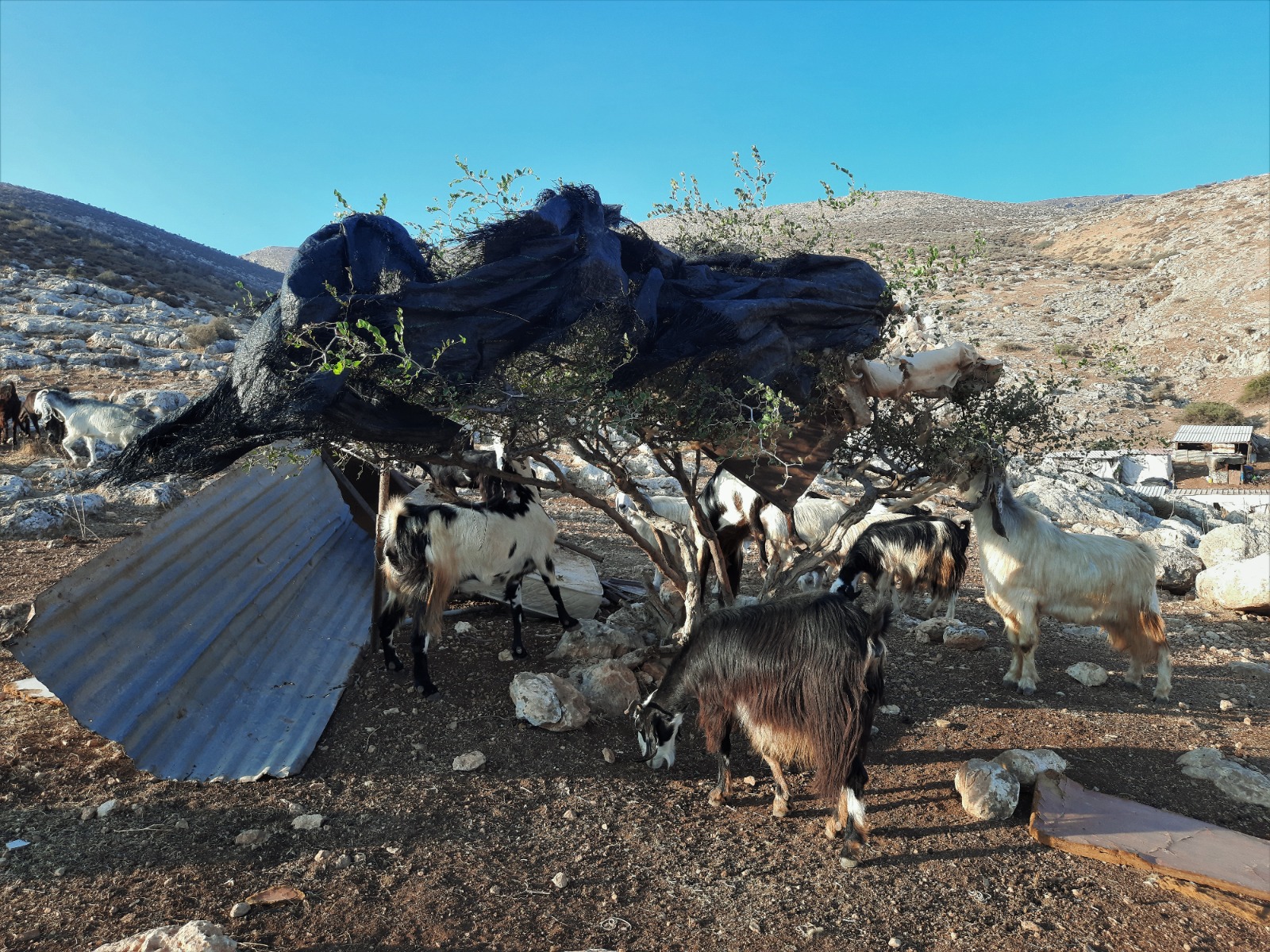 Shahar ShilohNov-3-2021Ein Shibli: grazing begins close to home
-
Jordan Valley
See all reports for this place-
Jordan Valley The Jordan Valley is the eastern strip of the West Bank. Its area consists of almost a third of the West Bank area. About 10,000 settlers live there, about 65,000 Palestinian residents in the villages and towns. In addition, about 15,000 are scattered in small shepherd communities. These communities are living in severe distress because of two types of harassment: the military declaring some of their living areas, as fire zones, evicting them for long hours from their residence to the scorching heat of the summer and the bitter cold of the winter. The other type is abuse by rioters who cling to the grazing areas of the shepherd communities, and the declared fire areas (without being deported). The many groundwaters in the Jordan Valley belong to Mekorot and are not available to Palestinians living in the Jordan Valley. The Palestinians bring water to their needs in high-cost followers.
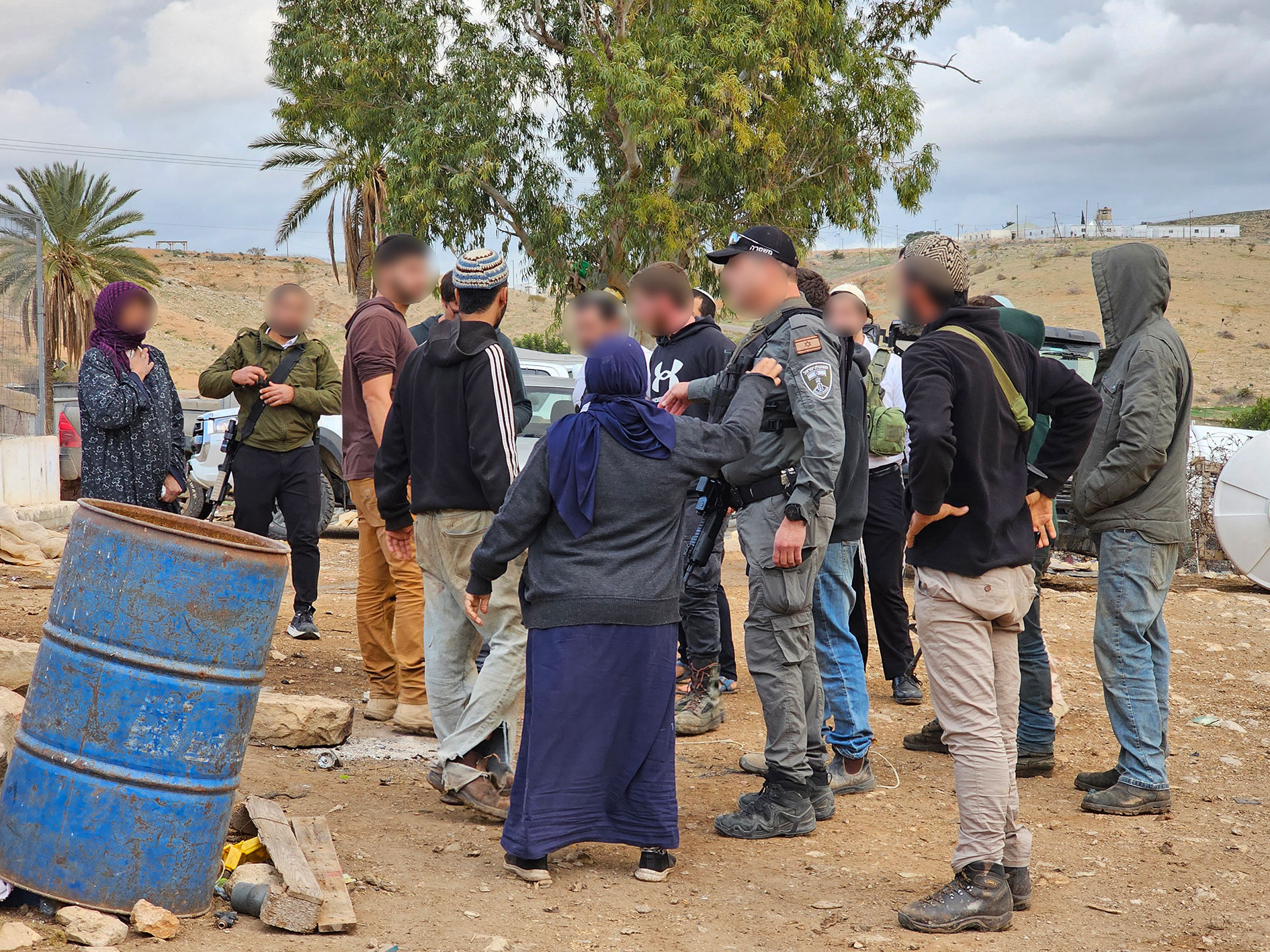 Sarah PostecDec-27-2026Hammam al-Malih: Border Guard and settlers in the compound
-
Ma'ale Efrayim
See all reports for this place-
Ma'ale Efrayim On the road connecting Route 90 (the Jordan Valley road) to the Allon Road.
-
Za'tara (Tapuah)
See all reports for this place-
Za'tara (Tapuah) Za'tara is an internal checkpoint in the heart of the West Bank, at the intersection of Road 60 and Road 505 (Trans-Samaria), east of the Tapuah settlement. This checkpoint is the "border" marked by the IDF between the north and south of the West Bank, in accordance with the policy of separation between the two parts of the West Bank that has been in place since December 2005. At the Za'tara checkpoint, there are separate routes for Israelis and Palestinians. In the route for Israelis, there are no inspections and the route for Palestinians inspects. The queue lengthens and shortens suits. The checkpoint is open 24 hours a day. The checkpoint is partially staffed and the people who pass through it are checked at random.
 Shoshi AnbarSep-27-2023Za'atra (Tapuah Intersection). Signs
-