
Escorting shepherds in the Jordan Valley, two days without attacks



Al Farisiya Friday at 8:00
At 8:30 a.m. an army vehicle came and made the rounds in the community. Sophia and Racheli walked over to see what they were after. The soldiers wouldn’t answer and closed their window. Apparently, this is the local routine of the army force that makes rounds in order to humiliate the Palestinian villagers, show who’s boss and warn them not to make ‘trouble’. Sometimes they just explain that came to make sure everything was alright, sometimes they refuse to speak, at times they come just to say that the road should not be crossed as the area belongs to Rotem colony.
That day, they left and returned at 11 a.m. for another round. Nothing happened but in fact much happened – moments of fear what would ensue. Would they take someone, go through houses. And these are routine days. On April 14th, when the soldiers were really needed to stop the pogrom, they stood by as the colonists ran wild unhampered. And at the same time, human rights activists who wished to see what was going on and help were not allowed to enter the area. Why? Because the army calls the shots!
Good things happened, too. Racheli established simple and inexpensive birthday gifts with a good-wishes card in Arabic, translated by an East Jerusalem friend – to two children: Azhar received a pretty and simple necklace, and Hamude several children’s fun things like soap bubbles – simply heartening…
As for other areas – Dan and Miki accompanied Yusuf and his two sons and the flock for 3 hours around Khalat Makhoul, close to Hemdat colony and to the Kfir Brigade’s training base. The grazing was on hills close to home in the direction of the army base. One of the children said that a day earlier, a soldier came to the same place, pointed his rifle at them and told them to scram for they cannot graze there. They left. Indeed, as soon as we were seen across the road, a soldier came out of the base and looked at us. He didn’t cross the road nor sent an army force. Perhaps he was realized we were there. Anyway we were not threatening anyone, and it’s rather ridiculous to think that sheep are a threat. But, like any occupier, is certain that Palestinians only wish to harm Jews and that sheep are kept not as a source of livelihood but for espionage purposes…
After our accompaniment, we visited Fathi at Ein Hilwa. Dan brought him wood to fire up the outdoor oven. Fathi and his son say that colonists from the outpost connected to Maskiyot colony have been harassing them in recent weeks more than ever. The colonist whose outpost home is situated 30 meters above Fathi’s encampment and sports a large Star of David, has been preventing the Palestinian’s cattle from going down to Ein Hilwa spring for water, for the past two weeks. The colonists stand there and chase them away. So Fathi and his son have been purchasing water from a tanker now, costing five times more than water in Israel. The same colonists even prevent them at times from passing by the track to the grazing grounds, and then they have to purchase not only water but feed as well – the two natural resources now so plentiful in the Valley. The son also said that until October 7th he was working inside Israel in gardening, and since then Palestinians are not allowed in Israel and he moved to live with his father and helps him with the cattle.
Nidal at Humsa was accompanied that day by Nati, Artam and Simona. Grazing passed by warmly and peacefully. In the morning his son was accompanied, and after 13:00 Nidal himself went out with half the flock. No colonists were seen that day. Ahmad went towards the water reservoir – an outpost nearby – managed to graze unhampered. Nurit mentioned she even managed to wade in the water.
At 4 p.m. most of the group members went home. I (Miki) remained and was invited to the fast-breaking meal. That evening the tent heard women chatting about things. The night passed quietly.
Saturday, April 7, 2024 – at 7 a.m. the accompanying morning shift arrived and I left for home.
Al-Farisiya / 'Ein a-sakut
See all reports for this place-
Al-Farisiya / 'Ein a-sakutA community of shepherds in the Jordan Valley opposite the settlement of "Rotem". Making a living from grazing sheep, the residents are exposed to harassment, abuse and theft from settlers who come to them from outposts and settlements in the area, and their grazing area is shrinking due to settler takeovers, fire zones and declared nature reserves.Machsom Watch companies participate in shepherd escort activities and provide a 24/7 protective presence, and there is continuous and warm contact with the community.
-
Jordan Valley
See all reports for this place-
Jordan Valley The Jordan Valley is the eastern strip of the West Bank. Its area consists of almost a third of the West Bank area. About 10,000 settlers live there, about 65,000 Palestinian residents in the villages and towns. In addition, about 15,000 are scattered in small shepherd communities. These communities are living in severe distress because of two types of harassment: the military declaring some of their living areas, as fire zones, evicting them for long hours from their residence to the scorching heat of the summer and the bitter cold of the winter. The other type is abuse by rioters who cling to the grazing areas of the shepherd communities, and the declared fire areas (without being deported). The many groundwaters in the Jordan Valley belong to Mekorot and are not available to Palestinians living in the Jordan Valley. The Palestinians bring water to their needs in high-cost followers.
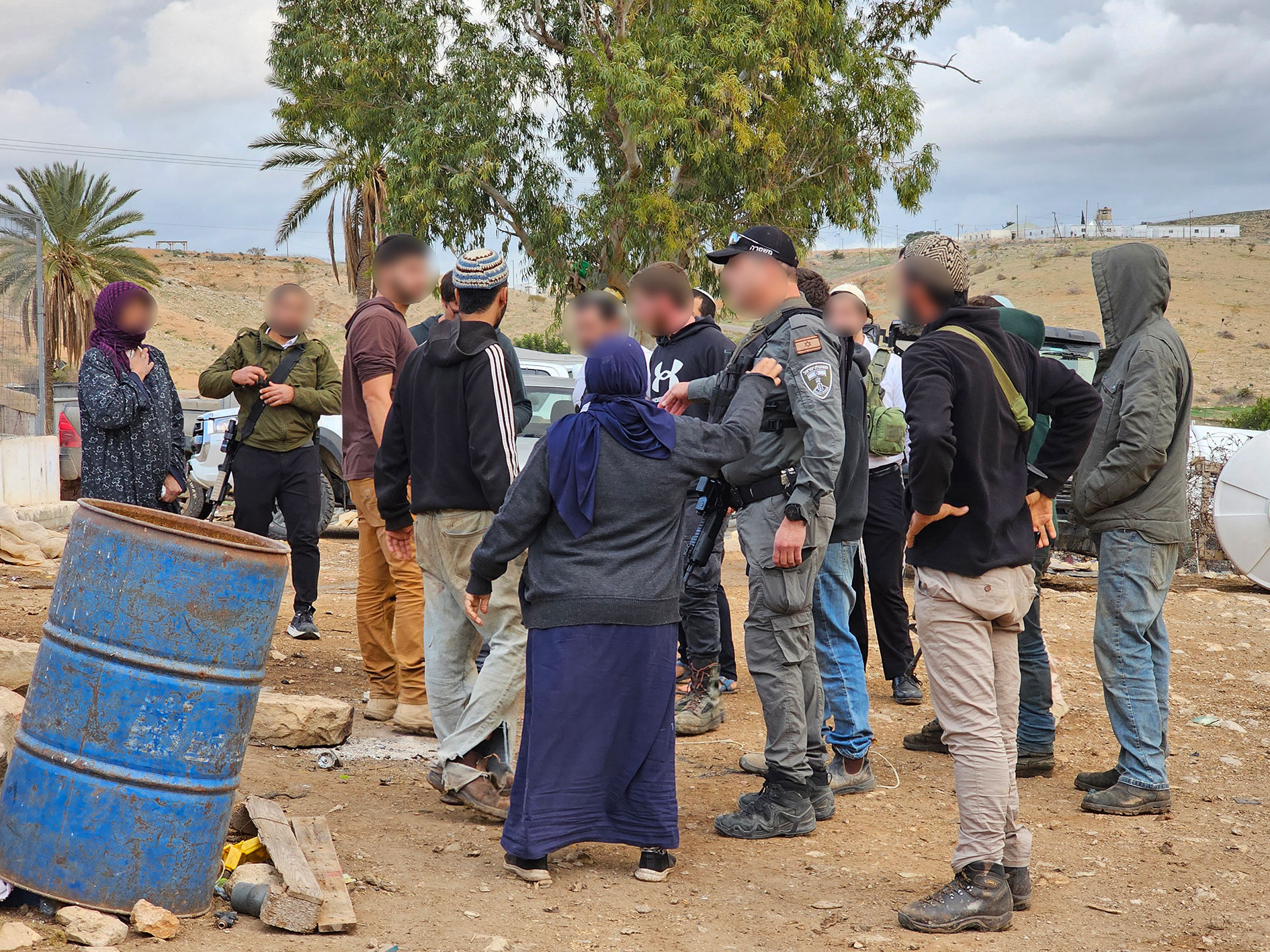 Sarah PostecDec-27-2026Hammam al-Malih: Border Guard and settlers in the compound
-