
Eyal CP - You shall not see here a smiling worker
You shall not see here a smiling worker…
We arrived at the CP at 05:00 approximately. The place is packed with workers filling the entire exit square. They sit, eat, and are waiting for transportation. Some are waiting for employers and others for busses and others for taxis. The place is very quiet and calm. In the course of the two hours we were there, there were quiet mass prayers at two different centers.
We came with the decision to talk to the waiting people. On the board of the pavement there were workers from Bidiya sitting, and one of them volunteered to be the spokesman. We filmed a video in which he told about the long exhausting day, the need to depart very early and to wait in order not to waste a day’s work. He repeated again and again: look here, around, nobody is smiling. They are all frustrated. I looked. One person smiled to me and said “I don’t speak Hebrew”.This young man, the first and last during that morning, told us that he belongs to the fortunate ones who still have an original contractor, and doesn’t have to pay the preposterous sum of 2500 IS.
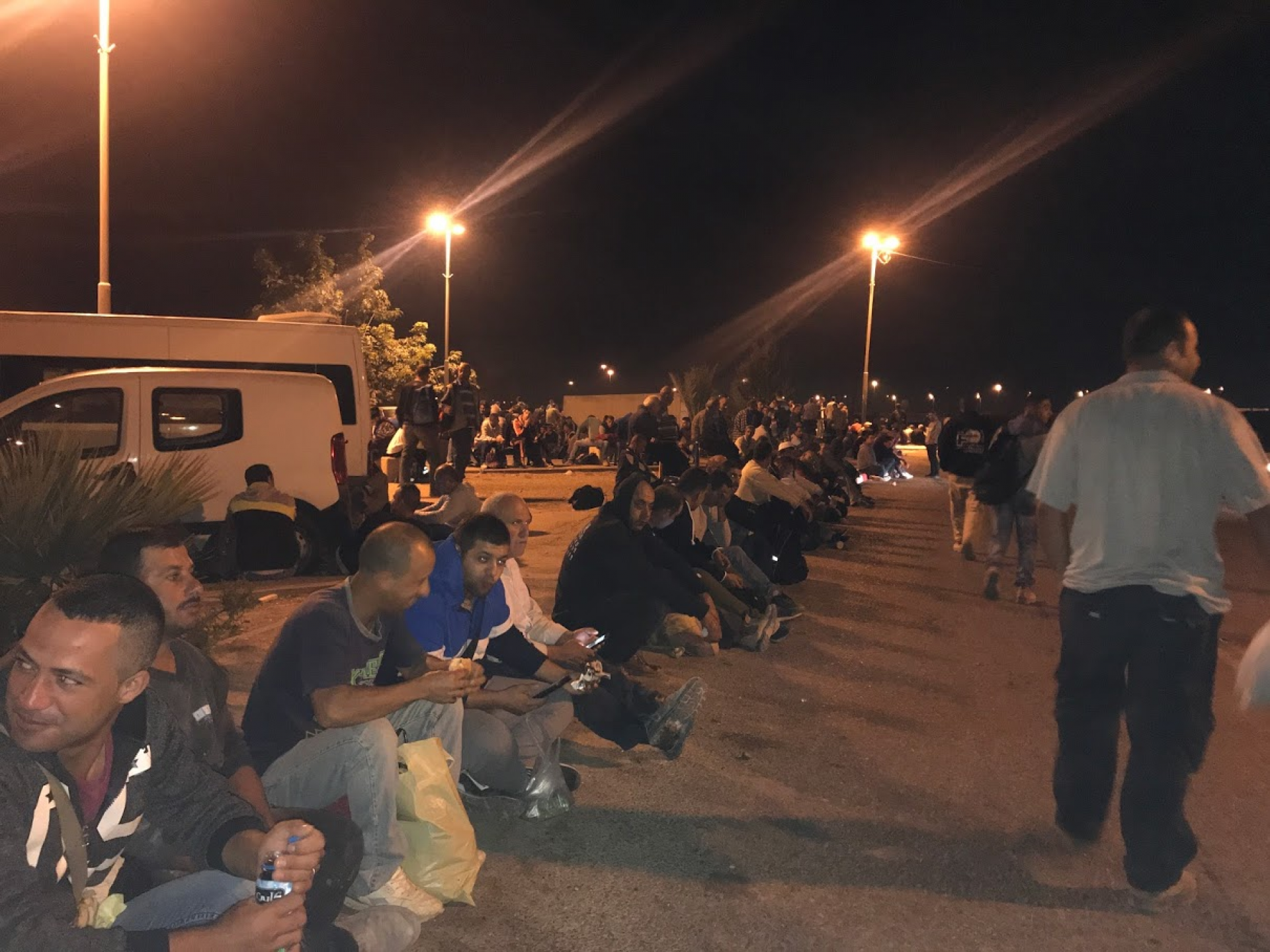
Afterwards we took photographs and had a conversation with other workers who told us a similar story but even a worse one. They have to pay at least 2500 NIS at the beginning of the month.
Azzun
07:00 we arrived at Azzun.
On the street A. told us immediately that every night soldiers enter the village and then “a movie begins”. Whoever approaches is stopped and searched. Cars are searched, houses are searched. They look for a fourteen years old boy who may have thrown stones. Grenades are thrown.
“Yesterday we went to buy things for the house. There were two jeeps on the main road, the soldier opened the window of the vehicle and threw a tear gas grenade.Luckily we were near the shop. We immediately entered. The street was full of people and all of them fled.
Even at night, around one o’clock they threw a grenade. I couldn’t sleep. I waited for them to knock on the door like madmen. I didn’t want the children to wake up”.
'Azzun
See all reports for this place-
Azoun (updated February 2019)
A Palestinian town situated in Area B (under civil Palestinian control and Israeli security control),
on road 5 between Nablus and Qalqiliya, east of Nabi Elias village. The inhabitants are allowed to construct and improve infrastructures. The Separation Fence has confiscated lands belonging to the town's people. In 2018 olive tree groves owned by one of its inhabitants were confiscated for the sake of paving a road to bypass Nabi Elias. Azoun population numbers 13,000, its economic state dire. Its infrastructures are poor, neglect and poverty rampant. In the meantime, the town council has completed paving an internal road for the inhabitants' welfare.
Because of its proximity to the Jewish settler-colony of Karnei Shomron and its outposts, the town suffers the intense presence of the Israeli army, especially at nighttime: soldiers enter homes, arrest suspects, trash the house and sometimes ruin it, as they do in numerous places in the West Bank. At times a checkpoint closes the entrance to the town, so no one can come in or get out.
-
Eyal Checkpoint / Crossing
See all reports for this place-
Eyal Checkpoint is intended for pedestrians and Palestinians only. This is the main barrier for workers to cross from the center of the West Bank. Workers with a work permit to enter Israel can pass through it for trade, medicine, and visiting prisoners. The checkpoint was built on the Green Line north of Qalqilya in the separation barrier that surrounds the city. The checkpoint began operating in 2004 by the military. Opening hours on weekdays from 04:00 to 19:00. We started holding shifts there in 2007. We arrived at the checkpoint before it opened at 4 in the morning. We reported on the difficult conditions and the long and cramped queues of workers who must continue their journey by commuting to work throughout Israel. At the end of June 2009, the checkpoint was operated by a civil security company, The transit time has been gradually shortened, today it is faster, but the Palestinians still have to arrive very early to make it to the transportation. Usually, about 15,000 people pass through.
-