
Food distribution to besieged communities in the Jordan Valley

We waited for the truck of Rabbis for Human Rights that carried the food crates near a deserted café on Road 90. At Al Farisiya we met Aref and Peretz Gan and divided the crates among us for distribution in various parts of the Palestinian Jordan Valley. Peretz has a large, new van that could contain 34 crates, as my own car only contained 9. But the van cannot drive on the internal, potholed tracks that lead to the communities living far inside the area. So Peretz with his vehicle stood on the road every time and we transferred the crates to my car and climbed the harsh terrain. I didn’t know all of the communities. One of them had 2 crates and then I found out that there were 5 families living in the place, so I had to go back to them again with more crates…
Tetting to Nidal was a problem. The army had blocked all tracks going to them, and they could only be accessed on foot. We had 3 crates for 3 families. The crates are heavy and cannot be carried on foot. One of Nidal’s children brought a wheelbarrow but that was not simple either. The dirt dyke on the way is 2.5 meters high, the wheelbarrow fell several times, but finally they managed. We distributed crates to 38 families in 12 shepherd communities.
Finally, we visited the family of Mahmoud who has been arrested and sentenced to 5 months in prison because of an innocent post he had shared. His wife looks exhausted after working hard picking tomatoes, as she has to care the for home, the farm work, his elderly parents, and his mentally disabled sisters – and their own children as well. We don’t know how she will hold out until her husband is freed.
Jordan Valley
See all reports for this place-
Jordan Valley The Jordan Valley is the eastern strip of the West Bank. Its area consists of almost a third of the West Bank area. About 10,000 settlers live there, about 65,000 Palestinian residents in the villages and towns. In addition, about 15,000 are scattered in small shepherd communities. These communities are living in severe distress because of two types of harassment: the military declaring some of their living areas, as fire zones, evicting them for long hours from their residence to the scorching heat of the summer and the bitter cold of the winter. The other type is abuse by rioters who cling to the grazing areas of the shepherd communities, and the declared fire areas (without being deported). The many groundwaters in the Jordan Valley belong to Mekorot and are not available to Palestinians living in the Jordan Valley. The Palestinians bring water to their needs in high-cost followers.
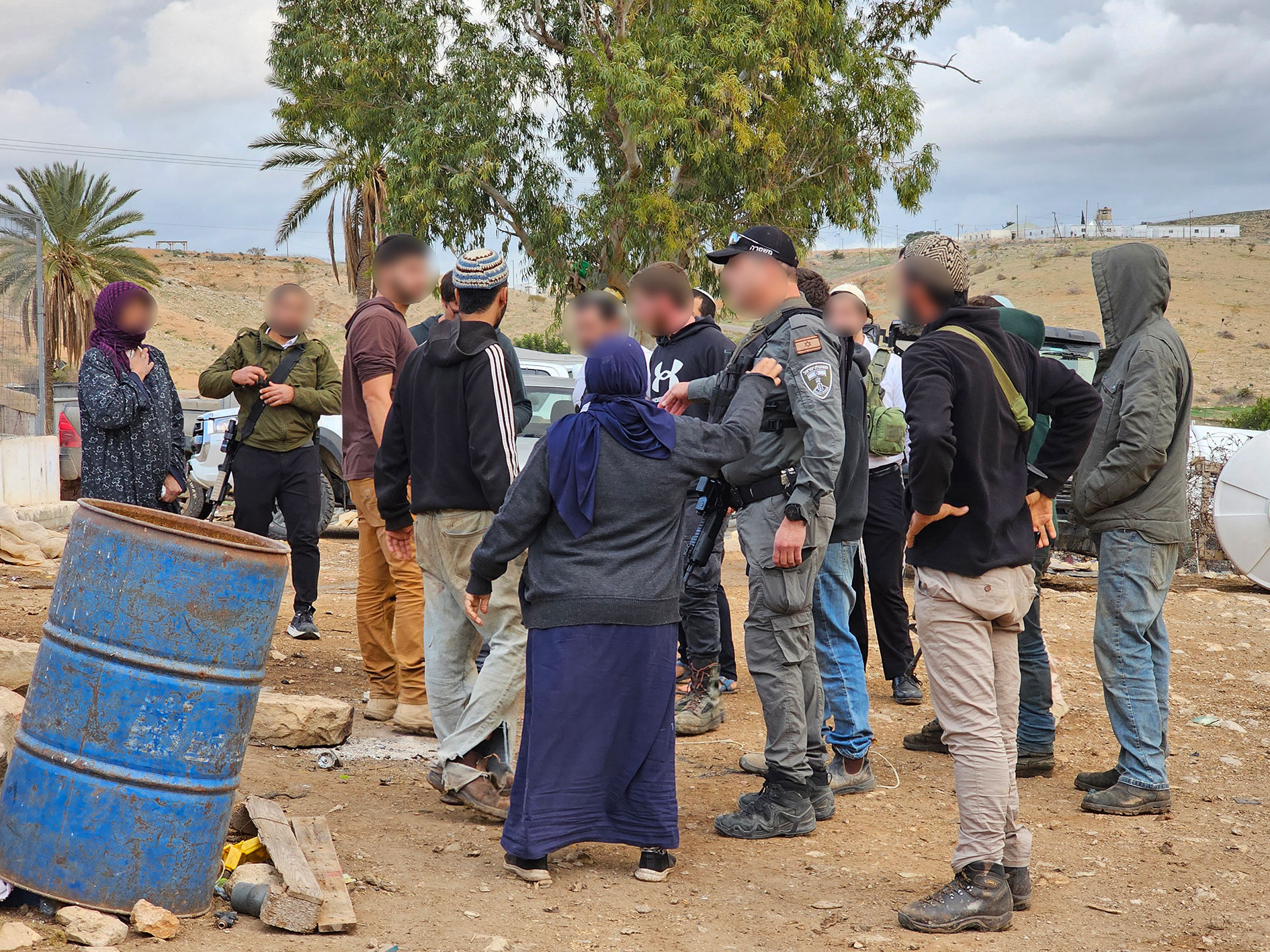 Sarah PostecDec-27-2026Hammam al-Malih: Border Guard and settlers in the compound
-