
Hamra (Beqaot), Tayasir, Thu 15.8.13, Morning

The encampments of the Bedouins, on both sides of the road that curves up to the CP, do not yet show any signs of life. By the time we come back from the CP we'll see children running around, women walking from place to place and men busy with the sheep. On every side we see a biblical view (if we ignore the tractors). and it is still not terribly hot at this time of day.
Two big yellow taxis and one truck loaded with bales of hay (see photo) went through to the west without any delay or inspection of documents. Apart from this it is very quiet. Our arrival provided the soldiers with some action; two of them quickly came to tell us to move the car away a bit and to try to understand who we are. The short explanation was accepted indifferently: 'ah'.

On the way to the Hamra CP a shepherd on a mule and a very big herd of sheep cross the Alon Road, number 578. They are on the way to some water source. "No problems," says the shepherd,"if there are problems I call Daphna or Jamila."
Most of the settlements look wrapped up in evergreen trees, vineyards, fruit orchards, and fields. The Bedouins' fields, which used to grow wonderful 'baladi' (native) vegetables, which we used to buy from the stalls that they set up at the sides of the roads, are now deserted and dried up. More and more very orderly encampments, as well as construction sites halted at various stages, dot the spectacular desert landscape.
Hamra CP 0830
There is traffic in all directions but no delays on either side. Most of the activity at the CP is at dawn, in the early hours of the morning, when workers from the West Bank arrive to work in the settlements in the Valley. Now everything is going on slowly.
From the nearby junction it is possible to see Palestinian farming, groves and green field crops that get water from the Tirza stream (Wadi el Par'a), which generously waters the fertile Jiftlik region.

And the rest is history.
Al-Jiftlik
See all reports for this place-
A large Palestinian area in the Jordan Valley (in Israeli-controlled Area C), which includes a town located on two main roads: Highway 57 leading from Nablus to Adam Bridge and Highway 90, Israel's eastern longitudinal highway. Some of its residents are Bedouin who were expelled from the Negev in the 1950s. MachsomWatch women have been in regular contact with the Bedouin communities in the area for many years.
A special connection was formed with the Kaabna family, who, following the demolition of their home in 2017, fled to the village of Hadidiya, and experienced a terrible tragedy along the way. In 2019, they were expelled again from Hadidiya under threat of demolition and returned to Jiftalik.
Jiftalik is the only village in the Jordan Valley for which Israel prepared and approved master outline plans in 2005. All of them were prepared without the participation of the residents and restricted construction and development in the village to a limited part of its area, thus many demolitions are being carried out there.
Because of an inadequate water system, residents are forced to purchase water in tankers, and all requests for the construction of a reservoir have been denied.
-
Hamra (Beqaot)
See all reports for this place-
One of the Jordan Rift Valley checkpoints that prevent direct transit between the West Bank and the Jordan Valley, in addition to Tayasir Checkpoint. Located next to Hamra settlement, on Route 57 and the Allon Road.
Read about the peple of the Jordan Valley and the quiet transfer happening there.
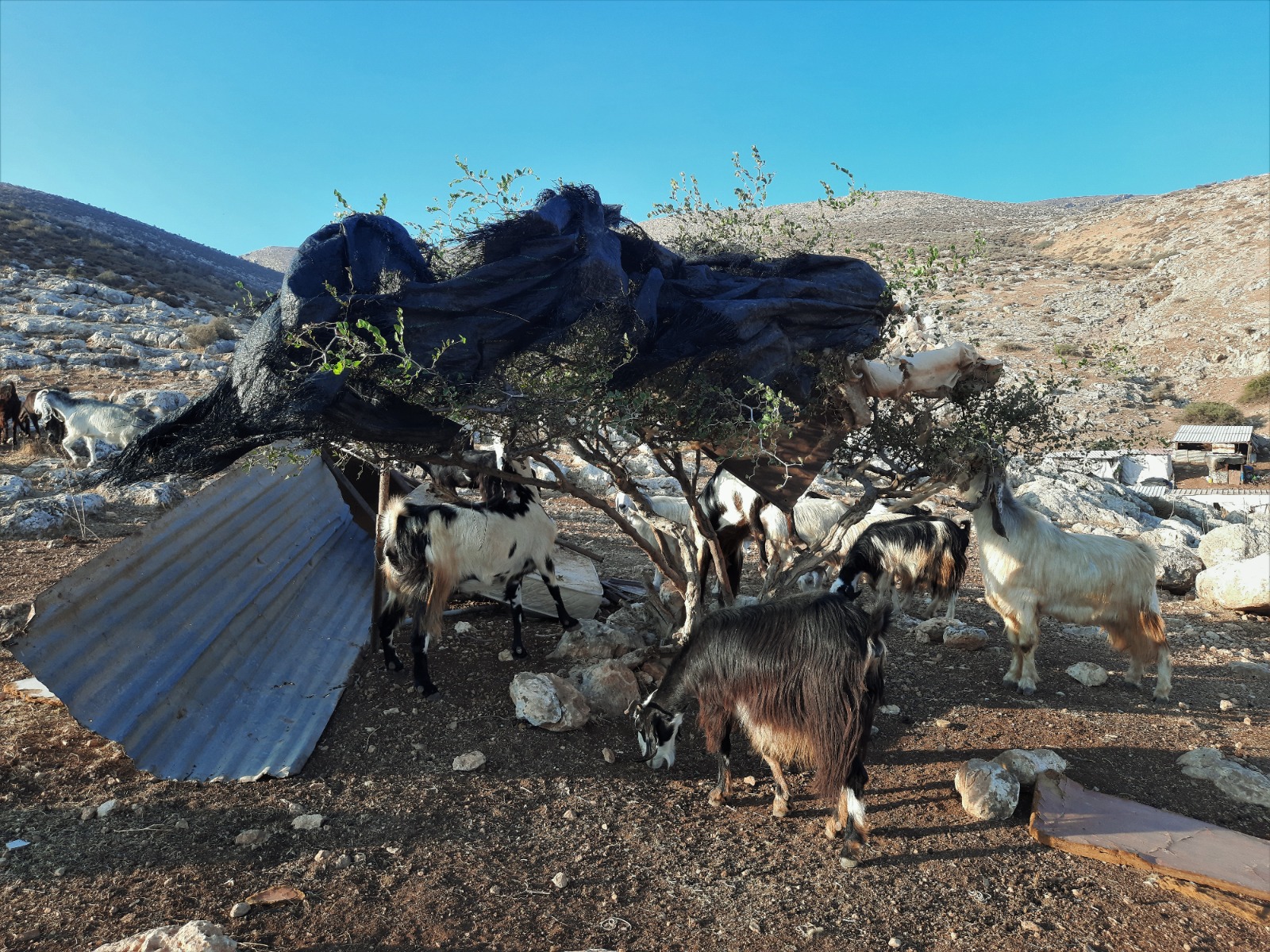 Shahar ShilohNov-3-2021Ein Shibli: grazing begins close to home
-
Tayasir CP
See all reports for this place-
Located on road 5799, It is one of the checkpoints control the passage between the northern West Bank and the Jordan Valley. For a long time, it stood empty and open, with only a sign next to it warning against entering Area A. It was adjacent to an old military camp - now everything is neglected. How much money was invested here, and how much brainwashing was done to the soldiers of Netzah Yehuda and Kfir.
Today, it is very difficult to pass there. Many delays. Often, teachers from Tubas are not allowed to pass into the Valley to villages like Ein al-Bida where the local schools are located, and there are no classes. There are additional days when the checkpoint is closed. In general, there is a wait there of about two to four hours to go towards the Valley and also to return. Many times the Palestinians are forced to use the Hamra checkpoint, which also leads into Tubas and the West Bank, but there is also a huge queue there and a long wait.
Following a deadly attack on soldiers at the nearby base in February 2025, the checkpoint was completely closed for the time being. (Updated March 2025)
-