
Hamra, Ma’ale Efrayim, Tayasir, Sun 10.8.08, Afternoon
|
Guests: Hadas, film editor; Amira Haas, journalist; Fathi C, Jordan Valley activist
The stay at the checkpoints was short, and insteas we visited residents of a number of "pasture stations" (encampments) in the Jordan Valley. 11:15 Maale Ephraim Checkpoint One car, its documents being checked slowly. When I get out of the car and approach the soldiers, the Palestinian car is released. 11:45 Hamra Checkpoint
No cars in either direction. We drive on northwards.
12:50 Tayasir Checkpoint Only one taxi waiting, eastbound, with perhaps ten passengers, including a baby and toddlers, waiting to pass on foot. Ten minutes pass till the taxi is called for checking, in the normal ritual: the car stops 20 metres from the checkpoint, the driver gets out, raises his shirt and pirouettes. (Of course, if he had an explosive charge or a weapon, he could leave them in the car and pull them out after the humiliating dance.) Another ten minutes pass till the soldier comes from the (air–conditioned) vehicle inspection hut to the pedestrian hut (also air–conditioned), and calls for the first of the transients. As they pass him, the anger is evident in their faces – they have been waiting more than half an hour, for nothing, with no one else at the checkpoint!!
Noontime and it’s very hot.
13:15 – we leave – there are no Palestinians at the checkpoint, and vehicles pass at a rate of one every five minutes.
Iron Gate Facing Roi
The locked gate blocks the path from the pastures of the Hudeida tribe, and others, to the mainstays of their livelihood – the West Bank villages Tamun and Tubas, the hospital, doctors, water sources and so on. The gate is supposed to be opened three times a week, for half an hour in the morning and half an hour in the afternoon – on Sunday, Tuesday and Thursday. Whoever needs a doctor outside of those times must travel by tractor to the checkpoint at Hamra or Tayasir (there are no cars or taxis in the area) – a two-three hour detour. There is nothing to be said about ambulances! 14:50 – right behind us a military jeep appears. A tractor is waiting to cross into the West Bank with three passengers. The soldiers sit in the jeep and wait. 15:00 – after an hour they open the gate only for the tractor. I ask why they do not leave it open till 15:30 as obligated, for perhaps people will still come. The answer: the observers at Beqaot will see if someone will want to pass, then they’ll come to open. Sure! Just like last week when Salah arrived with his children, after being summoned for interrogation at the DCO, and it was only our repeated requests that got them to open the gate after two and a half hours! Salah then said that if we hadn’t been there, they would never have opened.
The waiting hut for the Palestinians – the only shade at the checkpoint – is being used to store the soldiers’ water tank, and the Palestinians have to wait in the sun.
A worker returning to the West Bank waits ten minutes, alone in the blazing sun, until they call him. There’s no reason for the delay because they are not checking anyone else. Just so! Let him wait! The soldiers try to drive us away with shouts and threats to call the police. 16:10 – we leave. Visit to el Farsia on the Allon Road north of Rotem. Some 22 families (100 souls) living on the spot since before 1948. Electric power lines cross their land – cross but don’t stop. No electricity – it’s only for Jews. Living off the land, they grow cucumbers and tomatoes, and a year ago they also brought melon seed from Sardinia. A spring flows through, and they used it to irrigate the fields – and to live. Five months ago a white Civil Administration jeep drove up, at 10 am, without military escort (implying that they knew there would be no resistance) and cut all the pipes from the spring to the cultivated plots. They were told that they are forbidden to take water from the spring. An Israeli lawyer that they hired from Um el-Fahm succeeded in making the Civil Asdministration return the pipes (only a week ago) but what’s the point in that when they are forbidden to pump. The pipes lay idle while the fields and hothouses turn yellow, dry, with nothing left. Today they bring water in tanks from Ein el Bida. The children say that they sometimes travel to the nearest town, Tubas, to visit the extended family, but they vigorously (and angrily) insist "but here is our home, only here!" And if that isn’t enough – landowners living in Tubas collect rents on the camp here, on the pastures, and recently they have increased the rent. And the Palestinian Authority, instead of pressuring the landowners to encourage the adherence to land on the site, is indifferent to their fate and allows this extortion. Many people have left – they have no strength left to fight both the Israelis and the landowners. And if that isn’t enough – the checkpoints, the blocks, the separation trenches and the army. A daughter of the family marries a boy from Tamoun. How many difficulties will be placed in the way of members of the tribe when they want to visit her, the grandchildren? Two days ago the bridegroom decided to bring to the campsite yoghurt and lamb for the traditional wedding "mansaf." The gate was locked, of course, and the checkpoint so far away... The bridegroom decided to shorten the route, and crossed through the mountains. The observers spotted him and sent a scout after him. He was taken to Hamra Checkpoint where he spent five hours in solitary confinement – a day before the wedding. |
Hamra (Beqaot)
See all reports for this place-
One of the Jordan Rift Valley checkpoints that prevent direct transit between the West Bank and the Jordan Valley, in addition to Tayasir Checkpoint. Located next to Hamra settlement, on Route 57 and the Allon Road.
Read about the peple of the Jordan Valley and the quiet transfer happening there.
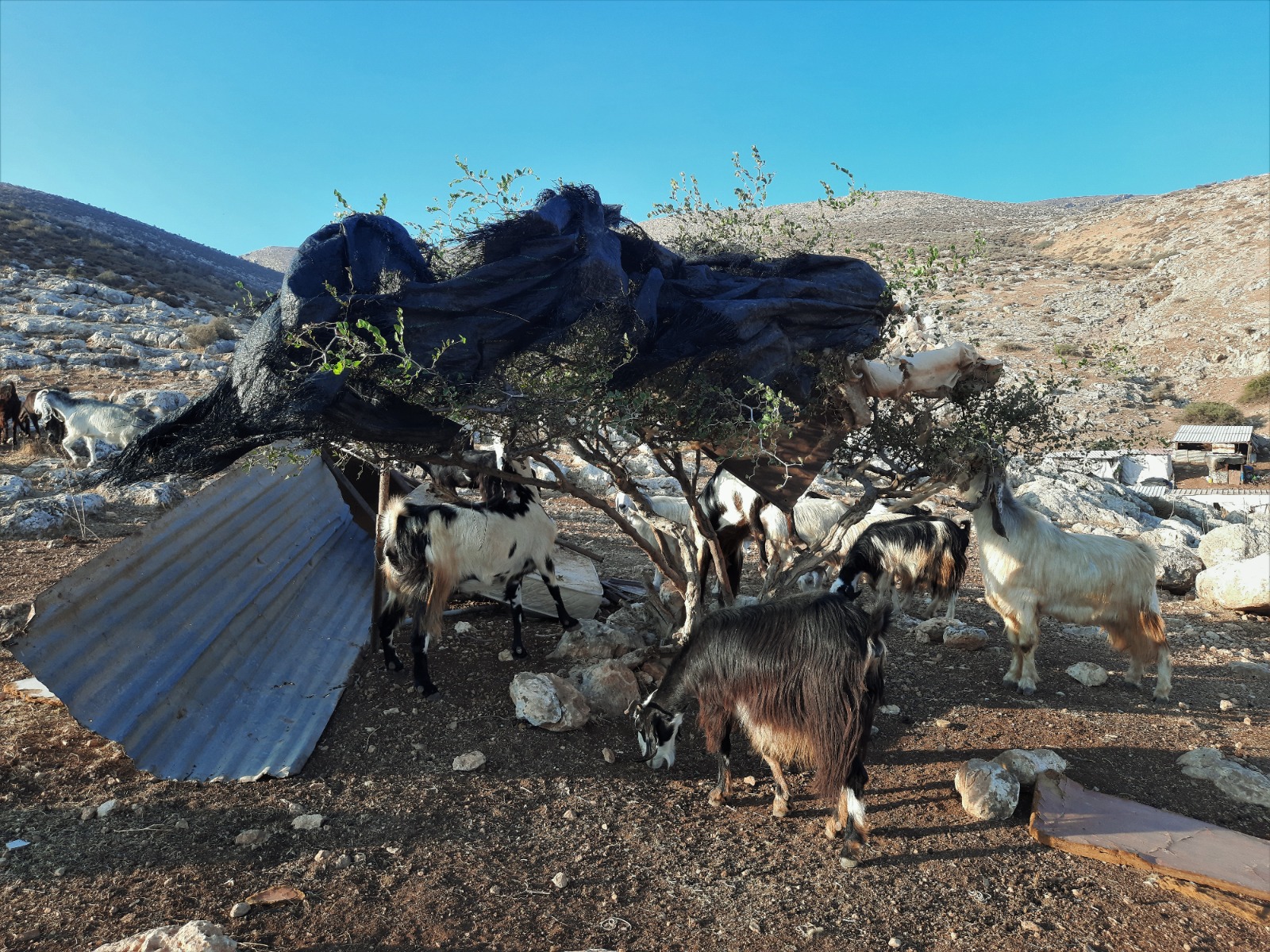 Shahar ShilohNov-3-2021Ein Shibli: grazing begins close to home
-
Ma'ale Efrayim
See all reports for this place-
Ma'ale Efrayim On the road connecting Route 90 (the Jordan Valley road) to the Allon Road.
-
Tayasir CP
See all reports for this place-
Located on road 5799, It is one of the checkpoints control the passage between the northern West Bank and the Jordan Valley. For a long time, it stood empty and open, with only a sign next to it warning against entering Area A. It was adjacent to an old military camp - now everything is neglected. How much money was invested here, and how much brainwashing was done to the soldiers of Netzah Yehuda and Kfir.
Today, it is very difficult to pass there. Many delays. Often, teachers from Tubas are not allowed to pass into the Valley to villages like Ein al-Bida where the local schools are located, and there are no classes. There are additional days when the checkpoint is closed. In general, there is a wait there of about two to four hours to go towards the Valley and also to return. Many times the Palestinians are forced to use the Hamra checkpoint, which also leads into Tubas and the West Bank, but there is also a huge queue there and a long wait.
Following a deadly attack on soldiers at the nearby base in February 2025, the checkpoint was completely closed for the time being. (Updated March 2025)
-