
Hamra, Ma’ale Efrayim, Tayasir, Thu 15.10.09, Afternoon
Guest, Michael Rierdon, writer on peace movements in Israel/Palestine
Along the road descending to the Jordan Valley, some of the road blocks which had been removed (possibly by the Palestinians) – were reinstalled.
Ma'ale Efrayim CP, 11:15
Only soldiers were present, no Palestinians. The structure and tower had been removed but were replaced by a courtyard encircled by high concrete panels, similar to those of the separation wall. We hadn't stopped to check out whether there was a structure within.
Hammara CP – 11:40-12:50
There was a line of five vehicles on their way from the Jordan Valley to the West Bank. Passage was very slow, taking about half an hour to get through. It was very hot and hazy, the dust obscuring vision. Despite the fact that most cars are not air-conditioned, the passengers preferred to wait in the blazing heat of the cars rather than in the outdoor noon-time furnace. Pedestrians coming from the direction of the Biq'a now need to cross on the road and not through the barrier, resulting in further delay for the cars (since cars are not summoned to proceed as long as there are pedestrians in the barrier area).
Having greeted three traditionally clad Palestinian women, they inquired who we were. Fascinated by our reply, they explained that they were Palestinians, born and living in Jordan, at Jebl Husein, unaware of the existence of peace groups. Jewish women? Amazed, but in admiration.
As usual, all passengers traveling from the West Bank to the Valley are required to get off the car and cross through on foot – and since inspection of the vehicles is a more lengthy procedure – to wait at the crossroads in the blazing sun. The men emerge from the barrier holding their belts. This is a harsh scene, particularly with older people. But the Palestinians tell us that today it was "a good barrier". Indeed, the soldiers were not cross, not brutal, they weren't even shouting. Nevertheless, this is a barrier, an illegal, immoral, obstacle in the lives of the Palestinians and even "a good Barrier" is bad.
On our way to Tayasir we came across some shepherds who told us about a new military regulation prohibiting the crossing over of the (Alon) road with their sheep. A shepherd was caught and fined INS1000 some days ago. This should be added to the list of alleviations granted the Palestinians that Israel is boasting of recently.
Tayasir CP 13:30-14:30
No lines and quick passage. An occasional car approaches the barrier and continues on its way within 5-10 minutes. The soldiers are oblivious of us and apparently of the Palestinians as well, with the delay at the barrier being minimal. They would have been pleased not to be there at all. Along the road we saw a full school bus stopping near a Bedouin campsite and some students getting off. It was good to see that finally, after four years, the school transportation service has been renewed' as it had been cancelled due to the impediment of barrier delays (resulting in immense distances that the children had to cover on foot or hitchhike).
Juniya CP/ Gate 15:00
Two Bedouin shepherds of the Hadidya clan and their tractor were waiting near the gate. They confirmed the evil restriction and that a fine was imposed on one of the shepherds. At 15:25 and following two phone calls to the DCO a jeep finally arrived and opened the gateway. A very thorough inspection and the soldiers searched again and again under the tractor. The shepherds were going eastward to Tamun to visit their kids who were at school there and were forced to live there with relatives during the week because of the gate's restricted passage schedule. The Geneva Convention lays responsibility on the occupier to provide for the health and education of the occupied population. The occupier in our case has not provided these facilities to the population but moreover, is hindering access to education by means of gates and barriers between the children and their schools. Those that cross over will, of necessity, be forced to remain on the other side until Sunday, when the gate will reopen again.
Hamra (Beqaot)
See all reports for this place-
One of the Jordan Rift Valley checkpoints that prevent direct transit between the West Bank and the Jordan Valley, in addition to Tayasir Checkpoint. Located next to Hamra settlement, on Route 57 and the Allon Road.
Read about the peple of the Jordan Valley and the quiet transfer happening there.
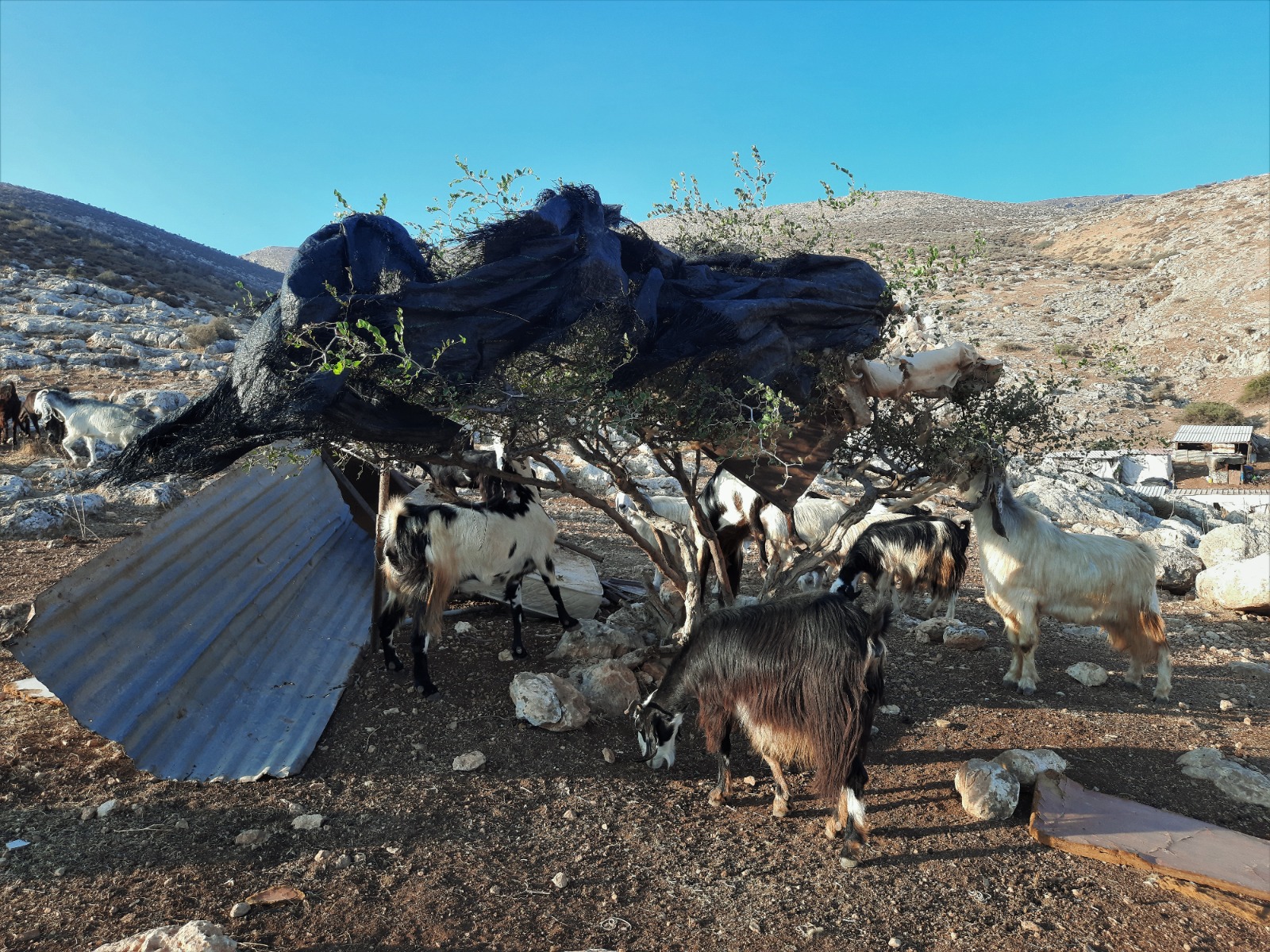 Shahar ShilohNov-3-2021Ein Shibli: grazing begins close to home
-
Ma'ale Efrayim
See all reports for this place-
Ma'ale Efrayim On the road connecting Route 90 (the Jordan Valley road) to the Allon Road.
-
Tayasir CP
See all reports for this place-
Located on road 5799, It is one of the checkpoints control the passage between the northern West Bank and the Jordan Valley. For a long time, it stood empty and open, with only a sign next to it warning against entering Area A. It was adjacent to an old military camp - now everything is neglected. How much money was invested here, and how much brainwashing was done to the soldiers of Netzah Yehuda and Kfir.
Today, it is very difficult to pass there. Many delays. Often, teachers from Tubas are not allowed to pass into the Valley to villages like Ein al-Bida where the local schools are located, and there are no classes. There are additional days when the checkpoint is closed. In general, there is a wait there of about two to four hours to go towards the Valley and also to return. Many times the Palestinians are forced to use the Hamra checkpoint, which also leads into Tubas and the West Bank, but there is also a huge queue there and a long wait.
Following a deadly attack on soldiers at the nearby base in February 2025, the checkpoint was completely closed for the time being. (Updated March 2025)
-