
Hamra, Ma’ale Efrayim, Tayasir, Thu 21.5.09, Afternoon
At the Ma'aleh Efraim CP at 12:22, as always there is racial segregation. Residents who own cars with yellow licence plates are not inspected, while those whose cars have white licence places, the original residents of the region, are obliged to stop for inspection by a representative of the owners of the yellow ones. The representative forces them to get out of the vehicle, to open the trunk, and other parts of the car and to present various documents that were given them by that same foreign culture.
The Tyasir CP at 13:10, which is on almost the only road between two big regions of the occupied territories, is closed between nine at night and four thirty the next morning.
The representative asks a man of 58, "Where do you live? How old are you? Where are you coming from?" All of this in bad Arabic. The people have trouble understanding. And he asks other people – "Is this one your daughter?" People's possessions fall out of their hands because of the stress and the embarrassment. Those wearing uniforms sit in air-conditioned huts – the natives who got out of the cars at a distance from the CP are standing there waiting to be called. Sometimes there is a little boy who was taken out of the car. The drivers have to undress from far away, and to turn around in place. The soldiers push their hands into the bags of all of them — children and women, and old people and men. A man of 70 is asked "What's your name?" And the name is written in the document that the soldier holds in his hand.
All around the CP there is a big military base, firing areas, skeletons of rotting APCs.
Gochya GateThe gate is opposite the settlement of Ro'i; it wa supposed to block the passage of people from the encampments in the area, so as to banish them quietly. We arrived at 14:22. As noted, this CP is opened only for half an hour twice a day, three times a week (because of pressure from the Red Cross). CP soldiers who are supposed to open it, usually come late. And only a blessed few who have permits of passage, sometimes wait for hours, and then give up and go away. So today there is a jeep half an hour early. Four people and among them a pair of old people are waiting on a tractor in order to go through. The soldiers have actually come for some other reason but they would have to come back soon to open the CP, so they have stayed here. They are sitting in the air-conditioned vehicle and they say to us: "Only from three o'clock. Those are the rules. There are laws in the sector and we carry them out." And when it is exactly three o'clock, their commander gets out of the jeep and waves in the direction of the tractor — come on! We went to visit friends. When we came back, we passed near the same CP. The time was now 16:10 and we saw three tractors and people sitting in their shade. There is no army jeep. The drivers of two of the tractors say that they are on the list; they went through in the morning, and now the soldiers did not let them through. The third tractor driver says that he arrived a little before three thirty and the soldiers were not there any longer. There were many telephone calls to various representatives and at 4:50 the jeep came back, allowed one of the tractors to go through (after a long discussion) and indicated to the other two that they should not even try to approach. They drive away from there with heavy hearts. The road home has lengthened by a number of hours. Hamra CP at 17:03It takes the soldiers five minutes to inspect a car. You can see that they are not trying to do it quickly. To the people they shout instructions roughly and make other humiliating remarks. There are nine soldiers at the CP – four are doing the inspection and another five stand around us for 30 minutes. "I also want to love Arabs; I just don't know why," says one of them. Pedestrians go around the hut because in it there is a big container of water from which the soldiers take water wastefully, so many birds come to drink the water that was spilled and two (dog)cubs that the soldiers are feeding are also running around. The matter of the water: In Tyasir we saw a soldier running with a giant bag of ice to cool the voices of the soldiers. And after that we visited friends who, although they live near their own well, have to travel everyday (a very long way because all the roads are blocked) to bring water because M'korot fenced off the well. At 18:05 we stopped near a surprise CP set up by the Israeli police and the IDF, on the road near the blocked entrance to the village of Kussarin. The soldier points his rifle and looks through the eye-piece at every Palestinian car that passes and stops some of them. Despite the fact that Jewish cars go through here, the policeman only stops the Arabs and gives them tickets on all kinds of little things. He is also angry at us and although we did not do anything against the law, he also gave us a ticket.
Gochya
See all reports for this place-
Gochya checkpoint, which is opposite Beqaot settlement, is a metal bar blocking a dirt road in the Jordan Valley that prevents residents living in the eastern Jordan Valley from travelling freely to the western Jordan Valley and back again. This checkpoint, which is supposed to open only three times a week for half an hour (and usually doesn’t open at all), prevents residents living in the eastern Jordan Valley from accessing the town of Tamun, for example, which serves as a regional urban center. They’re prevented from maintaining contact with family members, obtaining medical treatment, getting to school and shopping, etc. Children from the eastern Jordan Valley are compelled to live during the week with families in Tamun to insure they are able to attend school regularly. The locals must make long detours, and risk severe punishment if they’re caught. In order to prevent them from bypassing the checkpoint, the IDF dug a series of long, deep ditches around the checkpoint and created very high earthen berms.
-
Hamra (Beqaot)
See all reports for this place-
One of the Jordan Rift Valley checkpoints that prevent direct transit between the West Bank and the Jordan Valley, in addition to Tayasir Checkpoint. Located next to Hamra settlement, on Route 57 and the Allon Road.
Read about the peple of the Jordan Valley and the quiet transfer happening there.
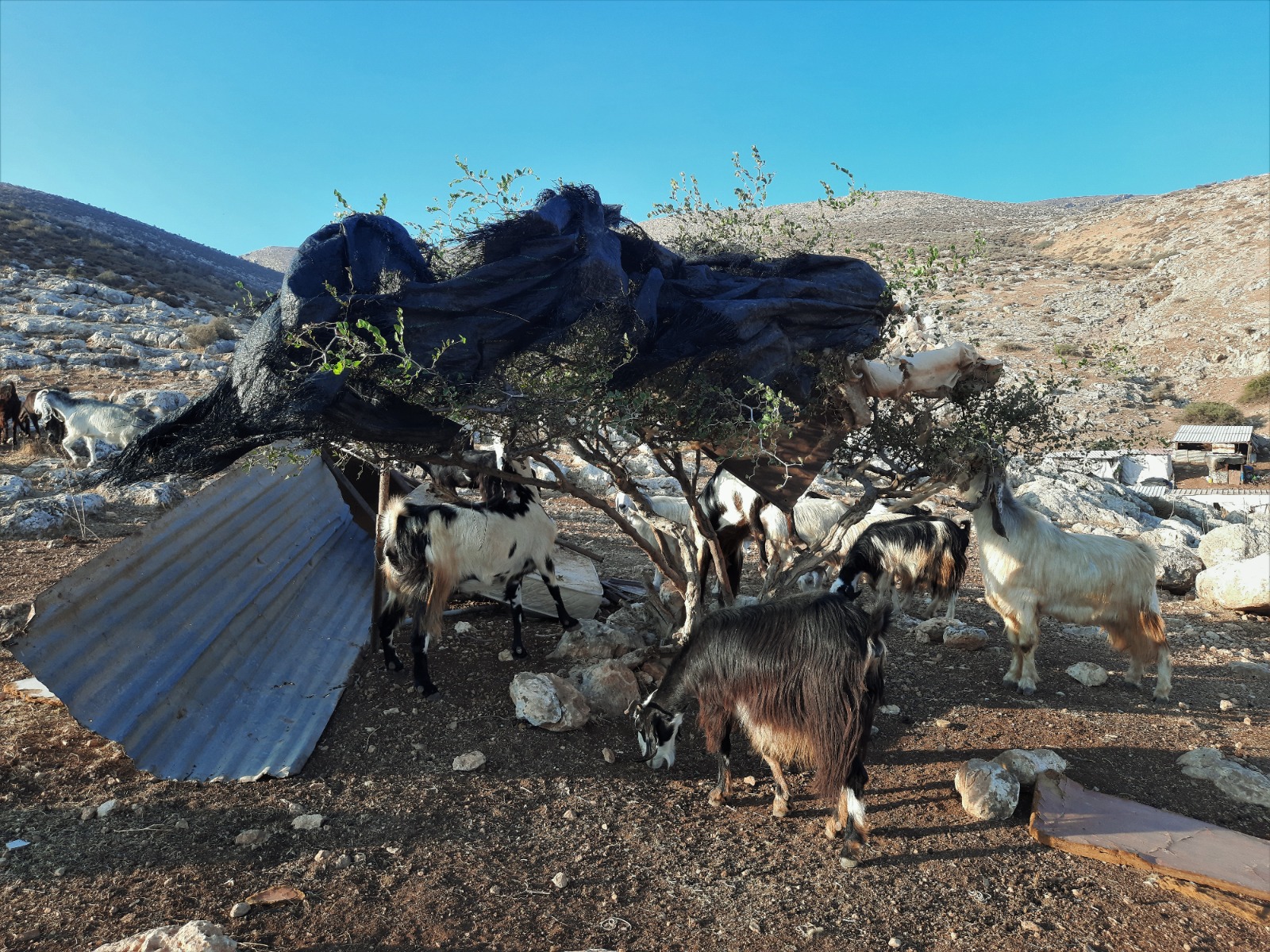 Shahar ShilohNov-3-2021Ein Shibli: grazing begins close to home
-
Ma'ale Efrayim
See all reports for this place-
Ma'ale Efrayim On the road connecting Route 90 (the Jordan Valley road) to the Allon Road.
-
Tayasir CP
See all reports for this place-
Located on road 5799, It is one of the checkpoints control the passage between the northern West Bank and the Jordan Valley. For a long time, it stood empty and open, with only a sign next to it warning against entering Area A. It was adjacent to an old military camp - now everything is neglected. How much money was invested here, and how much brainwashing was done to the soldiers of Netzah Yehuda and Kfir.
Today, it is very difficult to pass there. Many delays. Often, teachers from Tubas are not allowed to pass into the Valley to villages like Ein al-Bida where the local schools are located, and there are no classes. There are additional days when the checkpoint is closed. In general, there is a wait there of about two to four hours to go towards the Valley and also to return. Many times the Palestinians are forced to use the Hamra checkpoint, which also leads into Tubas and the West Bank, but there is also a huge queue there and a long wait.
Following a deadly attack on soldiers at the nearby base in February 2025, the checkpoint was completely closed for the time being. (Updated March 2025)
-