
Hamra, Ma’ale Efrayim, Tayasir, Za’tara (Tapuah), Sun 27.7.08, Afternoon
12:10 Zaatra Checkpoint
Two Border Police jeeps, and one of military police, by the settlers’ hitchiking station. Today Palestinian travellers are also being checked in the direction of Huwwara.
12:37 Maale Ephraim Checkpoint
Cars with Israeli license plates are waved through. The Palestinians are stopped. Driver and passengers hand over IDs, the baggage compartment is inspected. All the while, the sentry’s rifle is pointed at the people being checked. Several Jewish youths sit by the checkpoint, waiting for a ride, while a girl plays a recorder.
13:02 Hamra Checkpoint
A long line of cars – four from the north, 14 from east to west (the Valley to the West Bank) and 16 from west to east. The soldiers stopped checking for half an hour as they took a lunch break, all of them together. Under the shed erected for waiting Palestinians the soldiers have positioned their gigantic water container. Pedestrians are bypassing the hut. The taps intended for the Palestinians are dry. Checking starts anew shortly after we arrive – in one direction. An additional jeepload of soldiers arrives, and one of them joins the checkers, scrutinising faces, ordering some of the cars to park on the side for additional inspection, all in a particularly lordly tone. When we ask him why the checking from the direction of the West Bank is not renewed – indicating the elderly pedestrians compelled to wait a long time for the cars that brought them, in the heat – he says “They’re used to it.” At 13:25 checking starts for cars coming from the West Bank. The jeep drives away from the checkpoint. When we leave, at 13:36, and approach our car, we see that same jeep parked beside the car. Noticing us, they drive off quickly. After a short drive it becomes apparent that they had extracted air from a tire. We were compelled to change a tire.
14:05 Tayasir Checkpoint
One car waiting on one side, and four on the other. One pedestrian waiting under the shed. A soldier greets us: “You arrive like that with nothing, I could shoot you.” Later he receives a command not to deal with us. The vehicle checking is thorough and long. The soldier points a finger at parts of the vehicle that he wants the driver to expose – engine cover, glove compartments, under the seats, under the vehicle. Each check takes a few minutes and also includes IDs and raising shirts in front of everyone. A truck loaded with hay approaches the checkpoint. The soldiers order the driver to back up to the entrance to the checkpoint and cover the hay with a black tarpaulin. They tell the driver that it is safer for him. The soldier responsible for checking pedestrians has been sitting, idle, in his cubbyhole since we arrived. A quarter of an hour later, following a complaint, he is asked over the radio why he hasn’t checked the man waiting in the shed: “I don’t do that… I wait till there are four of five, and then I check them” (at this checkpoint, the pedestrians are mostly passengers from the cars checked separately. Few cars, fewer passengers. Meanwhile the cars await the passengers). When the man finally passes, he testifies thart he has been waiting half an hour.
A soldier comes to say that his company commander does not want the journalists to take photos. After a while we are informed that there is a “hot warning” and we are to move away. The checkpoint soldiers carry on without their helmets. A taxi driver stops by us, after passing the checkpoint, and says that the soldier cursed him while checking his car. He refuses to repeat the exact words, and finally mumbles “your mother’s c–t, etc.” He asks us not to repeat to the soldiers what he said.
When we leave, our friend T. was first in line of the cars waiting for inspection. We phone later and find that he has waited for an hour and a half.
15:25 – we arrive at the locked gate in the open area sealed by a ditch along its whole length, facing the settlement of Ro’i. The gate is opened three times a week, twice a day. Only then can cars go through. Today it is supposed to be open between 15:00 and 15:30. When we arrive there are two cars, one on each side – and the gate is locked. The waiting people say that often the gate does not open on time, and they are forced to wait, or that the soldiers don’t bother to come at all. We call the DCO at 15:45 to ask why the soldiers haven’t come, and are told that “there’s a hot warning and the soldiers are busy.” In later conversations, they contend that “someone tried to brealk through the gate, and the soldiers are chasing him.” The gate is of course bolted and padlocked, and no one tried to break through. When the soldiers arrived at 16:00, they said that they had arrangements to make. They opened at 16:05 and then closed it and left.
At 16:10 S. arrived, accompanied by his children. Last week they had been kidnapped by the army (story was covered in Haaretz). They were returning from Jericho, where they had been summoned by the army for an internal investigation of the kidnapping. Of course they were late for the opening time of the gate, and if they took an alternative route (including checkpoints) they would arrive home in the evening. After a number of phone calls, a DCO officer said that the soldiers would come to open for them, but it would take time. S. commented that, when someone crosses the ditch without permission, the soldiers arrive in minutes – since the area is under constant surveillance.
17:55 – the same soldiers arrive to open the gate, and the family passes through.
18:05 –we pass by Hamra Checkpoint and see a line of 24 cars waiting from the west towards the Rift Valley, and four the other way into the West Bank.
19:11 Shaar Shomron Checkpoint
A Palestinian youth sits, handcuffed from behind, back to the checkpoint. He has been here since an hour and a half ago. He was caught trying to enter Israel to work – in the baggage compartment of a car driven by an Israeli Jew (who was also detained, but not handcuffed and not forced to sit with his back to the checkpoint). The youth complains that the handcuffs are painful, and could they be loosened…? The woman soldier says that she put them on loosely, but other soldiers eventually agree to remove them. Two red “bracelets” remain on his hands and the youngster constantly massages them. A soldier asks another soldier why was he handcuffed. Did he try to escape? “Something like that!” At 19:45 a policeman arrives. Again he handcuffs the youth and puts him in his vehicle together with an older holder of a blue Israeli ID which the soldiers claim to be a forgery. The Israeli Jew was interrogated on the spot.
20:05 – we leave.
Hamra (Beqaot)
See all reports for this place-
One of the Jordan Rift Valley checkpoints that prevent direct transit between the West Bank and the Jordan Valley, in addition to Tayasir Checkpoint. Located next to Hamra settlement, on Route 57 and the Allon Road.
Read about the peple of the Jordan Valley and the quiet transfer happening there.
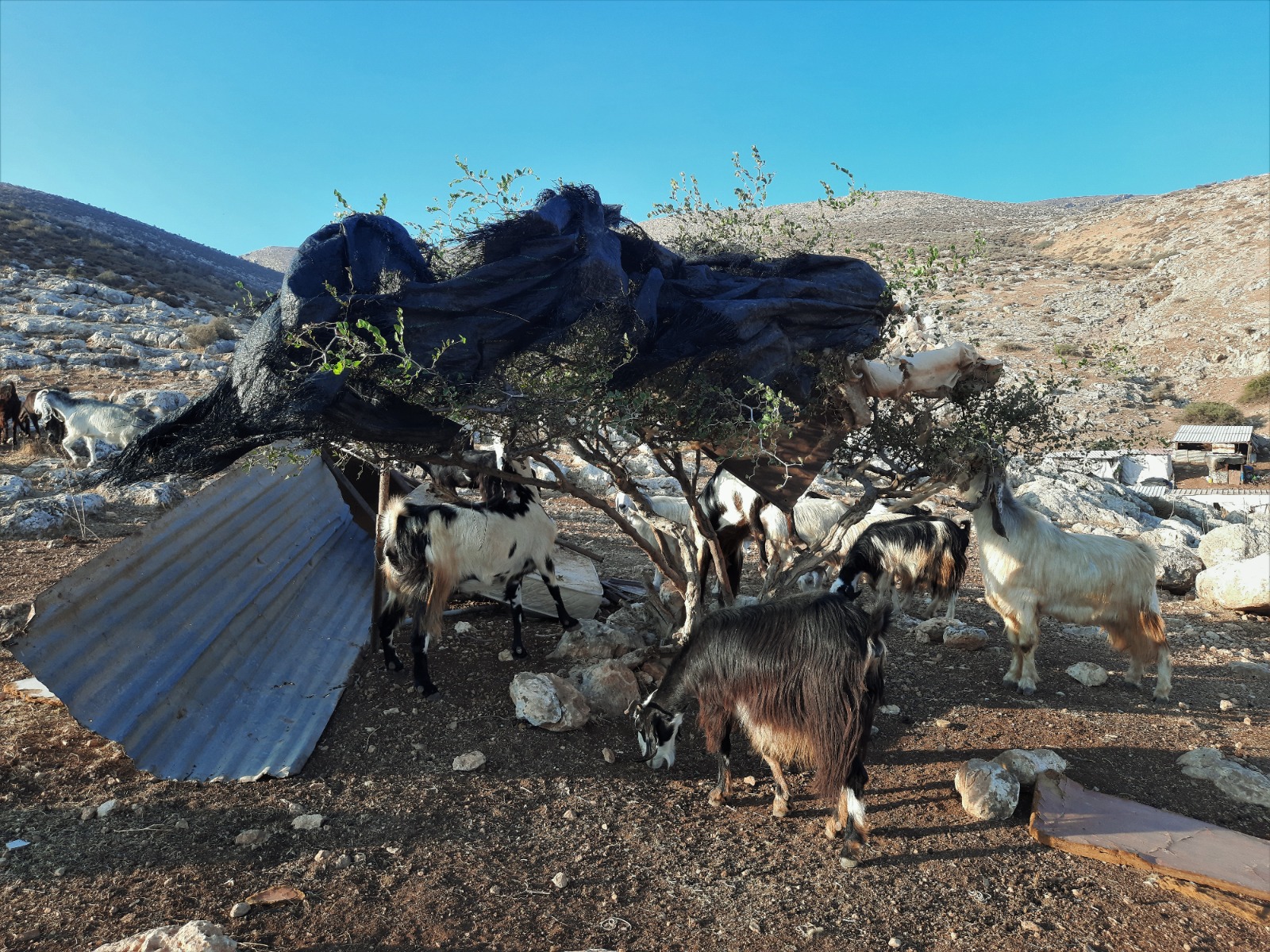 Shahar ShilohNov-3-2021Ein Shibli: grazing begins close to home
-
Ma'ale Efrayim
See all reports for this place-
Ma'ale Efrayim On the road connecting Route 90 (the Jordan Valley road) to the Allon Road.
-
Tayasir CP
See all reports for this place-
Located on road 5799, It is one of the checkpoints control the passage between the northern West Bank and the Jordan Valley. For a long time, it stood empty and open, with only a sign next to it warning against entering Area A. It was adjacent to an old military camp - now everything is neglected. How much money was invested here, and how much brainwashing was done to the soldiers of Netzah Yehuda and Kfir.
Today, it is very difficult to pass there. Many delays. Often, teachers from Tubas are not allowed to pass into the Valley to villages like Ein al-Bida where the local schools are located, and there are no classes. There are additional days when the checkpoint is closed. In general, there is a wait there of about two to four hours to go towards the Valley and also to return. Many times the Palestinians are forced to use the Hamra checkpoint, which also leads into Tubas and the West Bank, but there is also a huge queue there and a long wait.
Following a deadly attack on soldiers at the nearby base in February 2025, the checkpoint was completely closed for the time being. (Updated March 2025)
-
Za'tara (Tapuah)
See all reports for this place-
Za'tara (Tapuah) Za'tara is an internal checkpoint in the heart of the West Bank, at the intersection of Road 60 and Road 505 (Trans-Samaria), east of the Tapuah settlement. This checkpoint is the "border" marked by the IDF between the north and south of the West Bank, in accordance with the policy of separation between the two parts of the West Bank that has been in place since December 2005. At the Za'tara checkpoint, there are separate routes for Israelis and Palestinians. In the route for Israelis, there are no inspections and the route for Palestinians inspects. The queue lengthens and shortens suits. The checkpoint is open 24 hours a day. The checkpoint is partially staffed and the people who pass through it are checked at random.
 Shoshi AnbarSep-27-2023Za'atra (Tapuah Intersection). Signs
-