
Hamra, Tayasir, Wed 7.4.10, Afternoon
Translation: Bracha B.A.
It is dry and cloudy; the yellow of dry vegetation has already replaced the green.
13:00 – We were late for the meeting with the school children. We met them at the junction going west, in the direction of Hama el Malich. On the way to Tayasir there is a sign that reads, "The Netzach Yehuda Battalion."
13:15 – Tayasir Checkpoint
The roadblock is still in place across the road from the west. A soldier asks if we are OK. A red sign on the water tank that says "There's no one here but us" We take our places next to some bored soldiers who are waiting for their lunch. There is little traffic. Trucks pass loaded with hay and a mobile clinic from the Red Cross/Crescent and a few taxis pass by.
13:55 – We left. Throughout the time that we were there we heard shooting, possibly target practice since the area on both sides of the road is designated as an “firing area”.
14:05 – About ten soldiers are standing next to the entrance to the "Netzach Yehuda" Battalion. A jeep from the Liaison and Coordination Administration drives west in the direction of the Tayasir Checkpoint. The road to Hamra is empty. The Guchia checkpoint is closed. The sight of the earth embankments against the lovely landscape brings back the feeling of anger that we know so well.
14:20 – The soldiers have been at it since 5:00 in the morning and are tired out.
The road sign in the direction of Tubas as well as the dirty flag from the Haruv Patrol are lying on the ground. The bulldozer that erected the earth embankment is still parked next to the watchtower. Work is still being done on the road west of the checkpoint. The car with the mobile unit for checking bags still stands at the side of the road. Later a car from the Liaison and Coordination Administration will arrive and they will tell us that the unit is broken. They will also tell us that this is not a good time to come since the shifts are changing and the soldiers who have been on duty since 05:00 are tired and not working as quickly as they usually do. In the morning 4,000 passed through quickly in both directions. They have orders to let everyone through quickly – especially the teachers – despite the work being done on the road.
There is a line of 5-6 cars from the east and occasionally taxis arrive from the west. The passengers approach the turnstile and come out holding their belts. The dog handler under the shed prepares her black dog for guard duty, puts a vest on his back and leaves for the guard position. Occasionally she announces that she is about to check a car but doesn't check anyone.
15:55 – Six soldiers are standing and listening to one of the people from the Liaison and Coordination Administration. Occasionally cars drive by but are not checked. An ambulance with a flashing light stops for a few seconds and then drives on. People emerge quickly from being checked and are threading their belts back into their pants. The dog handler lets the dog check a taxi whose passengers have been checked. The passengers gaze at their belonging s on the side of the road and express their anger at their belongings and the taxi that have been contaminated by the dog.
An armored military vehicle arrives and drives up to the area. One of the soldiers talks with the others and then comes up to us. He is armed from head to foot: weapon, flak vest, and microphone. HE seems angry. Perhaps he was told by the dog handler that we photographed her. He tells us that this is a sterile area, is dangerous, and that we have to leave…The shed is not being used by anyone except for keeping the dog and equipment. The lieutenant insists, saying that we cannot stand there and threatens to call the police. The other soldiers and the representative from the Liaison and Coordination Administration attempt to calm him down, and we tell him that we always stand here.
We left at 15:30.
The gate east of the entrance to the settlement of Roi was open. The gate is used by the Hadidya family since their road was blocked. North of the settlement we stopped next to a young man riding a donkey to give him some useful items that we had. He also knows Dafna.
Hamra (Beqaot)
See all reports for this place-
One of the Jordan Rift Valley checkpoints that prevent direct transit between the West Bank and the Jordan Valley, in addition to Tayasir Checkpoint. Located next to Hamra settlement, on Route 57 and the Allon Road.
Read about the peple of the Jordan Valley and the quiet transfer happening there.
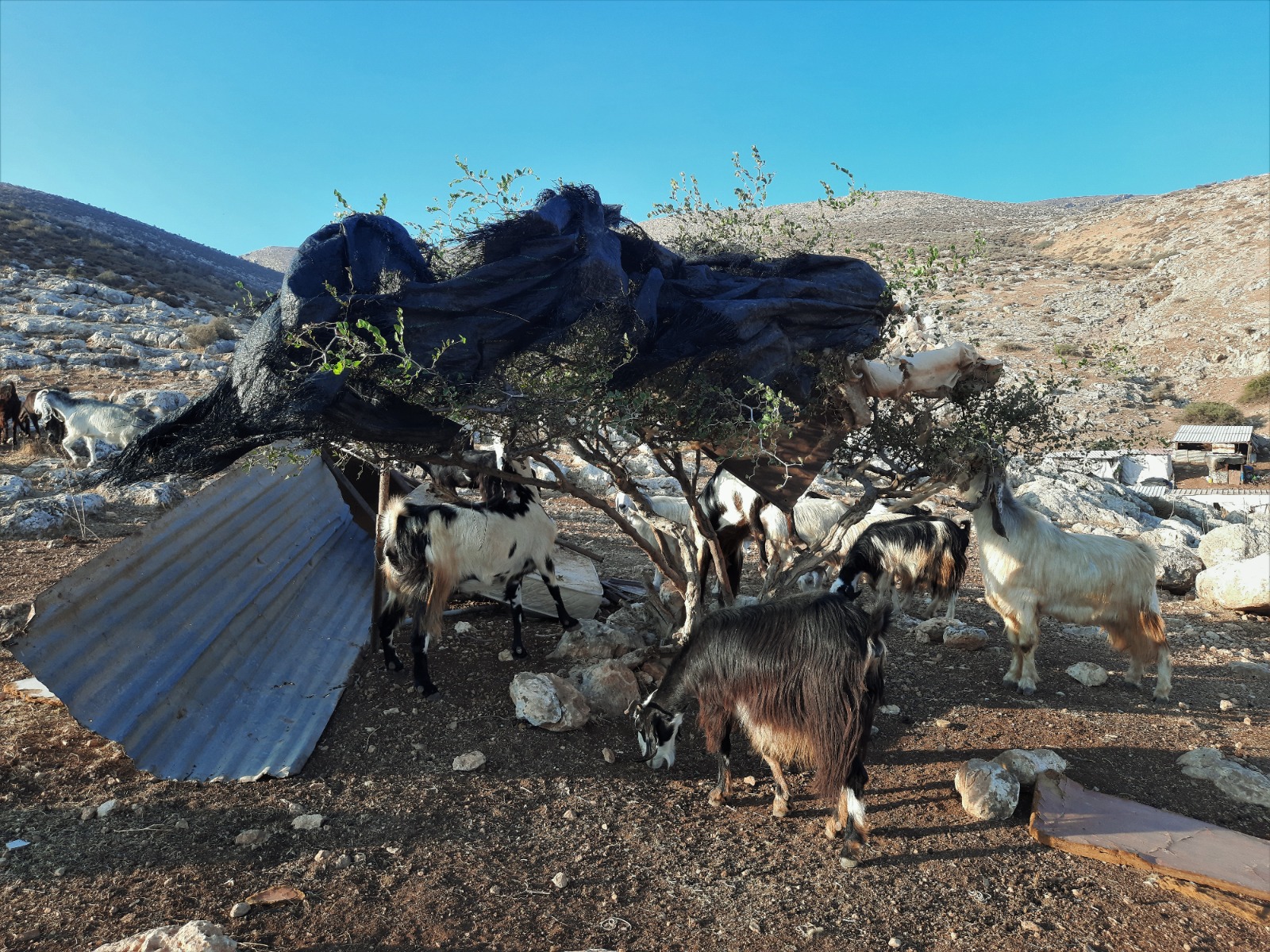 Shahar ShilohNov-3-2021Ein Shibli: grazing begins close to home
-
Tayasir CP
See all reports for this place-
Located on road 5799, It is one of the checkpoints control the passage between the northern West Bank and the Jordan Valley. For a long time, it stood empty and open, with only a sign next to it warning against entering Area A. It was adjacent to an old military camp - now everything is neglected. How much money was invested here, and how much brainwashing was done to the soldiers of Netzah Yehuda and Kfir.
Today, it is very difficult to pass there. Many delays. Often, teachers from Tubas are not allowed to pass into the Valley to villages like Ein al-Bida where the local schools are located, and there are no classes. There are additional days when the checkpoint is closed. In general, there is a wait there of about two to four hours to go towards the Valley and also to return. Many times the Palestinians are forced to use the Hamra checkpoint, which also leads into Tubas and the West Bank, but there is also a huge queue there and a long wait.
Following a deadly attack on soldiers at the nearby base in February 2025, the checkpoint was completely closed for the time being. (Updated March 2025)
-