
Hebron, Sansana, South Hebron Hills, Tarqumiya, Tue 5.2.08, Morning
06:30 – 11:00
The morning following the terrorist attack in Dimona – in the news they continuously report that the terrorists came from South Hebron Hills. We worry of what we will see and how again innocent people will suffer from collective punishment and we will return to the question of the egg and the hen – what causes what? Suicidal attacks harm human rights or vice versa?
Sansana-Meitar Checkpoint
Many Military Police soldiers are on guard. In 6:30 AM there are no workers passing. Some are waiting on the Israeli side for their employers.
Route 60
On the way to Hebron there are no military vehicles in the junctions. There's more traffic of Palestinian cars on the road (did they get rid of the Apartheid decision?). All the dirt mounds along the road 60 are kept. All watch tours are manned.
Hebron
The Disputed House (Bet Hameriva)
A soldier is standing next to the Egged bus stop for Line 161 and watches the settlers' children who are waiting for the bus to take them to school. He doesn't stop or detain anyone. But it is coincidental. Bassam's grocery store is closed.
The way to the Cave of the Patriarchs – next to the concrete blocks soldiers are standing now, in pairs. More soldiers than last week and two weeks ago. The Palestinian kids are on their way to school and they see soldiers and their guns everywhere.
Pharmacy Checkpoint – no picking in the children's back packs. Conclusion: sometime it helps to complain. There are no detainees and the passage is quick.
The Cave of the Patriarchs Checkpoint – Three detainees in the checkpoint near the parking lot. We watch the more than usual warm friendliness between a settler in Hasidic clothes and the policemen. A BP soldier who was formal in his communication with us stops answering our questions after he speaks with the settler. He tells us: "I thought you were on our side – now I know you're the opposite". We assume that if we stay there he will detain Palestinians because of us so we left. Indeed after we leave all Id's are returned. Sometimes one has to know when to leave.
Tel Rumeidah Checkpoint – The soldiers are standing on top and not stopping anyone. We went into the new grocery store, got acquainted with the owners and asked them how they get their merchandise. They answer "by cart and hands". There's snow in all the deserted streets. We ask how they shoveled the snow and the answer was that it took time for the municipality to coordinate with the army but the snow plows arrived and removed the snow under heavy army escort. They also told us that there is currently army search going on the H1 area. We are in the H2 area.
Tarpat Checkpoint – From the car we see a "Shimshon" soldier running with the beret on his head towards a Palestinian woman, dressed traditionally, about 24 years old. The soldier grabs her hand and stops her. We approach them. She doesn’t want to speak with us. A, our driver encourages her. The soldier took her Id for inspection. She is a substitute teacher and is not on the list of teachers who can pass the side entrance. The woman is upset and humiliated – isn’t a gun enough? The soldier touched her body. The soldier yells at me "Maniac" and "don't interrupt my job". Michal stays beside the woman. A settler approaches the soldiers and tells them "don’t pay attention to what they say – didn’t they hear about the suicidal attack yesterday? You are doing a holly work in the checkpoints".
The soldier tells me about a stabbing attempt by a young Palestinian woman in Bethlehem checkpoints. He adds: "why can't she (the Palestinian) greet me with good morning?" The soldiers are not aware of the cultural differences and tell me "we can do whatever we want". We feel that there's nothing to talk about with them – Pent up and not pent up aggression guides them in their actions – these two specific settlers. Young kids who speak Hebrew – they learned it from the soldiers – defend their teacher. And the soldiers: "Why should you care, you'll have time off".
We walk away feeling that maybe here too, because of the settlers words to the soldiers, our presence is not being helpful. We walk to the school Kodova to tell Rim, the school principal to come down and help. Rim, prettier than always with a red coat from Ireland knows already about the detention from the kids and is very happy to see us. We go down the stairs together and see that the teacher has been released. The teacher doesn't want to acknowledge us or make friends with us – she is a religious Muslim and claims that there shouldn't be good relationships between Muslims and Jews, even if they are liberal like us. Rim is a nit apologetic on her behalf. We tell her there's no need to be. We think how human relations can be so complicated in the Middle east and how guns and the people who carry them can destroy the happiness of a young woman, and how willing she is to become a Shahid…. We left with a heavy feeling and also felt lucky we have Rim.
On our way back all soldiers are in place – pairs in every corner and every turn – all the way to Kiryat Arba.
Tarqumiya
Before I left this morning, around 5:30 AM I get a phone call from a Palestinian who wants to thank me for helping improve the passage in Tarkumia. Miki F. received phone calls through Sunday and Monday about how terrible the situation is there. It was awful – workers waited a lot of time, it was unorganized and 2 workers were injured from crashing each other while sanding in line. One of them broke his hand and the other got dry injuries. Both of them were transferred in an ambulance of the Red Cross that a soldier called for to a hospital in Hebron. Because the checkpoints in Husan and Geva were closed, there are about 4000 workers crossing in Tarkumia every day. They don't know each other and there are fights between villages on who will be the first to arrive. The checkpoint opens at 4AM but there aren't enough soldiers. S' the checkpoint commander called me up on
Monday and asked for my intervention. Today they held a debriefing about what happened there on Sunday and they started to man the checkpoint with 14 soldiers. Lets hope they will continue with this. No one means to be evil – everyone wants to make the passage more efficient and human. It is sometimes hard to anticipate what will happen. We also think that it is best for the Palestinians to understand that it is not good for them to arrive all at once. ..that way they will have to wait less and still get to work at the same time.
The despair is big – and not over – but this is the end of the summary.
Hebron
See all reports for this place-
According to Wye Plantation Accords (1997), Hebron is divided in two: H1 is under Palestinian Authority control, H2 is under Israeli control. In Hebron there are 170,000 Palestinian citizens, 60,000 of them in H2. Between the two areas are permanent checkpoints, manned at all hours, preventing Palestinian movement between them and controlling passage of permit holders such as teachers and schoolchildren. Some 800 Jews live in Avraham Avinu Quarter and Tel Rumeida, on Givat HaAvot and in the wholesale market.
Checkpoints observed in H2:
- Bet Hameriva CP- manned with a pillbox
- Kapisha quarter CP (the northern side of Zion axis) - manned with a pillbox
- The 160 turn CP (the southern side of Zion axis) - manned with a pillbox
- Avraham Avinu quarter - watch station
- The pharmacy CP - checking inside a caravan with a magnometer
- Tarpat (1929) CP - checking inside a caravan with a magnometer
- Tel Rumeida CP - guarding station
- Beit Hadassah CP - guarding station
Three checkpoints around the Tomb of the Patriarchs
 Raya YeorDec-18-2025Hebron - Yusri Jaber and part of his family
-
Meitar checkpoint / Sansana
See all reports for this place-
Meitar Checkpoint / Sansana The checkpoint is located on the Green Line and serves as a border crossing between Israel and the West Bank. It is managed by the Border Crossing Authority of the Defense Ministry. It is comprised of sections for the transfer of goods as well as a vehicle checkpoint (intended for holders of blue identity cards, foreign nationals or diplomats and international organizations). Passing of Palestinians is prohibited, except for those with entry permits to Israel. Palestinians are permitted to cross on foot only. The crossing has a DCO / DCL / DCL / DCL (District Coordination Office), a customs unit, supervision, and a police unit. In the last year, a breach has been opened in the fence, not far from the crossing. This breach is known to all, including the army. There does not appear to be any interest in blocking it, probably as it permits needed Palestinian workers without the bureaucratic permits to get to work in Israel. Food stalls and a parking area economy have been created, but incidents of violent abuse by border police have also been recorded. Updated April 2022
-
South Hebron Hills
See all reports for this place-
South Hebron Hills
South Hebron Hills is a large area in the West Bank's southern part.
Yatta is a major city in this area: right in the border zone between the fertile region of Hebron and its surroundings and the desert of the Hebron Hills. Yatta has about 64,000 inhabitants.
The surrounding villages are called Masafer Yatta (Yatta's daughter villages). Their inhabitants subsist on livestock and agriculture. Agriculture is possible only in small plots, especially near streams. Most of the area consists of rocky terraces.Since the beginning of the 1980s, many settlements have been established on the agricultural land cultivated by the Palestinians in the South Hebron Hills region: Carmel, Maon, Susia, Masadot Yehuda, Othniel, and more. Since the settlements were established and Palestinians cultivation areas have been reduced; the residents of the South Hebron Hills have been suffering from harassment by the settlers. Attempts to evict and demolish houses have continued, along with withholding water and electricity. The military and police usually refrain from intervening in violent incidents between settlers and Palestinians do not enforce the law when it comes to the investigation of extensive violent Jewish settlers. The harassment in the South Hebron Hills includes attacking and attempting to burn residential tents, harassing dogs, harming herds, and preventing access to pastures.
There are several checkpoints in the South Hebron Hills, on Routes 317 and 60. In most of them, no military presence is apparent, but rather an array of pillboxes monitor the villages. Roadblocks are frequently set up according to the settlers and the army's needs. These are located at the Zif Junction, the Dura-al Fawwar crossing, and the Sheep Junction at the southern entrance to Hebron.
Updated April 2022
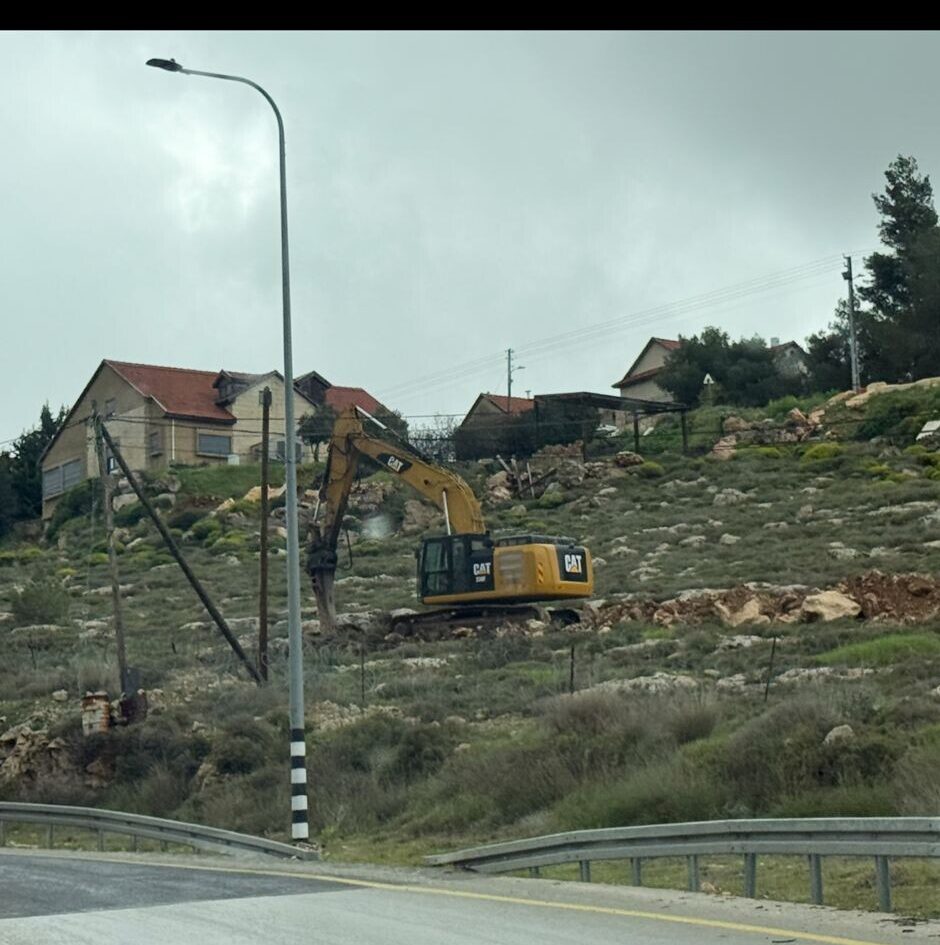 MuhammadFeb-24-2026South Hebron Hill, Beit Hagai: Paving an internal security road
-
Tarqumiya CP
See all reports for this place-
The Tarqumiya Checkpoint is one of the largest and busiest checkpoints where people and goods cross into Israel. It is located on the Separation Barrier close to the Green Line, on Road 35 (connecting Beer Sheva and Hebron). It is run by the Israel Defense Ministry’s Crossings Administration with civilian secuirty companies running the day to day operations. The checkpoint is indeed open to vehicles in both directions 24/7, but Palestinians are prevented from crossing in vehicles, except in special cases. MachsomWatch activists visit the checkpoint as it opens at 3:45 am, in order to observe the daily passage of nearly 10,000 Palestinian workers. The workers arrive from throughout the Southern West Bank. Our activists report on the tremendous overcrowding at this checkpoint; they have observed young men climbing and scrambling on the fences and roofs of the ‘access cages’. This is how the work day begins for those who ‘build the land of Israel’. updated November 2019
-