
Hebron, South Hebron Hills, Tue 10.8.10, Morning
South Mount Hebron, Hebron
Translation: Bracha B.A.
1. More evidence of the rampant behavior of settlers in Hebron
2. The Civilian Authority dismantles and confiscates irrigation equipment of farmers for the fourth time.
The entire trip to Hebron was routine except for a large military convoy that we passed. There was no hint of the activity that we were to witness in Hebron.
Hebron
Immediately after we reached Tzir Tzion – known as Wadi Hassin to the local residents, immediately behind the checkpoint that separates Kiryat Arba from the rest of the city, next to the first row of shops, a man named Fatkhi Jabber el Gabri invited us to see his shop that had been burned. The graffiti scrawled on the doors explained everything. He explained that the shop had been burned 40 days ago but none of the factors responsible had offered any answer or help. The store was completely burned.
South Mount Hebron
Before continuing on our usual route we stopped to see Atta Gaber and to hear if he had any news. He called us to come and said, "They're here again." A team of Rueters crewmen were situated opposite his house and we were told to go to the fields opposite where people were dismantling equipment. We hurried down dirt roads and reached the vineyards and fields where workers from the civilian authority were dismantling sprinklers and loading them onto a truck with a crane. A bulldozer was leveling the ground. Soldiers and people from the Border Patrol guarded the workers. We asked to speak to the person in charge and were referred to Yizhar Lahav who is appointed by the authority and in charge of water. He presented us with documents. We asked if they had demolition orders.
"Not here," he answers. "We're not demolishing anything, We're only confiscating the irrigation equipment. They are stealing water." After some more discussion regarding the legality of their actions an officer from the Liaison and Coordination Administration arrives and orders them to leave. He orders his people, "We have to go somewhere else."
All these logistics and manpower left to continue their "sacred work." Perhaps our presence daunted them. We returned to our car to find the back window shattered and a rock on the ground among the broken glass. This was not done by chance.
Hebron
See all reports for this place-
According to Wye Plantation Accords (1997), Hebron is divided in two: H1 is under Palestinian Authority control, H2 is under Israeli control. In Hebron there are 170,000 Palestinian citizens, 60,000 of them in H2. Between the two areas are permanent checkpoints, manned at all hours, preventing Palestinian movement between them and controlling passage of permit holders such as teachers and schoolchildren. Some 800 Jews live in Avraham Avinu Quarter and Tel Rumeida, on Givat HaAvot and in the wholesale market.
Checkpoints observed in H2:
- Bet Hameriva CP- manned with a pillbox
- Kapisha quarter CP (the northern side of Zion axis) - manned with a pillbox
- The 160 turn CP (the southern side of Zion axis) - manned with a pillbox
- Avraham Avinu quarter - watch station
- The pharmacy CP - checking inside a caravan with a magnometer
- Tarpat (1929) CP - checking inside a caravan with a magnometer
- Tel Rumeida CP - guarding station
- Beit Hadassah CP - guarding station
Three checkpoints around the Tomb of the Patriarchs
 Raya YeorDec-18-2025Hebron - Yusri Jaber and part of his family
-
South Hebron Hills
See all reports for this place-
South Hebron Hills
South Hebron Hills is a large area in the West Bank's southern part.
Yatta is a major city in this area: right in the border zone between the fertile region of Hebron and its surroundings and the desert of the Hebron Hills. Yatta has about 64,000 inhabitants.
The surrounding villages are called Masafer Yatta (Yatta's daughter villages). Their inhabitants subsist on livestock and agriculture. Agriculture is possible only in small plots, especially near streams. Most of the area consists of rocky terraces.Since the beginning of the 1980s, many settlements have been established on the agricultural land cultivated by the Palestinians in the South Hebron Hills region: Carmel, Maon, Susia, Masadot Yehuda, Othniel, and more. Since the settlements were established and Palestinians cultivation areas have been reduced; the residents of the South Hebron Hills have been suffering from harassment by the settlers. Attempts to evict and demolish houses have continued, along with withholding water and electricity. The military and police usually refrain from intervening in violent incidents between settlers and Palestinians do not enforce the law when it comes to the investigation of extensive violent Jewish settlers. The harassment in the South Hebron Hills includes attacking and attempting to burn residential tents, harassing dogs, harming herds, and preventing access to pastures.
There are several checkpoints in the South Hebron Hills, on Routes 317 and 60. In most of them, no military presence is apparent, but rather an array of pillboxes monitor the villages. Roadblocks are frequently set up according to the settlers and the army's needs. These are located at the Zif Junction, the Dura-al Fawwar crossing, and the Sheep Junction at the southern entrance to Hebron.
Updated April 2022
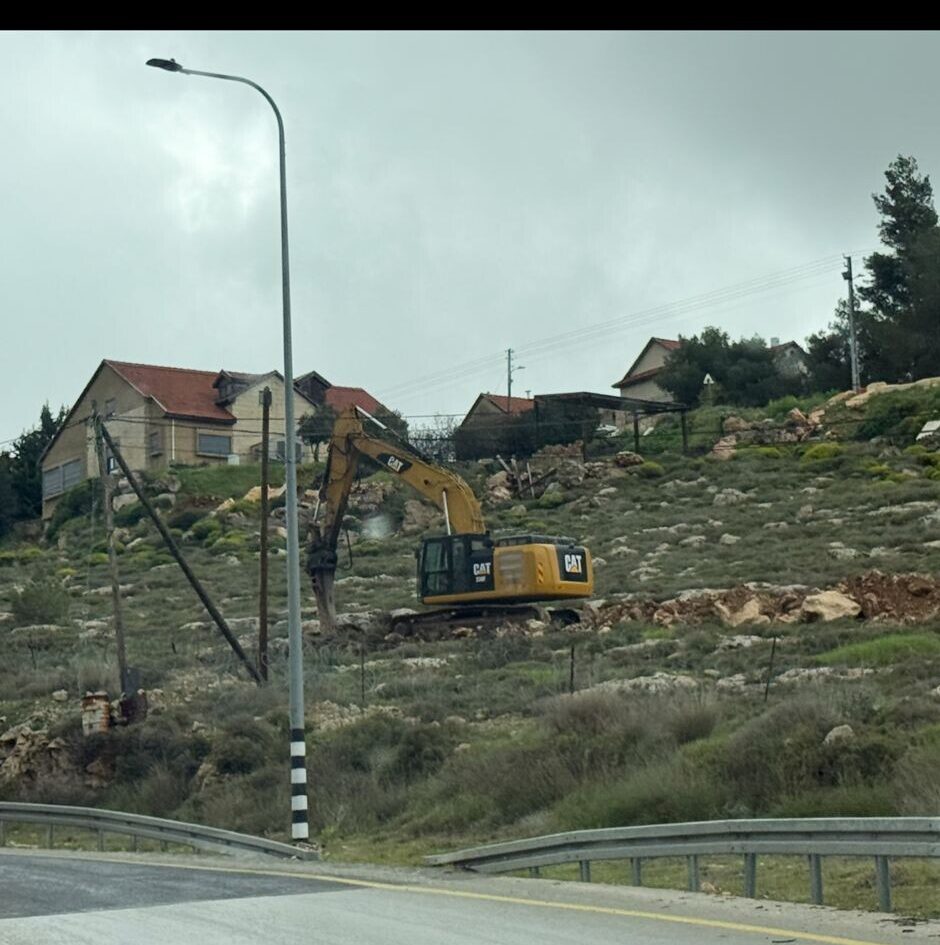 MuhammadFeb-24-2026South Hebron Hill, Beit Hagai: Paving an internal security road
-