
Hebron, South Hebron Hills, Tue 9.11.10, Morning
Translator: Charles K.
Meitar crossing
Despite the complaints, by 6:45 the fenced corridor is empty. All the laborers have crossed to the Israeli side. Two buses carrying relatives of prisoners wait on the Palestinian side.
We agreed to come again next week, at 4:30 in the morning, to see what goes on before 6:30.
Route 60
Heavy traffic, vehicles of all kinds. A jeep apparently outfitted with surveillance devices covering a broader area is parked at the Eshtamoa settlement. We hear the buzz of an unmanned drone in the sky. There’s also an observation balloon.
At the Dura Elfawwar junction there’s a flying checkpoint! A spiked barrier and soldiers who’ve come down from the pillbox and search the cars entering and leaving Elfawwar. When we return, they’re no longer there.
Razor wire glints in the sun below Beit Haggai. There’s also a roadblock at the southern entrance to Hebron. Soldiers are inspecting a car they’ve detained. A soldier on the hill, weapon drawn, covers them.
Kvasim junction– A busy sheep market before the holiday. There, too, soldiers on guard as they are every week. In view of their responses in previous weeks, we decided not to ask them why they’re interfering with the daily life of the people. It would only depress us.
Hebron
The new entrance being built to Kiryat Araba and the finishing touches to the 144 housing units in Nofei Mamreh are very impressive and make us envious. For that, there’s money, and lots of it.
Soldiers are everywhere in town. Around the Worshippers Route – soldiers. At Curve 160 – soldiers.
At the Pharmacy checkpoint the school janitor says everything is ok, and there aren’t any particular problems. Suddenly two soldiers and an officer from the Lavie battalion show up, in addition to the soldiers at the checkpoint.
We ask the CPT women about the atmosphere at the checkpoint. They’re happy to report that those soldiers came and talked to the ones at the checkpoint, and then they stopped searching the children’s schoolbags.
They said they spoke to the soldiers, who told them they’d inspect the bags of only 1 in 10 children, for security reasons, of course. Perhaps someone’s reading the reports of all the organizations, and taking them seriously!? Because a minute ago, and in previous days, they treated every compass and ruler as if it had been a weapon.
We tried to find a member of Osama abu Sharach’s family, to ask how they are. Everything was still closed. We were told he’s renovating his home, and he’ll move back in when the renovations have been completed.
In general, we’re happy to see that Palestinians are renovating homes in the entire area surrounding the Cave of the Partriarchs.
I keep remembering the verse, “But the more they afflicted them, the more they multiplied and the more they spread abroad” (Exodus 1:12). Isn’t that written in our own sources?! Shouldn’t we have learned to be smarter, more humane, more understanding?! Meanwhile, this whole city is filled with people who’ve selected entirely different verses to guide their lives.
Hebron
See all reports for this place-
According to Wye Plantation Accords (1997), Hebron is divided in two: H1 is under Palestinian Authority control, H2 is under Israeli control. In Hebron there are 170,000 Palestinian citizens, 60,000 of them in H2. Between the two areas are permanent checkpoints, manned at all hours, preventing Palestinian movement between them and controlling passage of permit holders such as teachers and schoolchildren. Some 800 Jews live in Avraham Avinu Quarter and Tel Rumeida, on Givat HaAvot and in the wholesale market.
Checkpoints observed in H2:
- Bet Hameriva CP- manned with a pillbox
- Kapisha quarter CP (the northern side of Zion axis) - manned with a pillbox
- The 160 turn CP (the southern side of Zion axis) - manned with a pillbox
- Avraham Avinu quarter - watch station
- The pharmacy CP - checking inside a caravan with a magnometer
- Tarpat (1929) CP - checking inside a caravan with a magnometer
- Tel Rumeida CP - guarding station
- Beit Hadassah CP - guarding station
Three checkpoints around the Tomb of the Patriarchs
 Raya YeorDec-18-2025Hebron - Yusri Jaber and part of his family
-
South Hebron Hills
See all reports for this place-
South Hebron Hills
South Hebron Hills is a large area in the West Bank's southern part.
Yatta is a major city in this area: right in the border zone between the fertile region of Hebron and its surroundings and the desert of the Hebron Hills. Yatta has about 64,000 inhabitants.
The surrounding villages are called Masafer Yatta (Yatta's daughter villages). Their inhabitants subsist on livestock and agriculture. Agriculture is possible only in small plots, especially near streams. Most of the area consists of rocky terraces.Since the beginning of the 1980s, many settlements have been established on the agricultural land cultivated by the Palestinians in the South Hebron Hills region: Carmel, Maon, Susia, Masadot Yehuda, Othniel, and more. Since the settlements were established and Palestinians cultivation areas have been reduced; the residents of the South Hebron Hills have been suffering from harassment by the settlers. Attempts to evict and demolish houses have continued, along with withholding water and electricity. The military and police usually refrain from intervening in violent incidents between settlers and Palestinians do not enforce the law when it comes to the investigation of extensive violent Jewish settlers. The harassment in the South Hebron Hills includes attacking and attempting to burn residential tents, harassing dogs, harming herds, and preventing access to pastures.
There are several checkpoints in the South Hebron Hills, on Routes 317 and 60. In most of them, no military presence is apparent, but rather an array of pillboxes monitor the villages. Roadblocks are frequently set up according to the settlers and the army's needs. These are located at the Zif Junction, the Dura-al Fawwar crossing, and the Sheep Junction at the southern entrance to Hebron.
Updated April 2022
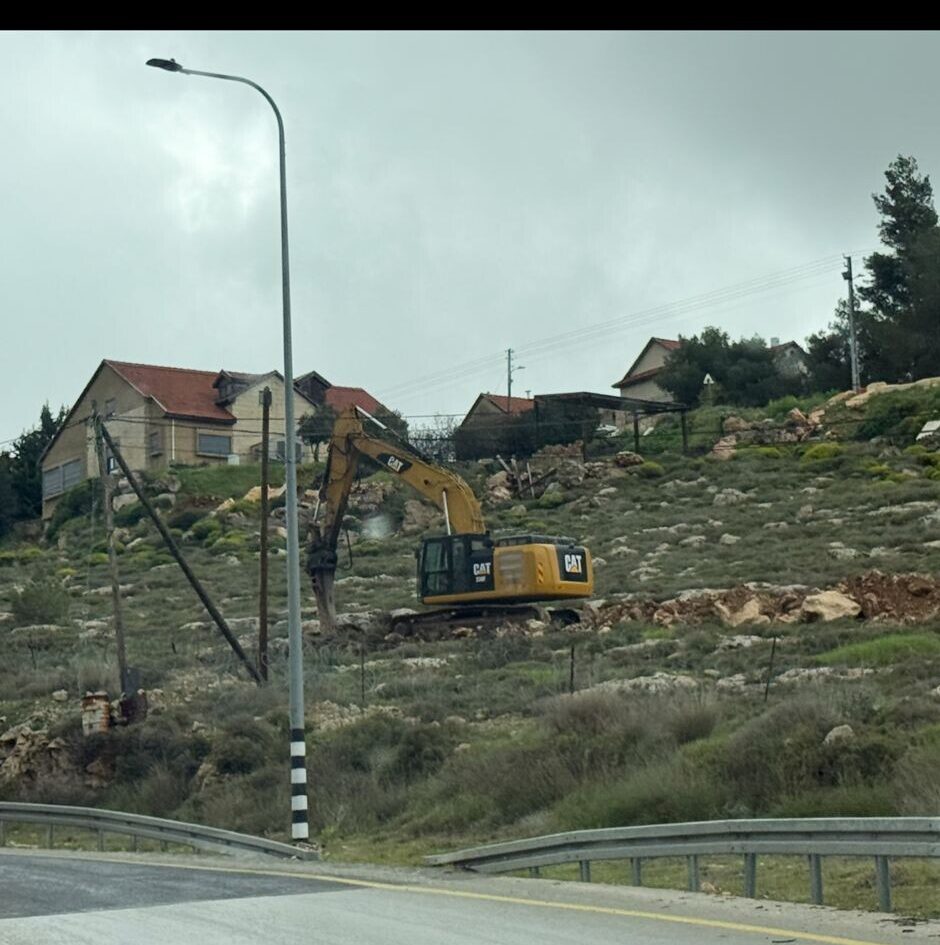 MuhammadFeb-24-2026South Hebron Hill, Beit Hagai: Paving an internal security road
-