
Highway 398 ("Lieberman Road"): Blockades on all narrow roads. Only one narrow connecting road remains open - the "Fabric of Life" Road
Bethlehem Checkpoint; Mazmuriya Checkpoint; Route 398 and Route 356 (Lieberman Roads); “Shortcut” through the settlement of Efrat; Visit with the Nafouz Dadoua family in Umm Rukba (Al-Khader); Return via the relocated Walaja Checkpoint.
Bethlehem Checkpoint:
It’s been a long while since we visited the Bethlehem checkpoint, and the evidence is that no one rushed to kick us out at the entrance. But as soon as we stood at the gate, we were informed that we were not allowed to walk on the path leading to the pedestrian crossing into Bethlehem. A soldier called the checkpoint commander, who treated us with surprising kindness as he explained the current situation at the checkpoint.
The flow of workers to Israel was sparse, and there were almost no buses. We saw church workers and a few laborers. We spoke with some of them, especially one man in a tragic situation—his daughter has been hospitalized at Hadassah for a long time, and he is trying to find work to help fund her kidney transplant.
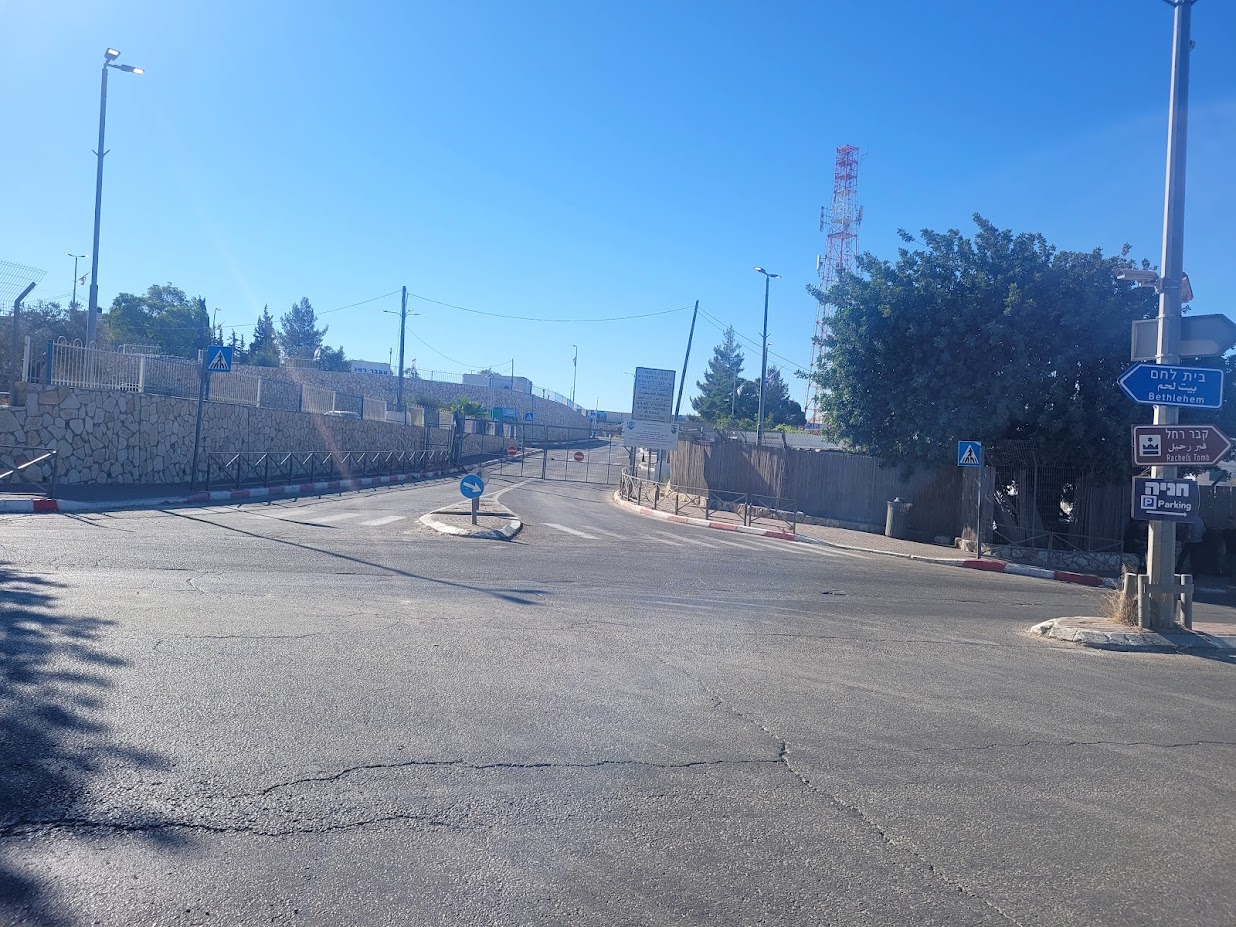
The checkpoint, which was completely closed during the Israel-Iran war, is now open from 6:00 AM to 1:00 PM. About 500 people pass through daily, compared to 4,000 before October 2023. The commander said there are plans to gradually increase the number of construction work permits. The vehicle checkpoint between Jerusalem and Bethlehem was closed.
It’s awful that the West Bank is starving, while there is a high demand for construction in Israel—and yet the gates for work remain closed. When will this end?


Drive on Route 398 and Route 356 (“Lieberman Roads”):
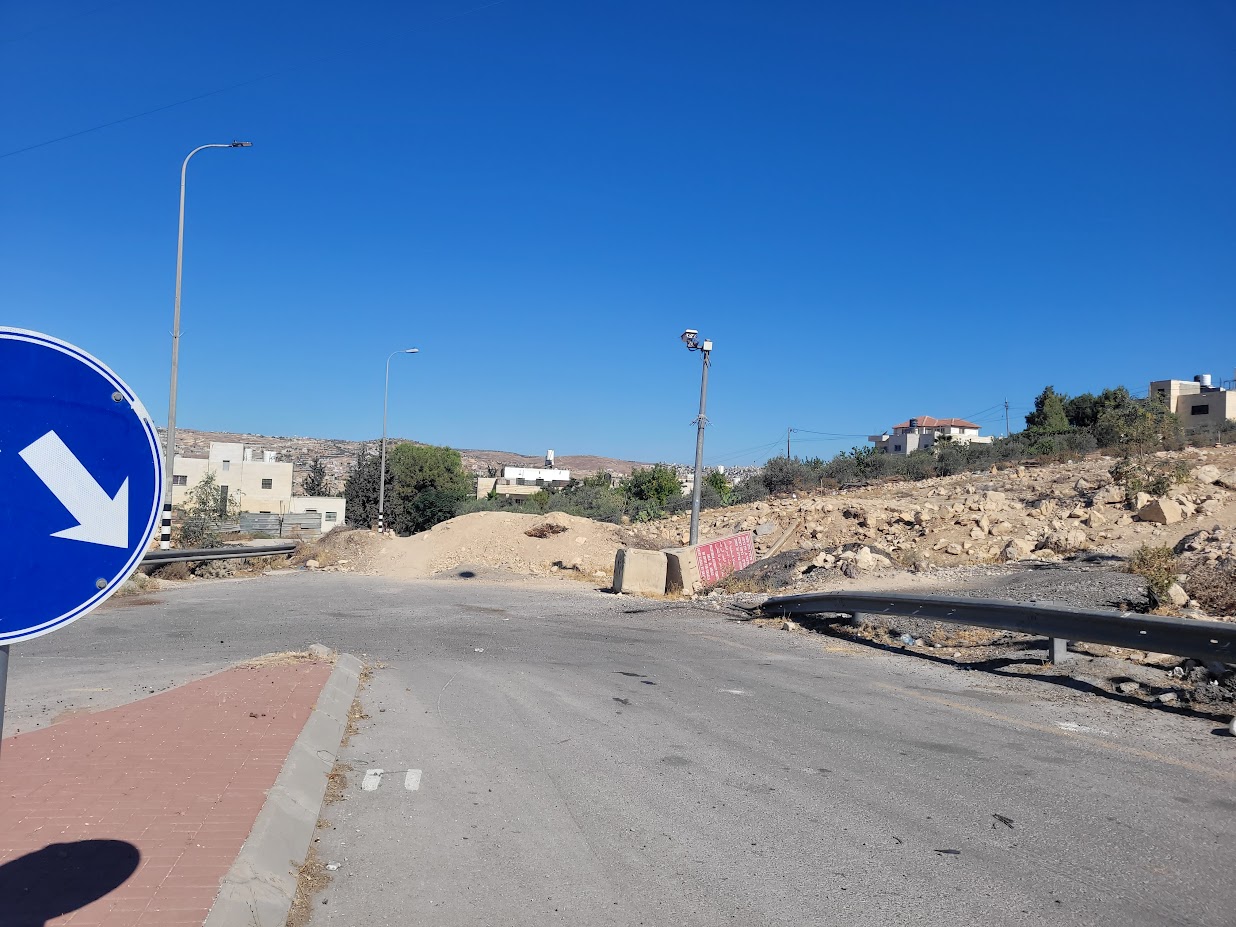
The situation hasn’t changed since October 2023—perhaps it’s even worse. Roadblocks remain on all the narrow roads coming from Jerusalem and the northern West Bank, which once connected to the “Lieberman Roads.” That used to be the only way for Palestinians to get to Hebron and the southern West Bank, and even then, the journey was long and challenging.
Now, only one narrow underpass road remains open, from Ubeidiya to Beit Sahour and into the heart of Bethlehem. All Palestinian movement between the northern and southern West Bank now funnels through this “fabric of life” road. It’s hard to believe that such brutal arbitrariness has been going on for two and a half years.
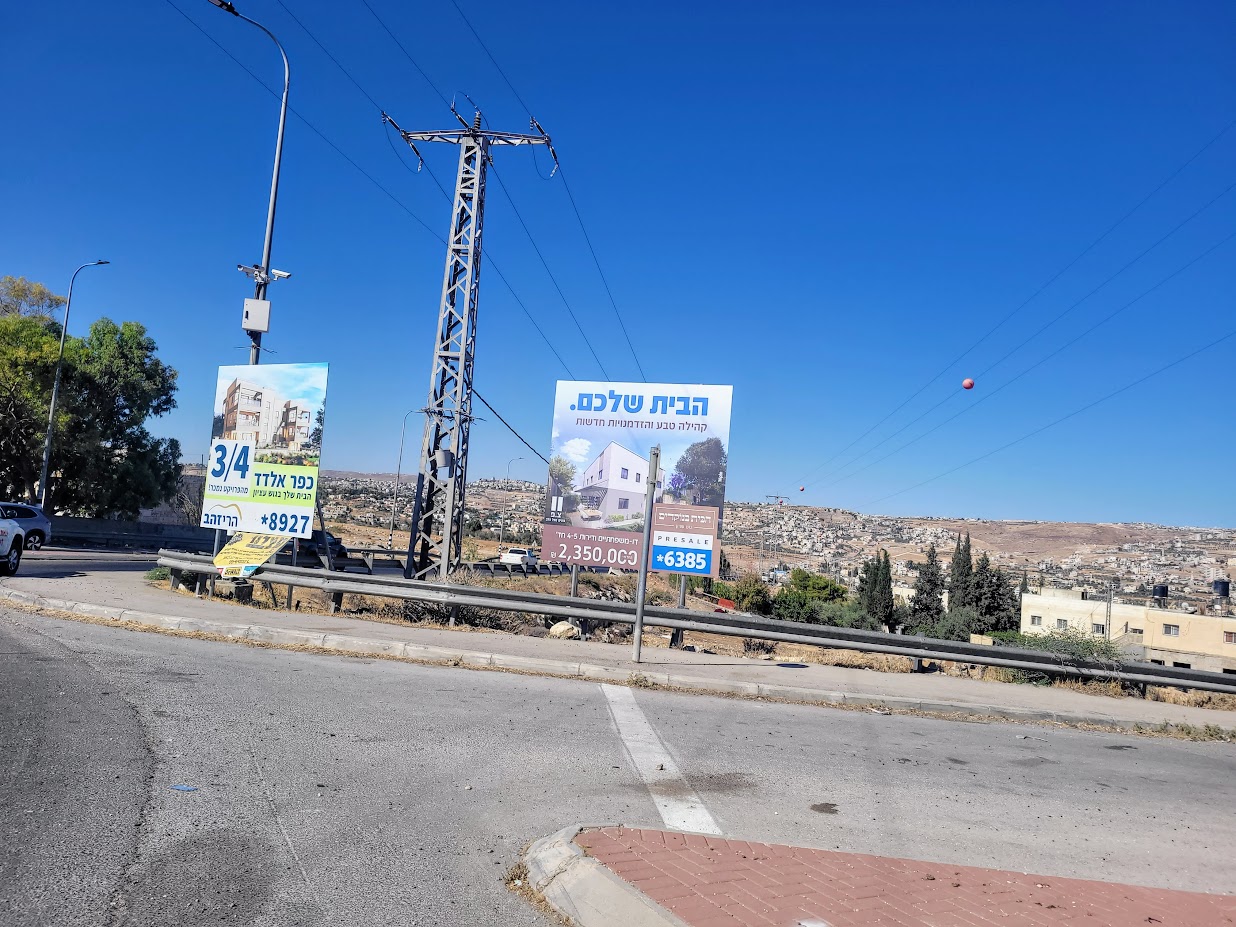
The settlers are led by “Lieberman Roads,” free of Palestinians, from Jerusalem to the “Eastern Gush Etzion” settlements. It’s unbelievable — the small historical bloc in the west has expanded southward and eastward, reaching the desert and the outskirts of the Dead Sea. The “Gush Etzion Regional Council” now includes Tekoa, Nokdim, Ibei HaNahal, Ma’ale Amos, and more wild outposts that are springing up rapidly. Open our map and you won’t believe your eyes…
We headed toward Route 60 and decided to drive through Efrat as a shortcut, which turned out to be a mistake. It took us 25 minutes with NO TRAFFIC, because the main road of this well-established, well-kept settlement, was designed in the shape of a snake, and In this way, it occupies a large strip along Route 60 and expands eastward. There are already approved plans (by Bennett) for Givat Eitam, known as E2 — and not without reason. It will, as usual, be connected to the settlement that spawned it and will also block Bethlehem from the south.
We arrived at the home of our dear friend Nafouz Dadoua in Umm Rukba (a northern neighborhood of Al-Khader). We hadn’t visited Nafouz in a long time, and she didn’t look well — pale and with medical issues. She lives in anxiety because the bulldozers could arrive any day without warning. Nafouz, a widow, has five beautiful daughters aged 15 to 18 and two young sons. There’s a traditional social issue with no man in the house, and there are financial problems. The 17-year-old is set to marry in two weeks — to her cousin, the son of her mother’s sister. Nafouz says this is for the best. She’ll move to Dura, where Nafouz has family, and it’s quieter there, according to her. She’ll of course stop studying. It’s a bit hard for us to see her marry so young, but the family’s situation is difficult, and she’s marrying into a good, familiar family. The girl looks happy and we are excited with her.
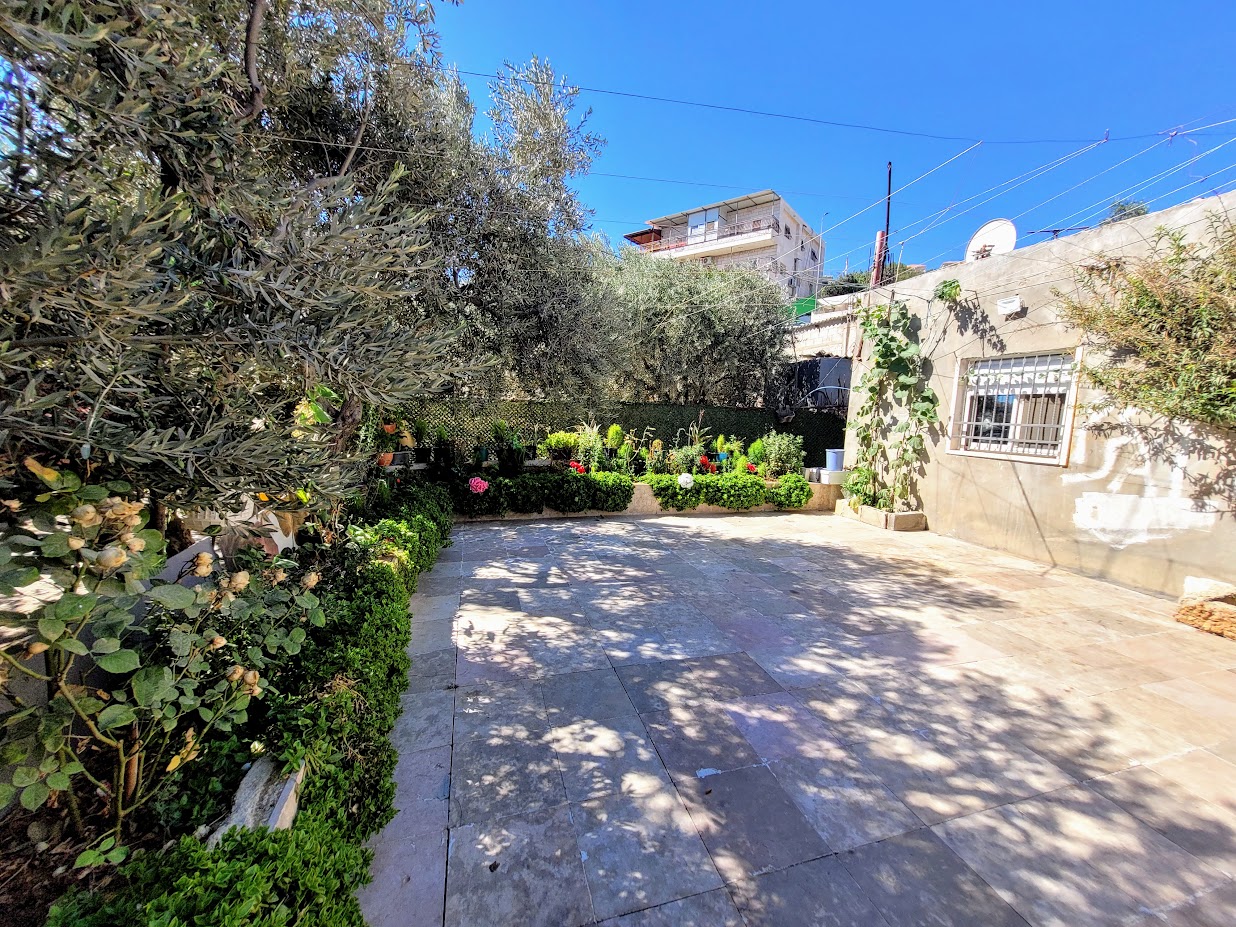
We’re sitting in the well-kept garden, drinking sweet sage tea (maramiyyeh). All the children are with us, and we’re talking about the uncertain future — about the rejection of the humanitarian petition against the demolition, which was signed with unusual speed by Supreme Court Justice Stein. We talk about what everyone will wear to the wedding, how Nafouz will come to visit, and what the children will do during the vacation, when their movement is entirely restricted by checkpoints. Kamal, our driver, is invited to the wedding and they promised to send us photos.
We drive back through Al-Walaja. The checkpoint was moved a month ago to a new location, preventing Al-Walaja residents without a blue ID card from accessing the Ein Haniya spring park. The spring and its pool had served for generations as a place of recreation, gathering, and traditional ceremonies for the residents of Al-Walaja. Aviv Tatarsky from “Ir Amim” asked us for contacts in the army who might be able to ease the harsh new restriction on farming the lands near the checkpoint. We couldn’t find such a contact, and he is still searching. Times have changed, and all the human rights organizations are disconnected and unable to file complaints with the Civil Administration or the army.
Meanwhile, house demolitions continue in the part of Al-Walaja that was annexed to Jerusalem. You’ve been warned — there is a heavy price for the blue residency ID.
Location Description
Al-Khader
See all reports for this place-
Al-Khadr served as transit from Bethlehem to Route 60. A dirt mound prevent vehicular traffic from and to Bethlehem from the west. A small market developed there. Taxi ranks were on both sides of the obstruction. It was replaced by a similar obstruction at Al Nashash which has recently been removed and thus the way from Bethlehem to Hebron through Route 60 is now free.
-
Al-Walaja
See all reports for this place-
Al-Walaja
A checkpoint for vehicles, located on the Green Line, in Nahal Refaim National Park. Staffed by Border Police and private security companies and active 24 hours a day. Palestinians are not allowed to cross, except for residents of East Jerusalem. Preparations are made to move the checkpoint so that The Ein Haniya spring, which has been used by the villagers for generations, will be permanently blocked for Palestinians, as will the the access to the 1,200 dunams of their surrounding agricultural land. Machsomwatch has been in contact with the people of village and reported on their changing situation over the years. (See the link to the reports)
Part of the village is in the municipal territory of Jerusalem drawn after 1967. In 2009 the village was surrounded by a separation barrier (mostly a wall) and then demolitionx of houses in the Jerusalemite part were carried out due to lack of building permits (but the fact is that no outline plan was prepared for the village, therefore it is impossible to get any permit for construction). In 2018, a petition was submitted to stop the demolitions, and it was agreed that the village, with the help of the organizations "Bimkom" and "Ir Amim" will prepare an outline plan, while the demolitions orders will be freezed. Despite the fact that the approval process is underway and soon to be discussed in court, a decision was approved in August 2023 to demolish 6 houses immediatly . Protest actions by inhabitants and various organizations, including Machsomwatch are now taking place to cancel this decree.
updated to August 2023
-
Bethlehem (300)
See all reports for this place-
Located adjacent to the Separation Wall ("Jerusalem Wrap") at the north entrance to Bethlehem, this checkpoint cuts off Bethlehem and the entire West Bank from East Jerusalem, with all the serious implications for health services, trade, education, work and the fabric of life. The checkpoint is manned by the Border police and private security companies. It is an extensive infrastructure barrier and is designated as a border terminal, open 24 hours a day for foreign tourists. Israeli passport holders are not allowed to pass to Bethlehem, and Palestinian residents are not allowed to enter Jerusalem, except those with entry permits to Israel and East Jerusalem residents. Israeli buses are allowed to travel to Bethlehem only through this checkpoint.The checkpoint, which demonstrated harsh conditions of crowding and extreme passage delays for years, started employing advanced electronic identification posts and has upgraded its gates' system as of the middle of 2019 - and conditions improved.Adjacent to the checkpoint, in an enclosure between high walls and another passage, is the historic Rachel's Tomb, which is now embedded within a concrete fortified building. It contains prayer and study complexes for Jews only, as well as a residential complex. updated November 2019 .
-