
Huda's kindergarten in Hashem al Daraj


And again we found ourselves on Route 317 on our way to Huda’s kindergarden in Hashem El Daraj.
It is the end of summer after a bad winter with little rain and this is the way the road looks. The garden has been renovated during the summer holidays and everything is new and well maintained. We found the kids in various activities, some learned to write and some played construction games. After their initial shyness the children opened up and welcomed us happily. At the food break Muhammad brought them pita, juice and chocolate which made them very happy.
Huda also said that not all children can bring food to the garden, as well as a request that we collect clothes for children, even shoes, because there are children who come barefoot to kindergarten. The children are three to six and maybe some of the readers of the report have the opportunity to donate something to these adorable children. It seems to me that everything is welcome. It is one of the poorest communities in southern Mount Hebron.
The children said goodbye to us.
But on the way back, as we passed Umm to Kheir, the ruins brought us back to the harsh reality.
At the exit from Umm al-Kheir to the main road, an army-backed police van stood and stopped a car as usual, an old man was required to take all the contents of the car out. There were sacks of food for the sheep that look very heavy, but no one came to their aid. I guess they confiscated all the contents of the car and maybe the car itself. Why???
South Hebron Hills
See all reports for this place-
South Hebron Hills
South Hebron Hills is a large area in the West Bank's southern part.
Yatta is a major city in this area: right in the border zone between the fertile region of Hebron and its surroundings and the desert of the Hebron Hills. Yatta has about 64,000 inhabitants.
The surrounding villages are called Masafer Yatta (Yatta's daughter villages). Their inhabitants subsist on livestock and agriculture. Agriculture is possible only in small plots, especially near streams. Most of the area consists of rocky terraces.Since the beginning of the 1980s, many settlements have been established on the agricultural land cultivated by the Palestinians in the South Hebron Hills region: Carmel, Maon, Susia, Masadot Yehuda, Othniel, and more. Since the settlements were established and Palestinians cultivation areas have been reduced; the residents of the South Hebron Hills have been suffering from harassment by the settlers. Attempts to evict and demolish houses have continued, along with withholding water and electricity. The military and police usually refrain from intervening in violent incidents between settlers and Palestinians do not enforce the law when it comes to the investigation of extensive violent Jewish settlers. The harassment in the South Hebron Hills includes attacking and attempting to burn residential tents, harassing dogs, harming herds, and preventing access to pastures.
There are several checkpoints in the South Hebron Hills, on Routes 317 and 60. In most of them, no military presence is apparent, but rather an array of pillboxes monitor the villages. Roadblocks are frequently set up according to the settlers and the army's needs. These are located at the Zif Junction, the Dura-al Fawwar crossing, and the Sheep Junction at the southern entrance to Hebron.
Updated April 2022
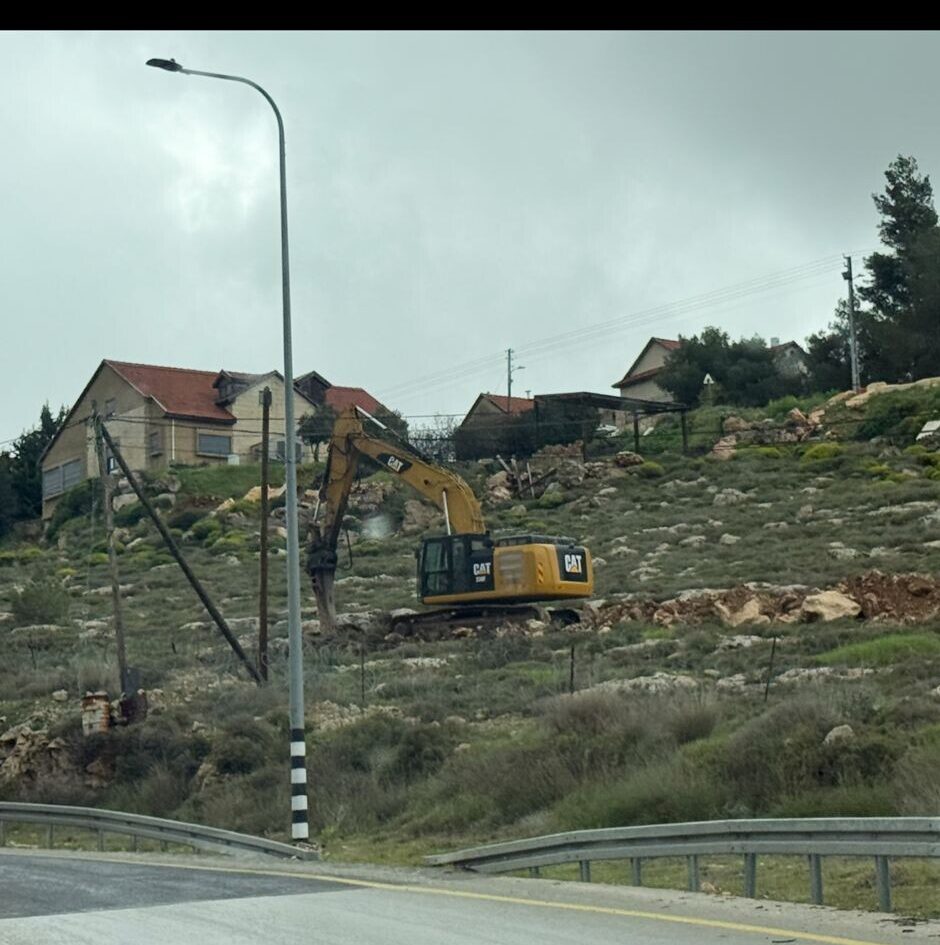 MuhammadFeb-24-2026South Hebron Hill, Beit Hagai: Paving an internal security road
-