
Jaba (Lil), Qalandiya, Sun 1.5.11, Afternoon
Translating: Ruth Fleishman
"All the Israeli citizens, regardless of their race and religion, know that Israel is, was and will stay obligated to being the most anti-racist country in the world…"
Qalandiya checkpoint:
– On the same day that the Israeli president spoke these word (Hebrew source: http://www.calcalist.co.il/local/articles/0,7340,L-3516288,00.html), we witnessed this "anti-racist" country physically and mentally torture a person with heart disease on his way to surgery.
The 46 year old man from Gaza had been transferred from one stretcher to another, from one ambulance to another, ever since the break of dawn, exposing him to the public eye. This was in violation of the right to privacy embedded in the patient's bill of rights: "…maintain the dignity and privacy of the patient at all stages of his treatment" (Patient's Right Act, 1996, chapter 3/10). Not having civil rights means that even his privacy had been taken from him, this is his "punishment" for not having been born to the same people as a the president.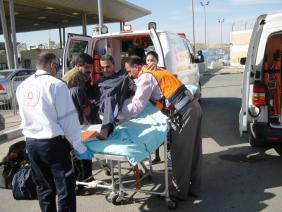
– Roni had set to meet a German group on the Palestinian side of the checkpoint. The visitors weren't satisfied with our explanations regarding this checkpoint and the occupational mechanism as a whole, and wanted to experience it by actually crossing the checkpoint alongside us. This journey that was supposed to be short and simple, ended in bitter disappointment: The soldiers, who had probably been watching us the whole time, decided to play a hoax on the expense of the foreigners and locked the turnstiles every time that one of them arrived at the head of the line. They got everyone running from one lane to the other as their finger constantly pressed the lock button. When the visitors realized that this was part of a collective punishment, that the main victims were the Palestinians who had arrived there at the wrong time by accident, they felt guilty and headed back.
On Labour Day:
"There's no work here. It's tough this way…" said a resident of the refugee camp who was sitting idly by the wall. Throughout the hours we spent at the checkpoint and its vicinity, we saw hundreds of labourers heading back from a day of work. They were the lucky ones that received permits seeing as they fitted the profile that the sovereign had implemented: adult men. They are obedient people who don’t speak out when their salaries aren't paid or their social rights which are implemented by law are taken from them, for it is well known and reality proves it to be so, that anyone who dares complain loses even his single prized possession- the right to provide for his family.
Jaba checkpoint:
"You mustn't stand here!", "You mustn't take our picture or that of the checkpoint"- "This is a military zone…"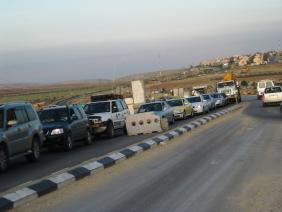
We saw a long and curvy line of vehicles on the road leading to Adam at the direction of the checkpoint. We insisted on our right to be there and take pictures, as well as see the decrees that forbid us from doing so. The group of soldier huddled at the post and started looking through their files, but the decree that is said to exist wasn't to be found (because there is no such decree!).
The soldiers' attention was diverted towards us, making them forget all about the Palestinians and the traffic began to flow.
Jaba' (Lil)
See all reports for this place-
Jaba' (Lil) In fact, the Jaba checkpoint is east of the Qalandiya checkpoint. Its declared purpose is the prevention of Israeli citizens from entering Area A. A road checkpoint for vehicles, located on Road 65, borders the southern fence of Kfar Jaba, about three kilometers east of the Qalandiya checkpoint, on the road leading to the settlement of Adam on Road 60. Archaeological excavations within the village found the remains of a cloth house from the First Temple period. The events that led to the construction of the checkpoint are precisely here: on the day of the abduction of Gilad Shalit and before the outbreak of the Second Lebanon War, a 17-year-old man from one of the settlements was abducted by a Palestinian cell. His body was found several days later at the entrances to Ramallah. A military investigation revealed that his abductors had taken him along this route. The checkpoint was set up to prevent future kidnappings and to warn settlers from traveling to Ramallah and entering Area A (which is forbidden for Israelis). The checkpoint that operates around the clock. Usually only vehicles traveling in the direction of Ramallah are inspected. (November 2016): Every morning, when the settlers en masse travel to Jerusalem on Route 60 and every afternoon they return from Jerusalem on Route 60, the army initiates a traffic jam at the entrance to the Jaba checkpoint and stops the movement of Palestinians traveling toward Route 60. (February 2020): In the last two years the checkpoint has not always been manned. Sometimes the soldiers come and just stand, sometimes they come and stop and check those who enter the village, sometimes they patrol the alleys of the village, sometimes they fire stun grenades and gas and sometimes they invade houses and stop young people, say those passing through the Hazma checkpoint. (Updated February 2020)
-
Qalandiya Checkpoint / Atarot Pass (Jerusalem)
See all reports for this place-
Click here to watch a video from Qalandiya checkpoint up to mid 2019 Three kilometers south of Ramallah, in the heart of Palestinian population. Integrates into "Jerusalem Envelope" as part of Wall that separates between northern suburbs that were annexed to Jerusalem in 1967: Kafr Aqab, Semiramis and Qalandiya, and the villages of Ar-Ram and Bir Nabala, also north of Jerusalem, and the city itself. Some residents of Kafr Aqab, Semiramis and Qalandiya have Jerusalem ID cards. A terminal operated by Israel Police has functioned since early 2006. As of August 2006, northbound pedestrians are not checked. Southbound Palestinians must carry Jerusalem IDs; holders of Palestinian Authority IDs cannot pass without special permits. Vehicular traffic from Ramallah to other West Bank areas runs to the north of Qalandiya. In February 2019, the new facility of the checkpoint was inaugurated aiming to make it like a "border crossing". The bars and barbed wire fences were replaced with walls of perforated metal panels. The check is now performed at multiple stations for face recognition and the transfer of an e-card. The rate of passage has improved and its density has generally decreased, but lack of manpower and malfunctions cause periods of stress. The development and paving of the roads has not yet been completed, the traffic of cars and pedestrians is dangerous, and t the entire vicinity of the checkpoint is filthy. In 2020 a huge pedestrian bridge was built over the vehicle crossing with severe mobility restrictions (steep stairs, long and winding route). The pedestrian access from public transport to the checkpoint from the north (Ramallah direction) is unclear, and there have been cases of people, especially people with disabilities, who accidentally reached the vehicle crossing and were shot by the soldiers at the checkpoint. In the summer of 2021, work began on a new, sunken entrance road from Qalandiya that will lead directly to Road 443 towards Jerusalem and Tel Aviv. At the same time, the runways of the old Atarot airport were demolished and infrastructure was prepared for a large bus terminal. (updated October 2021)
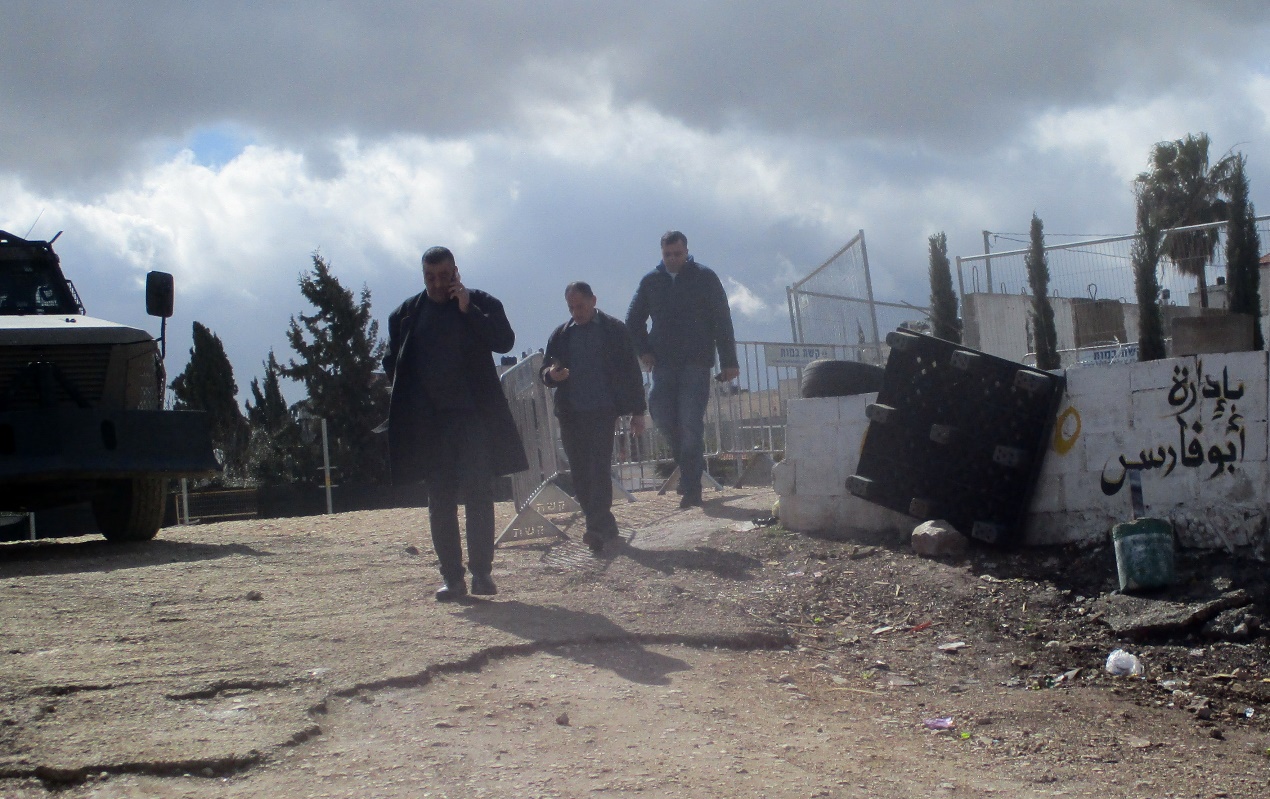 Tamar FleishmanFeb-27-2026Qalandiya: On the way to prayer
-