
Jaba (Lil), Qalandiya, Sun 8.4.12, Afternoon
Translating: Ruth Fleishman
Qalandiya:
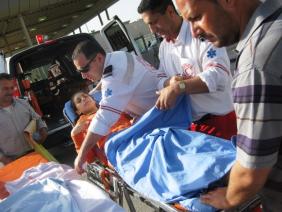
Into the inner vehicle area a twelve year old girl from Jenin was being transferred in an ambulance from the occupied territories. The driver said that her condition required that she receive instant treatment and an urgent hospitalization, and added: "Lately they have been detaining me here a lot, sometimes even for two hours…", but the back-to-back transference was performed with no delays, apart for the ones necessary according to the occupational system (and not, heaven forbid, for malicious reasons), and these were: moving the child from one stretcher to the other, a meticulous inspection of the escorts' documents and rummaging through bags. "Perhaps today it was quick because you were here", said the driver.- No, it wouldn't be right to give us credit for that. It was a matter of luck.
Where is Yitzhak Kedman When You Need Him?
Fourteen year old Mahmud is a victim of life. One night last week he escaped for fear of his violent father, reached the entrance of the checkpoint and threw stones at the construction, attempting to get arrested. The soldiers came out, they arrested him, handcuffed and blindfolded him and took him to the military base at Atarot, during the entire ride they kept slapping him on his head.
In Atarot he was interrogated by people dressed as civilians (did they really need GSS people to interrogate this miserable child?), from there he was taken to Moskobia (= the Russian Compound). He was detained for a day or two. Mahmud lost track of time. For him and for others in this situation, the day turns into the next day which turns into the next day, and there is no telling the difference among them. He remembers sharing a cell with two children who were his age, and that when he was arrested the money he had in his pocket was taken from him. He even admitted with a sorrowful smile and acceptance: "No, it wasn't worth it".
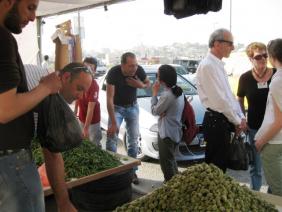
The fruit market enwrapping the Palestinian side of the checkpoint is recovering from the raid, theft and destruction inflicted on it by the long hand of the occupation. Stands have once again been placed on the sides of the road and on the squares, Baladi fruit are once again piled and a lively and vibrant commerce is taking place once again- until the next time.
Jaba checkpoint:
Where else are the dogs and paratroopers going to train if not here?
Originally the checkpoint was designed to prevent Israeli drivers (strictly them!) from arriving at Qalandiya and Ramallah and sometime used also to regulate the traffic on road 60 so as to ease the congestion on the road for the settlers, but the checkpoint is also used to train the dogs of the Oketz unit on Palestinian vehicles: the soldiers at the checkpoint randomly stop the vehicles passing by, the dog trainers hide in them a try with residues of explosives and then let the dog inside so that he sniff around and find the substance hidden. This time it wasn't the dogs that were in training but the paratroopers: "new soldiers", one of the seniors called them. The ones in training stood on the opposite side of the checkpoint and stop vehicles, they took the passengers out, checked their registrations, rummaged through the intestines of the vehicle and went on to the next vehicle.
Jaba' (Lil)
See all reports for this place-
Jaba' (Lil) In fact, the Jaba checkpoint is east of the Qalandiya checkpoint. Its declared purpose is the prevention of Israeli citizens from entering Area A. A road checkpoint for vehicles, located on Road 65, borders the southern fence of Kfar Jaba, about three kilometers east of the Qalandiya checkpoint, on the road leading to the settlement of Adam on Road 60. Archaeological excavations within the village found the remains of a cloth house from the First Temple period. The events that led to the construction of the checkpoint are precisely here: on the day of the abduction of Gilad Shalit and before the outbreak of the Second Lebanon War, a 17-year-old man from one of the settlements was abducted by a Palestinian cell. His body was found several days later at the entrances to Ramallah. A military investigation revealed that his abductors had taken him along this route. The checkpoint was set up to prevent future kidnappings and to warn settlers from traveling to Ramallah and entering Area A (which is forbidden for Israelis). The checkpoint that operates around the clock. Usually only vehicles traveling in the direction of Ramallah are inspected. (November 2016): Every morning, when the settlers en masse travel to Jerusalem on Route 60 and every afternoon they return from Jerusalem on Route 60, the army initiates a traffic jam at the entrance to the Jaba checkpoint and stops the movement of Palestinians traveling toward Route 60. (February 2020): In the last two years the checkpoint has not always been manned. Sometimes the soldiers come and just stand, sometimes they come and stop and check those who enter the village, sometimes they patrol the alleys of the village, sometimes they fire stun grenades and gas and sometimes they invade houses and stop young people, say those passing through the Hazma checkpoint. (Updated February 2020)
-
Qalandiya Checkpoint / Atarot Pass (Jerusalem)
See all reports for this place-
Click here to watch a video from Qalandiya checkpoint up to mid 2019 Three kilometers south of Ramallah, in the heart of Palestinian population. Integrates into "Jerusalem Envelope" as part of Wall that separates between northern suburbs that were annexed to Jerusalem in 1967: Kafr Aqab, Semiramis and Qalandiya, and the villages of Ar-Ram and Bir Nabala, also north of Jerusalem, and the city itself. Some residents of Kafr Aqab, Semiramis and Qalandiya have Jerusalem ID cards. A terminal operated by Israel Police has functioned since early 2006. As of August 2006, northbound pedestrians are not checked. Southbound Palestinians must carry Jerusalem IDs; holders of Palestinian Authority IDs cannot pass without special permits. Vehicular traffic from Ramallah to other West Bank areas runs to the north of Qalandiya. In February 2019, the new facility of the checkpoint was inaugurated aiming to make it like a "border crossing". The bars and barbed wire fences were replaced with walls of perforated metal panels. The check is now performed at multiple stations for face recognition and the transfer of an e-card. The rate of passage has improved and its density has generally decreased, but lack of manpower and malfunctions cause periods of stress. The development and paving of the roads has not yet been completed, the traffic of cars and pedestrians is dangerous, and t the entire vicinity of the checkpoint is filthy. In 2020 a huge pedestrian bridge was built over the vehicle crossing with severe mobility restrictions (steep stairs, long and winding route). The pedestrian access from public transport to the checkpoint from the north (Ramallah direction) is unclear, and there have been cases of people, especially people with disabilities, who accidentally reached the vehicle crossing and were shot by the soldiers at the checkpoint. In the summer of 2021, work began on a new, sunken entrance road from Qalandiya that will lead directly to Road 443 towards Jerusalem and Tel Aviv. At the same time, the runways of the old Atarot airport were demolished and infrastructure was prepared for a large bus terminal. (updated October 2021)
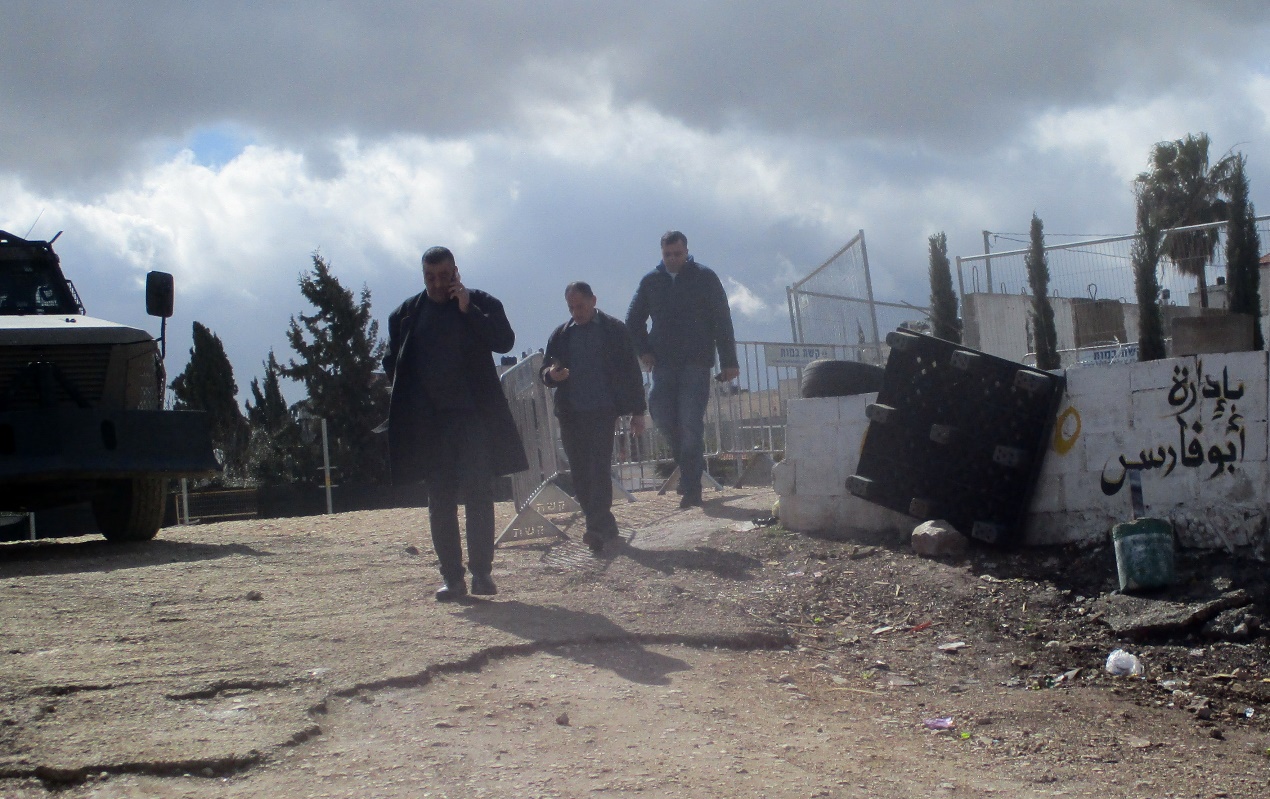 Tamar FleishmanFeb-27-2026Qalandiya: On the way to prayer
-