
Jerusalem: "Mufti's House" on Mount Olives is slated for demolition within a week
Bethlehem:
Since the outbreak of the October 7 war, a “no-breathing” closure has been imposed on the occupied territories, and almost no one enters or leaves through the checkpoint that once handled thousands of Palestinians daily. Only one lane is open, and only a tiny handful of Palestinians pass through (according to bus drivers, only a few hundred). As usual, the initial response was to try to expel us from the observation spot we’ve been using for many years, but we asked to speak with the checkpoint commander. Eventually, the checkpoint police commander and his deputy arrived, followed by the new DCO (District Coordination Office) officer. Our conversation was “friendly,” but in reality it was a dialogue of the deaf.
From the DCO officer, we got a phone number for the Civil Administration emergency hotline – 074-7642929 – which he was sure “always answers.” From experience, we know it’s a deaf-mute number: the Smotrich–Ben Gvir-run administration doesn’t answer anyone.
For Palestinian pedestrians with valid crossing permits, the checkpoint is open to Jerusalem until 12:30 p.m., and in the return direction to the territories, it closes at 5:00 p.m. Vehicle crossing with Israeli license plates is allowed 24/7, except when inspectors are busy with their own affairs – and Palestinian time, as is well known, is endless. At least the cars have air-conditioning.
Anyone who returns on foot after the closing time, or forgets to scan their magnetic card on return, risks a nighttime visit with a summons to the Shin Bet and revocation of their work permit for at least two weeks, sometimes for many weeks or even months.
Bus drivers, waiting in vain for passengers, said the bus company bought new, advanced buses and improved service levels, but the buses leave every 15 minutes mostly empty or with just a few passengers. The transportation is funded by the Ministry of Transport, but besides the outrageous waste of money, the operating company is facing financial difficulties. The street vendors we’ve known for years have disappeared—there are no buyers. For the “evil government” and for most Israelis, the hunger in the territories isn’t much of a concern.
Sheikh Sa’ad:
Due to the summer break in schools and kindergartens, there was almost no traffic through the checkpoint at this hour. Our acquaintance, a local council member, came to meet us and told us that on regular days the checkpoint is very busy because the Sawahra checkpoint, which was also a “list” checkpoint (only those on a list can pass) for vehicles has been closed, and everyone (mostly blue ID holders) must now pass through Sheikh Sa’ad. The number of people crossing in the morning reaches about 3,000. From time to time, soldiers decide to check and verify the address of everyone crossing – including small children – and then long lines form. And that’s before the school year even starts in September.
Furthermore, as part of the network of roads in the West Bank meant to “make settlers’ travel more pleasant,” there is a plan to pave a road from Umm Tuba (connected to Jabel Mukaber, Sheikh Sa’ad’s parent neighborhood), including a tunnel under the checkpoint roundabout, linking it to Jericho Road (and the new Kedmat Tzion neighborhood) via the Kidron Valley and Wadi Qadum. Will these be apartheid roads? Probably yes, but we’ll find out.
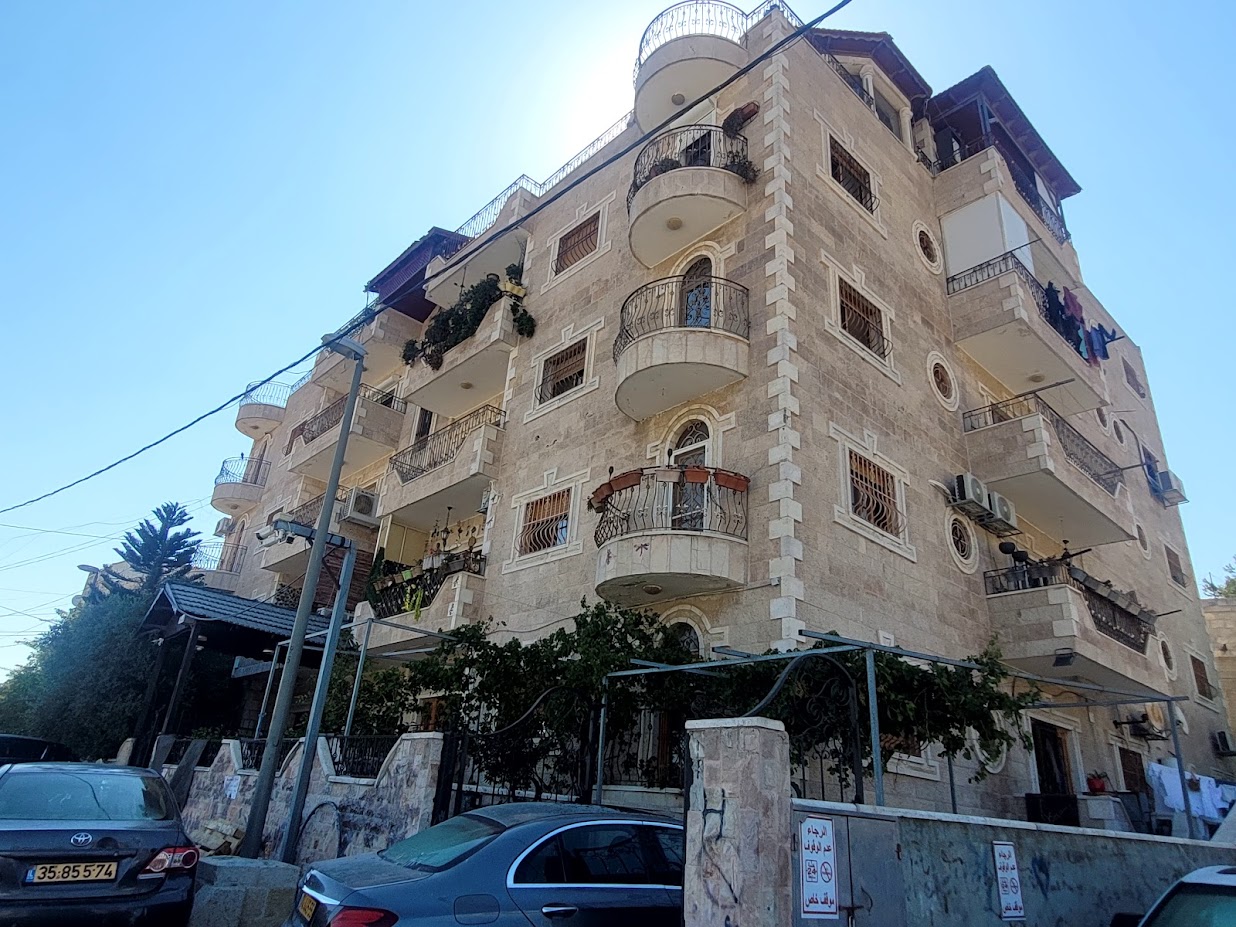
“Mufti’s House” in A-Tur:
The house is named after Sheikh Ekrima Sabri, the former Mufti of Jerusalem, referred to by Israeli authorities as the “inciting Mufti,” a constant target of political persecution. In the beautiful five-story building at the top of the western slope of A-Tur live 17 families—about 140 people. The house was built around 20 years ago without a permit (it is almost impossible for Palestinians to obtain building permits within Jerusalem city limits).
Now, the Israel Land Enforcement Authority, headed by Ben Gvir’s ministry and coordinated with the Custodian General, has informed residents they must vacate ahead of a demolition scheduled for next week. The municipality obeyed the bully who keeps the government on a short leash, even though the demolition order was issued over 20 years ago but never carried out until now. With the fully right-wing government determined to advance ethnic displacement, this house has now been targeted—serving as a signal to Jerusalem’s elite and to Palestinian society as a whole that everyone is in the crosshairs, including influential critical voices.
Rumor has it the Mufti left the building to spare his neighbors suffering, but that probably won’t prevent the injustice.
For more on the intensifying wave of demolitions, see this article by +972, based on data by “Ir Amim” and more organizations.
Location Description
Bethlehem (300)
See all reports for this place-
Located adjacent to the Separation Wall ("Jerusalem Wrap") at the north entrance to Bethlehem, this checkpoint cuts off Bethlehem and the entire West Bank from East Jerusalem, with all the serious implications for health services, trade, education, work and the fabric of life. The checkpoint is manned by the Border police and private security companies. It is an extensive infrastructure barrier and is designated as a border terminal, open 24 hours a day for foreign tourists. Israeli passport holders are not allowed to pass to Bethlehem, and Palestinian residents are not allowed to enter Jerusalem, except those with entry permits to Israel and East Jerusalem residents. Israeli buses are allowed to travel to Bethlehem only through this checkpoint.The checkpoint, which demonstrated harsh conditions of crowding and extreme passage delays for years, started employing advanced electronic identification posts and has upgraded its gates' system as of the middle of 2019 - and conditions improved.Adjacent to the checkpoint, in an enclosure between high walls and another passage, is the historic Rachel's Tomb, which is now embedded within a concrete fortified building. It contains prayer and study complexes for Jews only, as well as a residential complex. updated November 2019 .
-
Jerusalem
See all reports for this place-
The places in East Jerusalem which are visited routinely by MachsomWatch women are Silwan and Sheikh Jarrah. During the month of Ramadan, also the Old City and its environs are monitored.
-
Sheikh Sa'ed
See all reports for this place-
A checkpoint limited to pedestrians, located on Jerusalem’s municipal boundary.
The checkpoint sits on the separation fence at the entrance to Sheikh Sa’ad, dividing it from its neighbourhood of Jabel Mukkabar. It’s manned by Border Police soldiers and private security companies and operates 24 hours a day. Palestinians are forbidden to go through, other than residents of Jabel Mukkabar or Sheikh Sa'ad who have permits. Both groups are permitted through only on foot. Residents of East Jerusalem who don’t live in Jabel Mukkabar are also allowed to cross to Sheikh Sa’ad, but not in the opposite direction; they must return through the Sawahira ash Sharqiya checkpoint.
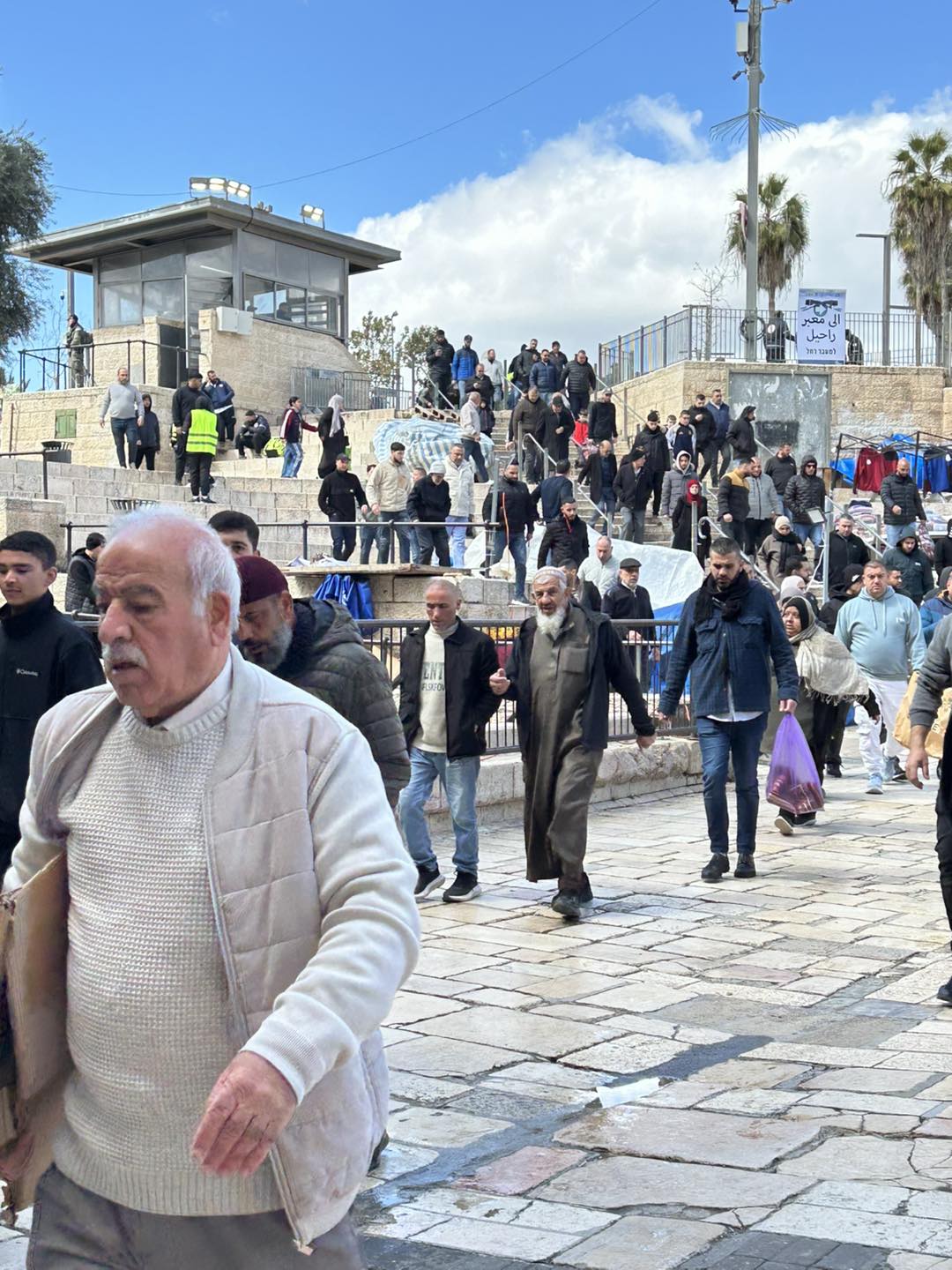 Avital CFeb-27-2026Jerusalem, Damascus Gate: Crowd rushing to prayer
-