
Jewish Terror. Burin inhabitants without a moment of rest
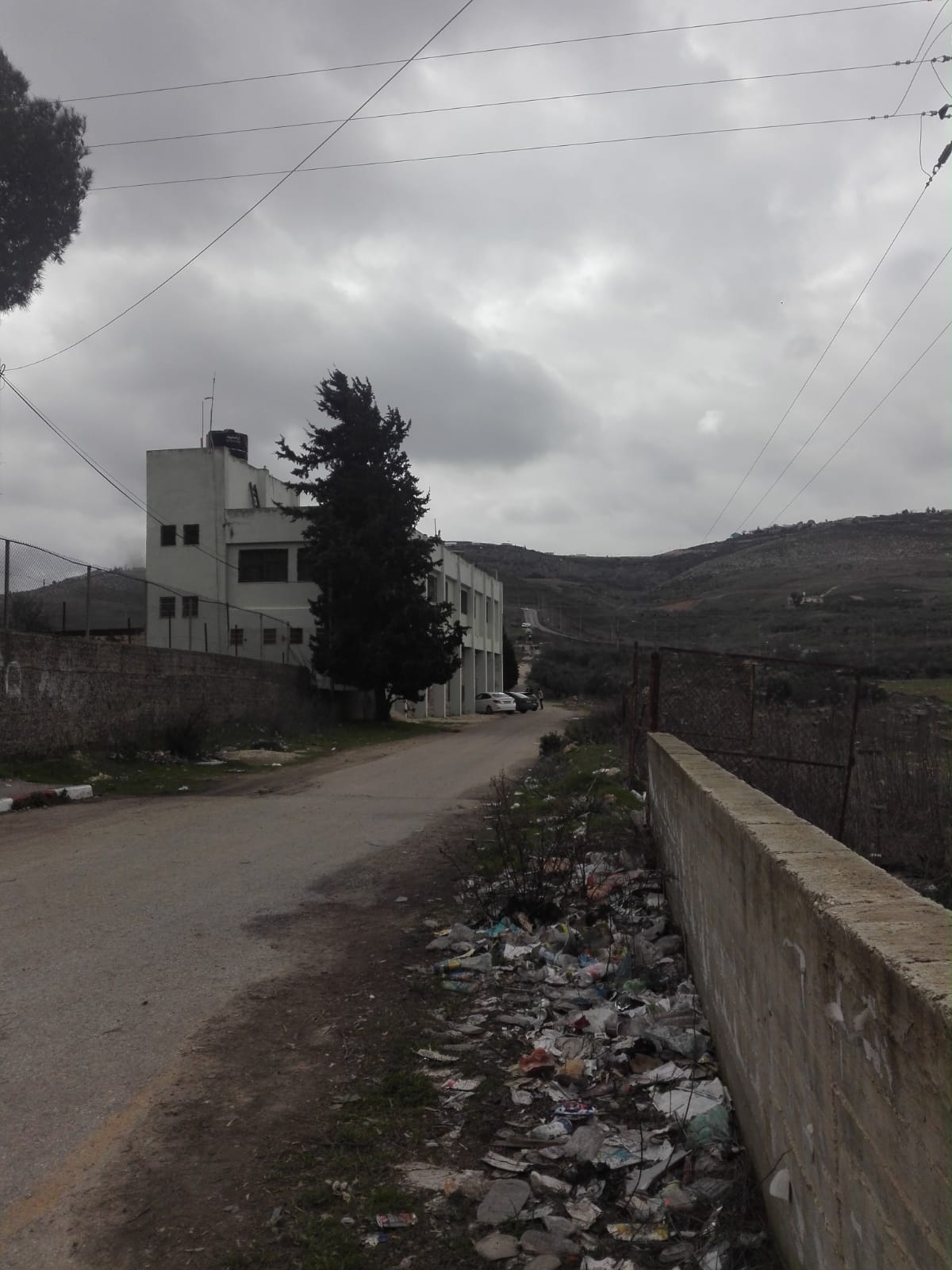
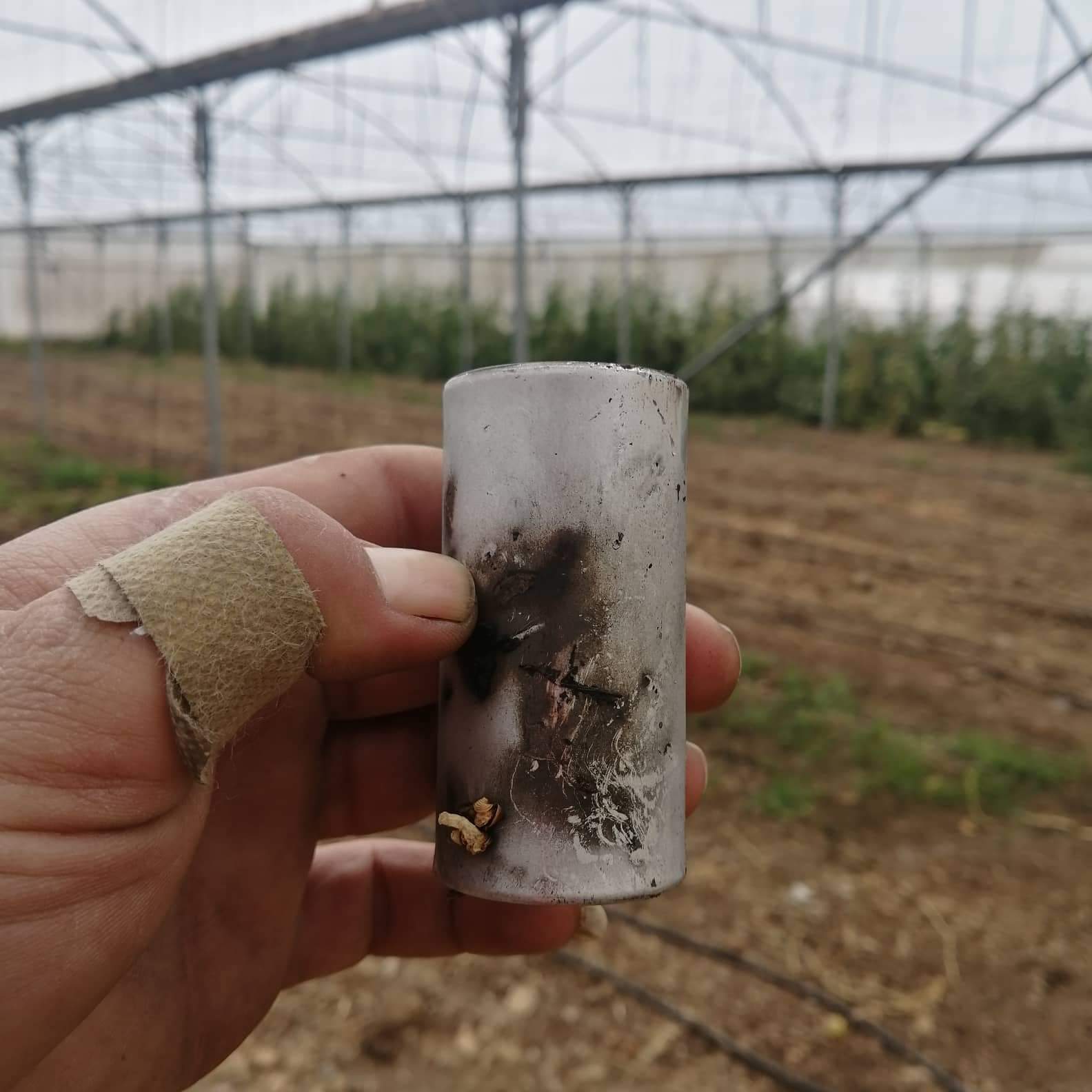


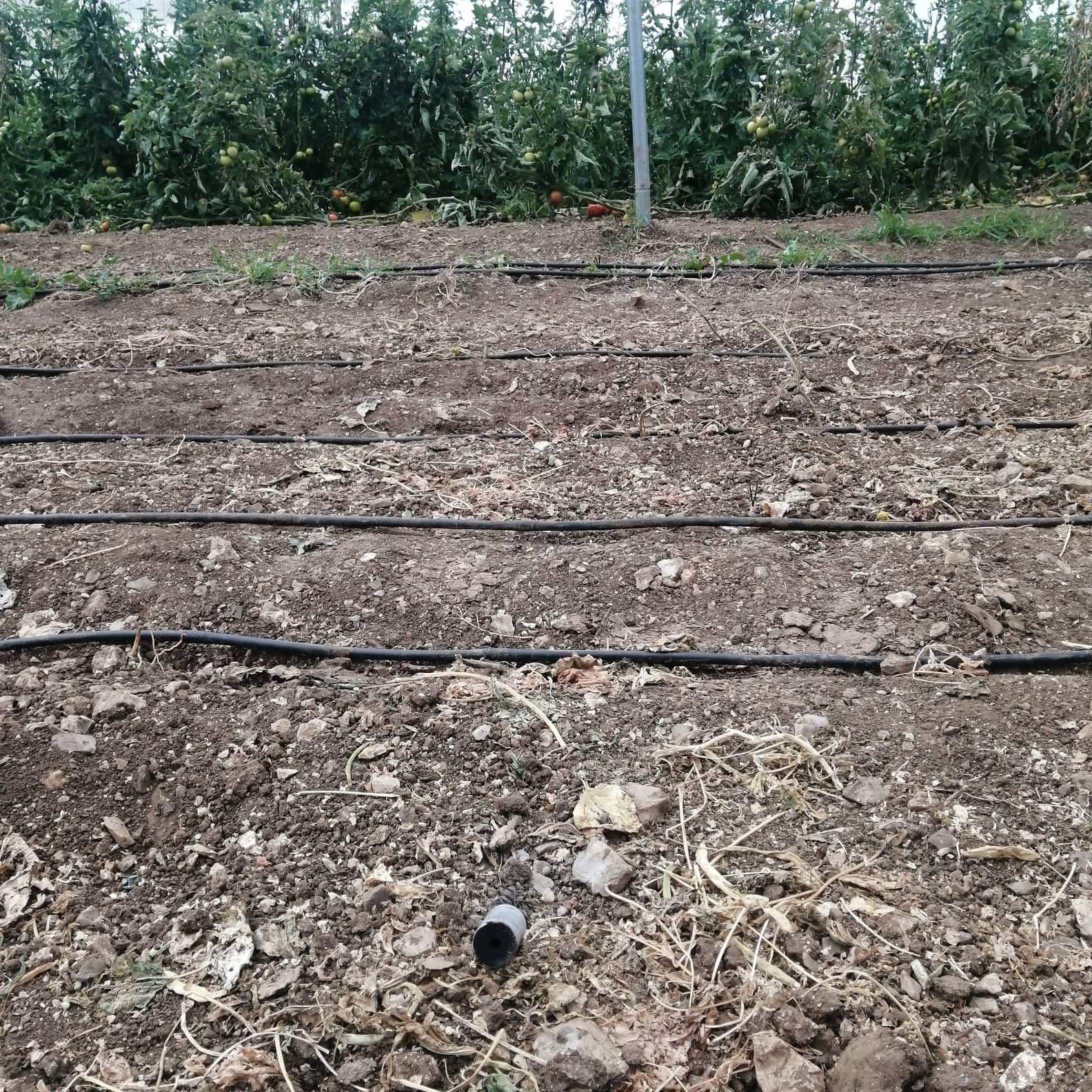


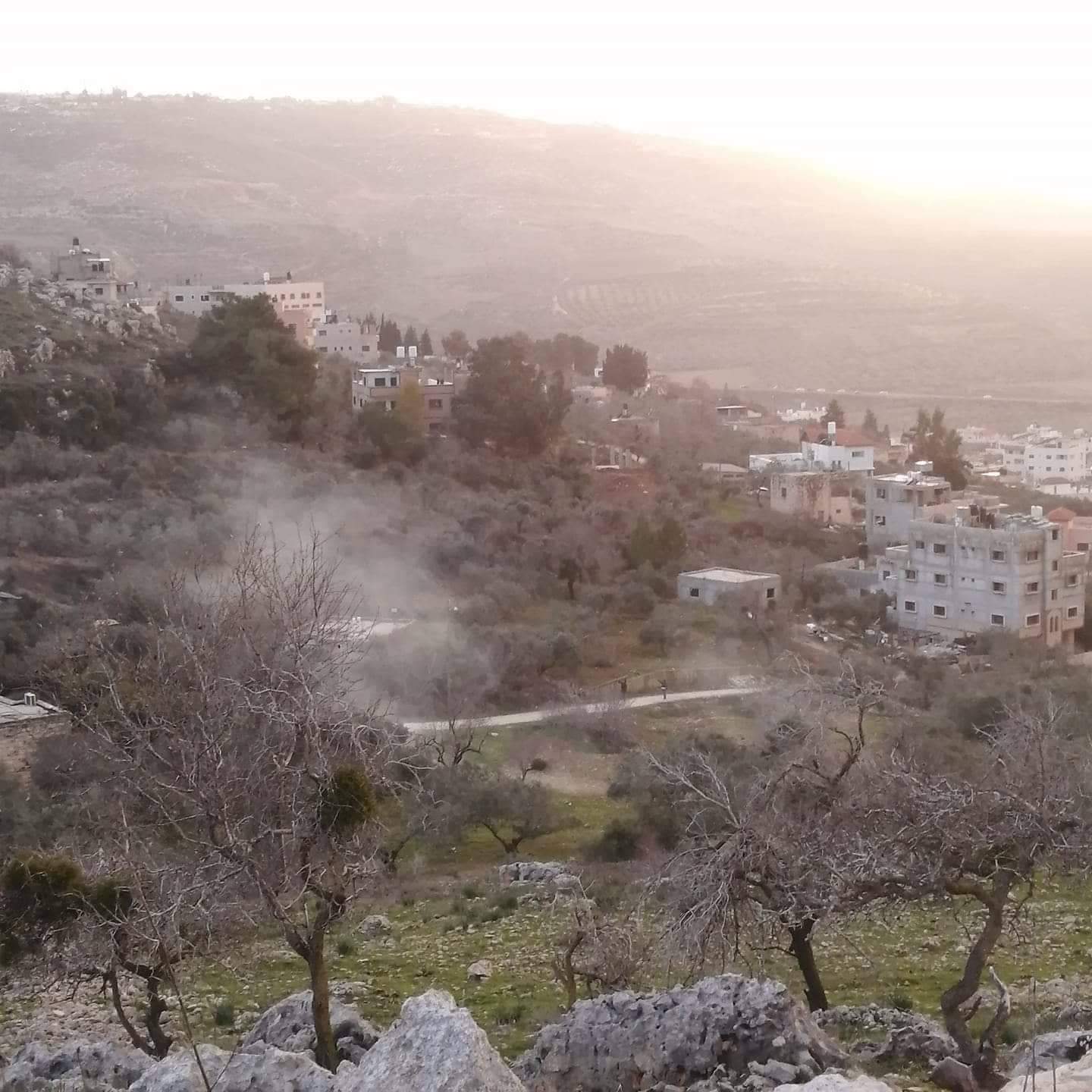
1. The troublesome event in Jenin took the life of an innocent policeman who was a resident of Azzun. Following this, the soldiers were sent to the village “in order to prevent disturbances”.
2. For the residents of Burin, there is not a moment of rest. On the north there is evil and also on the south. One day they are attackedd by the settlers from Har Bracha on the north, and on the next day, by the settlers from Yizhar on the south, and they have no protection.
Agricultural Gate of Habla
13:10: The gate is open. A large number of vehicles come and go with no delay. At 13:30, the soldiers close the gate. They say that the hours of opening are 13:10 – 13:40.
Azzun
5-6 border guard vehicle and a police vehicle. The yellow gate is open. At the entrance, on the right side of the road, there are soldiers stationed and seem to be doing rifle practice. Near them some cement barriers have been set up and a shooting range. Towards the villlage one can see smoke. The llieutenant approaches us to find out who we are. When we quiestion him, he tells us that there has been some stone throwing. He advises us not to enter the village lest we also be hit by stones. Because of the smoke, we decided not to enter. On a telephone discussion with the owner of the store in Azzun, we were told that a Palestinian policeman, during his shift in Jenin, was killed by IDF fire. (Later we heard on the news that he was killed by mistake). It seems it was clear to the army that there would be protests in the village so soldiers had been sent there.
The funeral of the policeman was on 8.2.2020, accordiing to the report of the store owner in Azzun. Today (shabbat) some youth burned tires along the 2 roads to the entrance, so the army did not enter the village during the funeral. Later on, the army closed the 2 entrances to Azzun and no one can go in or out of the village. This whole ugly picture stand in opposition to the flowering of the almond trees along the way…
Jit Junction
Soldiers on alert next to the pillbox. A big traffic jam on the east of the Junction.
Burin
Despite the ongoing suffering, D. will never cease her hospitality. Over a cup of hot sage tea and excellent coffee, she tells us about the difficult events of this week. There is one isolated house, on the very top of the village, which is close to the outpost of Giv’at Ronen. A week ago, some thugs descended from the outpost and set the house on fire. From there, they continued down towards the buildings of the village threw a shower of tear gas grenades over them. The number of grenades was so high that the smell of the tear gas reached D.’s house, which is quite far away from there.
Settlers with an army escort almost reached the school in their vehicle during school hours. On Wednesday, 5.2, they parked their vehicle, entering the school courtyard, and began to throw tear gas grenades into the shcool! One boy who stood at the entrance was hit, fell down and was injured. He was hospitalized for 2 days in Rafidiyah Hospital. At the time of the attack, the yourth of the village ran to reach the school and confront the attackers but the principal stopped them from doing this, so that no one would be hurt.
In this village, children grow up who live a traumatic life from a young age, in constant fear. With the feeling that there is nowhere, not in the house nor in the school, where they are protected from violence and attacks of the settlers.
D. concluded the conversation among us with these words: “There are good Jews and there are bad Jews. There are good Arabs and there are bad Arabs, but the settlers are only bad.” And the village of Burin absorbs all this evil.
'Azzun
See all reports for this place-
Azoun (updated February 2019)
A Palestinian town situated in Area B (under civil Palestinian control and Israeli security control),
on road 5 between Nablus and Qalqiliya, east of Nabi Elias village. The inhabitants are allowed to construct and improve infrastructures. The Separation Fence has confiscated lands belonging to the town's people. In 2018 olive tree groves owned by one of its inhabitants were confiscated for the sake of paving a road to bypass Nabi Elias. Azoun population numbers 13,000, its economic state dire. Its infrastructures are poor, neglect and poverty rampant. In the meantime, the town council has completed paving an internal road for the inhabitants' welfare.
Because of its proximity to the Jewish settler-colony of Karnei Shomron and its outposts, the town suffers the intense presence of the Israeli army, especially at nighttime: soldiers enter homes, arrest suspects, trash the house and sometimes ruin it, as they do in numerous places in the West Bank. At times a checkpoint closes the entrance to the town, so no one can come in or get out.
-
Burin (Yitzhar)
See all reports for this place-
Burin (Yitzhar)
This is a Palestinian village in the Nablus governorate, a little south of Nablus, on the main road passing through the West Bank. The settlements: Yitzhar and Har Bracha, settled in locations that surrounded the village, placed fences so it is cut off the main road.
There are around 4000 inhabitants. Most of them are engaged in agriculture and pasture, although many graduates of the two secondary schools continue to study at the university. Academic positions are hardly available, they find work as builderd, or leave for the Gulf countries.
The village lands were appropriated several times for the establishment of Israeli settlements and military bases, and as a result, Burin's land and water resources dwindled. lSince 1982, more than 2,000 dunams of village land have been declared "state land" and then transferred to Har Bracha settlement.
Over the past few years and more so since 2017, the villagers have been terrorized by the residents of Yitzhar and Har Bracha, the Givat Ronen outpost and others. Despite the close proximity of soldiers to an IDF base close to one of the village's schools, residents are suffering from numerous stone-throwing events, vehicle and fire arson, also reported in the press.
In 2023, the prevention of the olive harvest in the village plot was more violent than ever. Soldiers and settlers walked with drawn weapons between the houses of the village and demanded that people stop harvesting in the village itself and in the private plots outside the village. The settlers from Yitzhar and Giv'at Roned raided the olive groves and stole crops. 300 olive trees belonging to the residents of Burin, near Yitzhar, were uprooted. The loss of livelihood from the olives causes long-term economic damage to the farmers' families, bringing them to the point of starvation.
(updated for November 2023)
-
Habla
See all reports for this place-
Habla CP (1393)
The Habla checkpoint (1393) was established on the lands of the residents of Qalqilya, on the short road that
connected it for centuries to the nearby town of Habla. The separation barrier intersects this road twice and cut off the residents of Qalqilya from their lands in the seam zone.(between the fence and the green line).
There is a passage under Road 55 that connects Qalqilya to the sabotage This agricultural barrier is used by the farmers and nursery owners established along Road 55 from the Green Line and on both sides of the kurkar road leading to the checkpoint.
This agricultural checkpoint serves the residents of Arab a-Ramadin al-Janoubi (detached from the West Bank), who pass through it to the West Bank and back to their homes. The opening hours (3 times a day) of this agricultural checkpoint are longer than usual, about an hour (recently shortened to 45 minutes), and are coordinated with the transportation hours of a-Ramadin children studying in the occupied in the West Bank.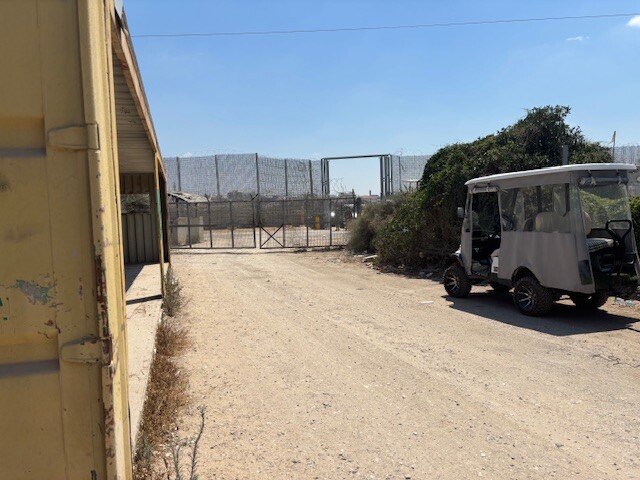 Nina SebaAug-18-2025Habla: The gate is in the process of closing
-