
Jordan Valley: A calm Saturday, but signs of malice and tension are ever present
One team accompanied M., a farmer from Bardala, as he worked his fields. Settlers from the nearby outpost had opened all the irrigation taps in his fields adjacent to the outpost, wasting huge amounts of water that flowed unchecked for two days. M., fearing the settlers, did not dare to go and shut them himself. Over the course of three hours, we walked with him through his fields while he closed each tap. He asked if it might be possible to have an escort every afternoon after work to help him with this task, but we don’t always have enough manpower. He also showed us, in different fields, droppings from the settlers’ cows that had been driven into his fields, and in this way they destroyed any remaining melons that were still left there. Regarding the hot pepper harvest we saw in one of the orchards, M. explained that he had abandoned it because the workers were too afraid to come, fearing the settlers. As a result, the crop became overripe and can no longer be sold on the market. Next year he will not sow again, as he has already sunk deeply into debt from water costs and from the repeated losses caused by the settlers’ damage to his crops.
He also said he sees no way to protect his 300 dunams of land from being taken over by settlers, and he foresees that all the local farmers will eventually lose their livelihoods. Perhaps he will find another source of income — maybe even work in a settlement (!), or by renting out rooms to newlywed couples in need of housing. Time will tell what his future holds.
Ein Sakut – Saturday–Sunday
The shepherds from Farisiya leased an onion field as a trial, since they saw that settler Gilad had decided to return with his flock to the corral in Rotem. They managed to pass undisturbed through the underpass beneath Route 90, and the sheep happily grazed on the onion remnants in the field. One of the escorts later took them to bathe in a nearby spring at Ein al-Beida — a small pleasure still left, who knows for how long, as the water company Mekorot and the settlers have not yet seized control of all the springs in the area.
P. succeeded in bringing his herd of cows down to the spring to drink and graze on green grass. The security officer who usually drives him away was apparently resting this Saturday.
At K.’s place, where the Civil Administration forces demolished the structures the week before, the family spent the day resting in a small makeshift shelter of cloth with a fan powered by the last remaining solar panel that the army had not destroyed. They are waiting to file a petition to the High Court of Justice to determine where they might relocate nearby with their cattle. For now, the herd is grazing in the Tayasir area and is expected to return in about a month, in the hope that the court will allow them to remain. In the meantime, the herd withstands the extreme heat.
In the afternoon, more volunteers arrived, and everyone helped tidy up the area — gathering the metal poles from the pens, collecting stones, and so on — in the hope of rebuilding in the future. It is a struggle to hold on under such hardship. Their lawyer is optimistic and hopes they will be granted permission to live about 50 meters from the Alon–Tubas road, where they might start their lives anew.
At 18:30 we managed to celebrate the birthday of Z., one of S.’s daughters, who turned 23. She was moved by the cakes, sweets, and small gifts we brought — a brief moment of joy amid such hardship.
When the night shift arrived, we spread out to provide “protective presence” in Ein Sakut, Farisiya, and at K.’s place. We lay down to sleep, but the settlers did not leave us in peace. At 21:30, just as we were dozing off, the dogs began barking. Two cars of settlers — G., Amosi, Benzi, and two others — drove up the path toward the compound, heading for the observation hut which, of course, remained untouched since it “belongs” to the Jewish settlers. They sat there and began throwing and rolling stones down toward the compound. We called the police. They said they would send a patrol. An officer phoned, promised to come and check, but never appeared. On the phone he told us we should file a complaint at the Binyamin police station.
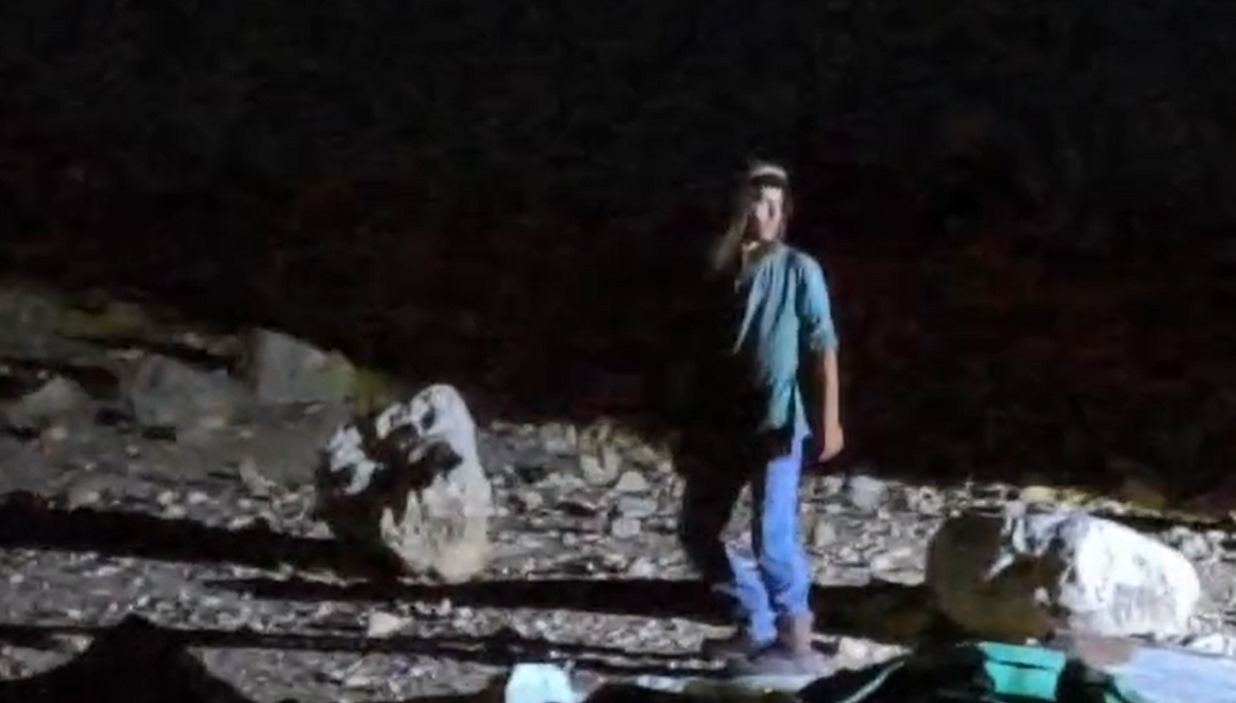
We also alerted the army through one of our activists to prevent further harassment. The settlers left — apparently satisfied — but then an army jeep arrived. The soldiers were polite, asked what was happening, and said they would stay nearby for protection. They parked at the entrance to the compound where K.’s tents once stood. But their task did not end there. They began photographing the small shelter, since even pitching a simple sleeping tent is forbidden.
When we asked what the problem was, the soldiers replied that they were only ensuring everything was in order. They continued photographing the ruins and then returned to their jeep, perhaps to report over the radio. A fourth time they came back and told the residents: “You are not allowed to remain here; you must evacuate.” We asked what had happened — weren’t they here to protect the residents? They replied: “These are two separate orders. We will protect you, but you must evacuate.” Evacuate elderly people in the middle of the night, people who are here lawfully? And where did this “new order” come from? The soldiers said: “These are the army’s orders.” We asked to see a written order. They said they would arrange it. We told them at least to stay on-site until then. They agreed, but warned that in the morning a force would arrive to evict K.’s family.
We notified K.’s son, who manages the family’s affairs, so that he could contact the lawyer, and we decided to remain until morning with the next shift.
The rest of the night passed quietly. In the morning, K. went to the Palestinian Authority’s monitoring offices in Tubas to meet the lawyer and sign documents. The morning volunteers arrived. Apparently, the army decided to postpone the eviction — perhaps it had only been a test of their procedures.
We left at 10:00. No soldiers were seen for the rest of that day..
With hope for a better future, day by day, life continues under uncertainty and worry.
Location Description
Al-Farisiya / 'Ein a-sakut
See all reports for this place-
Al-Farisiya / 'Ein a-sakutA community of shepherds in the Jordan Valley opposite the settlement of "Rotem". Making a living from grazing sheep, the residents are exposed to harassment, abuse and theft from settlers who come to them from outposts and settlements in the area, and their grazing area is shrinking due to settler takeovers, fire zones and declared nature reserves.Machsom Watch companies participate in shepherd escort activities and provide a 24/7 protective presence, and there is continuous and warm contact with the community.
-