
Jordan Valley - distribution of dry food to needy families
We traveled to bring sacks of dry food to needy families.
We started from the Fassayil area, according to Dafna’s request. We met a small family there and sat with them over a cup of coffee. At some point I realized that the Miriam sitting with us is Miriam who used to be blind. She now sees quite well surrounded by family. Sons, daughters and children. They were happy to tell us all their troubles. We left with them 8 sacks of 25 kilos each, wheat, fava and lupine beans. I wonder if they’re eaten or sown or both. The main thing was that they were pleased.

Later, we went to Makhul and left 8 bags there for the benefit of all the residents and their neighbors.

Pasia’s kitchen is located in Jaffa, near Bloomfield, receives donations from factories or anyone who wishes to give to it, and delivers to the needy. This is how we received foam-rubber mattresses about a year ago and distributed them in the Valley.
Fasa'il
See all reports for this place-
An old community of shepherds in the Jordan Valley that is located between settlements and is exposed to the demolition of its residential buildings at times by the army and the abuses of the settlers. King Herod founded the city of Fatza'elis in 8 BC, and named it after his older brother, Petzal. The permanent settlement in the place began with Bedouins who migrated to the area as early as the 1950s after being expelled from the Tel Arad area. Over the years, additional Bedouin residents who were expelled from other places in the Jordan Valley joined. Areas that were declared as fire areas or state lands . As part of the Alon plan, a significant part of the lands in the area were expropriated and four Israeli settlements were established on them: Tomer, Gilgal, Fatza'el Netiv HaGdud. Illegal posts were erected over the years. Some of them were authorized during the 7th October War.
-
Jordan Valley
See all reports for this place-
Jordan Valley The Jordan Valley is the eastern strip of the West Bank. Its area consists of almost a third of the West Bank area. About 10,000 settlers live there, about 65,000 Palestinian residents in the villages and towns. In addition, about 15,000 are scattered in small shepherd communities. These communities are living in severe distress because of two types of harassment: the military declaring some of their living areas, as fire zones, evicting them for long hours from their residence to the scorching heat of the summer and the bitter cold of the winter. The other type is abuse by rioters who cling to the grazing areas of the shepherd communities, and the declared fire areas (without being deported). The many groundwaters in the Jordan Valley belong to Mekorot and are not available to Palestinians living in the Jordan Valley. The Palestinians bring water to their needs in high-cost followers.
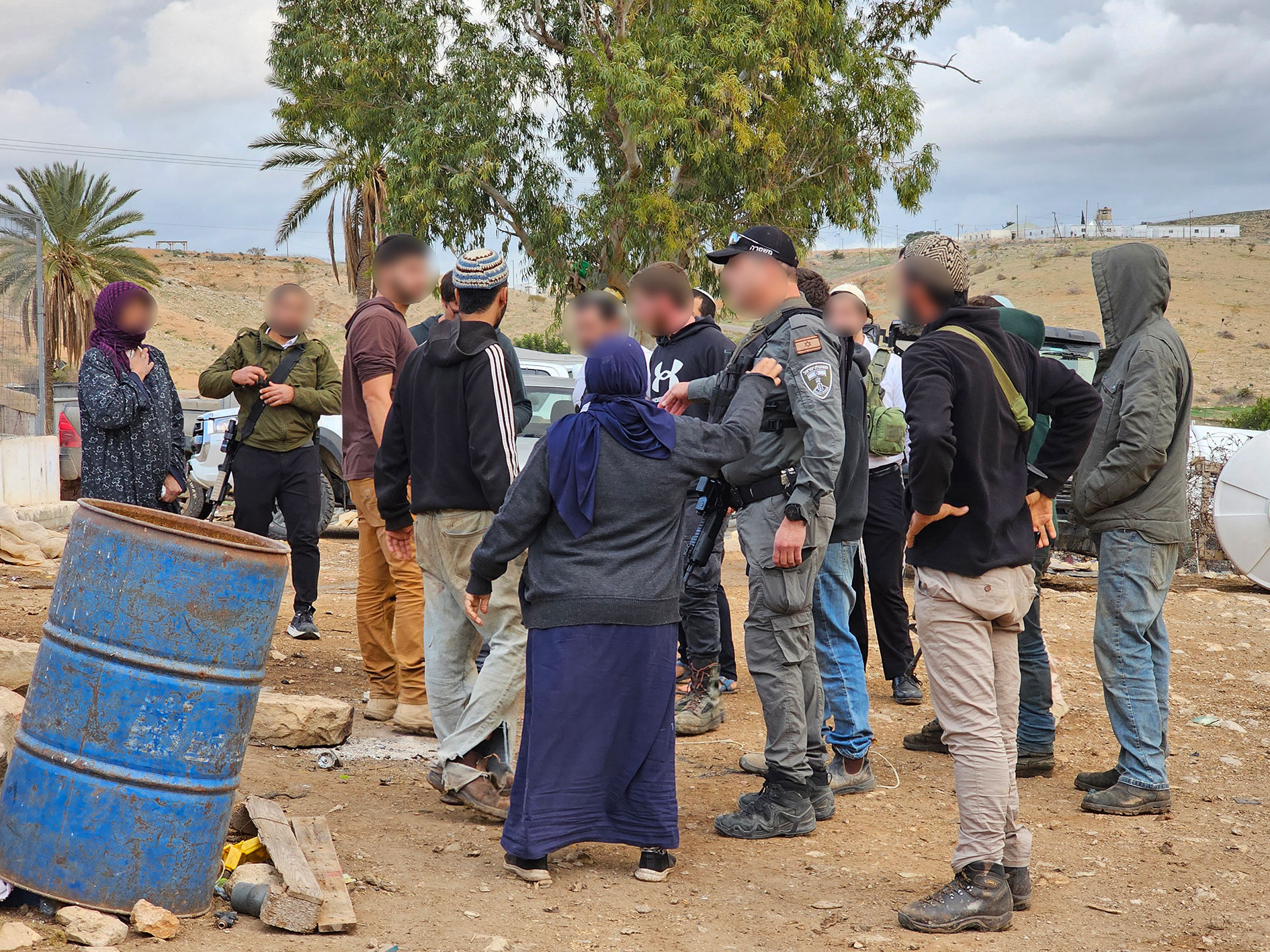 Sarah PostecDec-27-2026Hammam al-Malih: Border Guard and settlers in the compound
-
Khalet Makhul
See all reports for this place-
Khalet Makhul
A small settlement of a shepherd community located on the way to the settlement of Hemdat. Two nearby outposts make life miserable for the Palestinians, who make a living from grazing, and the army backs the settlers. As a result, the possible grazing areas are getting smaller.
The local children attend school in the settlement of Ein Al-Beida. Long lines of 3 hours sometimes stretch out at the Hamra and Tayasir checkpoints leading to the town of Tubas, making it difficult to get water, supplies, and sell the cheese, milk, and meat that the residents produce for their living.
Following a deadly attack at the Tayasir checkpoint in February 2025, the checkpoint was closed completely for the time being.
(Updated March 2025)
-