
Jordan Valley: Settler youths from Shadmot Mehola enjoy Shabbat by threatening Palestinian shepherds.
As usual, we arrived in the Jordan Valley in the morning to provide protective presence and accompany shepherds.
Two teams joined the night shift, which stayed on for an extra hour to help the shepherds of Ein al-Sakut move their flocks from the western to the eastern side of Route 90 via the underpass bridge. This time, Gilad, the settler from the Teneh Yarok outpost—who we thought would head off to Rotem with his sheep for Shabbat—remained in the area and approached the bridge. The Palestinian shepherds, fearing he might once again scatter their flock or mix it with his own and accuse them of theft, chose instead to cross the highway directly. This left them grazing only in the melon fields left after harvest, with no access to the nearby cornfields, which were harder to reach. We stayed with them. At 8:00, A. arrived with a water tanker to water the flocks, and by 10:00 they had returned to their usual grazing area, while two of us remained behind to deter possible settler harassment.
Another pair accompanied Sh. from al-Hamayer (al-Farsiya) between 6:00 and 9:00. The sheep chose to leave and walk to be watered because of their thirst and the heavy heat..
Later, we accompanied F. in Ein al-Hilweh, where he took his cows down to the spring. Afterwards, we all returned to al-Farsiya.
Elsewhere, another team accompanied M., a farmer in Bardala. When alone, he faces repeated threats and attacks from settlers at a nearby outpost and therefore avoids going out during the week. With our presence, he was able to drive to his fields and open the irrigation valves. He has been unable to hire workers to harvest his hot peppers, as people are too afraid, so our two volunteers joined in and spent four hours picking peppers to the best of their ability.
From 12:30 we all endured the exhausting 40-degree heat in al-Farsiya, before heading out again at 15:30 to accompany F. to the spring, to Ein al-Sakut, and to al-Hamayer.
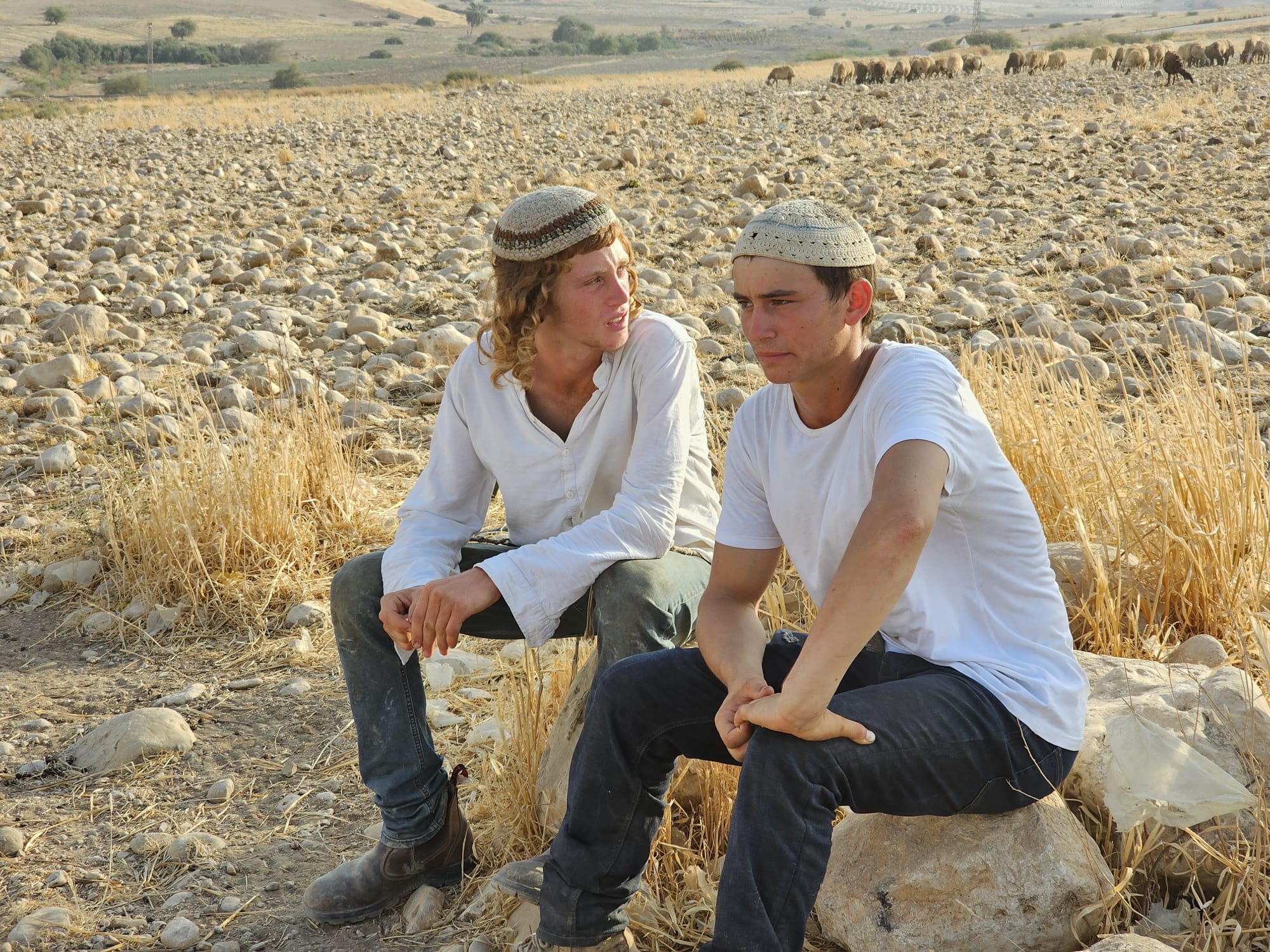
At 17:30 two settlers, both very young, arrived on foot from the settlement of Shadmot Mehola (across from Ein al-Sakut) and came down to Ein al-Sakut. Dressed in white shirts for Shabbat, they chose to sit down precisely in the shaded shelter that the shepherds had built, even though our team was inside guarding against the theft of goat kids that had been left nearby. The rest of the flocks were with the shepherds in the area. For a while they simply stared, until the settlers eventually gave up—perhaps because there were only two of them—and decided to leave. They strolled calmly along the path, as if to show who was in control, and may well have planned to harass or scatter the flocks. Four of our companions surrounded them, preventing them from doing anything.
The settlers then sat down near B.’s flock and refused to move. One of us asked why they were harassing, and they launched into a kind of mythic story that apparently circulates among the settlers of Shadmot Mehola: that some twenty years ago, a quarrel and fight broke out between A. and one of the settlers when they were both 14, and ever since the settlers are convinced that “the Arabs” only want to drive them out of their settlement. Of course, they also made clear their view that Palestinians should not be there at all, because the land was given to Jews alone.
In the end, they tired of it, realizing they would achieve nothing that day, and walked away—followed by one of our team members, who made sure they returned to Shadmot Mehola. We ended our shift and divided up for night watches at Ein al-Hilweh, al-Farsiya, and Ein al-Sakut. The night passed quietly, except at Ein al-Hilweh, where settlers apparently welded metal frames for booths at the spring, to serve Jewish bathers. The work was carried out at night because of the heat, and there was no way to stop it, since the occupation authorities already recognize the settlers’ “illegal” appropriation of the spring and its upkeep for settlers’ use. Palestinians no longer dare go down there without accompaniment—let alone bathe as they once did in the past, before the spring was seized.
At dawn, at 5:15, all the teams again set out to help the Ein al-Sakut shepherds move their flocks under the highway bridge to reach their fields on the western side. But when the shepherd spotted a settler approaching, he chose again to cross the road itself. At 6:15 the Sunday morning teams took over, and we returned home to Tel Aviv.
A seemingly easy day ending without incident—but always riddled with apprehension, and It is precisely this constant uncertainty that drains the shepherds of their remaining strength and resilience in the face of the settlers.
Location Description
'Ein al-Hilwe
See all reports for this place-
Ein al-Hilwe is a natural spring and a Palestinian grazing area in the Jordan Valley that was used by the Palestinian shepherd communities for watering their flocks and for daily use. As of 2021, settlers from the Maskyot settlement took control of the spring: they fenced it off, built a wading pool and a mikveh, and installed flags and recreational facilities.
Palestinians are effectively denied access to the spring, and are forced to make do with running water in a remote wadi or, when the road is blocked, buy water from vendors at high prices.
The spring is located in the heart of an area where illegal outposts are being established, as part of a broader trend of pushing Palestinian communities away by denying them access to essential resources. Neighboring communities such as Umm Jamal and Khirbet Samra have already left due to the pressure.
Over the years, MachsomWatch members have reported arrests on false claims by settlers, harassment and violence, including damage to herds, intrusion into homes, and the intimidation of children. MachsomWatch volunteers participate in a protective presence in areas around the spring to prevent harassment of shepherds due to the presence of settlers.
-
Al-Farisiya / 'Ein a-sakut
See all reports for this place-
Al-Farisiya / 'Ein a-sakutA community of shepherds in the Jordan Valley opposite the settlement of "Rotem". Making a living from grazing sheep, the residents are exposed to harassment, abuse and theft from settlers who come to them from outposts and settlements in the area, and their grazing area is shrinking due to settler takeovers, fire zones and declared nature reserves.Machsom Watch companies participate in shepherd escort activities and provide a 24/7 protective presence, and there is continuous and warm contact with the community.
-