
Jordan Valley: Shabbat started peacefully and ended with terrible violence
Shabbat, October 18, 2025
Shabbat started peacefully and ended with terrible violence, demonstrating a thousand times over, the fragility of life in the community of Palestinian herdsmen in the era of settler messianism.
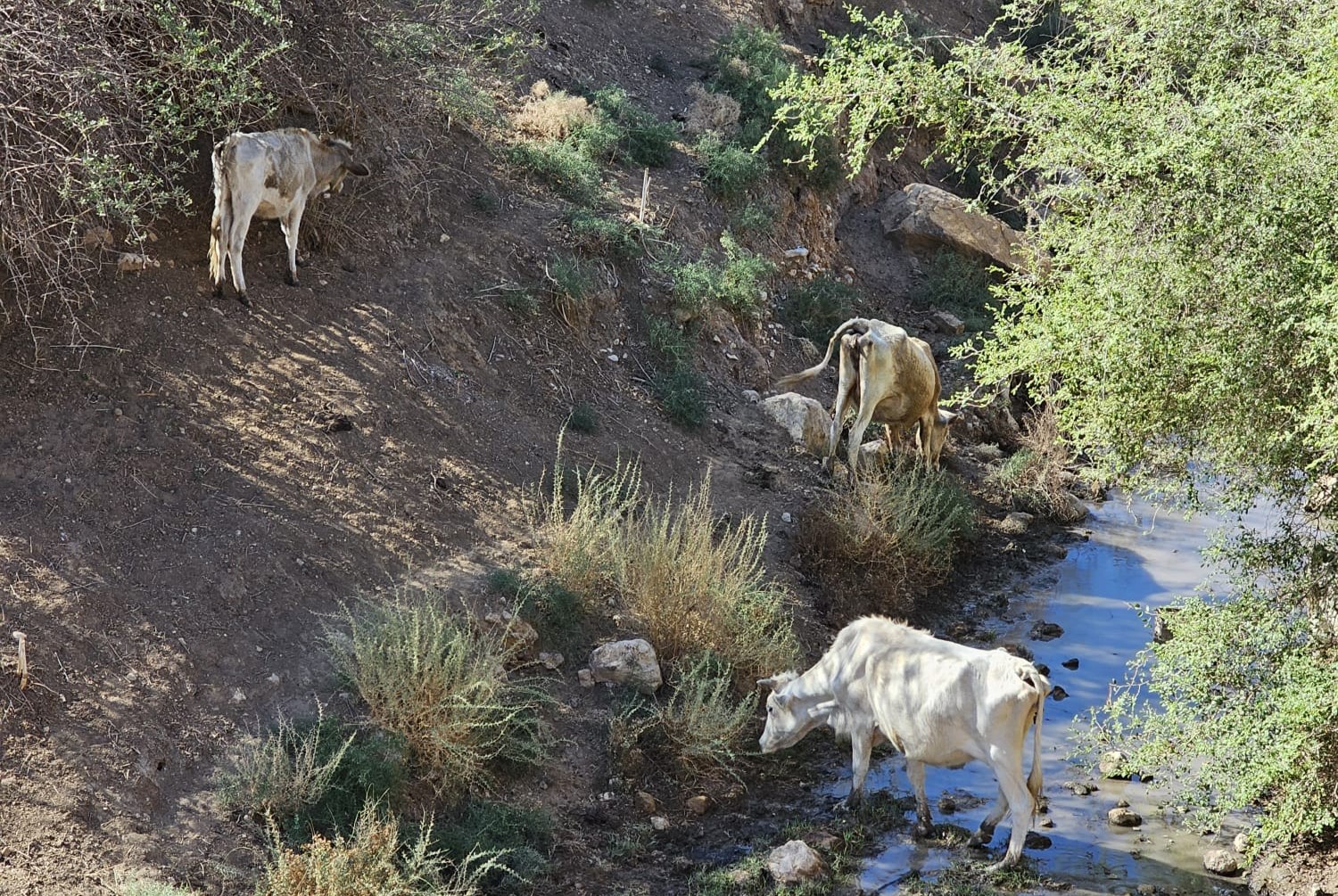
Two escorts joined the herdsmen at Ein-a-Sakut, for peaceful, uneventful grazing.
At Al-Farisiya, members of the protective presence (round-the-clock presence at the herdsmen’s homes) passed the shift talking and drinking coffee.
There was also something sad: one of the herdsmen has stopped going out because his plot has been ruined by cows belong to someone else in his community. The distress is fragmenting the solidarity and we decided not to get involved. I don’t know if that was the right decision, but that’s what was decided.
We got a call to come to Hammam El-Malih – settlers were on the prowl. Two escorts drove there, but the settlers had already left when they arrived. They apparently opened the electricity room, checked it and then left for unknown reasons. Perhaps they saw our car approaching. The Palestinians assured us that they’d let us know if the settlers returned.
Shabbat rest came to an end during the afternoon. Rumors started about settlers in their Sabbath shirts on their way to harass the people with ATVs and rocks.
At Samara, several youths made the rounds inside the community, scared the children, and left before we arrived. We got a call from Humsah about settlers who had come to show who is the sovereign boss in the Territories, as part of their effort to encourage people to leave.
And then we received a call from the community at Al-Farisiya Ihmeir saying settlers were inside the community. We rushed there and saw two youths in Sabbath shirts and yarmulkes making their way along the path. They went towards the other herdsman and we ran after them. They crossed over the Allon road and the herdsman thought they were going back to their settlement. We drove to Ein a-Sakut to bring the herdsmen supper and then, within seven minutes, got a call from the same herdsman to say the youths had not gone home but had gone and attacked A. from Al-Farisiya on his tractor.
We took two herdsmen with us to help us find him and check what was happening. We arrived and in the middle of the field on the east of the Allon Road, we saw the agitated herdsman on the phone to the police. The policemen assured him they would come and he turned to us to tell us what was happening. He had filled the water tank of his home in the village of Ein al-Beida and was returning in the direction of El Farsiya. On the way, he saw three youths moving among the bushes. At first, he thought they were just hanging out there, but the second he passed by them, one of them jumped out in front of his tractor and didn’t let him pass, while the other two tried to snatch his phone from him. Miraculously A. managed to get away, even as they flung large rocks at him. Luckily for him, they just hurt his arm. When he reached the Allon Road, he called us. It’s not clear if these were the same youths we saw at Hamra, perhaps joined by reinforcements. In any case, they evidently ran off having taken the keys to the tractor.
The police didn’t come but they sent an army patrol, which arrived half an hour later with two Bedouin trackers. They claimed adamantly that they had already been looking for us for half an hour, even though A. had advised the police of his whereabouts. It’s not clear if they had been busy or had something else to do, but they said it was already too late to find the youths. A. said they were from Shadmot Mehola, that he knew them, and the soldiers said they would go there and check the cameras at the gate if they’d arrived home.
Whether they managed to talk to the military security commander or just intended to, its reasonable to assume that nothing will happen to the youths. On the contrary, they will probably gt a prize for their heroism against the last herdsman who dared to stand up to them.
In the end, the police in blue never came. A got a spare key and return with his tractor to Al-Farisiya. We stayed overnight as part of the protective presence.
At 11:30 p.m., we got a call for help from a herdsman at Khalet Makhul, saying that settlers had entered his home and threatened to come back the next day. We drove there, but they had already disappeared. The soldiers were patrolling the road, apparently because of a terrorist attack at Tubas at which two soldiers had been injured.
Sunday October 19, 2025
The night passed quietly and in the morning, we returned to the peaceful city.
Location Description
'Ein al-Hilwe
See all reports for this place-
Ein al-Hilwe is a natural spring and a Palestinian grazing area in the Jordan Valley that was used by the Palestinian shepherd communities for watering their flocks and for daily use. As of 2021, settlers from the Maskyot settlement took control of the spring: they fenced it off, built a wading pool and a mikveh, and installed flags and recreational facilities.
Palestinians are effectively denied access to the spring, and are forced to make do with running water in a remote wadi or, when the road is blocked, buy water from vendors at high prices.
The spring is located in the heart of an area where illegal outposts are being established, as part of a broader trend of pushing Palestinian communities away by denying them access to essential resources. Neighboring communities such as Umm Jamal and Khirbet Samra have already left due to the pressure.
Over the years, MachsomWatch members have reported arrests on false claims by settlers, harassment and violence, including damage to herds, intrusion into homes, and the intimidation of children. MachsomWatch volunteers participate in a protective presence in areas around the spring to prevent harassment of shepherds due to the presence of settlers.
-
Al-Farisiya / 'Ein a-sakut
See all reports for this place-
Al-Farisiya / 'Ein a-sakutA community of shepherds in the Jordan Valley opposite the settlement of "Rotem". Making a living from grazing sheep, the residents are exposed to harassment, abuse and theft from settlers who come to them from outposts and settlements in the area, and their grazing area is shrinking due to settler takeovers, fire zones and declared nature reserves.Machsom Watch companies participate in shepherd escort activities and provide a 24/7 protective presence, and there is continuous and warm contact with the community.
-
Humsah
See all reports for this place-
Humsah
A shepherd community in the Jordan Valley. It is located in a remote place in Area C. There are no convenient ways to reach it. Its inhabitants make a living from their flocks. Like other shepherd communities, they live without basic infrastructure. This shepherd community is exposed to settler harassment and demolition of property by the military through civil administration orders.
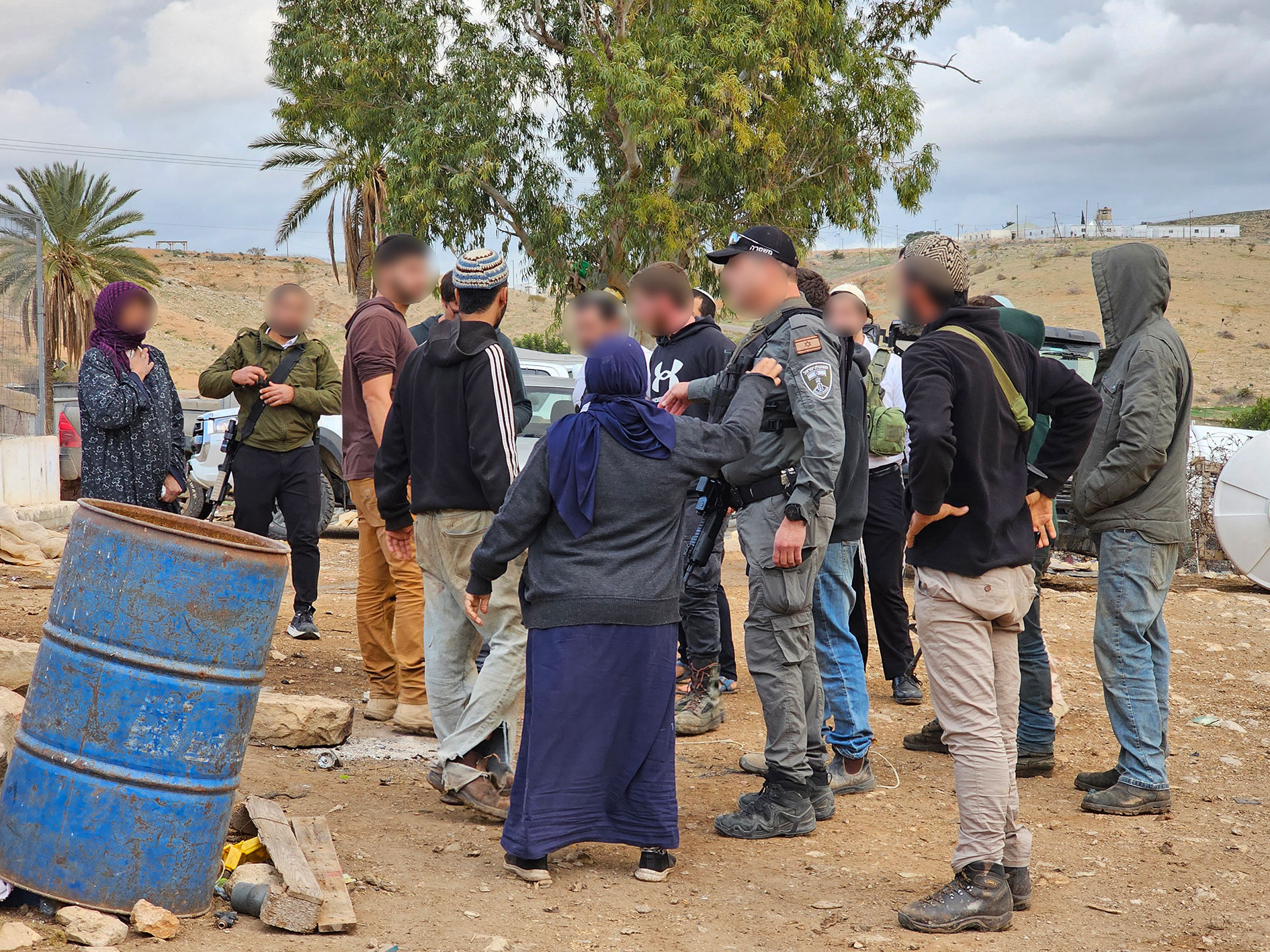 Sarah PostecDec-27-2026Hammam al-Malih: Border Guard and settlers in the compound
-
Jordan Valley
See all reports for this place-
Jordan Valley The Jordan Valley is the eastern strip of the West Bank. Its area consists of almost a third of the West Bank area. About 10,000 settlers live there, about 65,000 Palestinian residents in the villages and towns. In addition, about 15,000 are scattered in small shepherd communities. These communities are living in severe distress because of two types of harassment: the military declaring some of their living areas, as fire zones, evicting them for long hours from their residence to the scorching heat of the summer and the bitter cold of the winter. The other type is abuse by rioters who cling to the grazing areas of the shepherd communities, and the declared fire areas (without being deported). The many groundwaters in the Jordan Valley belong to Mekorot and are not available to Palestinians living in the Jordan Valley. The Palestinians bring water to their needs in high-cost followers.Sarah PostecDec-27-2026Hammam al-Malih: Border Guard and settlers in the compound
-