
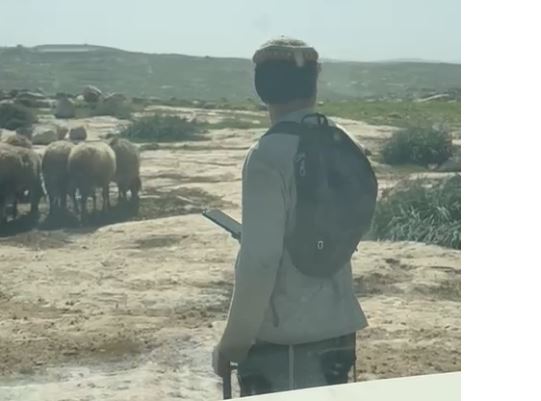
Khalat al-Muftih: A settler holding a club in his hands says: "I own all the land, you are not allowed to be here"
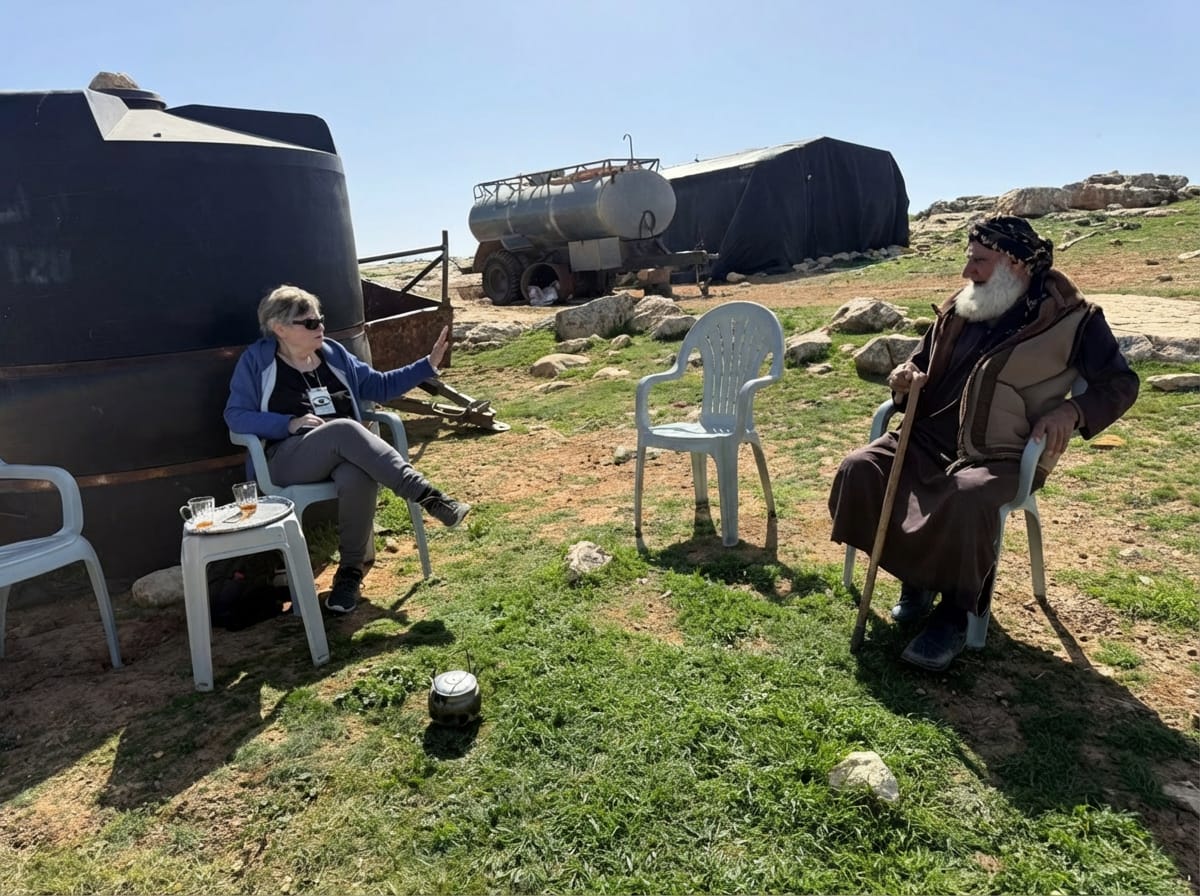
We drove to M. and S., whose land is near Route 60 on the outskirts of South as-Samu. M. with his wife and ten children. Three of their sons were arrested two weeks ago and we drove to the police station to find out what had occurred.
After we found the road to the family’s home a young settler about 16 years old herding a flock of sheep approached our car holding a club in his hands. As in any meeting between volunteers and settlers he began the usual speech that he was owner of the land here and that we were not allowed here. I told him that I was free to go wherever I wished and that he had no right to limit me in any way. He shouted that I was a traitor and an anarchist and blocked our way forward. I called the police and a policewoman listened attentively and asked for my location. When the settler saw that I had called the police he backed off and we were able to continue our drive.
After a few minutes the settler returned and attempted to make his presence known. I attempted in vain to talk to him and explain that I was trying to talk to him as one person to another. Was he not taught to respect adults and what about loving your fellow people? He continued to take pictures and even though he never answered me it appeared that he had heard. I could have argued with him and tell him what I thought of him, but I chose not to. Eventually he smiled and left.
I returned home, but the Palestinians who live here must deal with this harassment every day. .
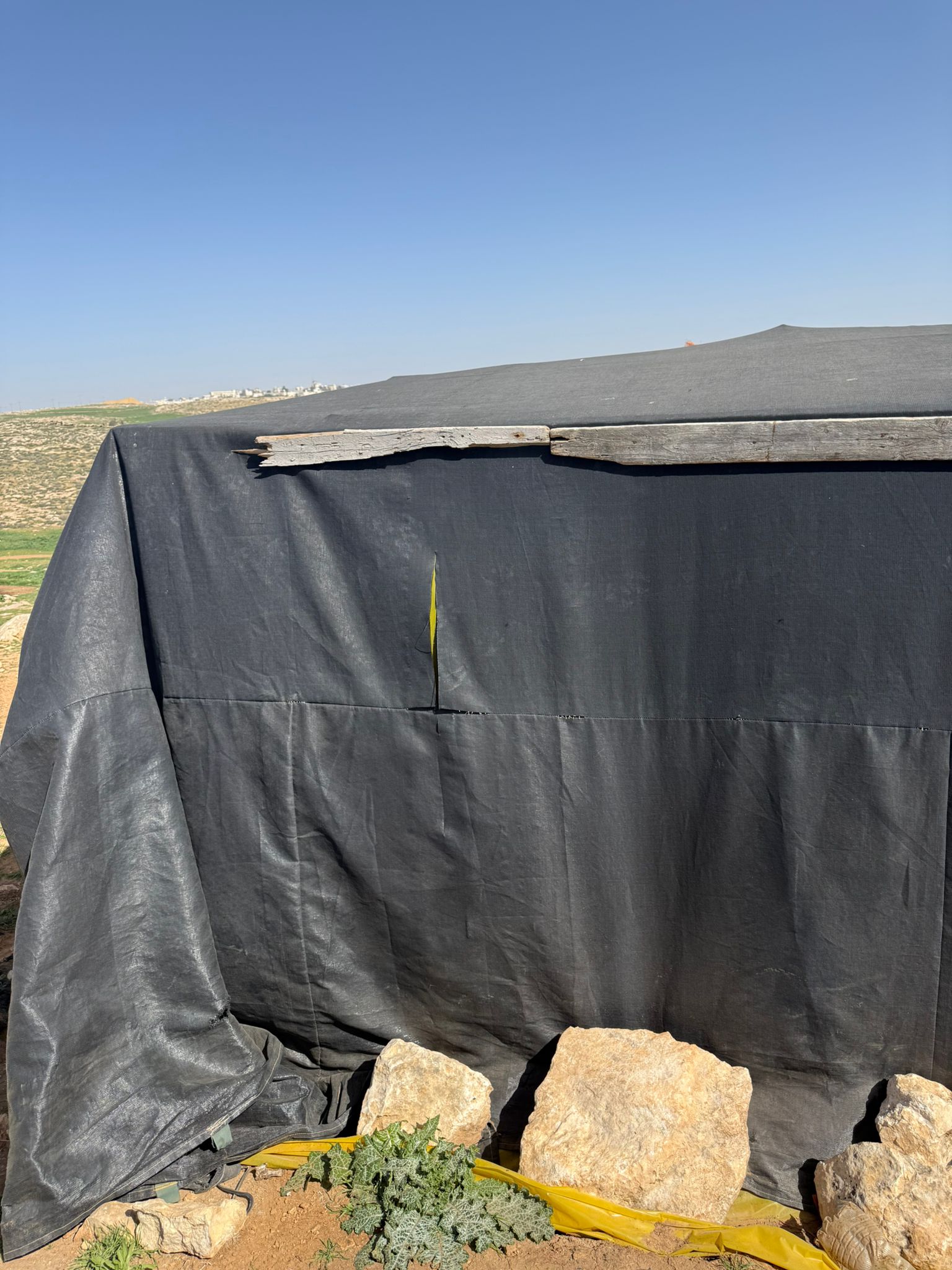
At the home of M., his wife and ten children M. showed us a tent that the settlers had ripped. They also attempted to steal his car but failed. Two weeks ago, settler youths with their flocks of sheep came from the illegal outpost that they had established several months ago. They trespassed on M. land and attempted to steal sheep from behind the house where their son was tending the flock. The settlers began throwing stones at the children and the sheep and the children began throwing stones back at them to protect themselves. M. called the police.
The police came and arrested three of M.’s sons. They were taken to Ofer prison and were freed four days later after intervention by Attorney Rahim. The settlers come every day to harass, invade, and curse and M. calls the police, but the settlers are never arrested. His sons graze the flocks close to the northern edge of their land. We left them food and clothes.
On the way, D. from Rahwa called and said they are leaving for the Dahariya area in a few days. ‘We have no life,’ she said, ‘when they come every day and abuse us; the small children are suffering.’
The horrors of the occupation.
Location Description
South Hebron Hills
See all reports for this place-
South Hebron Hills
South Hebron Hills is a large area in the West Bank's southern part.
Yatta is a major city in this area: right in the border zone between the fertile region of Hebron and its surroundings and the desert of the Hebron Hills. Yatta has about 64,000 inhabitants.
The surrounding villages are called Masafer Yatta (Yatta's daughter villages). Their inhabitants subsist on livestock and agriculture. Agriculture is possible only in small plots, especially near streams. Most of the area consists of rocky terraces.Since the beginning of the 1980s, many settlements have been established on the agricultural land cultivated by the Palestinians in the South Hebron Hills region: Carmel, Maon, Susia, Masadot Yehuda, Othniel, and more. Since the settlements were established and Palestinians cultivation areas have been reduced; the residents of the South Hebron Hills have been suffering from harassment by the settlers. Attempts to evict and demolish houses have continued, along with withholding water and electricity. The military and police usually refrain from intervening in violent incidents between settlers and Palestinians do not enforce the law when it comes to the investigation of extensive violent Jewish settlers. The harassment in the South Hebron Hills includes attacking and attempting to burn residential tents, harassing dogs, harming herds, and preventing access to pastures.
There are several checkpoints in the South Hebron Hills, on Routes 317 and 60. In most of them, no military presence is apparent, but rather an array of pillboxes monitor the villages. Roadblocks are frequently set up according to the settlers and the army's needs. These are located at the Zif Junction, the Dura-al Fawwar crossing, and the Sheep Junction at the southern entrance to Hebron.
Updated April 2022
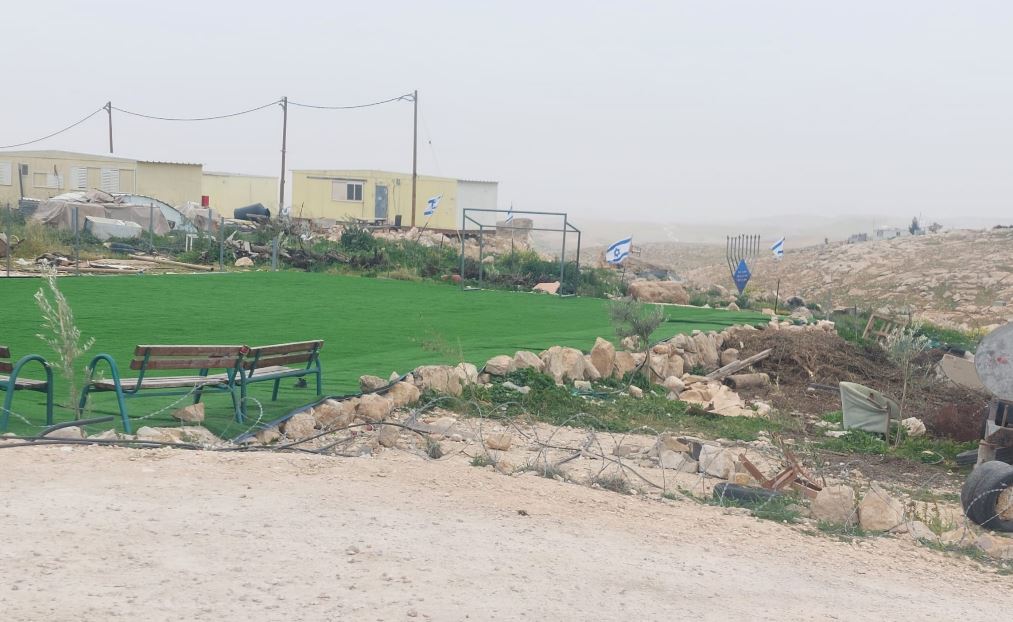 Michal TsadikFeb-17-2026Umm al-Khair: The soccer field for Palestinian children is surrounded by new trailers and lots of Israeli flags
-