
Khalet a-Deba' - the demolition of the village
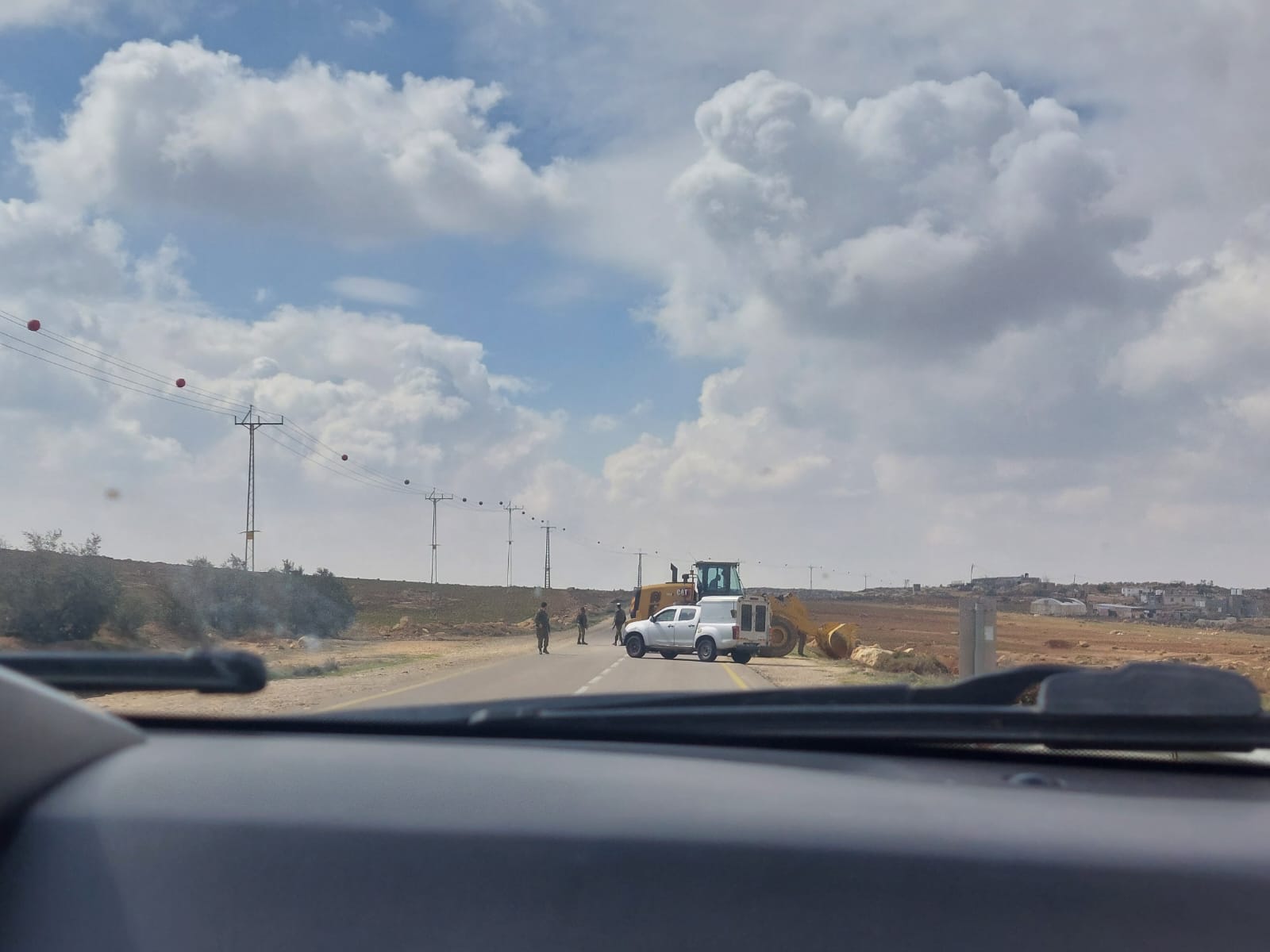


On the road, near Susiya, a bulldozer is piling up piles of dirt and stones along the road in order to block all the roads to Samu’. We waited, because the road was blocked, just to be on the safe side. Suddenly, a vehicle with a settler overtakes us and breaks through the checkpoint and drives on without stopping or being disturbed. We asked the soldiers to explain the matter. The soldier raises his shoulders and hands in a gesture that says: What to do? Muhammad gets angry and shouts: “If it were me or a Palestinian, they would have shot us immediately. “The security guard makes gestures that everything is fine, go.
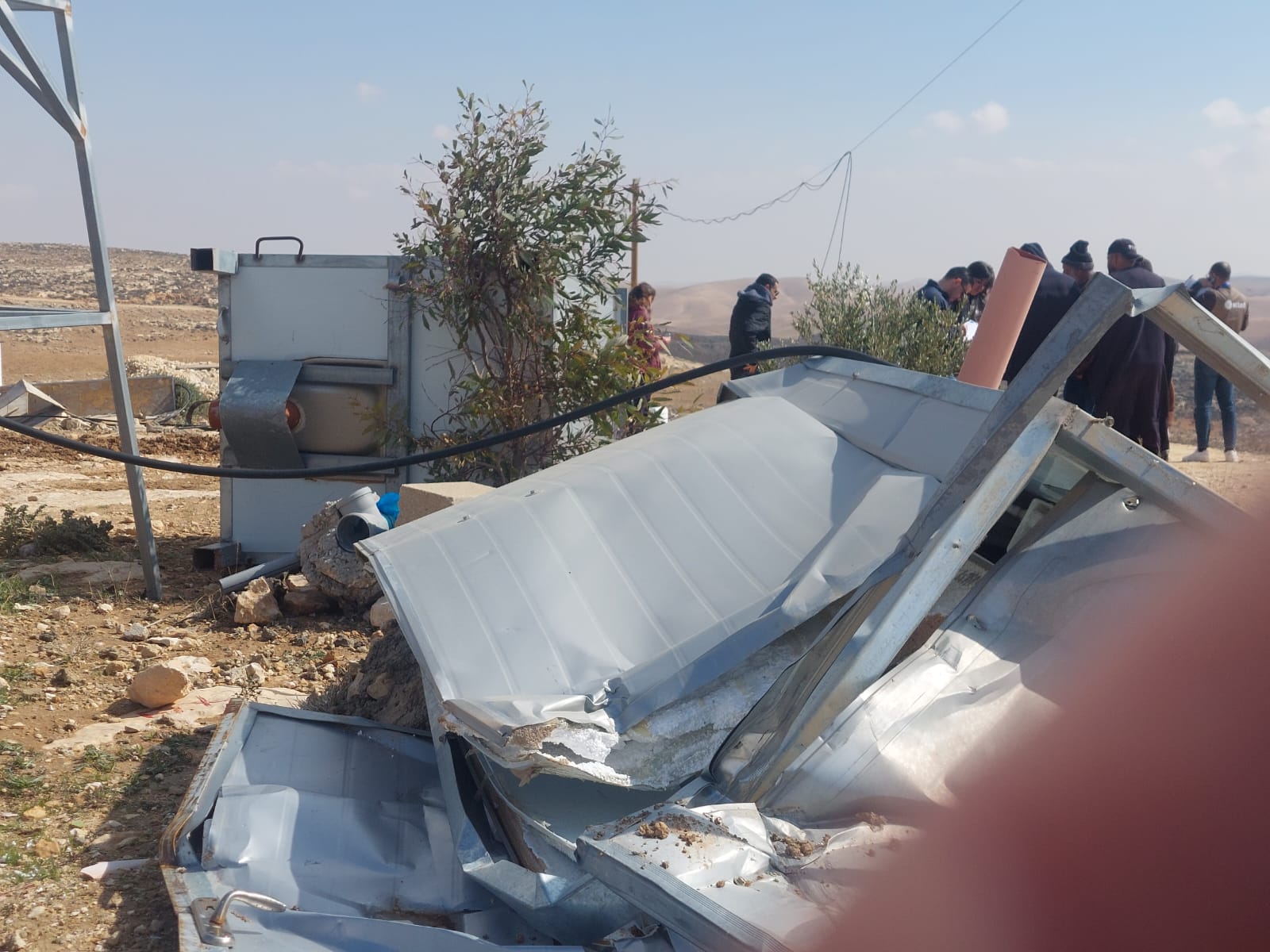
We drove to Khalet a-Daba’ where the day before DCL – District Coordination and Liaison Office – had come and demolished seven of the 18 houses of the Dababasa family there. That’s the whole of this small village.
Before we arrived, Nasser from A-Tuwani had told us that settlers also came to them at night with bulldozers with the intention of demolishing more houses. But this time the police arrived quickly, probably because it was an independent initiative of new settlers who settled near Mitzpe Avigail, and they fled when the police arrived. He also tells of an attempt to steal a donkey and a week-old foal. Again, thanks to the quick arrival of the police, they were driven off. The harassment happens all the time, he says.
But it was a planned operation by the DCL and the army. The destruction there is extensive and when we arrived, journalists from all over the world were there, as were Doctors for Human Rights, the Red Cross, and also a Palestinian humanitarian organization, new to us: Acted. According to them, they have existed for many years and come to help with all the needs of the people after the demolition of houses.
We did not meet Jaber. He was busy with the many organizations that came to report and help. But his brother and other family members tell us that 50 olive trees were also uprooted.
We also bought food supplies, in addition to the clothes and toys we brought. These are constantly collected by Smadar. We walked around the ruins and agreed to come back when everything calms down here to talk to the people.
In the meantime, to our delight, a very detailed article by Gideon Levy and Alex Levac about the residents of this place and their long-standing history has been published.
We have written and photographed this story more than once. They also live in caves there, fortunately. We have photographed them in the past. This time it was the sixth time that their homes were destroyed as part of the ethnic cleansing that is taking place in the southern Hebron Hills.
Location Description
A-Tuwani
See all reports for this place-
A-Tuwani
The locals came to a-Tuwani during the 20th century from the village of Yatta. They settled in abandoned ruins, utilizing the arable land, pastures for grazing sheep and the abundance of natural caves for habitation. The residents who settled in the caves came from families who could not purchase land for houses in the mother villages, as well as shepherds who did not have enough land to graze. They were joined by clan members who quarreled with other families in the mother locality.
Some of the residents today live in concrete buildings built above the caves. In the area of the village are several water cisterns and an ancient water well called 'Ein a-Tuwani. Local residents are forced to buy water in containers and transport them through many road blocks to the village. With the help of international organizations, an electrical system was installed in the village. In the late 90s of the 20tTh century, an elementary school was established in the serving several small villages in the area.
In 2004, MachsomWatch began visiting and reporting from the Khirbet Tuwani cave village, which suffers badly from the settlers of nearby outposts, and especially from the extremist Ma'on outpost. . The settlers contaminate cisterns, poison the flocks and uproot trees.Particularly notable is the harassment of children from the surrounding villages on their way to school in a-Tuwani, so much so that military escort of children is required to separate them from the attackers (this was arranged following an initiative of the organization's members). In the past year, the escort has been without the vital presence of overseas volunteers.
Near a-Tuwani there are several families who have returned to the caves due to the incessant demolitions of the civil administration (as there is a total construction ban in all of area C). Destroyed are not only residential and agricultural buildings, but also water pipes, machinery. Even water cisterns are clogged up. a-Tuwani residents have created an association for non-violent demolition protests, but in the past year the army’s harsh harassment and settler violence have intensified and escalated. The incident of the small generator confiscation, which left a young man paralyzed, is one of many examples - any legitimate protection of property rights leads to violence and even shootings by the army and the civil administration.
Updated April 2022
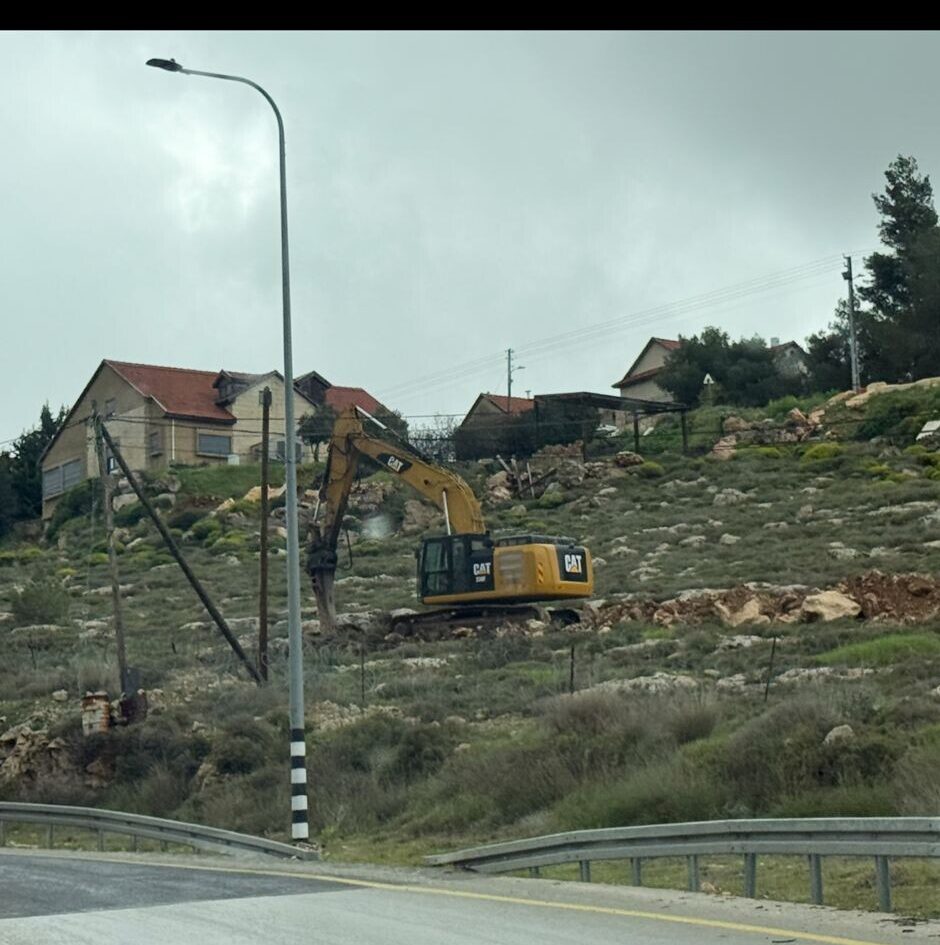 MuhammadFeb-24-2026South Hebron Hill, Beit Hagai: Paving an internal security road
-
Masafer Yatta*
See all reports for this place