
Last winter, the Israeli army came and demolished their home once again
Wednesdays for us mean our vigil at the Palestinian Jordan Valley. This time we decided to go down to the southern part and pay a visit at Fasail. Daphne, Nurit and I have very good ties with Hajar and her family, living in “Lower Fasail” (Fasail wusta). The family includes Ne’ima, Hajar’s sister who is a local school teacher, Hajar’s eldest son Zayid (works the date plantations of Jewish settler-colony Tomer and receives 100 shekels for a 10-hour work day). Zayid is married to Huda and they have two children. Hajar and her daughter-in-law are good friends and help each other. Hajar has another two younger sons – 15-year old Zakkariya and 7-year old Ibrahim. The children and grandchildren live together and play in the shade of the abundant Ficus tree under which all of life takes place. Hajar’s husband (Abu Zayid) was killed in a road accident about three years ago on his way back at night from Jericho.
I remember Hajar and her husband when, 6 years ago, after one of the Israel Civil Administration’s home demolitions there, we arrived at the site – Daphne, Nurit and I. This was the first time I saw with my own eyes the destruction that the Israeli army wreaks upon the Palestinian Jordan Valley’s shepherd community. I was shocked by the extent of cruelty exerted by the “most moral army in the world”. We spoke with them then, in the shade of the ficus tree, and when I wanted to donate 200 shekels to help them a bit in reconstructing the demolished home they would not take the money from me. It was also the first time I met an assertive refusal on the part of Palestinians to receive money. Since then I have grown to like Hajar very much. Unfortunately, in view of what happened in the area for the past half-year, and the need to accompany Palestinian shepherds to pasture there, we had not visited Fasail for a long time so today we decided to go there. Hajar and Huda were very excited at our coming. The small children have grown and Huda’s new baby boy has joined them. We spoke of this and that, especially of their lives in this hot region, about their children. Hajar told us she finished high-school in Jericho but has not studied ever since. This matter has always saddened greatly, when I meet someone who with her abilities and intelligence could have developed so much more and lived a much richer life. But perhaps I’m wrong – Hajar seems content with her children and grandchildren.
After visiting Hajar we went to visit Tahrir in another encampment of Fasail Al Wusta. Tahrir is a pretty young woman, married to a family relation, living in Fasail. His family has suffered greatly from home demolitions and eventually moved to the ‘Aida refugee camp near Bethlehem. The son remained with his small family in Fasail, and they too conduct their lives in the shade of another ficus tree nearby. They have five children.
About half a year ago, last winter, the Israeli army came and demolished their home once again, in stormy, wet weather. Machsomwatch donated money to purchase a tent, mattresses and equipment for their living quarters.
Tahrir looks very ill. She told us she underwent head-surgery but we didn’t quite understand what ails her. She said she gets dizzy, loses her balance and falls. Her husband stays home to take care of her and therefore is out of work. We brought them too large bags with coffee, tea and cookies.
We left Fasail and returned to Rosh Ha-Ayin in the afternoon.
Fasa'il
See all reports for this place-
An old community of shepherds in the Jordan Valley that is located between settlements and is exposed to the demolition of its residential buildings at times by the army and the abuses of the settlers. King Herod founded the city of Fatza'elis in 8 BC, and named it after his older brother, Petzal. The permanent settlement in the place began with Bedouins who migrated to the area as early as the 1950s after being expelled from the Tel Arad area. Over the years, additional Bedouin residents who were expelled from other places in the Jordan Valley joined. Areas that were declared as fire areas or state lands . As part of the Alon plan, a significant part of the lands in the area were expropriated and four Israeli settlements were established on them: Tomer, Gilgal, Fatza'el Netiv HaGdud. Illegal posts were erected over the years. Some of them were authorized during the 7th October War.
-
Jordan Valley
See all reports for this place-
Jordan Valley The Jordan Valley is the eastern strip of the West Bank. Its area consists of almost a third of the West Bank area. About 10,000 settlers live there, about 65,000 Palestinian residents in the villages and towns. In addition, about 15,000 are scattered in small shepherd communities. These communities are living in severe distress because of two types of harassment: the military declaring some of their living areas, as fire zones, evicting them for long hours from their residence to the scorching heat of the summer and the bitter cold of the winter. The other type is abuse by rioters who cling to the grazing areas of the shepherd communities, and the declared fire areas (without being deported). The many groundwaters in the Jordan Valley belong to Mekorot and are not available to Palestinians living in the Jordan Valley. The Palestinians bring water to their needs in high-cost followers.
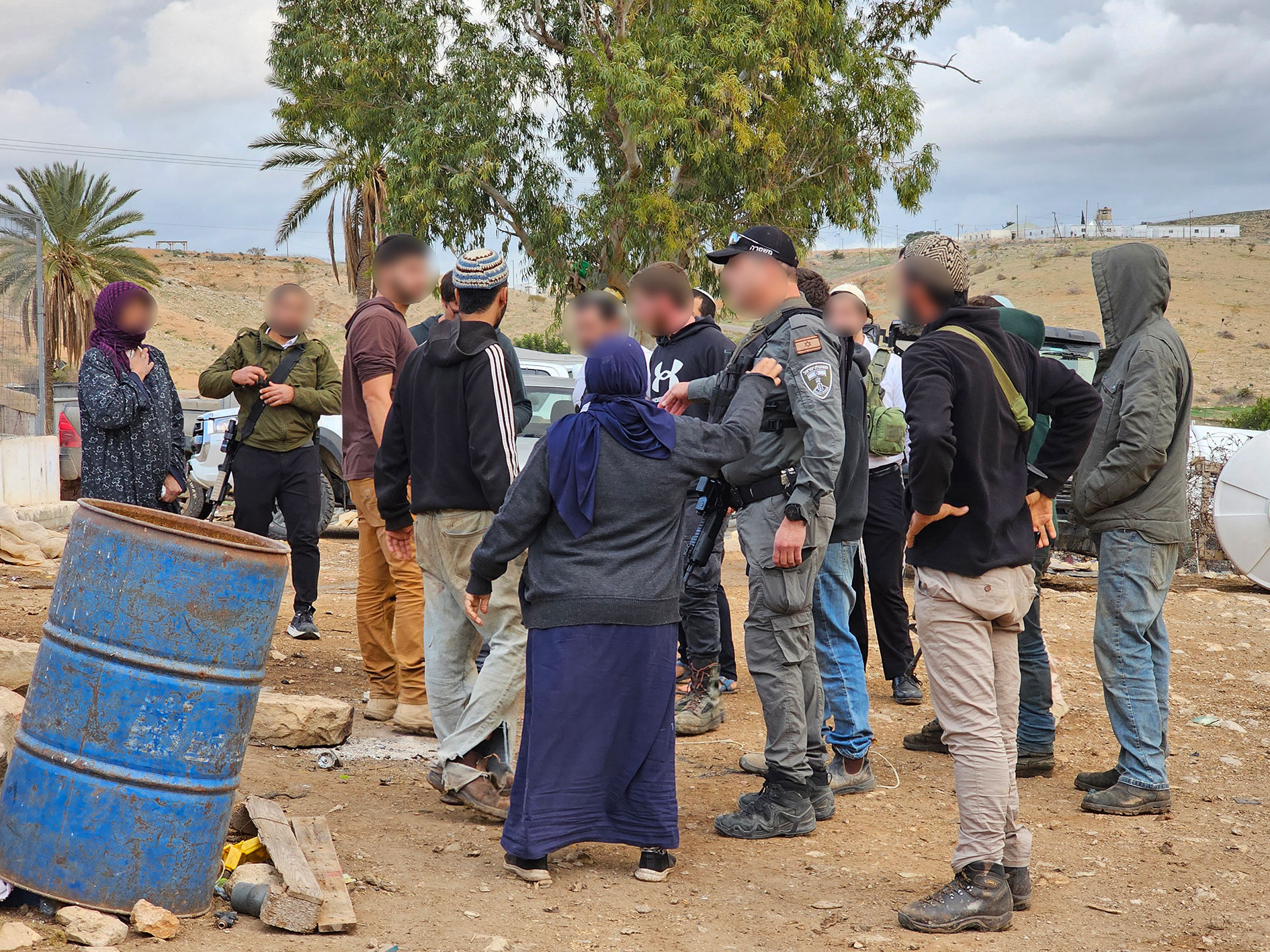 Sarah PostecDec-27-2026Hammam al-Malih: Border Guard and settlers in the compound
-