
North Bank checkpoints: 2 are closed and few pass through the others

Today was the first time that we visited the checkpoints since October 7th, the black Saturday in the Gaza Periphery.
06:15 – Barta’a Checkpoint 7,000-9,000 permits have been added for people who will be working in the seamline zone. The permits are given to people over 35 years old. There are still no workers allowed to cross into Israel, but anyone crossing to East Barta’a can continue on into Israel.
The checkpoint opened late, at 06:00 so that people were forced to be late for work. There was a sparse but steady flow of workers from the terminal who are lucky enough to have work and permits to cross. We stood in the upper parking lot and attempted to talk to the workers who were mostly young people. They asked us to help them get the checkpoint to open earlier.
Someone from Yaabed told us about the difficulties they have experienced since the war began. There are people in the town whose electricity has been turned off because they have no money to pay the bill. Many people are remaining at home because they have no work. Others reported that things are difficult but they are managing. Four women from Yaabed who work in the factory in Shahak Industrial Zone that manufactures mattresses that are exported to Europe were very friendly. They were waiting for a ride to work. Tura Checkpoint is closer for them, but it only opens at 07:00, so they prefer to cross here.
The parking lot is full of minibus taxis.
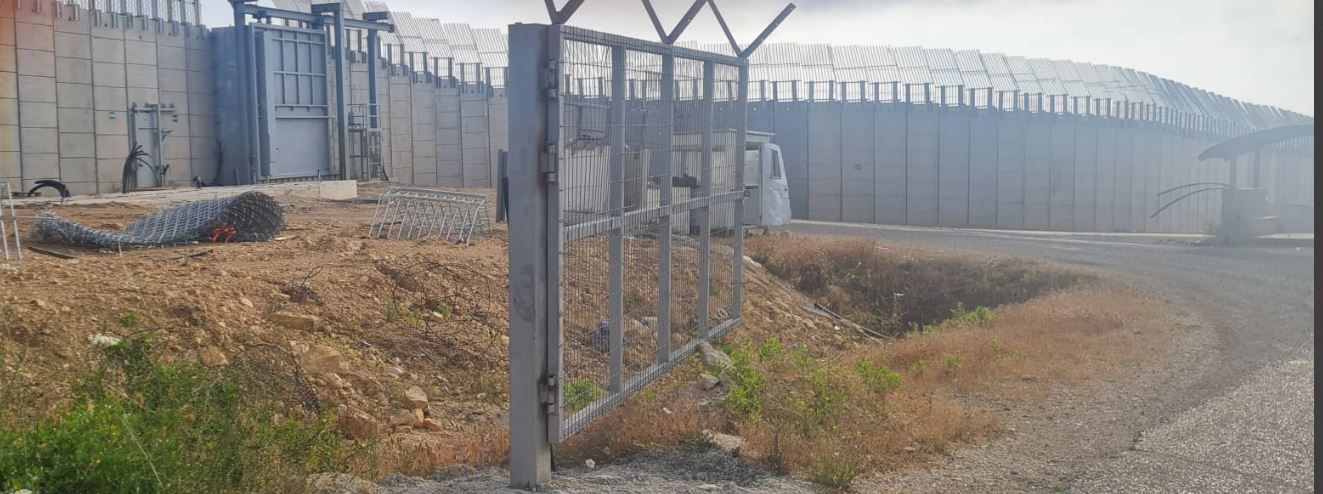
07:00 Tura Checkpoint Pedestrians are leaving the checkpoint to be picked up in cars to take them to work, mainly in the industrial zone. The long separation wall leads to the checkpoint and beyond. Above the upper edge there were metal screens to prevent people from climbing over with ropes or ladders. The makeshift passages from the West Bank to Israel and back continue over the wall under roads like bridges. The contribution of the wall, like the Bar Lev Line during the Yom Kippur War (1973), proved useless. The only people who benefitted are the contractors who built them.
The photo below shows the separation wall (9 meters high) that reaches from the southwest to the Tura checkpoint (visible at the end of the road) and continues from there and on to the northeast, and above it are steel grilles (2 meters) that are supposed to prevent the passage of people using ladders and ropes.
We continued on to Aanin agricultural checkpoint as we have done for years before the war in Gaza broke out. Of course the checkpoint was closed, almost deserted and this having nothing to do with the war. The decision to close the passage was made by the wise occupiers who believe that the hundreds of dunams of olive groves that lie on the other side of the separation barrier do not need to be tended by their owners. Their permits to cultivate their olives have been denied in favor of others who `simply want to go have a cup of coffee in Um al Fahem or seek work a couple of times a week.`
This is how the occupation promotes terror and hate.
The photo below shows deserted Aanin checkpoint. Who knows when the large gate for tractors and the small gate for pedestrians will open again?
People begged us to arrange for them to cross at Barta’a Checkpoint. Without tractor they can only weed their olive groves by hand or prune two or three days a week. The Palestinian District Coordination and Liaison Office does not help them at all.