
Qalandiya - 1-year-old baby, wounded in his ear, was delayed on his way to hospital
Facing a locked gate in the vehicle track at the checkpoint meant for buses, a private car stood waiting. A long time. Since it was strange to see a non-public vehicle in this track, I went out of my way and approached it. The driver told me he was from Kufr Aqeb, that his 1-year-old child was wounded in his ear and he was taking him to the hospital.
Yes, he knows the procedures, so before he got on his way he notified the army authorities in charge of the checkpoint that he was coming here and they, sitting inside, said it was alright and promised to open the gate for him. Promised but didn’t keep their promise.
The mother sat in the back seat holding her wounded baby.
This situation of Kufr Aqeb villagers, officially Jerusalem residents with blue (Israeli) IDs, is a privilege compared to the millions of Palestinians holding green (Palestinian) IDs. However, there’s a catch: in order to receive medical treatment they must get to Jerusalem and not to the Ramallah hospital nearer their home, so the wounded baby who needs urgent surgery, was delayed even more than necessary and possible because the way did not open as promised.
For quite a while the parents and their child waited. The father sat in his car hunched up with rage and worry.
They want us dead before they open the way for us, he said – words succinctly summing their reality.
I stood next to the car and waited with them. When the gate opened at long last, the car progressed a few dozen meters into the checkpoint compound, and was stopped again at the exit. Another inspection, another verification, again – not fitting the urgency of the case but rather ‘by the book’.
I remained behind, following the family with my eyes and thinking about the disregard of Palestinian lives as far as the Israeli soldiers, police force and security guards are concerned. I remembered 80-year-old Omar Asad whom soldiers shackled on a cold night and forgot to free him, and died on the cold ground. I thought about the value of life of those not considered equal to those holding guns, I wished the wounded baby would arrive on time at the hospital and receive the best treatment possible, and not be scarred either in body or in mind…

Further on the main road leading to Ramallah, between the two traffic lanes, Abu Amir’s kebab stand is located. The place is filled with exhaust fumes, dust rising from car tires, and still – in spite the changing looks of this stand covered with a shade-sheet – perhaps Abu Amir is right to locate his business at this spot.
Qalandiya Checkpoint / Atarot Pass (Jerusalem)
See all reports for this place-
Click here to watch a video from Qalandiya checkpoint up to mid 2019 Three kilometers south of Ramallah, in the heart of Palestinian population. Integrates into "Jerusalem Envelope" as part of Wall that separates between northern suburbs that were annexed to Jerusalem in 1967: Kafr Aqab, Semiramis and Qalandiya, and the villages of Ar-Ram and Bir Nabala, also north of Jerusalem, and the city itself. Some residents of Kafr Aqab, Semiramis and Qalandiya have Jerusalem ID cards. A terminal operated by Israel Police has functioned since early 2006. As of August 2006, northbound pedestrians are not checked. Southbound Palestinians must carry Jerusalem IDs; holders of Palestinian Authority IDs cannot pass without special permits. Vehicular traffic from Ramallah to other West Bank areas runs to the north of Qalandiya. In February 2019, the new facility of the checkpoint was inaugurated aiming to make it like a "border crossing". The bars and barbed wire fences were replaced with walls of perforated metal panels. The check is now performed at multiple stations for face recognition and the transfer of an e-card. The rate of passage has improved and its density has generally decreased, but lack of manpower and malfunctions cause periods of stress. The development and paving of the roads has not yet been completed, the traffic of cars and pedestrians is dangerous, and t the entire vicinity of the checkpoint is filthy. In 2020 a huge pedestrian bridge was built over the vehicle crossing with severe mobility restrictions (steep stairs, long and winding route). The pedestrian access from public transport to the checkpoint from the north (Ramallah direction) is unclear, and there have been cases of people, especially people with disabilities, who accidentally reached the vehicle crossing and were shot by the soldiers at the checkpoint. In the summer of 2021, work began on a new, sunken entrance road from Qalandiya that will lead directly to Road 443 towards Jerusalem and Tel Aviv. At the same time, the runways of the old Atarot airport were demolished and infrastructure was prepared for a large bus terminal. (updated October 2021)
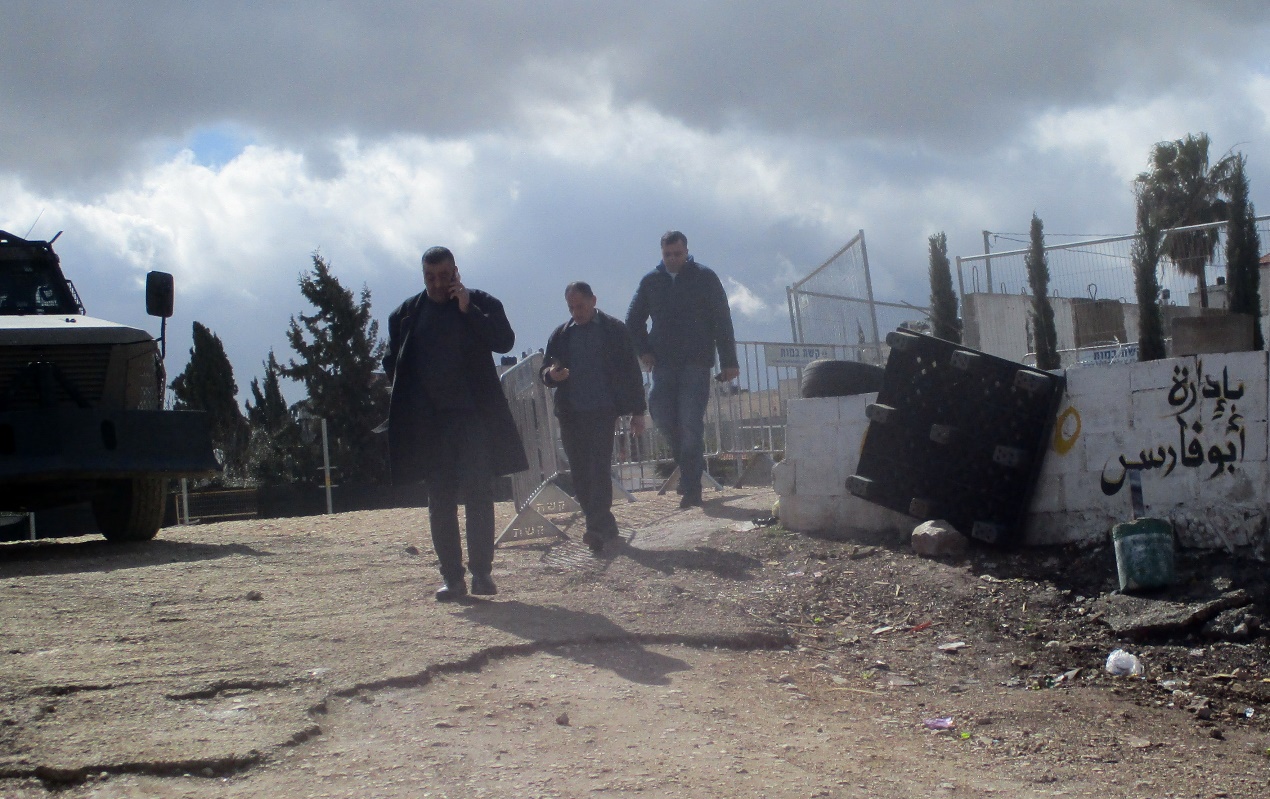 Tamar FleishmanFeb-27-2026Qalandiya: On the way to prayer
-