
Qalandiya
3rd Friday of Ramadan
The face of terror preceded those arriving.
The blood of the youth who was shot and wounded and lost one of his kidneys two days ago, a youth who was shot because he threatened, with empty hands, the soldiers, was now mixed with the blood of Muhamad al-Kosba, 17 yrs. old, who was murdered by the head of the Binyamin Brigade, General Israel Shomer, in the morning; a murder which was carried out without any complaints, no investigation and no official report.
"He climbed on the fence, and wanted to go pray at Al Kuds" is what the Palestinians said.
The martyr, Muhammad al-Kasba, joined his brothers Yasser and Samer, who were murdered by the soldiers' bullets in the year 2001, and a long and growing list of martyrs from the refugee camp Kalandia.
And in occupation as in occupation, those who pay the price of the injury of the youth and the murder of another youth are the victims themselves.
From the IDF we heard about the cancellation of the "favors" granted to the Palestinian population for the Fridays during Ramadan, a step which is nothing other than collective punishment of millions of people.
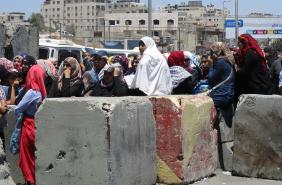
Added to the system of the stick and the carrot which is employed against the Palestinians all days of the year, every year and during the month of Ramadan in particular, is a worsening of the criteria according to which thousands of women and men from the West Bank cross through the Kalandia checkpoint or their way to the mosque of Al-Aksa, while their freedom of religious practice is damaged, a right which is protected by international laws and is emphasized in the Declaration of Independence.
As the former President of the United States, Spiro Agnew, said, "The bastards changed the rules and didn't tell me."

Many of those who left their homes at dawn and made their way whille fasting, and arrived at the checkpoint in order to continue on their way to the Al-Aksa mosque at the proper time for prayer, did not know that the had procedure had been changed; they didn't know that women who were not yet 30, and men who hadn't celebrated their 50th birthday, were not eligible according to today's laws to carry out their religious obligations, no matter how many hours they had traveled and no matter if their homes were close by or far away from here. whether they lived in Ramallah or in Nablus or in Jenin, armed men and women stopped them, checked their ages and sent them back.
The new guidelines stated that handicapped men could enter only through the men's gate, even if the way was longer and more crowded – only through the men's gate, and that women as well as men who did not meet the new criteria would be sent back through the gate – and they were indeed sent back. Everything according to the guidelines and everything according to the orders.
Qalandiya Checkpoint / Atarot Pass (Jerusalem)
See all reports for this place-
Click here to watch a video from Qalandiya checkpoint up to mid 2019 Three kilometers south of Ramallah, in the heart of Palestinian population. Integrates into "Jerusalem Envelope" as part of Wall that separates between northern suburbs that were annexed to Jerusalem in 1967: Kafr Aqab, Semiramis and Qalandiya, and the villages of Ar-Ram and Bir Nabala, also north of Jerusalem, and the city itself. Some residents of Kafr Aqab, Semiramis and Qalandiya have Jerusalem ID cards. A terminal operated by Israel Police has functioned since early 2006. As of August 2006, northbound pedestrians are not checked. Southbound Palestinians must carry Jerusalem IDs; holders of Palestinian Authority IDs cannot pass without special permits. Vehicular traffic from Ramallah to other West Bank areas runs to the north of Qalandiya. In February 2019, the new facility of the checkpoint was inaugurated aiming to make it like a "border crossing". The bars and barbed wire fences were replaced with walls of perforated metal panels. The check is now performed at multiple stations for face recognition and the transfer of an e-card. The rate of passage has improved and its density has generally decreased, but lack of manpower and malfunctions cause periods of stress. The development and paving of the roads has not yet been completed, the traffic of cars and pedestrians is dangerous, and t the entire vicinity of the checkpoint is filthy. In 2020 a huge pedestrian bridge was built over the vehicle crossing with severe mobility restrictions (steep stairs, long and winding route). The pedestrian access from public transport to the checkpoint from the north (Ramallah direction) is unclear, and there have been cases of people, especially people with disabilities, who accidentally reached the vehicle crossing and were shot by the soldiers at the checkpoint. In the summer of 2021, work began on a new, sunken entrance road from Qalandiya that will lead directly to Road 443 towards Jerusalem and Tel Aviv. At the same time, the runways of the old Atarot airport were demolished and infrastructure was prepared for a large bus terminal. (updated October 2021)
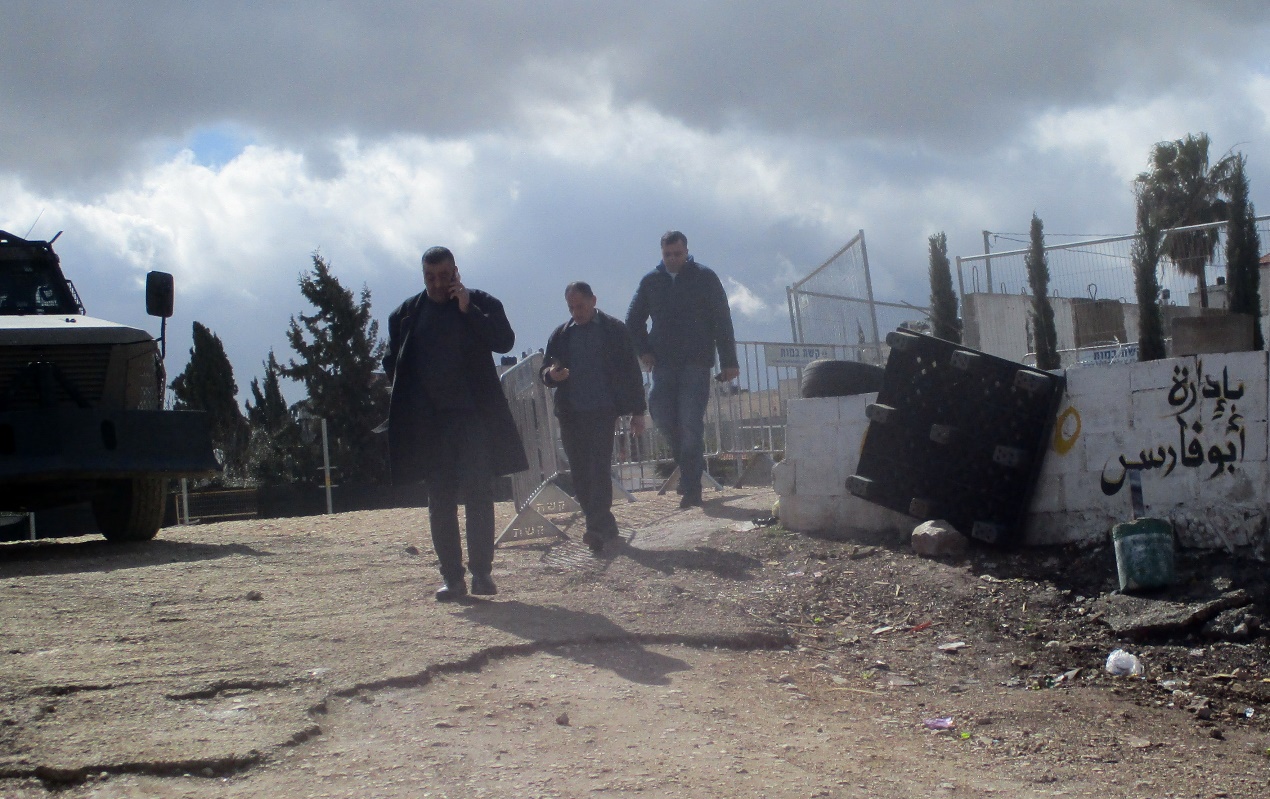 Tamar FleishmanFeb-27-2026Qalandiya: On the way to prayer
-