
Qalandiya

A distilled concentrate of the occupation’s horrors, its laws, arbitrary decrees, and erasure of the other, an other who is not myself, not ourselves, an other who is a woman, a man or even a baby who has not yet taken his first breath.
This other, whose presence has reduced everything that has ever been and experienced in this place is a baby born in Nablus four days ago with a hole in its heart, and sent for surgery at Maqassed Hospital in East Jerusalem.
The baby arrived with a doctor and nurse who operated a respiratory apparatus in the plastic box, a transparent intensive care unit, and were busy keeping him alive. Only the tip of his ear was visible through the white blanket in which his mother wrapped him before she took leave of the fruit of her womb. The mother has yet to recover from her delivery remained hospitalized under doctor’s orders. The mother’s mother accompanied the infant.
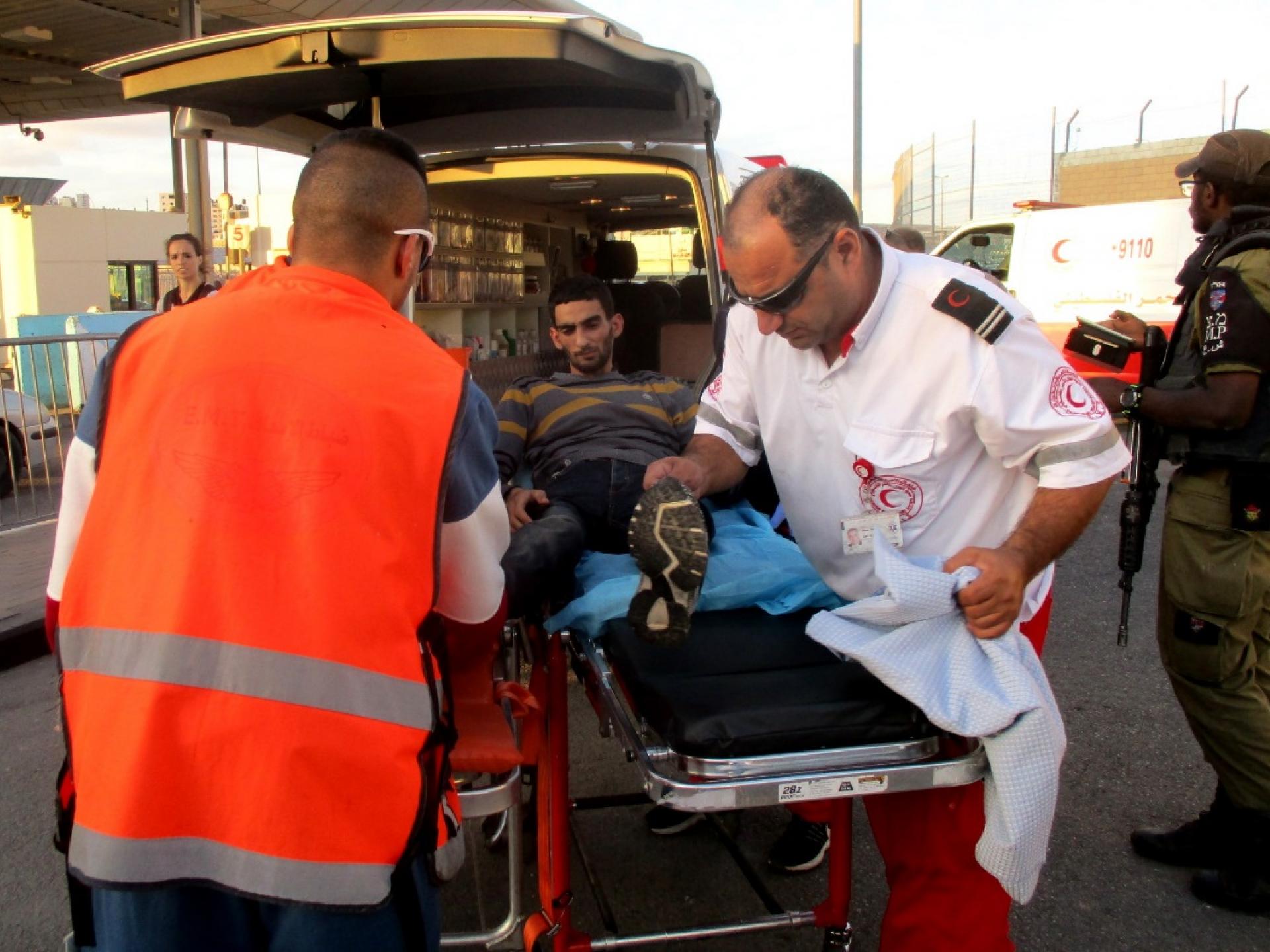
All this is conducted according to instructions, by protocol, all by order of the Israeli occupation that entry into East Jerusalem, a part of the greater-Jerusalem, is forbidden for an ambulance from the Occupied Territories.
Thus, in a back-to-back procedure, the baby was removed from the ambulance from the Occupied Territories and transmitted to the Red Crescent ambulance from East Jerusalem. Documents inspected, the security guards verified that the baby is really that baby, that the accompanying woman is really his grandmother, that the doctor and nurse are really the doctor and nurse, and only then – when everything was kosher and Israeli state security was under no apparent threat, was the Red Crescent Jerusalemite ambulance allowed to proceed.
Even the fact that Tony who brought the baby in his ambulance is known for his many years of experience in life-rescuing – was not considered. Strictly back-to-back procedure.
At a distance of not more than twenty yards from the Nablus baby described above, at the same time and place, a baby from the Gaza Strip was brought in a light-weight carrier, having been released that very morning from a Ramallah hospital after eye surgery.
His eye still bandaged, his body dazed with sedatives, the infant lay quietly and dozed.
Both are not considered humanitarian cases entitled to priorities over the regular procedures.
The Gazan baby, like others from the Gaza Strip released that same morning from hospitals in the West Bank, remained inside the checkpoint compound until he and they were finally allowed to exit into the other side and board the patient transport vehicle which is exclusively authorized to carry them to the Gaza Strip.

When it appeared that the torment cup had run over for that time, suddenly the air was sliced again with ambulance sirens. Once more a man sent to East Jerusalem for surgery, once more – the destination was Maqassed Hospital in East Jerusalem,and obviously – in back-to-back procedure.
Qalandiya Checkpoint / Atarot Pass (Jerusalem)
See all reports for this place-
Click here to watch a video from Qalandiya checkpoint up to mid 2019 Three kilometers south of Ramallah, in the heart of Palestinian population. Integrates into "Jerusalem Envelope" as part of Wall that separates between northern suburbs that were annexed to Jerusalem in 1967: Kafr Aqab, Semiramis and Qalandiya, and the villages of Ar-Ram and Bir Nabala, also north of Jerusalem, and the city itself. Some residents of Kafr Aqab, Semiramis and Qalandiya have Jerusalem ID cards. A terminal operated by Israel Police has functioned since early 2006. As of August 2006, northbound pedestrians are not checked. Southbound Palestinians must carry Jerusalem IDs; holders of Palestinian Authority IDs cannot pass without special permits. Vehicular traffic from Ramallah to other West Bank areas runs to the north of Qalandiya. In February 2019, the new facility of the checkpoint was inaugurated aiming to make it like a "border crossing". The bars and barbed wire fences were replaced with walls of perforated metal panels. The check is now performed at multiple stations for face recognition and the transfer of an e-card. The rate of passage has improved and its density has generally decreased, but lack of manpower and malfunctions cause periods of stress. The development and paving of the roads has not yet been completed, the traffic of cars and pedestrians is dangerous, and t the entire vicinity of the checkpoint is filthy. In 2020 a huge pedestrian bridge was built over the vehicle crossing with severe mobility restrictions (steep stairs, long and winding route). The pedestrian access from public transport to the checkpoint from the north (Ramallah direction) is unclear, and there have been cases of people, especially people with disabilities, who accidentally reached the vehicle crossing and were shot by the soldiers at the checkpoint. In the summer of 2021, work began on a new, sunken entrance road from Qalandiya that will lead directly to Road 443 towards Jerusalem and Tel Aviv. At the same time, the runways of the old Atarot airport were demolished and infrastructure was prepared for a large bus terminal. (updated October 2021)
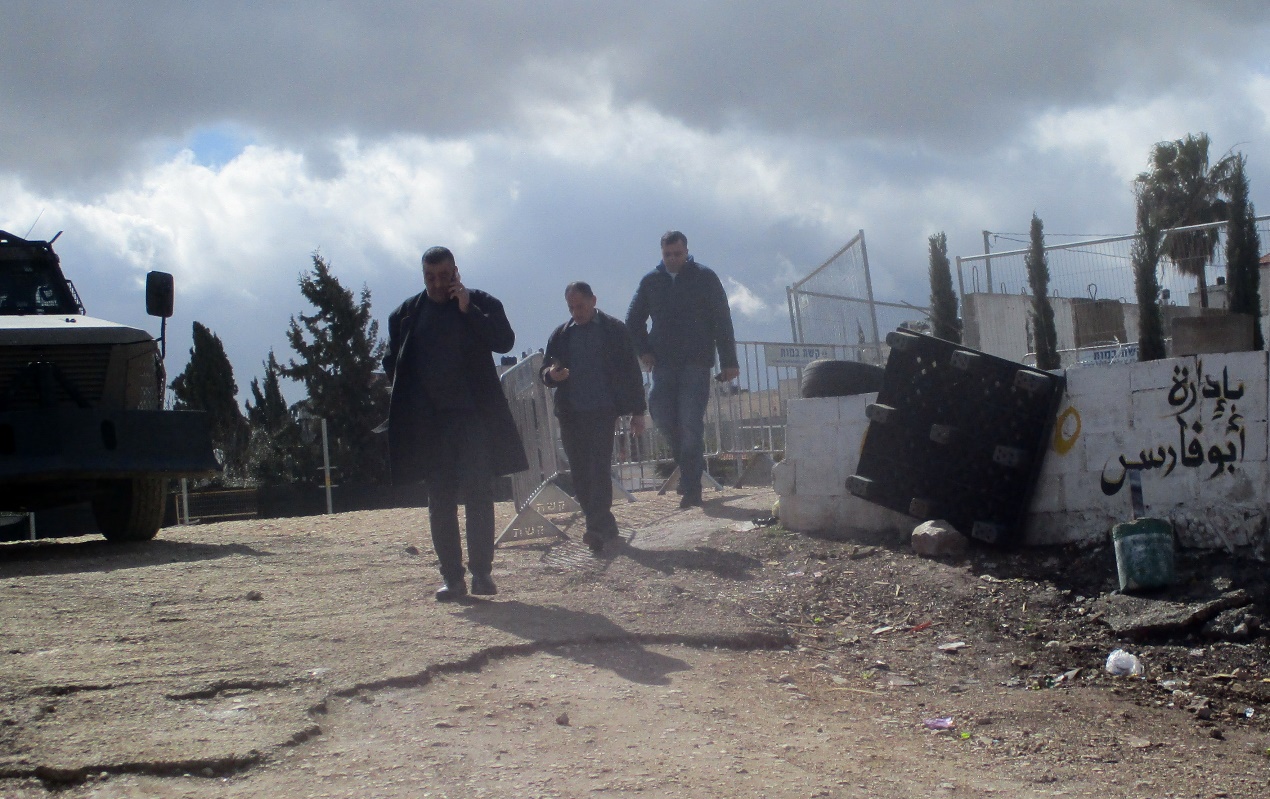 Tamar FleishmanFeb-27-2026Qalandiya: On the way to prayer
-