
Qalandiya
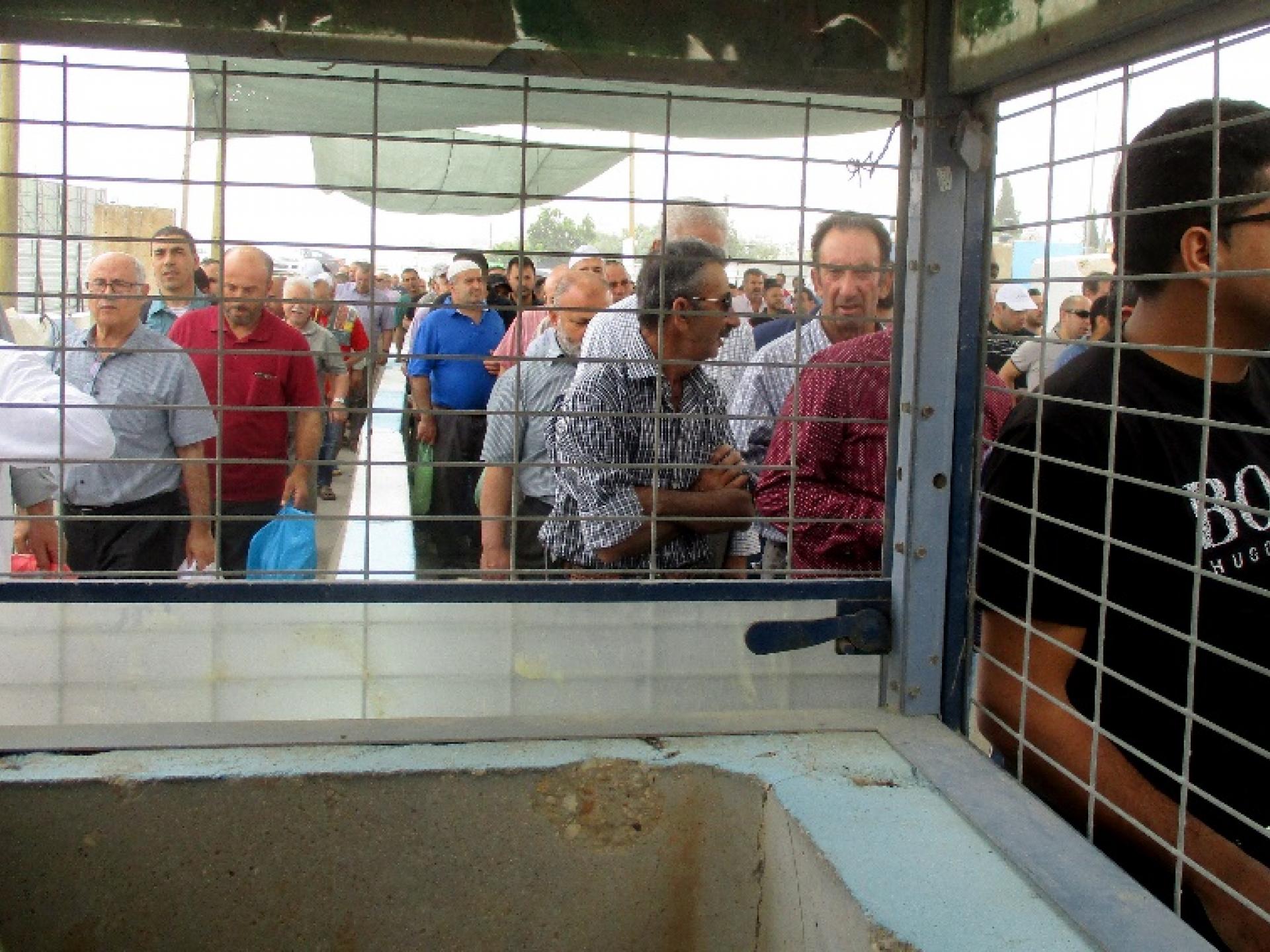
Streams of people spilling out of the field of vision crowded in front of the two functioning entries to the checkpoint. People’s way to prayer at Al Aqsa mosque is no easy task, neither fast nor clear of the filth of man-made obstacles. The comers were not allowed their right of personal choice. Neither the way they choose to take, not the track they are to wait in, nor what to hold in their hand.
Everything runs only by the letter of the book and orders. Everything is policed and absolute and determined top-down to the last of details. The soldiers sound as if they participated in anger-management workshops: they generously use hollow clichés of “please’ and “Ramadan Kareem”.
A Border Policeman went the extra mile as he blocked vehicles 2 kilometers before Qalandiya and made us all continue on foot, but took care to greet every dirver with “’Bro” or the Israeli slang equivalent of “dear”, thought he was cool and couldn’t understand how disgusting and wrong his speech and conduct were.
At the heart of the sterile area stood a policeman who carefully observed gthe appearance of those who had already succeeded to cross the first selection, and from time to time pointed at one of them and called over to the soldiers: “Turn this one back”. The latter did his bidding and pulled the man over to the ‘good riddance’ gate.
One man who was turned back attracted my attention. He was not young, his head mostly bald, graying at the sides, his long and tangled beard a faded ginger color, and when he heard his verdict he repeatedly claimed he had a permit.
Why? I asked the policeman. Look at him. He looks like someone who when getting to the Al Aqsa compound will preach and incite so he better not get there.
In addition to soldiers and policemen and Civil Administration personnel and Border Policemen, uniformed Palestinian police worked the outer ring, subject to the Israeli army’s orders, and saw to it that men do not walk the women’s track nor vice versa.
A trusty source said that a week ago, too, they were there but not easily recognized because they had been wearing civilian clothes.
Every person has the right of their personal space between bodies, every person also has their own personal pace, dictated by their body and physical limitations and will. All of these are taken away from Palestinians who come here, to the region of inaccessibility and controlling the other both privately and collectively.
One could say that order reigned, and in the same breath mention that this order is nauseating.
Everything was dictated top-down and set as if the Palestinians are brainless and mere actors in an absurd theater play written, directed and timed to the very last detail, a play of these versus those, of the ones holding rifles and the ones holding prayer rugs. A bad play, that even when covered with stage makeup remains cracked and ugly.
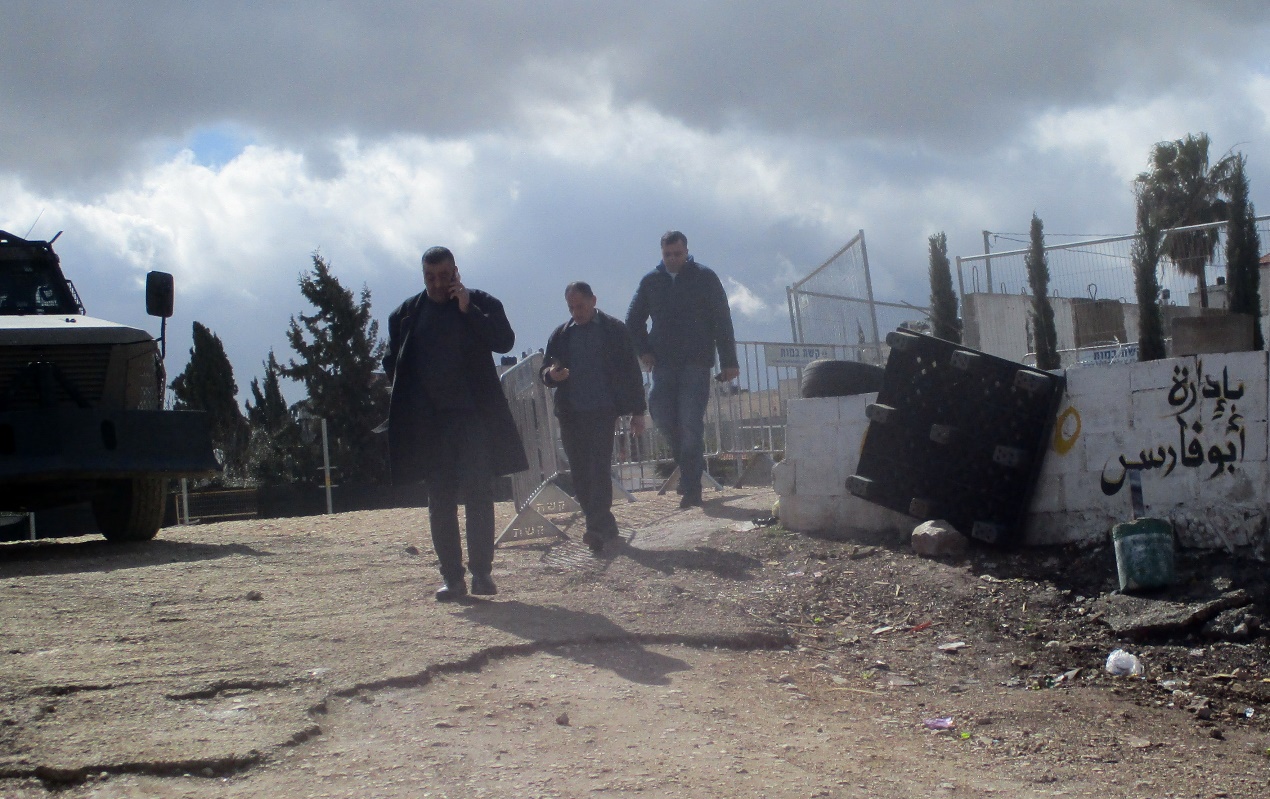
And if control does not suffice, with all its tones and colors and flags, a new concrete bloc has been added to them with an old inscription that would not shame a single army unit or military academy or even a pre-military seminar.

Qalandiya Checkpoint / Atarot Pass (Jerusalem)
See all reports for this place-
Click here to watch a video from Qalandiya checkpoint up to mid 2019 Three kilometers south of Ramallah, in the heart of Palestinian population. Integrates into "Jerusalem Envelope" as part of Wall that separates between northern suburbs that were annexed to Jerusalem in 1967: Kafr Aqab, Semiramis and Qalandiya, and the villages of Ar-Ram and Bir Nabala, also north of Jerusalem, and the city itself. Some residents of Kafr Aqab, Semiramis and Qalandiya have Jerusalem ID cards. A terminal operated by Israel Police has functioned since early 2006. As of August 2006, northbound pedestrians are not checked. Southbound Palestinians must carry Jerusalem IDs; holders of Palestinian Authority IDs cannot pass without special permits. Vehicular traffic from Ramallah to other West Bank areas runs to the north of Qalandiya. In February 2019, the new facility of the checkpoint was inaugurated aiming to make it like a "border crossing". The bars and barbed wire fences were replaced with walls of perforated metal panels. The check is now performed at multiple stations for face recognition and the transfer of an e-card. The rate of passage has improved and its density has generally decreased, but lack of manpower and malfunctions cause periods of stress. The development and paving of the roads has not yet been completed, the traffic of cars and pedestrians is dangerous, and t the entire vicinity of the checkpoint is filthy. In 2020 a huge pedestrian bridge was built over the vehicle crossing with severe mobility restrictions (steep stairs, long and winding route). The pedestrian access from public transport to the checkpoint from the north (Ramallah direction) is unclear, and there have been cases of people, especially people with disabilities, who accidentally reached the vehicle crossing and were shot by the soldiers at the checkpoint. In the summer of 2021, work began on a new, sunken entrance road from Qalandiya that will lead directly to Road 443 towards Jerusalem and Tel Aviv. At the same time, the runways of the old Atarot airport were demolished and infrastructure was prepared for a large bus terminal. (updated October 2021)
 Tamar FleishmanFeb-27-2026Qalandiya: On the way to prayer
-