
Qalandiya - Ramadan is over




Ramadan ended and we returned for a morning shift in Qalandiya. We drove past the checkpoint and parked in a paid parking lot on the Palestinian side. We arrived around 6:30 am. It is clear that Ramadan is over. People are carrying food bags and chain-smoking again. The kiosk returned to its normal location. The food stand is also back, french fries and falafel being fried in the morning and all kinds of food sold. People drinking coffee in the shed. We did not meet Abu Ramzi, our friend who sells pretzels. The salesman at the kiosk said he had already left.
At the checkpoint itself, we were surprised to find that there were long queues again. But the queues kept moving, sometimes shrinking to almost no people in the shed before entering the slalom, and then becoming long again.
Above the tower near the vehicle checkpoint, cries of “Irja Lawara” (retreat backward) were suddenly heard and we saw at least one security guard advancing from the vehicle checkpoint towards the end of the sterile area. This is the area with forbidden access to pedestrians, for fear of harm coming to soldiers and security guards. Whoever approaches gets shot at, and this has happened more than once. We feared that an incident was about to happen, but we saw no one approaching and the security guard also retreated quickly as well.
In the meantime, we approached the gate in the fences bordering the checkpoint compound that allows entry from the direction of Qalandiya. This gate has been closed for a long time and people want to enter without looping around to the second entrance. So they find ways. First they sawed the bottom of the fence. After a while the army blocked that breach. Now there are climbers over the fence and many more pass between the fence’s bars. There were two bars with a gap larger than usual, and they further expanded it by warping the bars to make the gap passable. “Suwary, suwary” (photograph, photograph) tells me someone crossing the fence through the bars and he signals a V with his hand. He greets us in English: “good morning, angels” and then helps us decipher the dedication added to the mural. Later someone else will tell us – why not open the gate? If you do not open it, then we break the iron…
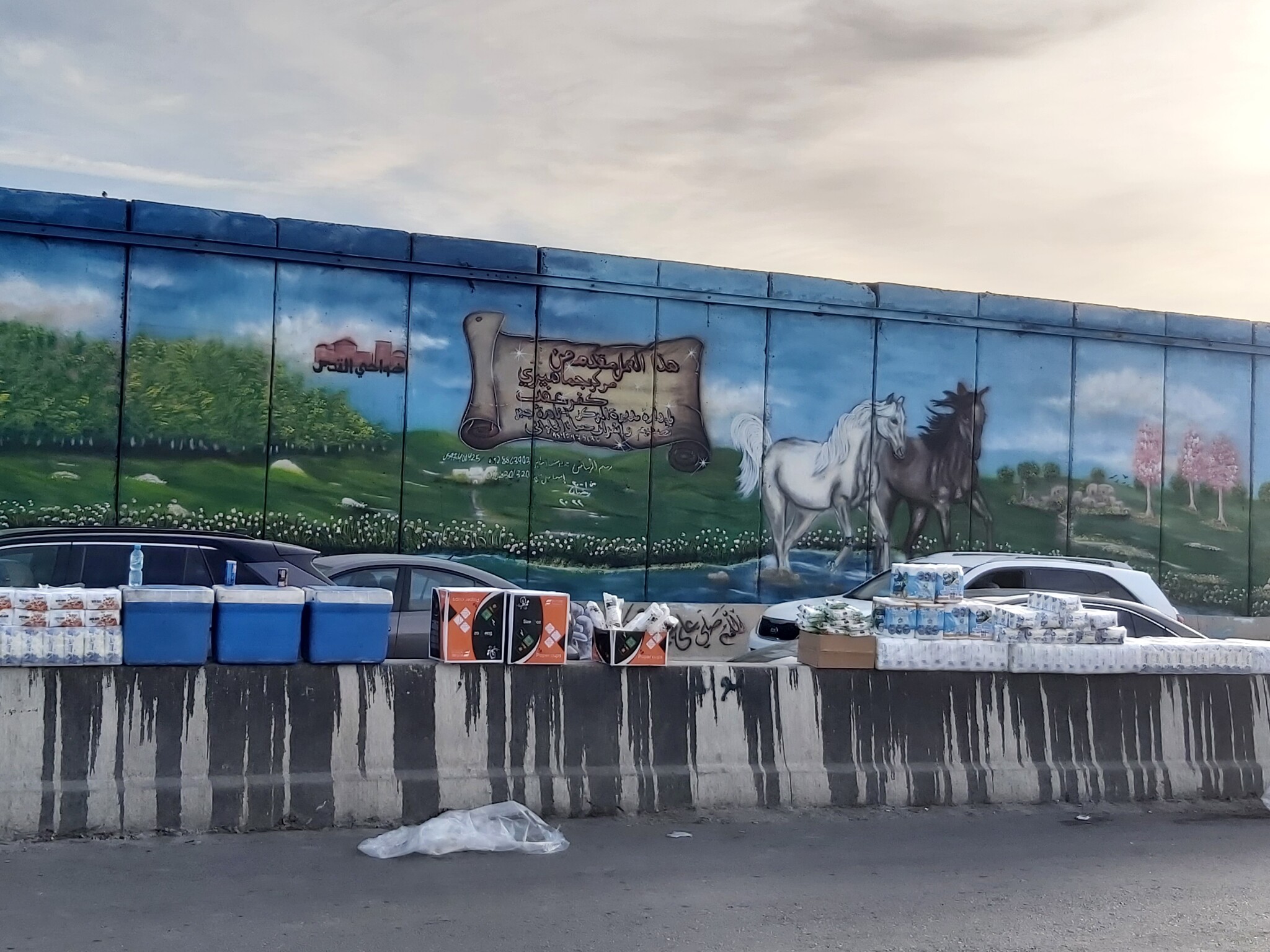
Turns out the mural previously seen and photographed by us wasn’t finished. Dedication has been added now – Kfar Akev’s residents are the ones who made the painting and dedicated it to the residents of Qalandiya. At least one character was added, and colors were painted onto other characters that were previously black and white.
The lanes are separated by low concrete barriers on which the hawkers placed their wares, and while passengers wait in traffic jams, they’re offered coffee and other products for sale.
We returned to the checkpoint’s entrance. The trash can overflows, but the surroundings are relatively clean. Later a sanitary worker will come to collect the trash here. But he only cleans at the checkpoint compound and not beyond. On the slalom walls of the checkpoint are partially torn remnants of Ramadan signs. It isn’t clear why they were not removed.
At 7:10, when we saw that the queues outside the checkpoint entrances had ended, we went inside. There were many people inside, but most of the checkpoint stands seemed to be active and queues were progressing at a reasonable pace. Upstairs in the gallery stood a security guard, observing the proceedings. While waiting, we noticed that the Palestinians standing next to us were upset by something and showed each other pictures on the phone. I asked the man standing next to me what had happened and he told me that an Al-Jazeera journalist had been shot in Jenin and killed. Shows me a picture of her on his phone and says her name is Sheerin Abu Akleh. By the time we got to the car (the passage itself took less than 10 minutes), her death had already become the talk of the day on all the news channels …
Qalandiya Checkpoint / Atarot Pass (Jerusalem)
See all reports for this place-
Click here to watch a video from Qalandiya checkpoint up to mid 2019 Three kilometers south of Ramallah, in the heart of Palestinian population. Integrates into "Jerusalem Envelope" as part of Wall that separates between northern suburbs that were annexed to Jerusalem in 1967: Kafr Aqab, Semiramis and Qalandiya, and the villages of Ar-Ram and Bir Nabala, also north of Jerusalem, and the city itself. Some residents of Kafr Aqab, Semiramis and Qalandiya have Jerusalem ID cards. A terminal operated by Israel Police has functioned since early 2006. As of August 2006, northbound pedestrians are not checked. Southbound Palestinians must carry Jerusalem IDs; holders of Palestinian Authority IDs cannot pass without special permits. Vehicular traffic from Ramallah to other West Bank areas runs to the north of Qalandiya. In February 2019, the new facility of the checkpoint was inaugurated aiming to make it like a "border crossing". The bars and barbed wire fences were replaced with walls of perforated metal panels. The check is now performed at multiple stations for face recognition and the transfer of an e-card. The rate of passage has improved and its density has generally decreased, but lack of manpower and malfunctions cause periods of stress. The development and paving of the roads has not yet been completed, the traffic of cars and pedestrians is dangerous, and t the entire vicinity of the checkpoint is filthy. In 2020 a huge pedestrian bridge was built over the vehicle crossing with severe mobility restrictions (steep stairs, long and winding route). The pedestrian access from public transport to the checkpoint from the north (Ramallah direction) is unclear, and there have been cases of people, especially people with disabilities, who accidentally reached the vehicle crossing and were shot by the soldiers at the checkpoint. In the summer of 2021, work began on a new, sunken entrance road from Qalandiya that will lead directly to Road 443 towards Jerusalem and Tel Aviv. At the same time, the runways of the old Atarot airport were demolished and infrastructure was prepared for a large bus terminal. (updated October 2021)
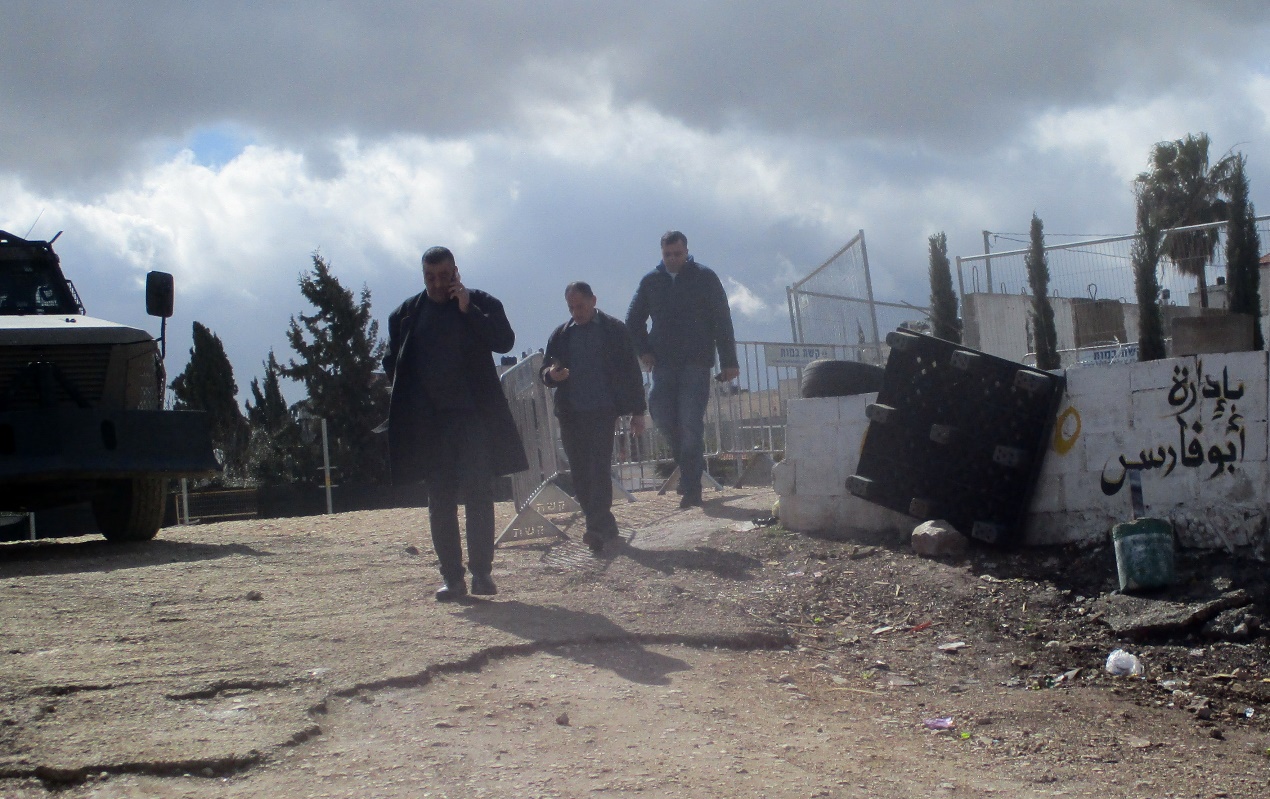 Tamar FleishmanFeb-27-2026Qalandiya: On the way to prayer
-