
Rashash: A young settler is violently harassing a peace activist
Rashash, Palestinans Jordan Valley
Getting underway at 6 a.m.
Guy and Sharon preceded us. M. who was near the encampment said the Jewish settler-colonists are already near the Palestinian shepherds so we hurried to the site. At first we noticed a large tight flock, but we found out it belonged to the settler-colonists. No one was with the livestock so we continued to walk. From the top of the hill we saw the two Palestinian shepherds, one of them a 14-year old boy, on the hillside. Guy and Sharon sat on rocks among the sheep.
Opposite them, at a distance of less than 100 meters, were three settler-colonists: two adults with a mini-tractor, and a boy with long blond side-curls, on horseback. There was no reason for their being there, next to the Palestinian floc, except their desire to harass the Palestinians. They sounded some very loud techno music, which made the sheep run away in fright.
Guy summoned Israeli police that arrived on site with the army. They immediately approached us in order to inspect and photograph our IDs. They did not check the settler-colonists’ IDs, although they said they did. (We saw they didn’t). We explained, quietly, that our purpose is simply to protect the Palestinians from the repeated violence which the settler-colonists from “Angels of Peace” outpost exert against them. The policeman, also polite, said he doesn’t wish to be involved, but kept the settler-colonists distant from the Palestinian shepherds so they could finish their grazing and descend to the spring in the east (En Rashash).
At 9:30 a.m. we began to return to our cars. I stayed back a bit because of a hurt ankle, and the young settler-colonist (David Shulman nicknames him ‘Goldilocks”) who had beat up Guy harshly on Sunday, came to me on his horse, threateningly close. For about 10 minutes he rode next to me. I strayed off the trail to rockier ground in order to escape the horse, until Sharon who noticed my absence returned with her video camera, and when the boy noticed she was filming him, he directed his horse back to the outpost and got on his way.
Upon our return to the encampment, we were treated to a tasty breakfast.
We then drove on to Makhoul in the northern Palestinian Jordan Valley, where things were quiet today, no harassment.
The Gochya Gate is still open.
A-Rashash
See all reports for this place-
A-Rashash was founded by the patriarch of the family, Haj Suleiman, who fled in 1948 from Tel Amal near Tivon. He leased land around the valley from one of the Palestinian residents and raised a glorious family that today consists of three family heads numbering about 100 people, with electricity from solar panels and water that they bring in trailer tanks from Ein Samia. There is no school there and the children attend an elementary school in the village of Duma, which is over the mountain at a distance of about 5 kilometers, and leave when they reach high school.
The daily life of the residents of the place consists of trying to avoid the machinations and damage of the settlers of the settlements and outposts that surround their village, and to protect the grazing lands of the sheep that remain in their possession. At the same time there is the constant threat of the orders of the civil government carried out by the army. About 3 years ago the residents decided to give up the extensive grazing areas and the access to the Ein Rashash spring and they graze around the encampment and buy feed for the sheep for a lot of money.
After the outpost hooligans managed to drive out the residents of Ras a Tin, Ein Samia and Kaboun, hence began the severe day-and-night harassment of of A Rashash. Since August 2023, the Jordan Valley activists have been holding 24/7 vigils in the pastoral communities to protect them and encourage them to stay on their land. There are refreshing responses, but not enough to provide the residents with long-term protection. You are Welcome to join.
-
Gochya
See all reports for this place-
Gochya checkpoint, which is opposite Beqaot settlement, is a metal bar blocking a dirt road in the Jordan Valley that prevents residents living in the eastern Jordan Valley from travelling freely to the western Jordan Valley and back again. This checkpoint, which is supposed to open only three times a week for half an hour (and usually doesn’t open at all), prevents residents living in the eastern Jordan Valley from accessing the town of Tamun, for example, which serves as a regional urban center. They’re prevented from maintaining contact with family members, obtaining medical treatment, getting to school and shopping, etc. Children from the eastern Jordan Valley are compelled to live during the week with families in Tamun to insure they are able to attend school regularly. The locals must make long detours, and risk severe punishment if they’re caught. In order to prevent them from bypassing the checkpoint, the IDF dug a series of long, deep ditches around the checkpoint and created very high earthen berms.
-
Jordan Valley
See all reports for this place-
Jordan Valley The Jordan Valley is the eastern strip of the West Bank. Its area consists of almost a third of the West Bank area. About 10,000 settlers live there, about 65,000 Palestinian residents in the villages and towns. In addition, about 15,000 are scattered in small shepherd communities. These communities are living in severe distress because of two types of harassment: the military declaring some of their living areas, as fire zones, evicting them for long hours from their residence to the scorching heat of the summer and the bitter cold of the winter. The other type is abuse by rioters who cling to the grazing areas of the shepherd communities, and the declared fire areas (without being deported). The many groundwaters in the Jordan Valley belong to Mekorot and are not available to Palestinians living in the Jordan Valley. The Palestinians bring water to their needs in high-cost followers.
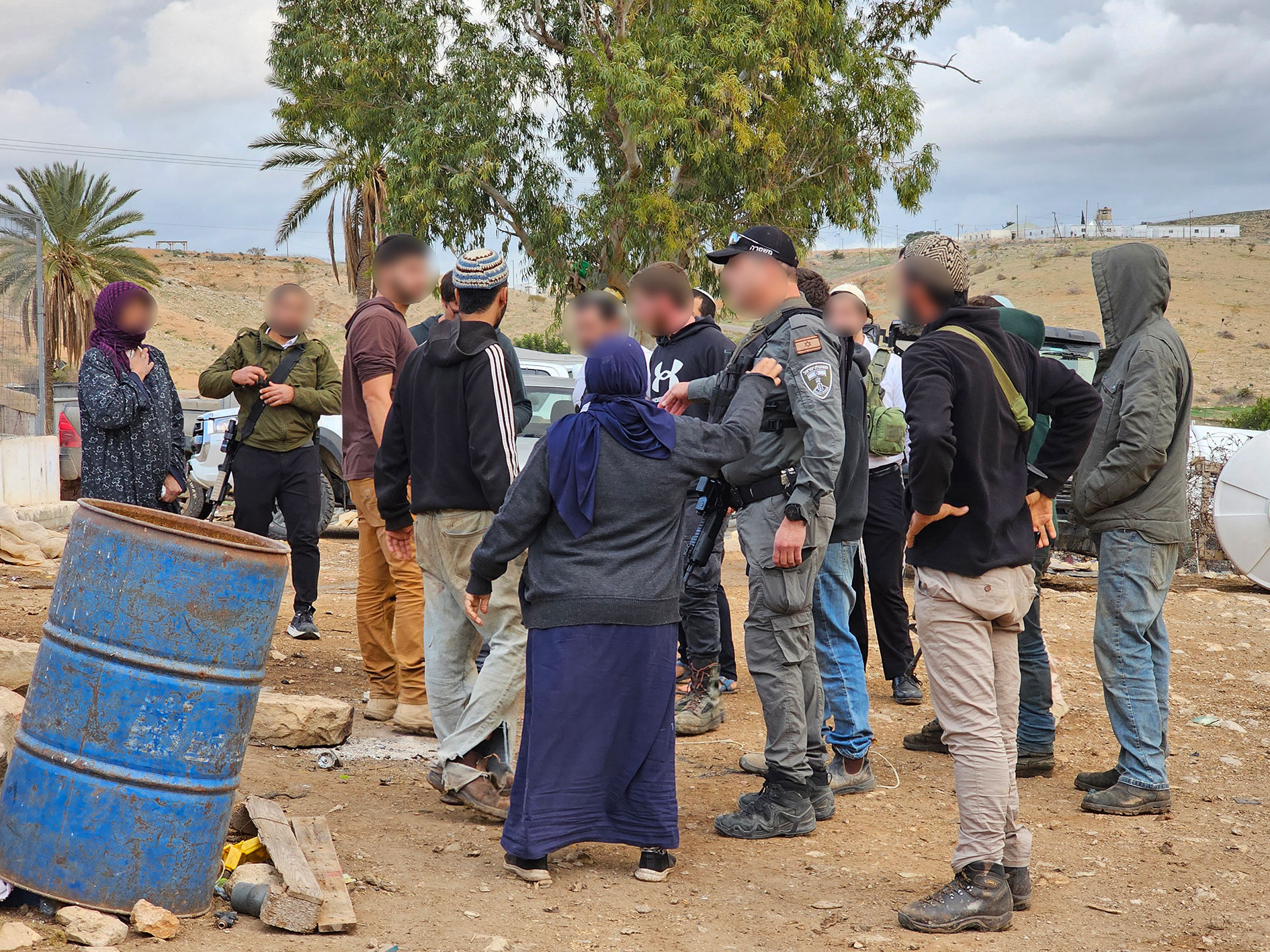 Sarah PostecDec-27-2026Hammam al-Malih: Border Guard and settlers in the compound
-
Khalet Makhul
See all reports for this place-
Khalet Makhul
A small settlement of a shepherd community located on the way to the settlement of Hemdat. Two nearby outposts make life miserable for the Palestinians, who make a living from grazing, and the army backs the settlers. As a result, the possible grazing areas are getting smaller.
The local children attend school in the settlement of Ein Al-Beida. Long lines of 3 hours sometimes stretch out at the Hamra and Tayasir checkpoints leading to the town of Tubas, making it difficult to get water, supplies, and sell the cheese, milk, and meat that the residents produce for their living.
Following a deadly attack at the Tayasir checkpoint in February 2025, the checkpoint was closed completely for the time being.
(Updated March 2025)
-