
Rashash - above the Jordan Valley



07:00 – 19:00
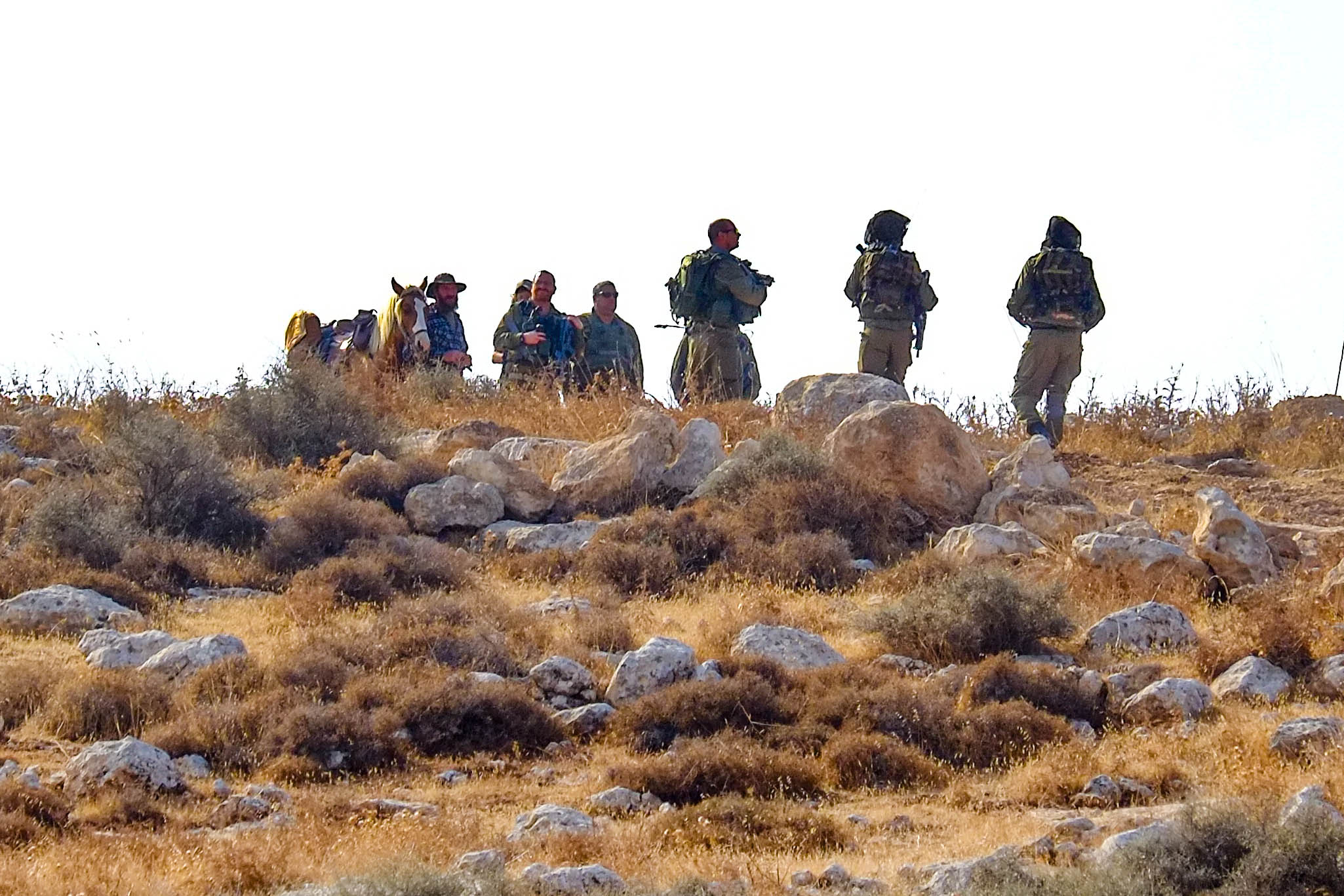
As we arrive, we receive word from the young Palestinian Bedouin shepherd that the settlers are already there, one of them on a horse. The previous day, the Bedouin were physically threatened by these hilltop youth from the adjacent outpost “Angels of Peace” (sic) and so we rush to join them.
We find two young settlers with their flock of sheared, white sheep – hilltop youth that are generally marginal youth from the city or other settlements, who have dropped out of all other frameworks and find a home in the wild west atmosphere of these illegal outposts.
The boys don’t even seem to herd their own sheep, but stay very, very close to us and the Bedouin herd, almost bumping against us, if not running into us, photographing us all the time, as we photograph them in the now familiar dance. One settler photographs a Bedouin boy, a kafiye around his head, throwing stones to keep his goats away from the settler flock, and the settler youth records himself saying: “here is a masked Palestinian throwing stones”. He goes on to say, “here they are about to steal our sheep, by mixing with our herd” when the Bedouin was trying to keep his goats away. That is how lies start.
In light of yesterday’s incident, and the army’s relatively positive response then, Guy Hirschfeld reports the potentially explosive situation to the army, while in the meantime the settlers have called their head-settler, Elhanan, who arrives on his all terrain vehicle, and also stands threateningly close to the Bedouin flock.
When the army arrives, a new unit of reserve soldiers, the commander does not come to us first, but drives straight to Elhanan, giving him a friendly handshake. So they appear to be buddies. The commander, looking much like a settler himself, and most likely is one, tells us “in order to avoid friction” the Bedouins must move down across the wadi. That an agreement has been reached to divide up the grazing lands – and they must move across the line – to the other side of the wadi – where there desert starts and there is not much for the goats to eat….
So this officer is clearly serving the interests of the settlers from the illegal outpost. We ask who told him about such an agreement – which is news to us and to the Bedouin – and the commander says he got the command from “higher up”. Well, now they don’t declare the land “closed military zone” as they used to, because then the settler flocks too would have to leave – but come up with an arbitrary “agreement” that would eventually starve the Bedouin herds.
And that is exactly what the settlers are after. It is not a question of dividing up the grazing grounds fairly (there is plenty of grass closer to the outpost) – but the entire point of keeping a flock of sheep is to roam as wide a terrain as possible, and to drive the Palestinians off their lands
A-Rashash
See all reports for this place-
A-Rashash was founded by the patriarch of the family, Haj Suleiman, who fled in 1948 from Tel Amal near Tivon. He leased land around the valley from one of the Palestinian residents and raised a glorious family that today consists of three family heads numbering about 100 people, with electricity from solar panels and water that they bring in trailer tanks from Ein Samia. There is no school there and the children attend an elementary school in the village of Duma, which is over the mountain at a distance of about 5 kilometers, and leave when they reach high school.
The daily life of the residents of the place consists of trying to avoid the machinations and damage of the settlers of the settlements and outposts that surround their village, and to protect the grazing lands of the sheep that remain in their possession. At the same time there is the constant threat of the orders of the civil government carried out by the army. About 3 years ago the residents decided to give up the extensive grazing areas and the access to the Ein Rashash spring and they graze around the encampment and buy feed for the sheep for a lot of money.
After the outpost hooligans managed to drive out the residents of Ras a Tin, Ein Samia and Kaboun, hence began the severe day-and-night harassment of of A Rashash. Since August 2023, the Jordan Valley activists have been holding 24/7 vigils in the pastoral communities to protect them and encourage them to stay on their land. There are refreshing responses, but not enough to provide the residents with long-term protection. You are Welcome to join.
-
Jordan Valley
See all reports for this place-
Jordan Valley The Jordan Valley is the eastern strip of the West Bank. Its area consists of almost a third of the West Bank area. About 10,000 settlers live there, about 65,000 Palestinian residents in the villages and towns. In addition, about 15,000 are scattered in small shepherd communities. These communities are living in severe distress because of two types of harassment: the military declaring some of their living areas, as fire zones, evicting them for long hours from their residence to the scorching heat of the summer and the bitter cold of the winter. The other type is abuse by rioters who cling to the grazing areas of the shepherd communities, and the declared fire areas (without being deported). The many groundwaters in the Jordan Valley belong to Mekorot and are not available to Palestinians living in the Jordan Valley. The Palestinians bring water to their needs in high-cost followers.
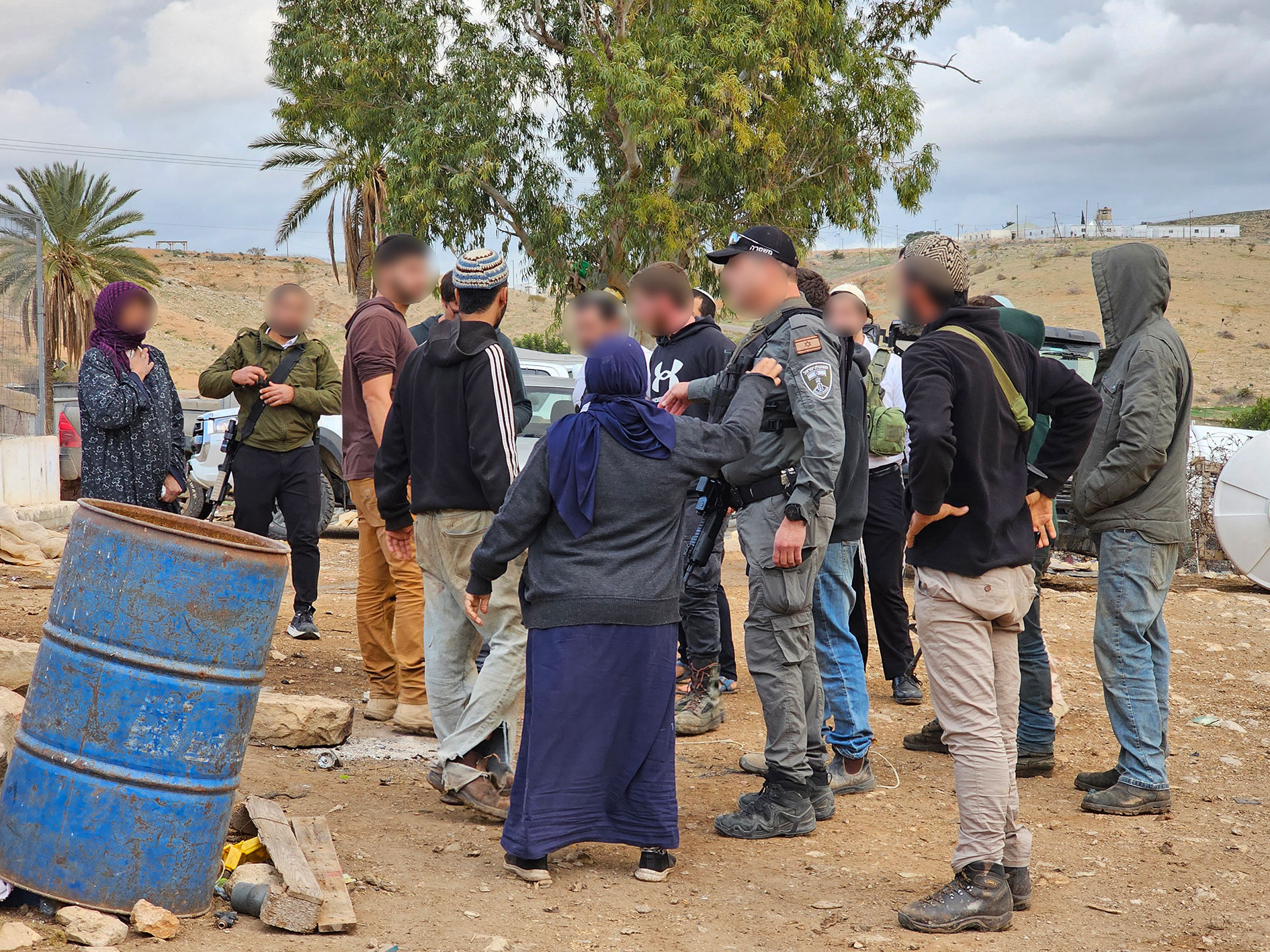 Sarah PostecDec-27-2026Hammam al-Malih: Border Guard and settlers in the compound
-