
Rashash: The Wild West in the Jordan Valley



08.00 – 12.00
It ended without the need to call an ambulance – miraculously nobody got hurt, but it certainly was tense.
The four of us activists enjoyed several peaceful hours with the young Palestinian herders at Rashash above the Jordan Valley on a beautiful morning – admiring the first flowers, drinking tea, watching a mother sheep licking her just-born lamb, her teats bursting with milk.
All this time, I was photographing the beauty of the landscape in the early morning light, asking myself, why photograph the beauty, when the reality is so ugly? Perhaps one answer is to emphasize what the Palestinians stand to lose, in the creeping annexation by Israel.
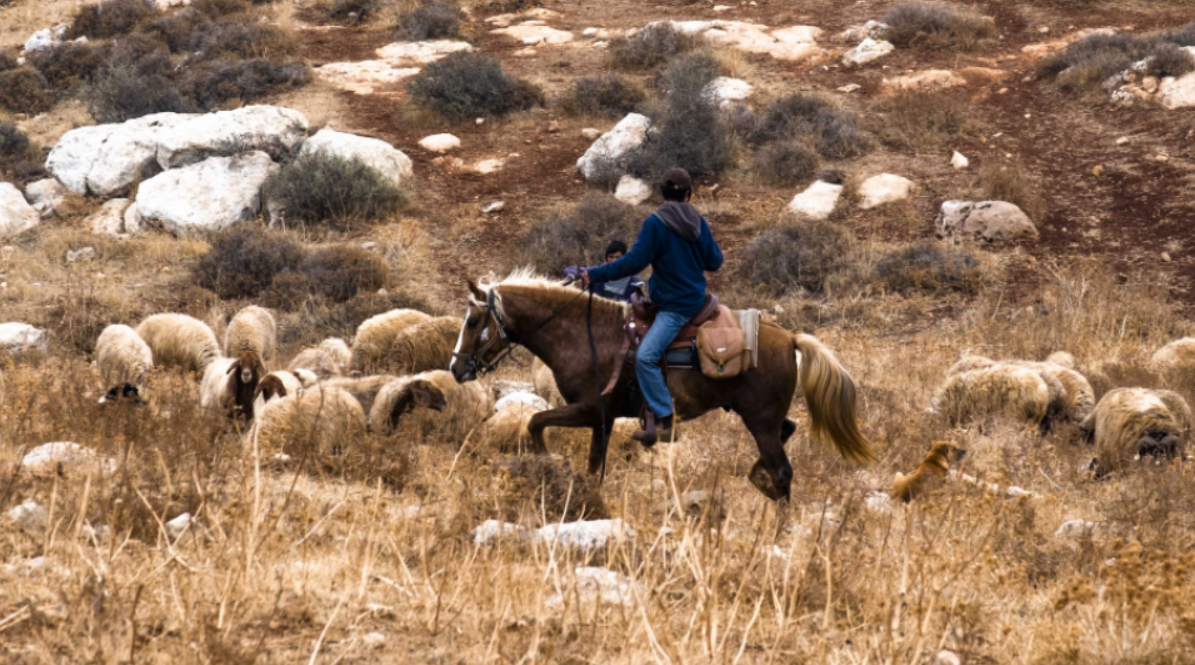
On the phone, we reported how quiet it was today (adding: “up to now.”…) – when, around ten thirty, a young hilltop settler from the “Angels of Peace” (sic) illegal outpost appeared over the ridge on horseback. He rode his horse straight into the herds, frightening the sheep into a stampede – which, we are told, could easily lead the pregnant ones to abort. He went on to pursue the three or four other herds on the next hill, with us following..
Soon, two more settler youth appeared in an all terrain vehicle, clearly enjoying the freedom of the ride through the hills. Again. out to frighten the herds, now also with a boombox blasting Rabbi Nachman songs. These hilltop youth are problematic youngsters that dropped out of all educational frameworks and for whom an easy, (ideal?), solution was found to absorb them in the Wild West of these outposts, under the tutelage of a ‘responsible adult’ – who probably even gets paid by the welfare authorities for this service. It is also an easy solution for the Israeli authorities – to let these unruly kids do the dirty work of chasing out the Palestinians, and be able to claim it was the work of “the bad seeds”.
We tried to protect the Bedouin – this is what we are here for – standing between the settlers and the herds, leading to tense confrontations. All the time documenting the scene on video, as the young settlers did too – who now adapt at staging situations where it appears they are the ones who are attacked – by filming themselves running, and recording their own voices, “they are chasing after us”. This went on for perhaps more than an hour – the settlers just did not let go.
The Bedouin herders stood their ground – they did not pack up and leave, but stayed, calmly, until the sheep were getting thirsty and only then started to go down into the wadi, moving towards the spring – the baby lamb carried inside the donkey’s bag, with the mother sheep trailing.
A-Rashash
See all reports for this place-
A-Rashash was founded by the patriarch of the family, Haj Suleiman, who fled in 1948 from Tel Amal near Tivon. He leased land around the valley from one of the Palestinian residents and raised a glorious family that today consists of three family heads numbering about 100 people, with electricity from solar panels and water that they bring in trailer tanks from Ein Samia. There is no school there and the children attend an elementary school in the village of Duma, which is over the mountain at a distance of about 5 kilometers, and leave when they reach high school.
The daily life of the residents of the place consists of trying to avoid the machinations and damage of the settlers of the settlements and outposts that surround their village, and to protect the grazing lands of the sheep that remain in their possession. At the same time there is the constant threat of the orders of the civil government carried out by the army. About 3 years ago the residents decided to give up the extensive grazing areas and the access to the Ein Rashash spring and they graze around the encampment and buy feed for the sheep for a lot of money.
After the outpost hooligans managed to drive out the residents of Ras a Tin, Ein Samia and Kaboun, hence began the severe day-and-night harassment of of A Rashash. Since August 2023, the Jordan Valley activists have been holding 24/7 vigils in the pastoral communities to protect them and encourage them to stay on their land. There are refreshing responses, but not enough to provide the residents with long-term protection. You are Welcome to join.
-
Jordan Valley
See all reports for this place-
Jordan Valley The Jordan Valley is the eastern strip of the West Bank. Its area consists of almost a third of the West Bank area. About 10,000 settlers live there, about 65,000 Palestinian residents in the villages and towns. In addition, about 15,000 are scattered in small shepherd communities. These communities are living in severe distress because of two types of harassment: the military declaring some of their living areas, as fire zones, evicting them for long hours from their residence to the scorching heat of the summer and the bitter cold of the winter. The other type is abuse by rioters who cling to the grazing areas of the shepherd communities, and the declared fire areas (without being deported). The many groundwaters in the Jordan Valley belong to Mekorot and are not available to Palestinians living in the Jordan Valley. The Palestinians bring water to their needs in high-cost followers.
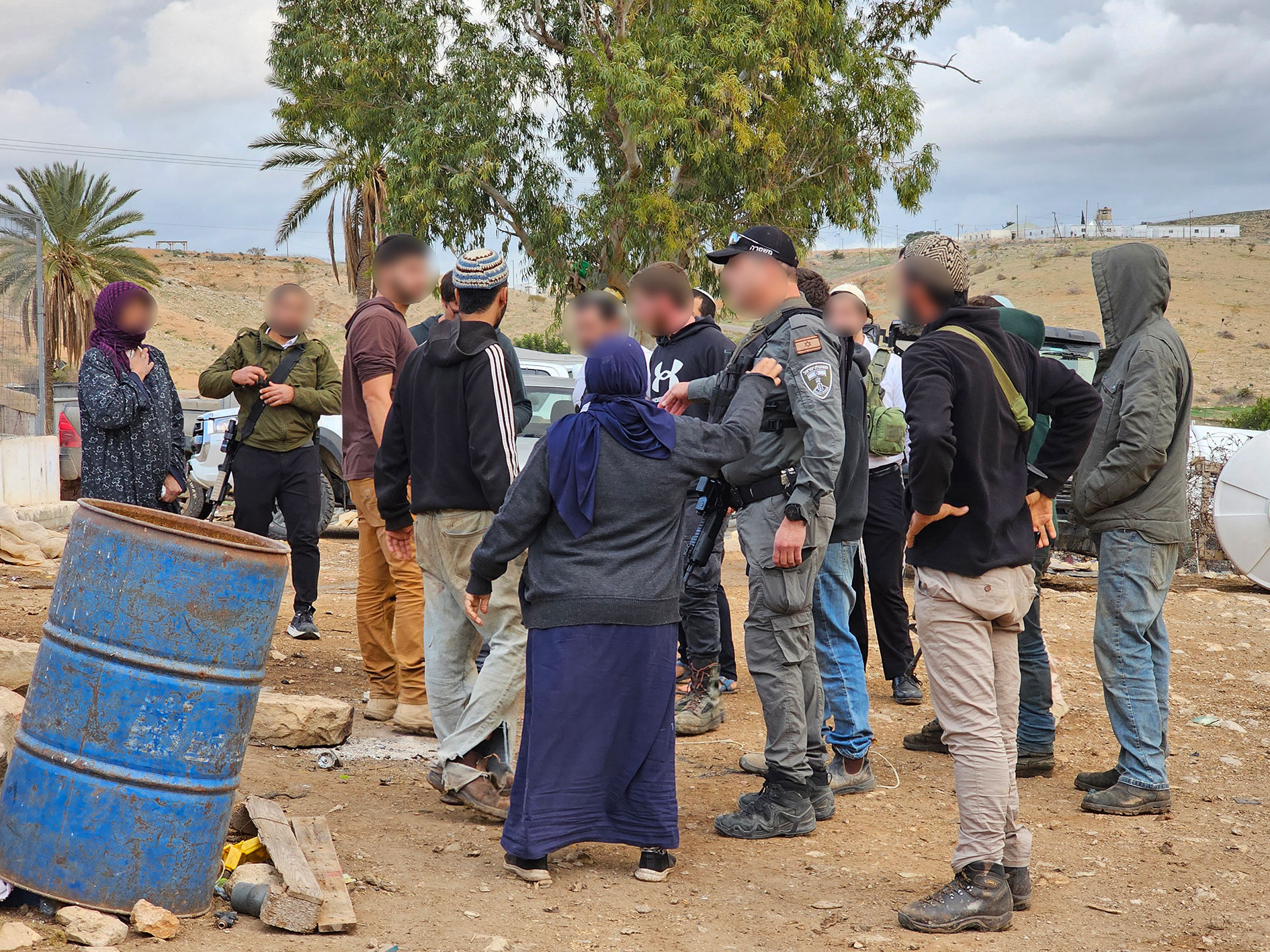 Sarah PostecDec-27-2026Hammam al-Malih: Border Guard and settlers in the compound
-