
Shomron Crossing, Tayasir, Za’tara (Tapuah), Sun 28.11.10, Afternoon
-
Translator: Charles K.
11:00 Shomron gate
A new brick wall north of the road conceals a courtyard containing some buildings. The soldiers didn’t really want to tell us what they were. They said it’s part of a border crossing that’s under construction. Maybe a dogs house? Like some of the road lanes covered by a blue plastic shed, they’re also concealed from the road by a metal wall. Apparently for vehicle inspection.
Marda and Zeita– All the entrances are open.
11:20 Za’tara junction– More than 10 cars on line from Huwwara. That’s the only direction from which soldiers are inspecting. A police car is parked in the area in the middle of the plaza.
Between Gitit and Mehora
Again we drive by dozens of fenced dunums of well-irrigated vegetables. In the middle, a packing house from which the vegetables are sent to the center of the country with no indication of the grower’s name or location. It turned out (unlike what was written in a previous report) that he’s Eyal Levy, from the moshav Na’ama, located far from here, in the southern Jordan Valley. The Israeli regime gave Levy many dozens of dunums and a generous allotment of water. If we remember that he pays his workers (Palestinians, who have no water allotment nor construction permits) NIS 70/day, without benefits, then the state of Israel has made him a very wealthy man on the basis of resources that belong to the inhabitants under Occupation. Remember that according to international law, natural resources in occupied territory belong to the local population and not to the occupier and its settlers. It’s impossible to avoid the question of how and why Eyal Levy received all these benefits?
Parush Biet Dgan: Orchards and greenhouses owned by Palestinians are everywhere around here, a rare sight in the Jordan Valley. We met an owner of greenhouses. They have the land and the water because it had been in their possession prior to the 1967 occupation. They get water from three local wells and from underground pipes from Ein Shibli. They don’t pay for the water (it’s from God); each farmer is entitled to an amount based on the size of his plot. This arrangement has been in effect for ages wasn’t affected by the Occupation.
It’s Area C, under total military control. Since 1967 no Palestinian has been allowed to erect even a shed for his sheep, much less to sink a well. We recently read in Ha’aretz about settlers taking over springs in the Jordan Valley.
12:40 – – Hamra checkpoint
Gideon Levy, the journalist, wasn’t allowed to go through the checkpoint to report on house demolitions in one of the villages west of the checkpoint. He waited there with an investigator from B’Tselem.
Light traffic at the checkpoint at this hour.
Resurfacing continues of the road north from the Hamra checkpoint. They’ve now reached the Kfir brigade base. It’s immediately obvious whether roads in the Jordan Valley serve settlers or Palestinians by how well they’re maintained. This is still Area C, where the Israeli regime is by law responsible for all civilian matters for the welfare of all residents.
We visited a Bedouin family between Hamra and Maskiyot. Most of the family members traveled to Mecca for the Eid al Adha holiday. We left bags of clothing and toys for the children. We visited another family in an encampment opposite the entrance to Maskiyot. We met two women and a few small children. One in a wheelchair. A young woman studying to be a gym teacher in Tubas. Two sons are university students in Nablus. It’s amazing that people with such a poor standard of living, in a tent, without electricity or running water, insure their children receive higher education.
Maskiyot– Trucks and an excavator are working on the hillside, preparing a new construction site.
14:00 Tayasir checkpoint
This is the hour when people begin returning from jobs in Nablus. All passengers must get out of the cars and go through the checkpoint on foot through a special crossing. They apparently went easy on one old man and allowed him to remain in the car. We witness a surrealistic scene (at a moment when there are no civilians at the checkpoint). One of the soldiers lifts his shirt and kneels, another points his weapon at him, a third handcuffs him. Are they playing? For our benefit? Or maybe they call it an “exercise”?
On the way back, near Hamam al Malik, three gazelles cross the road right in front of us.
A dike and trench begin beyond the Hamra checkpoint, alongside the road, to prevent vehicles from bypassing checkpoints in order to reach other parts of the West Bank, thereby separating the Jordan Valley from the West Bank. Apparently these are political arrangements in view of a future agreement. The Gochyea gate is part of that setup. There’s a similar gate opposite Beqa’ot which, apparently, is permanently closed.
14:58 Gochyea crossing
Local residents cross here to the large town of Tamun. It’s supposed to be open three times a week for half an hour in the morning and in the afternoon. It’s now 3 PM, and it’s still closed. We call the Jericho DCO but no one answers. Five minutes later a military vehicle arrives (the army observes the crossing from a nearby base). The soldiers open the gate. We talk with them.
15:30 We all leave
16:20 Za’tara junction (Tapuach)
A military vehicle parked in the plaza, a red civilian car next to it and four men sit off to the side – being inspected? Detained? We notice that we crossed through the plaza and can’t go back.
Shomron Crossing
See all reports for this place-
Shomron Crossing The Shomron checkpoint for vehicles. is located east of Rosh HaAyin and Kafr Qassem, on Road 5 (Trans-Samaria) leading to Ariel and the Za'atara junction. It is intended for blue ID cardholders, foreign guests or diplomats, and international organizations only. In 2009 the management was entrusted to a civil security company.
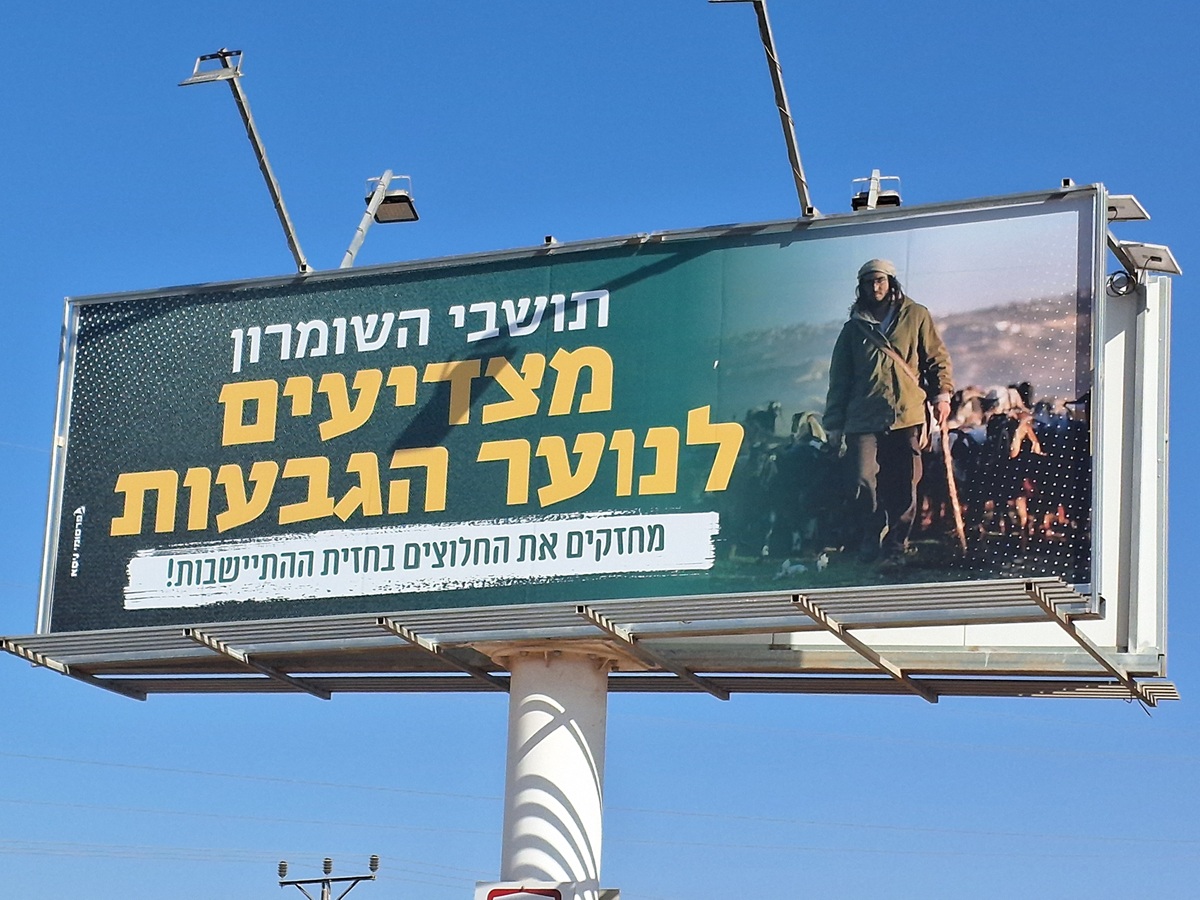 Ronit Dahan-RamatiAug-21-2025Highway 505: Salute to the Hilltop Youth
-
Tayasir CP
See all reports for this place-
Located on road 5799, It is one of the checkpoints control the passage between the northern West Bank and the Jordan Valley. For a long time, it stood empty and open, with only a sign next to it warning against entering Area A. It was adjacent to an old military camp - now everything is neglected. How much money was invested here, and how much brainwashing was done to the soldiers of Netzah Yehuda and Kfir.
Today, it is very difficult to pass there. Many delays. Often, teachers from Tubas are not allowed to pass into the Valley to villages like Ein al-Bida where the local schools are located, and there are no classes. There are additional days when the checkpoint is closed. In general, there is a wait there of about two to four hours to go towards the Valley and also to return. Many times the Palestinians are forced to use the Hamra checkpoint, which also leads into Tubas and the West Bank, but there is also a huge queue there and a long wait.
Following a deadly attack on soldiers at the nearby base in February 2025, the checkpoint was completely closed for the time being. (Updated March 2025)
-
Za'tara (Tapuah)
See all reports for this place-
Za'tara (Tapuah) Za'tara is an internal checkpoint in the heart of the West Bank, at the intersection of Road 60 and Road 505 (Trans-Samaria), east of the Tapuah settlement. This checkpoint is the "border" marked by the IDF between the north and south of the West Bank, in accordance with the policy of separation between the two parts of the West Bank that has been in place since December 2005. At the Za'tara checkpoint, there are separate routes for Israelis and Palestinians. In the route for Israelis, there are no inspections and the route for Palestinians inspects. The queue lengthens and shortens suits. The checkpoint is open 24 hours a day. The checkpoint is partially staffed and the people who pass through it are checked at random.
 Shoshi AnbarSep-27-2023Za'atra (Tapuah Intersection). Signs
-