
South Hebron Hills
South Hebron Hills, Sunday 24.9.06, AMObservers: Yael Tz. (Hebrew) Judy A. (English) Sansana: A long line of minibuses driven by Israeli employers waiting for workers from the territories. Tens of Palestinians stand in line on the Palestinian side and border police release them one by one for examination of their papers. The line looked endless although two hours later, on our way back, the border check point was completely empty. Road 60: The road was empty given the hour of the day. We didn’t see children on the way to school (the teachers’ strike continues). Few yellow taxis in the junctions or along the road.Dura El Fawwar – the roadblock was open in both directions.Sheep crossing – very few pedestrians crossed the road.Girls’ school – the school was closed, an army jeep was watching the junction but few people were crossing the road. One man was having his documents checked.Hebron: The city looks like it has been abandoned by its Arab and Jewish residents. The Ramadan fast and the fast of Gedalia seem to be responsible for this. There were a number of buses near the Cave of Machpela . An iron gate has been built in order to block the road from the market to Hasohadah Street . The gate was open. All the observation points were manned by soldiers from the Lavi unit. One of them stopped us because he hadn’t heard of Machsom Watch and he tried to call someone in order to receive permission for us to pass.We didn’t see the Christian volunteers today, perhaps because of the strike. The Cordova school was closed and also the boys’ school and the elementary school that is in front of the steps to the Cave of Machpela . There were a few children with backpacks on the street, walking to school and immediately home again.The magnetic crossings at the Tarpet and pharmacy blockades were empty of pedestrian traffic.East Haloul: the blockade was open and traffic flowed onto the road in both directions. Road 35: The Humanitarian blockade was closed, the Hebron-Halhoul bridge was open to traffic in both directions. We mainly saw taxis passing.Road 317: The Zif junction was open but deserted. The cement blocks have been put in place along the entire road replacing the earth mounds. The road is deserted except for one hitchhiker near the entrance to Maon.
Hebron
See all reports for this place-
According to Wye Plantation Accords (1997), Hebron is divided in two: H1 is under Palestinian Authority control, H2 is under Israeli control. In Hebron there are 170,000 Palestinian citizens, 60,000 of them in H2. Between the two areas are permanent checkpoints, manned at all hours, preventing Palestinian movement between them and controlling passage of permit holders such as teachers and schoolchildren. Some 800 Jews live in Avraham Avinu Quarter and Tel Rumeida, on Givat HaAvot and in the wholesale market.
Checkpoints observed in H2:
- Bet Hameriva CP- manned with a pillbox
- Kapisha quarter CP (the northern side of Zion axis) - manned with a pillbox
- The 160 turn CP (the southern side of Zion axis) - manned with a pillbox
- Avraham Avinu quarter - watch station
- The pharmacy CP - checking inside a caravan with a magnometer
- Tarpat (1929) CP - checking inside a caravan with a magnometer
- Tel Rumeida CP - guarding station
- Beit Hadassah CP - guarding station
Three checkpoints around the Tomb of the Patriarchs
 Raya YeorDec-18-2025Hebron - Yusri Jaber and part of his family
-
South Hebron Hills
See all reports for this place-
South Hebron Hills
South Hebron Hills is a large area in the West Bank's southern part.
Yatta is a major city in this area: right in the border zone between the fertile region of Hebron and its surroundings and the desert of the Hebron Hills. Yatta has about 64,000 inhabitants.
The surrounding villages are called Masafer Yatta (Yatta's daughter villages). Their inhabitants subsist on livestock and agriculture. Agriculture is possible only in small plots, especially near streams. Most of the area consists of rocky terraces.Since the beginning of the 1980s, many settlements have been established on the agricultural land cultivated by the Palestinians in the South Hebron Hills region: Carmel, Maon, Susia, Masadot Yehuda, Othniel, and more. Since the settlements were established and Palestinians cultivation areas have been reduced; the residents of the South Hebron Hills have been suffering from harassment by the settlers. Attempts to evict and demolish houses have continued, along with withholding water and electricity. The military and police usually refrain from intervening in violent incidents between settlers and Palestinians do not enforce the law when it comes to the investigation of extensive violent Jewish settlers. The harassment in the South Hebron Hills includes attacking and attempting to burn residential tents, harassing dogs, harming herds, and preventing access to pastures.
There are several checkpoints in the South Hebron Hills, on Routes 317 and 60. In most of them, no military presence is apparent, but rather an array of pillboxes monitor the villages. Roadblocks are frequently set up according to the settlers and the army's needs. These are located at the Zif Junction, the Dura-al Fawwar crossing, and the Sheep Junction at the southern entrance to Hebron.
Updated April 2022
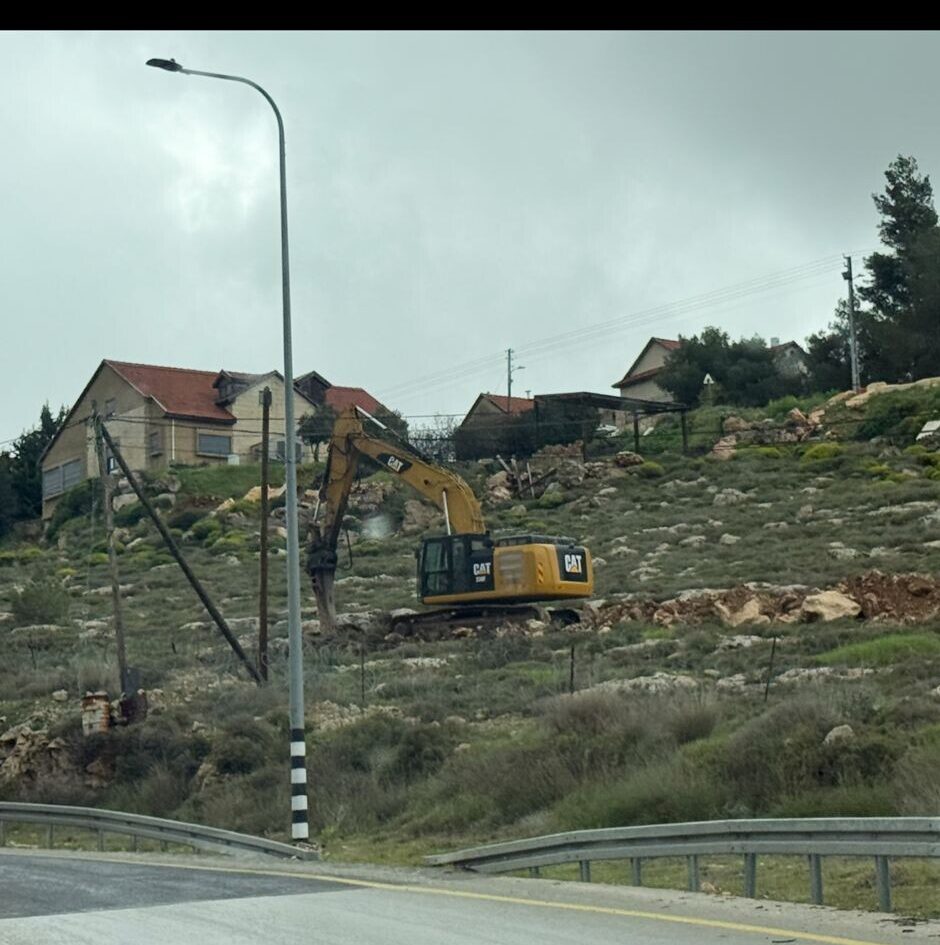 MuhammadFeb-24-2026South Hebron Hill, Beit Hagai: Paving an internal security road
-