
South Hebron Hills, Simia
The celebration of the new school in Simia
We decided to go back to the village of Simia, and as we neared, we saw from the road that something was happening.
We joined the ceremony: a large crowd, sitting in rows of plastic chairs, men on the left side of the pass, women on the right, flags, music and a loudspeaker, a band of drummers in uniform – scout uniforms. The people were gathered from all the surrounding villages.
We waited with all the audience for the arrival of the PA’s Minister of Education and Culture, and in the meantime, other “important” people arrived with their entourage (the person who is responsible for the entire South Hebron Hills and others). Each of them was greeted by the sound of drums, and after a considerable time the minister arrived.
Then began the speeches, the anthem, and the singing of students from the neighborhood, and so on.
Next to us stood the tents, the classrooms where the children were studying. Every morning Farhan (who also donated his land for the purpose of establishing the school) puts up the tents and at the end of the day dismantles them so that the army will not have any excuse to confiscate them. The teachers hung signs on the tents
Their content: we are here to stay and so forth.
All this time the army was down by the road, waiting for any possible developments. (One vehicle and several soldiers.)
One morning the army tried to arrest Farhan while he was putting up one of the tents “because he is not allowed to build” but he replied that he was not building anything and that this was his land.
We wanted to visit another village – Znuta – where they had insisted on setting up a school and had tried to teach Simia from their experience, but the principal could not meet us today.
We drove a little further north, as usual – the entrance to Abda was closed, to Dura open, to El Fawwar closed.
In the field near the Dura al-Fawwar junction, children throwing stones and a group of armed soldiers standing ready with gas cannisters on their rifles, waiting for the children to leave the area.
South Hebron Hills
See all reports for this place-
South Hebron Hills
South Hebron Hills is a large area in the West Bank's southern part.
Yatta is a major city in this area: right in the border zone between the fertile region of Hebron and its surroundings and the desert of the Hebron Hills. Yatta has about 64,000 inhabitants.
The surrounding villages are called Masafer Yatta (Yatta's daughter villages). Their inhabitants subsist on livestock and agriculture. Agriculture is possible only in small plots, especially near streams. Most of the area consists of rocky terraces.Since the beginning of the 1980s, many settlements have been established on the agricultural land cultivated by the Palestinians in the South Hebron Hills region: Carmel, Maon, Susia, Masadot Yehuda, Othniel, and more. Since the settlements were established and Palestinians cultivation areas have been reduced; the residents of the South Hebron Hills have been suffering from harassment by the settlers. Attempts to evict and demolish houses have continued, along with withholding water and electricity. The military and police usually refrain from intervening in violent incidents between settlers and Palestinians do not enforce the law when it comes to the investigation of extensive violent Jewish settlers. The harassment in the South Hebron Hills includes attacking and attempting to burn residential tents, harassing dogs, harming herds, and preventing access to pastures.
There are several checkpoints in the South Hebron Hills, on Routes 317 and 60. In most of them, no military presence is apparent, but rather an array of pillboxes monitor the villages. Roadblocks are frequently set up according to the settlers and the army's needs. These are located at the Zif Junction, the Dura-al Fawwar crossing, and the Sheep Junction at the southern entrance to Hebron.
Updated April 2022
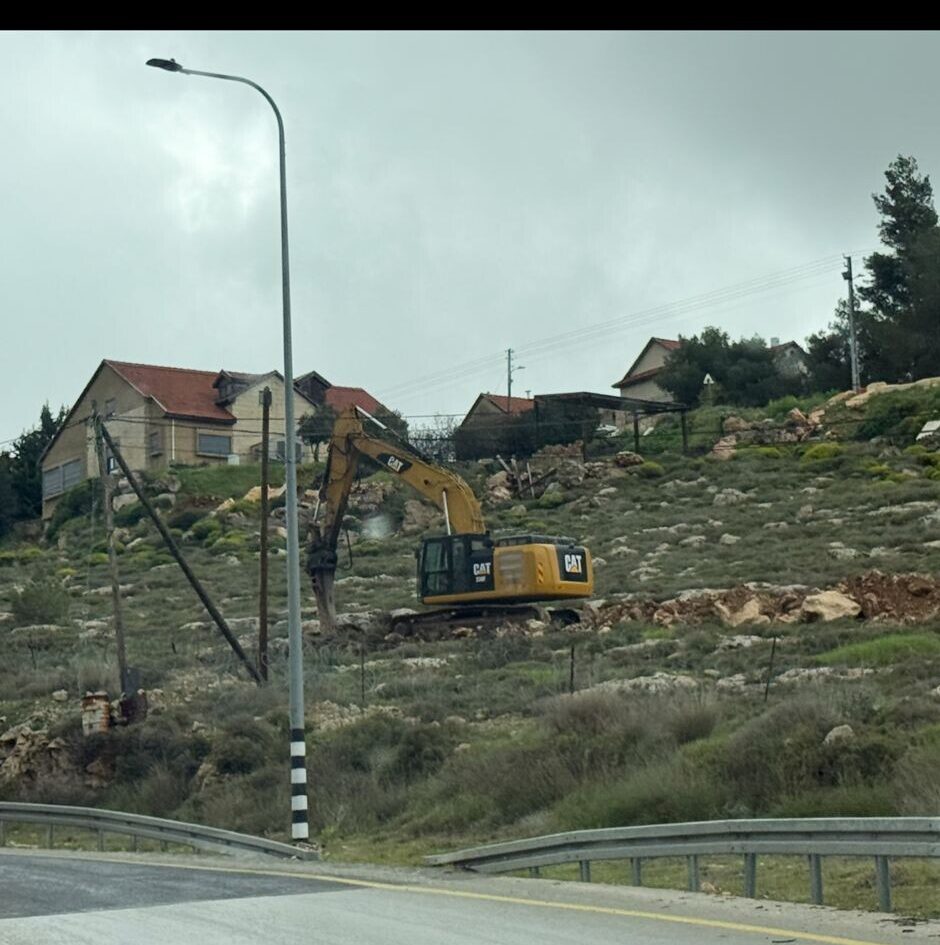 MuhammadFeb-24-2026South Hebron Hill, Beit Hagai: Paving an internal security road
-