
South Hebron Hills: The Palestinians situation is very difficult – no work, no livelihood
We are in the month of Ramadan; Meitar checkpoint is even more deserted than usual (it has been deserted for two and a half years, since the beginning of the war!).
The situation is very difficult. Palestinians have no work and no livelihood; there is ongoing abuse by settlers who damage property and harm people, and the pressure continues to mount….
We passed the Samu’a checkpoint; it was open.
Near Simiya, a car is being pushed to the side of the road because the keys were taken by the army, and there is no telling when they will be returned!!!
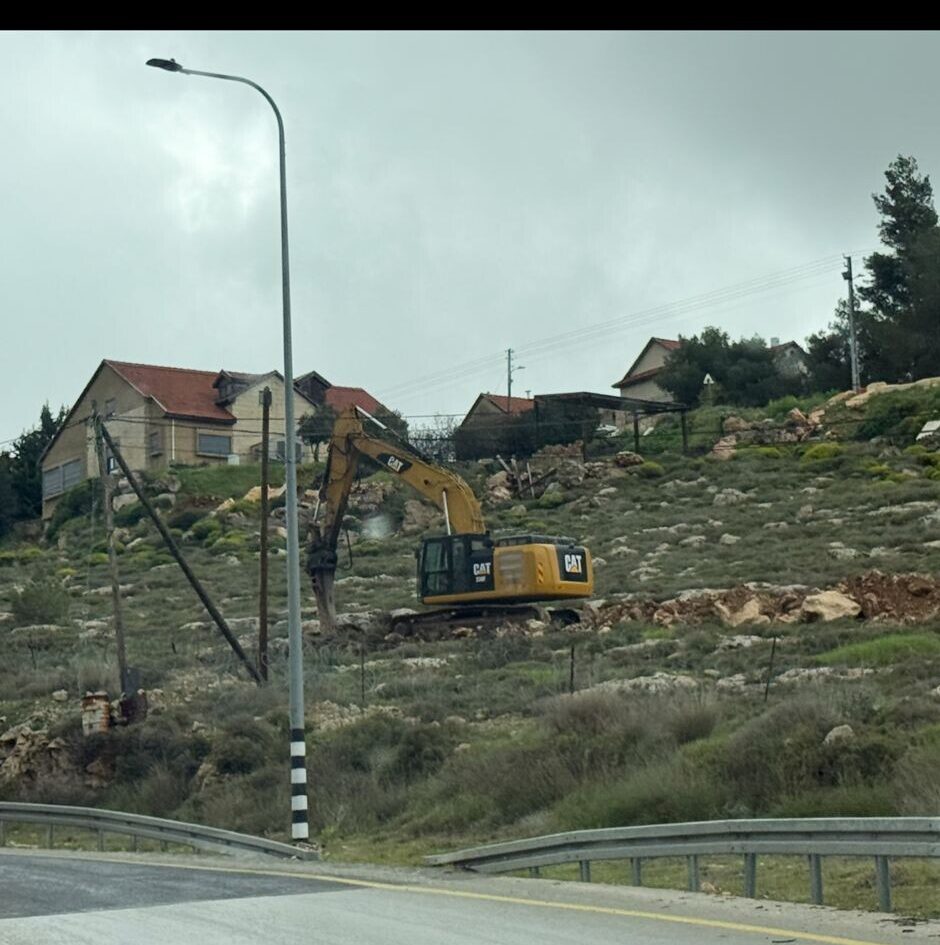
In Otniel, a new internal security road has been paved. The Dahariya checkpoint is closed, opening only intermittently. The Abda checkpoint is closed.
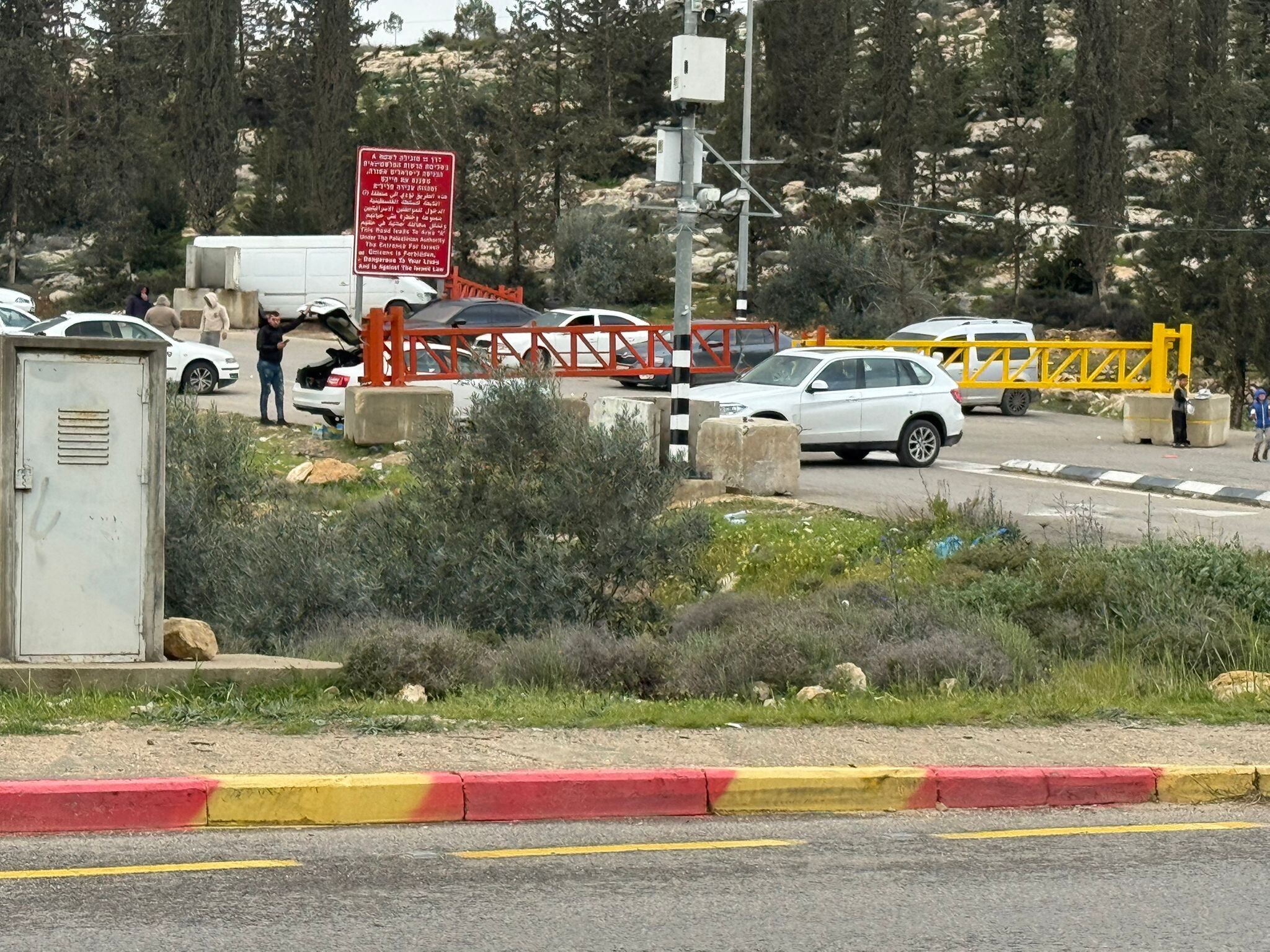
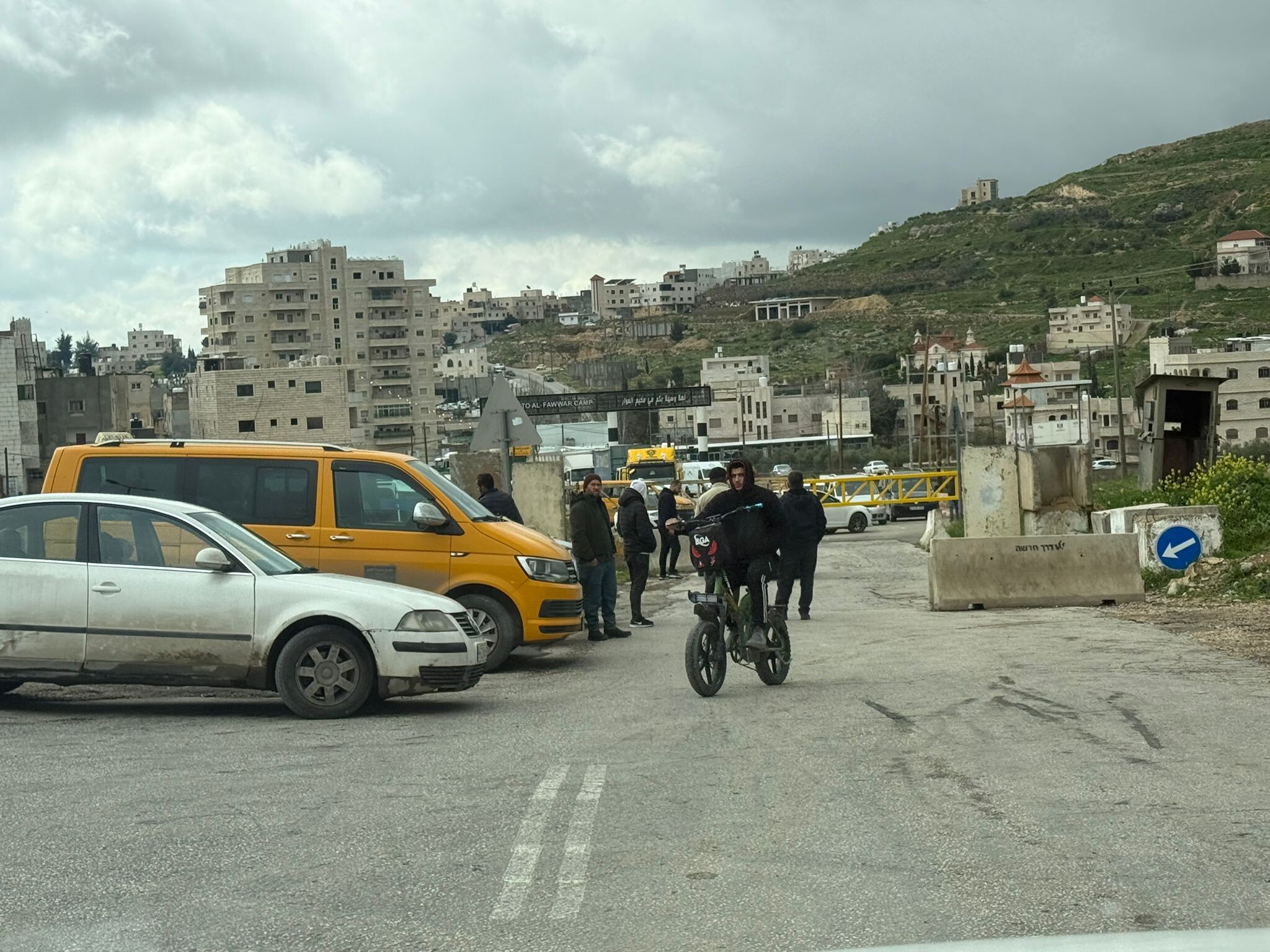
We reached the Al-Fawwar junction. The Al-Fawwar side is closed, while the Dura side is open.
We met N. there and gave him money for Ramadan to buy food…..
We continued, passing near Beit Hagai. We can see that a new internal security road is also being paved there. We proceeded to the Qilqis/Hebron junction. Both sides are closed, and people are crossing from side to side on foot!
At the Sheep Junction (Zomet HaKvasim), the passage to Hebron is open, as is the way to Yatta. Early in the morning, there is a sheep market.
We continued to Ziv Junction. The junction is open for passage, but occasionally a checkpoint is set up to inspect those passing through. Most of the time, it is open and quiet.
We entered the grocery store and left money and bags of clothes for Z. from Yatta, who will arrive later to collect them.
Despite Ramadan, the grocery store was practically empty of people… as mentioned, people have no money for holiday shopping!
We continued toward Carmel and Umm al-Khair. We passed through the cowsheds and the vineyard of the Carmel settlement. Over there, everything is perfectly organized! You can see that a lot has been invested there.
We continued and passed near At-Tuwani; the crossing opposite is closed, and an impounded car stands there, blocking the road! When will the keys be returned to the owners? There is no telling….
This is how it works in the Territories!
Location Description
Dura Al-Fawwar Junction
See all reports for this place-
Junction on Route 60: west - the town of El Dura, east - the Al Fawwar refugee camp. There is a manned pillbox at the junction. From time to time the army sets up flying checkpoints at the entrance to El Fawwar and Al Dura. Al-Fawwar is a large refugee camp (7,000 inhabitants in 2007) established in 1949 to accommodate Palestinian refugees from Be'er Sheva and Beit Jubrin and environs. There are many incidents of stone-throwing. In the vicinity of the pillbox there are excellent agricultural areas, Farmers set up stalls adjacent to the plots close to the road. In recent months the civil administration has set up dirt embankments thereby blocking access to the stalls, and making it impossible for the farmers to sell their vegetables. Updated April 2021, Michal T.
-
South Hebron Hills
See all reports for this place-
South Hebron Hills
South Hebron Hills is a large area in the West Bank's southern part.
Yatta is a major city in this area: right in the border zone between the fertile region of Hebron and its surroundings and the desert of the Hebron Hills. Yatta has about 64,000 inhabitants.
The surrounding villages are called Masafer Yatta (Yatta's daughter villages). Their inhabitants subsist on livestock and agriculture. Agriculture is possible only in small plots, especially near streams. Most of the area consists of rocky terraces.Since the beginning of the 1980s, many settlements have been established on the agricultural land cultivated by the Palestinians in the South Hebron Hills region: Carmel, Maon, Susia, Masadot Yehuda, Othniel, and more. Since the settlements were established and Palestinians cultivation areas have been reduced; the residents of the South Hebron Hills have been suffering from harassment by the settlers. Attempts to evict and demolish houses have continued, along with withholding water and electricity. The military and police usually refrain from intervening in violent incidents between settlers and Palestinians do not enforce the law when it comes to the investigation of extensive violent Jewish settlers. The harassment in the South Hebron Hills includes attacking and attempting to burn residential tents, harassing dogs, harming herds, and preventing access to pastures.
There are several checkpoints in the South Hebron Hills, on Routes 317 and 60. In most of them, no military presence is apparent, but rather an array of pillboxes monitor the villages. Roadblocks are frequently set up according to the settlers and the army's needs. These are located at the Zif Junction, the Dura-al Fawwar crossing, and the Sheep Junction at the southern entrance to Hebron.
Updated April 2022
MuhammadFeb-24-2026South Hebron Hill, Beit Hagai: Paving an internal security road
-